Tartu Secondary School of
business
JAMAICA Form 10 A
Tartu 2007
Introduction 3
Geography 3
History 3
Economy 4
Econometrics 6
Climate 6
Culture 6
Crime 7
Conclusion 8
Pictures 8
Used
material : 9
Introduction
Jamaica is an
island nation of the
Greater Antilles, 234
kilometres
(146 mi) in
length and as much as 80 kilometres (50 mi) in
width situated in the
Caribbean Sea. It is about 620
kilometres (385 mi) northeast of the Central
American mainland,
145 kilometres (90 mi)
south of
Cuba ,
and 190 kilometres (120 mi)
west of the island
of Hispaniola,
on which Haiti
and the Dominican
Republic are
situated. Its indigenous
Arawakan-speaking
Taíno
inhabitants
named the island Xaymaca,
meaning either the "
Land of Springs," or the "Land of
Wood and Water". Formerly a
Spanish possession
known as Santiago,
it
later became the
British West
Indies Crown
colony of Jamaica. It
is the third most populous anglophone
country in the
Americas ,
after the United
States and
Canada . I
chosed Jamica because
there are many things what I like in this
country. Mostly I like Jamaica´s music, culture and climate.
Geography
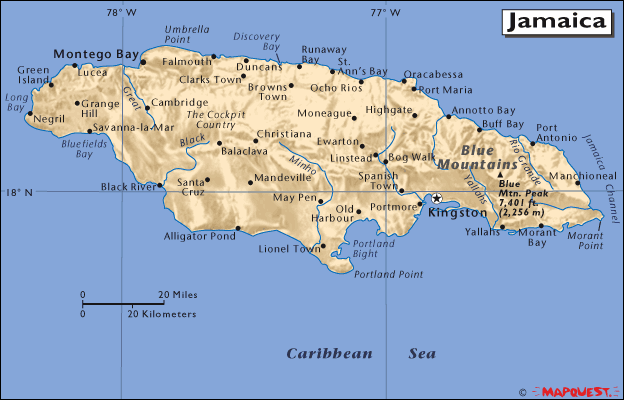
Jamaica is the third largest island in the Caribbean,
and the most populous
English speaking island there. The island of
Jamaica is home to the
Blue Mountains inland and
is
surrounded by a narrow
coastal plain. Most
major towns and
both cities are
located on the coast. Chief towns
include the capital city
Kingston ,
Portmore,
Spanish
Town, Mandeville,
Ocho
Rios, Port
Antonio , and the city
of Montego
Bay.
History
Sighted
by Christopher
Columbus in
1494 , Jamaica was conquered and settled in
1509 by Spaniards under a license from Columbus's son. Spanish
exploitation decimated the
native Arawaks. The island remained
Spanish until 1655, when
Admiral William
Penn and Robert Venables
captured it; it was formally ceded to
England in 1670, but the
local European population obtained a
degree of autonomy. Jamaica prospered
from the
wealth brought by buccaneers, notably Sir
Henry Morgan ,
to Port
Royal , the capital; in 1692,
however , much of the city
sank into the sea
during an earthquake, and Spanish Town became the new
capital.
A
huge, mostly African,
slave population grew up around the sugarcane
plantations in the
18th cent., when Jamaica was a
leading world
sugar producer. Freed and escaped slaves, sometimes aided by the maroons
(slaves who had escaped to remote
areas after
Spain lost control of
Jamaica), succeeded in organizing
frequent uprisings against the
European landowners. The sugar industry declined in the
19th cent.,
partly because of the abolition of slavery in 1833 (effective 1838)
and partly because of the elimination in 1846 of the
imperial preference tariff for colonial
products entering the British
market .
Economic hardship was the
prime motive
behind the Morant Bay
rebellion by freedmen in 1865. The British ruthlessly quelled the
uprising and also forced the frightened legislature to surrender its
powers; Jamaica became a crown colony.
Poverty
and economic decline led many blacks to
seek temporary
work in
neighboring Caribbean areas and in the United States; many
left the
island permanently, emigrating to England, Canada, and the United
States. Indians were imported to meet the
labor shortage on the
plantations after the slaves were freed, and
agriculture was
diversified to lessen dependence on sugar exports. A new constitution
in 1884 marked the initial revival of local autonomy for Jamaica.
Despite
labor and
other reforms,
black riots recurred, notably those of 1938,
which were caused mainly by
unemployment and resentment against
British racial policies. Jamaican blacks had been considerably
influenced by the theories of black nationalism promulgated by the
American expatriate
Marcus Garvey.
A royal commission investigating the 1938 riots recommended an
increase of economic
development funds and a faster restoration of
representative
government for Jamaica. In 1944
universal adult
suffrage was introduced, and a new constitution
provided for a
popularly elected house of representatives.
Economy
Jamaica is a mixed, free-market economy with state
enterprises as
well as private
sector businesses. Major sectors of the Jamaican
economy include agriculture,
mining , manufacturing,
tourism and
financial and
insurance services . Tourism and mining are the leading
foreign exchange earners.
Supported by multilateral financial institutions, Jamaica has,
since the
early 1980s, sought to implement structural reforms
aimed at
fostering private sector
activity and increasing the
role of market
forces in resource
allocation . Since 1991, the Government has
followed a
programme of economic liberalization and stabilization by
removing exchange controls,
floating the exchange
rate , cutting
tariffs, stabilising the Jamaican currency, reducing inflation and
removing restrictions on foreign investment.
Emphasis has been placed
on maintaining strict fiscal discipline, greater openness to trade
and financial flows, market liberalisation and
reduction in the
size of government. During this
period , a large
share of the economy was
returned to private sector ownership
through divestment and
privatisation programmes.
The macroeconomic stabilisation programme introduced in 1991, which
focused on tight fiscal and monetary policies, has contributed to a
controlled reduction in the rate of inflation. The annual inflation
rate has decreased from a high of 80.2% in 1991 to 7.9% in 1998.
inflation for FY1998/99 was 6.2% compared to 7.2% in the
corresponding period in CUU1997/98. The Government remains committed
to lowering inflation, with a long-term
objective of bringing it in
line with that of its major trading
partners .
After a period of steady
growth from 1985 to 1995,
real GDP
(gross
domestic product) decreased by 1.8%
and 2.4% in 1996 and 1997, respectively. The
decrease in GDP in 1996
and 1997 was largely due to significant problems in the financial
sector and, in 1997, a severe island-
wide drought (the worst in 70
years ) that drastically reduced agricultural
production . In 1997,
nominal GDP was
approximately J$220,556.2 million (US$6,198.9 million
based on the
average annual exchange rate of the period).
Fishing boats and bauxite cargo ships share the waterways
near Alligator Pond, Jamaica
The economy in 1997 was marked by low levels of
import growth, high
levels of private capital inflows and relative stability in the
foreign exchange market.
Recent economic
performance shows the Jamaican
economy is recovering. Agricultural
production, an important
engine of growth increased 15.3% in third
quarter of 1998 compared to the corresponding period in 1997,
signaling the
first positive growth rate in the sector since
January 1997. Bauxite
and
alumina production increased 5.5% from January to December, 1998 compared to
the corresponding period in 1997. January's bauxite production
recorded a 7.1% increase relative to January 1998 and continued
expansion of alumina production through 2009 is planned by Alcoa.
Tourism,
which is the largest foreign exchange earner, showed improvement as
well. In the third quarter of 1998, growth in
tourist arrivals
accelerated with an
overall increase of 8.5% in tourism earnings in
1998 when compared to the corresponding period in 1997.
Jamaica has a wide variety of
industrial and commercial
activities .
The
aviation industry is
able to perform most routine aircraft
maintenance, except for
heavy structural repairs. There is a
considerable amount of technical support for transport and
agricultural aviation. Jamaica has a considerable amount of
industrial engineering,
light manufacturing,
including metal
fabrication, metal roofing, and furniture manufacturing. Food and
beverage processing, glassware manufacturing, computer software and
data processing,
printing and publishing, insurance underwriting,
music and recording, and
advanced education activities can be
found in the larger
urban areas. The Jamaican construction industry is
entirely self-sufficient, with professional technical standards and
guidance .
Since the first quarter of 2006, the economy of Jamaica has undergone
a period of staunch growth. With inflation for the 2006 calendar
year down to 6.0% and unemployment down to 8.9%, the nominal GDP grew by
an unprecedented 2.9%. An investment programme in island
transportation and utility infrastructure and gains in the tourism,
mining, and
service sectors all contributed this
figure . All
projections for 2007 show an
even higher potential for economic
growth with all estimates over 3.0% and hampered only by urban crime
and public policies.
In 2006, Jamaica became
part of the CARICOM
Single Market and Economy (CSME)
as one of the pioneering
members .
Econometrics
GDP (2005): $9.7
billion .
Real growth rate (2006): 2.5%.
Per
capita GDP (2005): $3,640.
Natural resources: Bauxite, gypsum,
limestone , marble,
sand , silica.
Agriculture: Products--sugar,
bananas,
coffee , citrus
fruits , condiments and spices.
Industry:
Types --tourism, bauxite and alumina, processed
foods , sugar, rum,
cement , metal, chemical products.
Trade (2005): Exports--$1.5
billion: alumina, bauxite, sugar, bananas,
chemicals , citrus fruits
and products, rum, coffee. Major
markets (2005)--U.S. 26.3%, U.K.
10.8%, Canada 19.6%, Trinidad and Tobago 0.6%, Japan 1.0%. Imports
(2005)--$4.7 billion: machinery, transportation and
electrical equipment, food, fuels, fertilizer. Major suppliers (2000)--U.S.
40.1%, Trinidad and Tobago 9.0%, Japan 4.5%, U.K. 2.4%, Canada 2.3%.
Climate
The climate in Jamaica is
tropical , with hot and humid weather,
although higher inland regions have a more temperate climate. Some
regions on the south coast,
such as the Liguanea Plain and the
Pedro Plains are relatively dry rain-shadow areas.
Culture
Though a small nation, Jamaica is
rich in culture,
and has a
strong global presence. The
musical genres
reggae ,
ska,
mento,
rocksteady,
dub,
and, more recently, dancehall
and ragga
all originated in the island's vibrant
popular urban recording
industry. Internationally known reggae musician Bob
Marley was born in
Jamaica and is very respected there. Many other internationally known
artists were born in Jamaica including Lee
"
Scratch "
Perry ,
Peter
Tosh , Bunny
Wailer,
Jimmy Cliff,
Dennis Brown, Desmond
Dekker,
Beres Hammond, Beenie
Man, Shaggy,
Grace
Jones , Shabba
Ranks, Supercat,
Buju
Banton,
Sean Paul, I
Wayne , Capleton,
Bounty Killer and many
others .
Famous band artist groups that
came from Jamaica include
Black
Uhuru, Third
World Band, Inner
Circle,
Chalice Reggae Band, Fab
Five , and Morgan
Heritage. The
genre jungle
emerged from London's Jamaican diaspora. The
birth of hip-hop
in New
York also owed much to the city's Jamaican community.
Christianity
remains a strong
influence on cultural life, particularly in music.
Most people learn their music at
church ,
and Biblical
references are often used in popular
songs . It is not uncommon for
musicians to be
playing dancehall music on Saturday night, and church
music on
Sunday morning .
The
Rastafari movement was
founded in Jamaica. This
Back to
Africa movement
believes that
Haile Selassie of Ethiopia
was God
incarnate,
the returned black messiah,
come to take the lost
Twelve Tribes of Israel back
to
live with him in Holy Mount Zion
in a world of
perfect peace, love and
harmony . Bob Marley, a convert
to the
faith , spread the
message of Rastafari to the world. There are
now
estimated to be more
than a million Rastafarians
throughout the
world.
- National Bird — Doctor Bird (Green-and-black Streamertail, Trochilus polytmus)
- National Flower — Lignum Vitae (Guaiacum officinale)
- National Tree — Blue Mahoe (Hibiscus elatus)
- National Dish — Ackee and Saltfish (dried salted Cod)
- National Motto — "Out of Many, One People." (Unity among many cultures and races .)
Crime
Crime, including
violent crime, is a
serious problem in Jamaica,
particularly in Kingston.
While the vast majority of crimes
occur in impoverished areas, the
violence is not confined. The
primary criminal concern of a tourist is being a victim of
theft .
In several
cases , armed robberies of Americans have turned violent
when the victims resisted handing over valuables. Crime is
exacerbated by the
fact that
police are understaffed and
ineffective. Therefore, tourists should take their own
precautions and always pay
extra attention to their surroundings when
traveling,
exercise care when walking
outside after
dark , and should
always
avoid areas known for high crime rates. As a general
rule , valuables should not be left unattended, including in hotel
rooms and on the
beach . Care should be taken when carrying high
value
items such as cameras, or when wearing expensive jewelry on the
street .
Women 's handbags should be zipped and
held close to the
body . Men should carry wallets in their
front pants pocket.
Large amounts of
cash should always be handled discreetly.
To
enhance security in the principal resort areas, the Government of
Jamaica has taken a number of steps, including assignment of special
police foot and bicycle patrols.
Particular care is
still called for, however, when staying at isolated
villas and smaller
establishments that may have fewer security arrangements. Some
street vendors and taxi drivers in tourist areas are known to
confront and harass tourists to buy their wares or
employ their
services. If a
firm "No, thank you" does not solve
the problem, visitors may
wish to seek the assistance of a tourist or
police officer.
Drug use is prevalent in some tourist areas.
Citizens should avoid buying,
selling , holding or
taking illegal
drugs under any circumstances. There is anecdotal
evidence that
the use of so-called date
rape drugs, such as Ruhypnol, has become
more common at clubs and private parties.
Marijuana , cocaine, heroin
and other illegal narcotics are especially potent in Jamaica, and
their use may
lead to severe or even disastrous health consequences.
Conclusion
Jamaica is mostly known by culture. Most peolpe doesnt
know anything
about it´s eoconomy and history.
Before this summary I
didnt know
about the crime in Jamaica.
Jamaicas major industries are mining and
farming, also
turism . Despite of crime and some other negativ things,
I think that Jamaica is very
good place where to
travel .
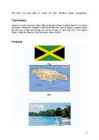
Pictures
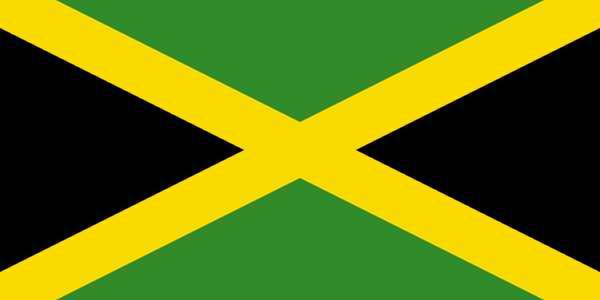
Flag
Map
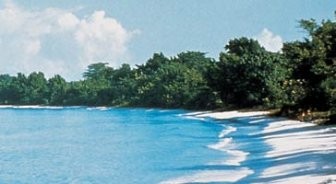
Nature
Used material:
http://travel.state.gov/travel/cis_pa_tw/cis/cis_1147.html http://www.infoplease.com/ce6/world/A0825906.html http://en.wikipedia.org/wiki/Jamaica#Culture http://www.state.gov/r/pa/ei/bgn/2032.ht m
http://images.google.com/images?hl=en&q=jamaica&gbv=2 9
 50 punkti
Autor soovib selle materjali allalaadimise eest saada 50 punkti.
50 punkti
Autor soovib selle materjali allalaadimise eest saada 50 punkti.
 ~ 9 lehte
Lehekülgede arv dokumendis
~ 9 lehte
Lehekülgede arv dokumendis
 2010-06-14
Kuupäev, millal dokument üles laeti
2010-06-14
Kuupäev, millal dokument üles laeti
 15 laadimist
Kokku alla laetud
15 laadimist
Kokku alla laetud
 1 arvamus
Teiste kasutajate poolt lisatud kommentaarid
1 arvamus
Teiste kasutajate poolt lisatud kommentaarid
 rommy99
Õppematerjali autor
rommy99
Õppematerjali autor
 annaabi.ee








Kõik kommentaarid