 10 punkti
Autor soovib selle materjali allalaadimise eest saada 10 punkti.
10 punkti
Autor soovib selle materjali allalaadimise eest saada 10 punkti.
 ~ 2 lehte
Lehekülgede arv dokumendis
~ 2 lehte
Lehekülgede arv dokumendis
 2010-04-14
Kuupäev, millal dokument üles laeti
2010-04-14
Kuupäev, millal dokument üles laeti
 13 laadimist
Kokku alla laetud
13 laadimist
Kokku alla laetud
 0 arvamust
Teiste kasutajate poolt lisatud kommentaarid
0 arvamust
Teiste kasutajate poolt lisatud kommentaarid
 Letters
Õppematerjali autor
Letters
Õppematerjali autor
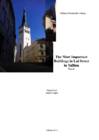
Tallinna Mustamäe College The Most Important Buildings in Lai Street in Tallinn Report Supervisor: Ingrid Teigar Tallinn 2014 Table of Contents Introduction.............................................................................. 3 Lai Street in general.................................................................. 4 The origin of the name "Lai"...................................................... 4 1 Lai Street / 4 Nunne Street...................................................... 5 17 Lai Street................................
Introduction Tallinn, the capital city of the Republic of Estonia and of the Harju county, is a town in North Estonia on the coast of the Gulf of Finland. It has nearly half a million inhabitants and covers an area of almost 160 sqkm. It is also an important economic and cultural centre and one of the main ports in the Baltic States. Tallinn is one of the oldest cities on the Baltic Sea. It is unique for its well-preserved architecture from the 13-15 centuries. In contrast to the ancient town-walls and towers, Tallinn of today offers modern hotels, restaurants, sport and cultural centres. Every five years national song and folk dance festivals take place in Tallinn. The yachting regatta of the 1980 Moscow Olympic Games was held at Pirita. History Tallinn means in English "Danish town"
Tallinn English College English Sergo Vainumäe 9A TALLINN Report Supervisor: Inge Välja Tallinn 2006 Order of contents: 1.Introduction 2.Toompea 3.Lower Town 4.Kadriorg and Pirita 5.Museums 1. Introduction Tallinn, the capital of Estonia, lies on the Baltic Sea. It is on almost the same latitude east St. Petersburg in Russia, Stockholm in Sweden and Stavanger in Norway, and covers 158 sq km. Tallinn was first marked on a map of the world by the Arab geographer al-Idrisi in 1154, its name then being Kolyvan (probably derived from the name Kalev). In the 13th-century Chronicle of Henricus de Lettis the town was called Lyndanise. Later came Reval (presumably after the old county
Tallinn Mustamäe College G2K Jaana-Kristiina Jõgevest The Four oldest churches of Tallinn Report Supervisor: Ingrid Teigar Tallinn 2009 The Dome Church The Danes began fortification of Toompea after the conquest of Tallinn in 1219 and probably also built the first church there. It was presumably a wooden building located at the site of the present cathedral. However, a serious conflict with the Order of the Brothers of the Sword broke out soon as the latter wanted to gain control of the entire Estonia. The order succeeded in subordinating Tallinn and the whole of North Estonia to its rule in 1227. The monks of the Dominican Order began the construction of a stone church in Toompea in 1229
The square in front of Tallinn's Town Hall functioned as a marketplace for centuries, dating back to times even before the Town Hall itself was built. Through the years this served as a place of celebrations as well as executions. Today the square remains a cultural focal point for the city. In summer, it's filled with outdoor cafés and is home to countless openair concerts, handicraft fairs and medieval markets. In winter, an annual Christmas Market enchants the crowds on the square, as does the town's Christmas tree (a tradition whose roots stretch back to 1441), which stays up for a month or more.
worldwide have been named in his honour. A ritual for university students is washing the hair of the Baer statue head on the eve of St. Philip's Day. Kristjan Jaak Peterson monument Kristjan Jaak Peterson was an Estonian poet, author of odes and pastorales, who was born in Riga and studied in Tartu. The aim of his work became the creation of literature in the original Estonian language. The Kissing Students The sculpture and fountain "The Kissing Students" located at the Tartu Town Hall Square, has become a symbol of Tartu. Erected in 1998, it was conceived by Mati Karmin. Legend kõneleb suudlevate tudengite kohta järgmist:Ühel hämaral sügisõhtul jalutas armunud tudengipaar mööda Tartu südalinna. Suudeldes ja naerdes jõudsid nad Raekoja platsile. Äkki muutus taevas tumedaks, pilved kogunesid linna kohale ja hakkas sadama paduvihma. Noormees avas vihmavarju ja võttis neiu oma embusesse. Kirglikult ja kaua suudlesid nad
2 Towns (Upper & Lower Town) Tallinn used to be divided into 2 parts - Upper Town where lived the aristocracy, gentry and the clergy; and Lower Town with traders, craftsmen and merchants. Legend says the Toompea Hill is actually the tumulus mound of the great Kalev. Linda carried rocks to his grave. It is a naturally- formed limestone hill. Lower Town was a merchantile centre, Tallinn also belonged to the Hansaetic League (1285). It is often referred to as the town of citizens. Any grown-up, married and economically independent person, born in a legal marriage between two free people and having lived in the town for at least 3 months, could apply to the Magistracy for citizenship. Serfs could escape from serdom after having successfully hidden in town for a year and a day. Two parts remained separated until the end of the 19th century. Four Names Lyndanise - mentioned by Henricus de Lettis in his Chronicle; derives from the name Linda -
Untill then the Knighthood House at Toompea Hill served as the temporary main building of the Art Museum of Estonia. The exhibition there was opened on April 1, 1993. Art Museum of Estonia premanently closed down the exhibitions in that building in October 2005. At the end of the 1970s, in the 1980s the first branches of the Art Museum of Estonia were founded. Starting from the 1995 all the branches offer different educational programmes for children and young people. In 1996 the exhibition hall on the first floor of Rotermann Salt Storage was opened, this branch was closed in May 2005. In summer 2000 the restored Kadriorg Palace was opened, but not as the main building of the Art Museum of Estonia, but as a branch. Kadriorg Art Museum now exhibits the foreign art collection of the Art Museum of Estonia. At present there are five active branches of the Art Museum of Estonia: Kadriorg Art Museum (Kadriorg Palace and Mikkel Museum), Niguliste Museum, Adamson-Eric
 annaabi.ee






Kõik kommentaarid