Vajad kellegagi rääkida?
Küsi julgelt abi LasteAbi
Logi sisse

Prepositions (0)

1 Hindamata
Punktid
Inglise keel - Kõik luuletused, mis on inglise keeles


Prepositions 
 
Table of Contents 
 
Prepositions of Time – in, on & at .......................................................................2 
Prepositions of Time – for & since  .......................................................................3 
Prepositions of Time – for & during  .....................................................................3 
Prepositions of Time – during & while  .................................................................4 
Prepositions of Time – by & by the time ..............................................................4 
Prepositions of Time – until & from ... till / to ... .................................................4 
Prepositions of Time - ago...................................................................................5 
Prepositions of Place – in ....................................................................................5 
Prepositions of Place – at ....................................................................................5 
Prepositions of Place – on ...................................................................................6 
Prepositions of Place - in & at with towns & villages............................................6 
Prepositions of Place – in, on & at with addresses and names  of streets / roads ..7 
Prepositions of Place with the wordscorner ’, ‘ front ’ and ‘ back ’ ............................7 
Prepositions of Place with the word ‘ arrive ’..........................................................7 
Prepositions of Place – in & on with travelling .....................................................8 
Prepositional Phrases  .........................................................................................8 
 
 
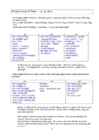
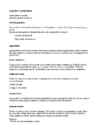
Prepositions of Time – in, on & at 
 
• in is used with  centuries , decades,  years , seasons and months, parts of the day, 
periods of time 
• on is used with  datesspecial   days , days of week, day of week +  part  of day, day 
+ of ... 
• at is used with  holidays exact time,  meals  and with  night  
 
 
in on 
at 
• the 20th  century 
• the 29th of November 
•  ChristmasEaster  
• the Middle   ages  
/August the  first  
• six o’ clock / 7.30 
• the 1980s 
• Christmas Day / New 
•  midday / noon / 
• 2006 
Year’s Eve / Easter 
midnight 
•  winter  / summer 
Sunday  
• the weekend  / 
• May / August / 
• Wednesday(s) 
weekends 
November 
•  Monday   morning  
•  breakfast  
• the morning(s)/ 
• the day of 
•  lunch (time) 
afternoon(s)/evening(s), 
•  dinner (time) 
• the holidays 
• night 
• the interval 


In Estonia the school year starts in September. The first school day is  
          on the 1st of September. Lessons  usually  start at 8 0’clock. I often  work  
          at night. 
 
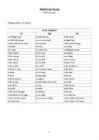
These prepositions are also used in the following expressions and prepositional 
phrases: 
 
in on at 
• the  beginning  
•  holiday  
• the beginning of sth 
• the middle of ...  
• business 
• the end of May 
• the end (= finally
• time (= punctual, not 
• (the age of) 27 
• time (=soon enough for 
late
• the moment 
sth / to do sth) 
 
•  present  
• a week / three months’ 
 
• the  same  time 
time (=after the time of) 
 
•  four  weeks (during the 
  
time), etc 
 
In the middle of the meeting my mobile  phone started ringing. The house was 
built  in a  month . I’ll be back in an  hourIn the end,  nobody knew why the 
war had started.  

 
Next week I will be  away  on business in  France . John is on holiday this 
month. This bus  never  runs on time. 
He learned to read at an  early  age. The boss is not  here  at the moment, 
please,  call  back in  half  an hour. There are no vacancies in our company at 
present. 
 

2
 
 
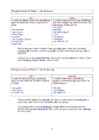
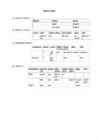
Prepositions of Time – for & since 
 
for since 
is used to express  how long  something   is used to express how long something 
goes on when we mean  the period of 
has been happening when we mean the 
time 
beginning of the period 
 
• 9 o’clock 
• ten minutes 
• Monday 
• two  hours  
• the first of April 
• three days 
• 2001 
• a week 
• Christmas 
• six months / years 
• breakfast 
• a long time 
• we  arrived , etc 
• ages, etc 
 
 
Where have you been? I  haven ’t  seen you for ages!  Jane  has not eaten 
anything for a week. I will be away for a while. It has been going on for a 
long time. 

 
I haven’t seen him since Monday. Ann’s been  waiting  since 8 o’clock. I have 
been studying English  since I was a  child


Prepositions of Time – for & during 
 
for during 
is used to say how long something 
is used to say when something 
goes on and refers to the whole period 
happens (not how long) and means ’in 
of time 
the process of ...’ 
 
 
• six years 
• the  film  
• two hours 
• our holiday 
• a week, etc 
• the night, etc 
 
 
The presenter  talked non-stop for two hours. I have been on holiday for 
week now. Ken hasn’t seen his  father  for a long time. 

 
Two meals will be served during the  flight . Make sure  that you do not 
disturb other people during the film. I will give you a ring some time during 
the next week. 


3
 
 
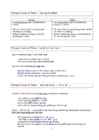
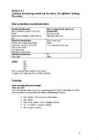
Prepositions of Time – during & while 
 
during while 
is a preposition  and is followed by 
is a conjunction and is followed by 
a noun  
a noun + a verb  
 
 
• We met a lot of  interesting people 
• We met a lot of interesting people while 
during our holiday. 
we were on holiday. 
• Robert suddenly began to  feel ill 
• Robert suddenly began to feel ill while 
during the  exam . 
he was doing the exam


Prepositions of Time – by & by the time 
 
by (+ a certain time) = not later than  
 
 
I have to be at home by 9 o’clock. 
 
The boss needs this report by Monday. 
 
by the time
 (something happens) 
 
 
By the time we get to the shops, they will be  shut
 
By the time I  finished , I was very tired. 
 I 
will 
cook  
dinner 
by the time you have finished your work. 
 
 
Prepositions of Time – until & from ... till / to ... 
 
 
until (= till) is used to say how long a situation continues 
 
 
Tom will be away till Monday. 
 I’ll 
be 
working  
until 11 o’clock. 
 Let’s 
wait  
till it stops raining. 
 
Jane will not stop teasing you until you tell  her off. 
 
 
from ... till (or to) ... are used to say how long something takes place mentioning 
both the beginning and the end
 
 
We stayed there from 8 a.m. to 4 p.m.. 
 
The shop is open  from 10 a.m. till 7 p.m. 
 I 
stayed 
in 
London 
from Monday to  Friday
 
He worked on his diploma work from morning till night all through the  
          month. 
 
4
 
 
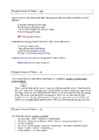
Prepositions of Time - ago 
 
ago is used to say how much time has passed from an event; it follows a noun 
(phrase) 
 
 
It started raining an hour ago. 
 We 
first 
met 

long 
time 
ago
 
The accident   happened  ten years ago
 It 
was 
many 
years 
ago
 
NB! No preposition! 
 
Prepositions are not used before  last, this, next and every
 
 
I’ll see you next week. 
 They 
got 
married  
last  March
 I 
have 
to 
finish 
it 
this month. 
 He 
goes 
swimming  
every Sunday. 
 
Prepositions are not used in the question ‘What time?’ 
 
 
What time do we have to leave? 
 
 
Prepositions of Place – in 
 
in is used when we talk about something or somebody inside or within some 
place or space 
 
 
in
There was no light  in the  room . I saw my reflection in the water. Viiralt lived in 
Paris  for some time. Grandpa was sitting in the armchair smoking a  pipe . In the 
morning, when he saw  himself  in the mirror , he noticed that his hair  was going 
grey. The news was in all the  newspapers . There are no  stars  in the sky 
tonight - it is too cloudyIn this picture  the painter gives the portrait  of himself. 
There are no traffic   lights  in this  street . There is a terrible pain in my stomach. 


Prepositions of Place – at 
 
at normally implies a place + activity
•  the bus-stop / doorwindow  / traffic lights 
•  the front / back of a  building / hall / cinema  / group of people etc) 
•  (a/the)  reception  
•  an event / a/the party / concert  / conference / meeting /  football  match 
•  home / work / school / university  
/  
5
•  a/the  station / an /the  airport  
 
 
•  the hairdresser’s / doctor’s / dentist ’s 
•  the seaside 
•  sea (on a voyage
 
My husband is at sea at the moment. Peter will meet you at the station. Let’s 
meet at the corner of the street. At reception of this bill you should pay the 
money immediately. John got acquainted with  Mary  at the dentist’s. Brian has 
some serious problems at work. My grandmother likes  to sit at the window  and 
watch the people passing by. I met Marju Lauristin at a reception in the British  
Ambassador’s house. 


Prepositions of Place – on 
 
on 
normally means the surface of something
•  the  ceilingwall  /  floor / ground / grass etc 
•  one’s  nose , mouth etc 
•  the notice -board, the screen  etc 
•  a/the table / top  shelf  / chair 
•  a/the page; page 7 (of the  newspaper
•  the ground / first / second / etc floor 
•  a small island  
•  the ( south ) coast / a /the river / a  road  
•  the way (to London) 
•  a horse / bicycle / motorbike etc 
 
You will  find the list of names on the notice-board. I  live  on the island of 
Hiiumaa. On my way home I met an old  friend  of mine. The  President  was seen 
riding on horseback. There are too many unnecessary icons on your computer 
screen. Write the return  address on the back of the envelope. Mr. Smith lives  on 
the top floor. There is a  spider  on the ceiling. 


Prepositions of Place - in & at with towns & villages 
 
We usually use in when we say that somebody is staying or living in a town: 
He’s in Los Angeles on business. Tom’s parents live in Nottingham. 
But we can use at instead when the town or village is a point on a journey  
(place+activity): 
Do you know  if this  train stops at Nottingham? 
We stopped at a  pretty  village on the way to London. 

 
We can also use at when we say that somebody is a student at a university town: 
He’s at  Manchester  studying Linguistics. (a student at Manchester 
University) 
 
 
6
 
 
Prepositions of Place – in, on & at with addresses and names of 
streets / roads 
 
We use at before an address and in or on before the name of a road: 
They’ve opened an office at 28 Lees Road. (exact address) 
The church is in / on Park Road. 

 
We sometimes use on instead of in when we talk about long streets or roads: 
The town is on the Pacific Highway
 
We can use at instead of in when we use a street name to refer to an institution 
in that street: 
There was an  important  meeting of ministers at Downing Street today
 
Notice that we say ‘on Wall Street’ to mean the financial institution. 
 
 
Prepositions of Place with the words ‘corner’, ‘front’ and ‘back’ 
 
CORNER 
•  in the corner of a /the room 
•  at on the corner of a /the street 
   There was a TV-set in the corner of the room. The bank is on the corner   
    of the street. 

 
FRONT / BACK 
•  in the front / back of a /the car 
•  in front of the computer 
•  at the front / back of a building / house / hall / cinema  
•  on the front / back of a  letter  / piece of  paper  
It is unhealthy to spend too much time in front of the computer. 
Your room is at the back of the hotel , it is very  quiet


Prepositions of Place with the word ‘arrive’  
 
arrive in when talking about a country or town: 
When did he arrive in Britain / London? 
arrive at with other places : 
What time did he arrive at school / work / the hotel / the party / the 
airport

 
arrive home (without a preposition) 
When did he arrive home


7
 
 
Prepositions of Place – in & on with travelling 
 
We use in for travel in taxis and cars: 
I read the paper in the taxi on my way home.  
 
We use on for travel using a bus, coach , plane or train but we use in if we want 
to emphasise inside the bus etc 
I’ll probably go on the bus.  
 
He was sitting in the bus  looking out of the window. 


Prepositional Phrases  
 
In many cases the use of prepositions cannot be explained logically. Those cases 
just have to be memorized. For example, we say:  
•  on the farm , on the right /left (- hand side), on a voyage 
•  in the end ( meaning ’finally’) but at the end of something 
•  at the top / bottom  of something 


8
 
 
Vasakule Paremale
Prepositions #1 Prepositions #2 Prepositions #3 Prepositions #4 Prepositions #5 Prepositions #6 Prepositions #7 Prepositions #8
Punktid 50 punkti Autor soovib selle materjali allalaadimise eest saada 50 punkti.
Leheküljed ~ 8 lehte Lehekülgede arv dokumendis
Aeg2014-12-14 Kuupäev, millal dokument üles laeti
Allalaadimisi 26 laadimist Kokku alla laetud
Kommentaarid 0 arvamust Teiste kasutajate poolt lisatud kommentaarid
Autor 213757 Õppematerjali autor
Reeglid Akadeemilises inglise keeles teemal Prepositions

Sarnased õppematerjalid

Golden Grammar rules
10
doc

Golden Grammar rules

) I'll see you on Friday ­ or rather, Saturday. 3. Use the simple present ­ play(s), rain(s) etc ­ to talk about habits and repeated actions. I play tennis every Saturday. (NOT I am playing tennis every Saturday.) It usually rains a lot in November. 4. Use will ..., not the present, for offers and promises. I'll cook you supper this evening. (NOT I cook you supper this evening.) I promise I'll phone you tomorrow. (NOT I promise I phone you tomorrow.) 5. Don't drop prepositions with passive verbs. I don't like to be shouted at. (NOT I don't like to be shouted.) This needs to be thought about some more. (NOT This needs to be thought some more.) 6. Don't use a present tense after It's time. It's time you went home. (NOT It's time you go home.) It's time we invited Bill and Sonia. (NOT It's time we invite Bill and Sonia.) 7. Use was/were born to give dates of birth. I was born in 1975. (NOT I am born in 1975.) Shakespeare was born in 1564. 8

Inglise keel
Inglise keele praktilise grammatika mõisted
22
pdf

Inglise keele praktilise grammatika mõisted

A crew of sailors. A flock of birds. A range of mountains. conjunction any member of a small class of words distinguished in manylanguages by their function as connecto rs between words, phrases,clauses, or sentences, as and, because, but, however. content words Content words are words that have meaning. They can be compared to grammatical words, which are structural. Nouns, main verbs, adjectives and adverbs are usually content words. Auxiliary verbs, pronouns, articles, and prepositions are usually grammatical words. Example ‘We flew over the mountains at dawn'. countable nouns Countable nouns are easy to recognize. They are things that we can count. For example: "pen". We can count pens. We can have one, two, three or more pens. Here are some more countable nouns: •dog, cat, animal, man, person •bottle, box, litre •coin, note, dollar •cup, plate, fork •table, chair, suitcase, bag Countable nouns can be singular or plural:

Inglise keel
Active tenses
25
odp

Active tenses

· `last night'. can be prepositional phrases with `at', `in', or `on'. `For' refers to a period of time in the past, present, or future. `Since' refers to a point in past time. A We use adverbials of time to say when something happens. We often use noun groups called time expressions as adverbials of time. yesterday, today, tomorrow last year, next Saturday, next week the day after tomorrow, last night, · the other day · Do not use the prepositions `at', `in', `on'!!! Prepositional phrases as adverbials of time: `at' is used with: clock times: at eight o'clock, at three fifteen religious festivals: at Christmas, at Easter mealtimes: at breakfast, at lunchtimes specific periods: at night, at the weekend, at weekends, at half-term `in' is used with: · seasons: in autumn, in the spring years and centuries: in 1985, in the year 2000, in the nineteenth century months: in July, in December

Inglise keel
Word order-articles-prepositions-adverb-adjective
5
odt

Word order, articles, prepositions, adverb, adjective

"He lives in England." But if the country's name has a "plural" meaning, we use 'the'. "The People's Republic of China", "The Netherlands", "The United States of America". Continents, towns and streets don't have an article. "Africa", "New York", "Church Street". Theatres, cinemas and hotels have 'the'. "The Odeon", "The Almeira", "The Hilton". We use 'the' before classes of people. "the rich", "the poor", "the British". Prepositions: TIME: English Usage Example on days of the week On Monday in months/seasons In August/in winter time of day in the morning year in 2009

inglise teaduskeel
Prepositions
6
rtf

Prepositions

to rise in the east tõusma idast to hear sth. on the radio midagi raadiost kuulma to see sth. on (the) television midagi telerist nägema Prepositions of movement: 1)We use TO in order to express movement toward a place. They were driving to work together. She's going to the dentist's office this morning. 2)TOWARD and TOWARDS are also helpful prepositions to express movement. These are simply variant spellings of the same word; use whichever sounds better to you. We're moving toward the light. This is a big step towards the project's completion. 3)With the words HOME, DOWNTOWN, UPTOWN, INSIDE, OUTSIDE, DOWNSTAIRS, 3 UPSTAIRS, we use no preposition. Grandma went upstairs Grandpa went home. They both went outside.

Inglise keel
Inglise keele jaotusmaterjal
37
doc

Inglise keele jaotusmaterjal

Kui räägitakse sellest, millist liiki liiklusvahendiga sõidetakse, kasutatakse eessõna by. By bus, by bicycle, by car, by coach, by plane, by train, ... Kõndimisest rääkides kasutatakse eessõna on. On foot Autodest rääkides kasutatakse eessõnu in, into ja out of in my car into his lorry out of the ambulance Teistest liiklusvahenditest rääkides kasutatakse eessõnu on, onto ja off on the train get onto the bus step off the train Prepositions of time in (the) parts of the day (not night) in the morning(s) in the evening(s) in the afternoon(s) months in February seasons in summer years in 1995 decades in the 1920s centuries in the 20th century at (the) clock time at 5 o'clock at 7.45 pm

Inglise keel
Inglise keele põhitõed algajale
42
pptx

Inglise keele põhitõed algajale

INGLISE KEELE PÕHITÕED C.K 2017 A – AN – SOME Singular: a or an Use some for things you can't count ◦ *a banana *a car *a monkey *a football ◦ *some milk *some water *some coffee ◦ *an egg*an accident *an umbrella *an *some sugar eagle ◦ *some tea *some juice*some money *some butter Plural: some Exercises: 1. http://www.english-4u.de/a_an_some_ex1.htm ◦ *some bananas *some cats *some monkeys *some 2. http://www.english-4u.de/a_an_some_ex3.htm balls ◦ *some eggs*some oranges *some umbrellas *some 3. http://www.english-4u.de/a_an_some_ex6.htm eagles We us the

Inglise keel
English Grammar Book 1
159
pdf

English Grammar Book 1

Did you know that the sentence was first divided into subject and verb by Plato, the famed philosopher from ancient Greece? That was about 2,400 years ago! Ever since then, students all over the world have found it worthwhile to study the structure of words and sentences. Why? Because skill in speaking and writing is the hallmark of all educated people. Lesson by lesson, this book provides basic instruction in the eight parts of speech--nouns, pronouns, verbs, adjectives, adverbs, prepositions, conjunctions, and interjections--as well as the standard patterns of English sentences. All students of English, be they native speakers or those who are studying English as a second language, will profit from the fundamental introduction and review of grammar provided by SADDLEBACK'S BASIC ENGLISH GRAMMAR 1 and 2. Helpful marginal notes throughout the books have been provided to reinforce existing skills and call attention to common problem areas.

Inglise keel


Kommentaarid (0)

Kommentaarid sellele materjalile puuduvad. Ole esimene ja kommenteeri


Sellel veebilehel kasutatakse küpsiseid. Kasutamist jätkates nõustute küpsiste ja veebilehe üldtingimustega Nõustun