Vajad kellegagi rääkida?
Küsi julgelt abi LasteAbi
Logi sisse

Prepositions (0)

1 Hindamata
Punktid

Esitatud küsimused

  • KUHU WHERE TO KUS?
  • KUST WHERE FROM?
  • KUS WHERE KUHU?
  • KUS WHERE KUHU?
  • KUS WHERE KUST?
  • Mis sa sellest arvad?
PREPOSITIONS
(eessõnad)
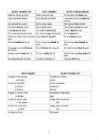
Prepositions of place :
KUS? WHERE?
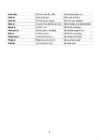
AT
ON
IN
at 10 High Street
on Fifth Avenue
in the world
at 224 Fifth Avenue
on the street(AmE)
in High Street
at the corner of the street
on the plane
in the east of Europe
at a hotel
on a bus
in London
at a store
on a boat /ship
in Trafalgar Square
at the concert
on the floor
in America
at the cinema
on the wall
in a village
at the theatre
on the shelf
in the country
at the station
on the table
in (the) town
at the airport
on a hook
in the mountains
at the bus- stop
on the notice - board
in the field
at home
on the radio
in the park
at work
on television
in the car
at the university
on page 5
in the drawer
at the lecture
on both sides of the street
in a chair
at an office
on top
in the picture
at a party
on leave
in the water
at the top of the page
on holiday
in the sky
at the bottom of the page
on my right
in a coffee bar
at the end of the street
on my way to college
in the middle of the room
at my left side
in the corner of the room
KUHU? WHERE TO?
KUS? WHERE?
KUST? WHERE FROM?
When do you go to work?
Father is at work now.
He was dismissed from work.
They went to the theatre.
I met them at the theatre.
I met them on my way from the cinema.
She returned to London.
She lives in London.
She returned from Oxford .
Tom dived into the water.
Tom is in the water.
Tom climbed out of the water.
It fell on (to) the floor.
The watch is on the table.
I took it from the shelf.
This street leads to the church .
Our school is near the hospital .
It is far from here.
If you can`t find a seat , sit on the floor.
They sat by the fireplace .
He rose from his seat.
They ran behind the house.
There `s a big tree behind the house.
Take the box from behind the door .
The garage was built between the houses .
He sat between the two girls .
He walked away from the girls.
George crawled under the car.
The cat is under the car.
She took her bag from under the table.
He jumped on (to) the horse .
The boys are in the car.
They got off the bus.
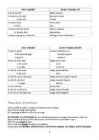
KUS? WHERE?
KUHU? WHERE TO?
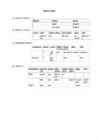
to appear at the meeting
koosolekule ilmuma
at the door
uksele
to arrive at the office
kontorisse jõudma
in London
Londonisse
in Estonia
Eestisse
to gather at the bus- stop
bussipeatusse kogunema
in the hall
saali
to hide sth. in the cellar
midagi keldrisse peitma
in the garden
aeda
to leave sth. in the train
midagi rongi unustama
at home
koju
to remain at home
koju jääma
KUS? WHERE?
KUHU? WHERE TO?
to set in the west
läände loojuma
to sit down at the table
laua äärde istuma
on the sofa
sohvale
to stay at a hotel
hotelli jääma
at home
koju
to write on the blackboard
tahvlile kirjutama
in the note - book
märkmikusse
to phone (ring up) sb. at the office
kellelegi kontorisse helistama
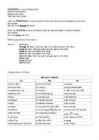
KUS? WHERE?
KUST? WHERE FROM?
to begin at page 5
alustama leheküljelt nr. 5
at the top of the page
lehekülje algusest
at point A
punktist A
to buy sth. at the shop
midagi poest ostma
in the market
turult
in London
Londonist
to find sth. in the street
midagi tänavalt leidma
in the river
jõest
to look sth. up in a dictionary
midagi sõnastikust järele vaatama
to read sth. in a book
midagi raamatust lugema
in a paper
ajalehest
to rise in the east
tõusma idast
to hear sth. on the radio
midagi raadiost kuulma
to see sth. on (the) television
midagi telerist nägema
Prepositions of movement :
1)We use TO in order to express movement toward a place.
They were driving to work together.
She's going to the dentist 's office this morning .
2)TOWARD and TOWARDS are also helpful prepositions to express movement. These are simply variant spellings of the same word; use whichever sounds better to you.
We're moving toward the light .
This is a big step towards the project 's completion.
3)With the words HOME, DOWNTOWN, UPTOWN, INSIDE, OUTSIDE , DOWNSTAIRS , UPSTAIRS, we use no preposition .
Grandma went upstairs
Grandpa went home.
They both went outside.
4)We use THROUGH to show movement from one side of an enclosed space to the other .
For example:
The train went through the tunnel .
5)We use ACROSS to show movement from one side of a surface or line to another.
For example:
She swam across the river.
6)More prepositions of movement:
She ran to the door.
through the tunnel. (from one side of an enclosed space to the other)
across the road . (from one side of an open space to the other)
along the road. (the length of the road)
down the road. (the length of the road)
over the bridge . (from one side of an open space to the other)
off the stage.
round the track .
into the room.
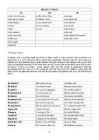
Prepositions of time:
MILLAL? WHEN?
AT
ON
IN
at two o` clock
on the first of July
in January
at five past two
on Tuesday
in early late December
at a quarter past two
on Sundays
in 1989, in the year 1989
at half past two
on the following day
in the morning
at noon
on working days
in the afternoon
at midnight
on Tuesday morning
in the evening
at night
on Monday afternoon
in the daytime
at sunrise
on the night of 9 April, 1988
later in the day
at breakfast
on the evening of May the first
(at two o`clock) in the night
at the weekend
on a sunny day in August
in the 19th century
at Christmas
on Christmas Eve
in the summer of 1970
at New Year
on New Year`s Eve
in spring
at the beginning of the month
on Christmas Day
in (the) future
MILLAL? WHEN?
AT
ON
IN
at the end of the year
on New Year`s Day
in the past
at the age of sixteen
on Mother `s Day
in my spare time
at the holiday
on my arrival home
in my absence
at once
on this occasion
in his youth
at last
on time
in these days
at his moment
in the end
at the same time
in the middle of the month
at that time
in two day`s time
at first sight
at present
Phrasal verbs :
A phrasal verb is a phrase made up of two or three words: a verb combined with an adverb or a preposition, or a verb combined with an adverb and a preposition. Phrasal verbs are very common in English , and their meaning may be quite different from the meaning of the ordinary verb, eg you may know the individual meanings of the words make and off, but you may not be able to guess that to make off means “to leave or escape “ . Some phrasal verbs have the adverb or preposition following immediately after the verb, as in „He owned up“ and „He looks after the children “; others have the object of the verb placed between the verb and the other parts of the phrasal verb, as in „He laid the book down“.
Be afraid of
She is afraid of you.
Ta kardab sind.
Be fond of
I am fond of music.
Ma armastan muusikat.
Be good at
He is good at languages.
Ta on keeltes andekas.
Be interested in
I am interested in it.
Ma olen sellest huvitatud.
Be kind to
He is kind to me.
Ta on minu vastu lahke .
Be pleased with
I was pleased with the result .
Ma olin tulemusega rahul.
Be proud of
He is proud of his son.
Ta on uhke oma poja üle.
Be surprised at
She was surprised at the news.
Ta oli üllatunud uudiste üle.
Agree with
I agree with you.
Ma olen sinuga nõus.
Belong to
It belongs to Dick .
See kuulub Dickile.
Consist of
It consists of two parts.
See koosneb kahest osast.
Depend on
It depends on the weather .
See sõltub ilmast.
Fall in love with
He fell in love with Meg.
Ta armus Megi.
Listen to
We listened to the news.
Me kuulasime uudiseid.
Look after
Pat looks after the child .
Pat hoolitseb lapse eest.
Look at
Look at this girl.
Vaata seda tüdrukut.
Look for
I`m looking for my pen.
Ma otsin oma sulepead .
Seem to
It seems to me that he likes you.
Mulle tundub, et sa meeldid talle.
Speak to
I spoke to her.
Ma kõnelesin temaga.
Take part in
We took part in the game .
Me võtsime mängust osa.
Talk to
I talked to them.
Ma kõnelesin nendega.
Think about
I often think about it.
Ma mõtlen tihti sellele.
Think of
What do you think of it?
Mis sa sellest arvad?
Wait for
I am waiting for you.
Ma ootan sind.
5
Prepositions #1 Prepositions #2 Prepositions #3 Prepositions #4 Prepositions #5 Prepositions #6
Punktid 50 punkti Autor soovib selle materjali allalaadimise eest saada 50 punkti.
Leheküljed ~ 6 lehte Lehekülgede arv dokumendis
Aeg2010-02-07 Kuupäev, millal dokument üles laeti
Allalaadimisi 58 laadimist Kokku alla laetud
Kommentaarid 0 arvamust Teiste kasutajate poolt lisatud kommentaarid
Autor Liisi Tõnisson Õppematerjali autor
Kokkuvõtlik ülevaade eessõnadest. Hea abimaterjal õppimaks eessõnade tööks.

Sarnased õppematerjalid

Prepositions
16
pdf

Prepositions

November • Monday morning • breakfast • the morning(s)/ • the day of • lunch(time) afternoon(s)/evening(s), • dinner(time) • the holidays • night • the interval In Estonia the school year starts in September. The first school day is on the 1st of September. Lessons usually start at 8 0’clock. I often work at night. These prepositions are also used in the following expressions and prepositional phrases: in on at • the beginning • holiday • the beginning of sth • the middle of ... • business • the end of May • the end (=finally) • time (= punctual, not • (the age of) 27 • time (=soon enough for late) • the moment

Akadeemiline inglise keel
English Grammar Book 1
159
pdf

English Grammar Book 1

Did you know that the sentence was first divided into subject and verb by Plato, the famed philosopher from ancient Greece? That was about 2,400 years ago! Ever since then, students all over the world have found it worthwhile to study the structure of words and sentences. Why? Because skill in speaking and writing is the hallmark of all educated people. Lesson by lesson, this book provides basic instruction in the eight parts of speech--nouns, pronouns, verbs, adjectives, adverbs, prepositions, conjunctions, and interjections--as well as the standard patterns of English sentences. All students of English, be they native speakers or those who are studying English as a second language, will profit from the fundamental introduction and review of grammar provided by SADDLEBACK'S BASIC ENGLISH GRAMMAR 1 and 2. Helpful marginal notes throughout the books have been provided to reinforce existing skills and call attention to common problem areas.

Inglise keel
I Love English 6 Workbook e-õpik lk-1-27
18
doc

I Love English 6 Workbook e-õpik lk. 1-27

. it before. (be; see) 3 As soon as Jim ... for the meal, he ... home. (pay; drive) 4 The boat ... slowly after she ... the rocks. (sink; hit) 5 Ann ... all her money when she ... the book she needed to buy. (spend; see) 6 I ... all the waste paper into the fire when I ... about the tickets in the envelope. (throw; remember) 7 David ... his girlfriend three messages before she ... him a reply. (send, give) 8 Tom ... an hour before the alarm ... off. (wake; go) 3. Complete the sentences with the prepositions. by for in of on out to up 1 We've run ... of time. The show starts ... ten minutes. 2 The pegs were ... a string hanging next ... the washing line. 3 Why do you insist ... us wearing wellies? According ... the weather forecast, it'll be fine today. 4 You've been rude ... your sister. Why don't you apologize ... her? --- 10 5 Let's have a walk ... the riverside. I want to take some photos ... the houseboats. 6 We met ... accident at the station when queuing ... tickets.

Inglise keel
Prepositions and Phrasal Verbs
14
doc

Prepositions and Phrasal Verbs

Viljandi County Gymnasium Prepositions Name Form 11b Supervisor: Name Viljandi 2009 Viljandi County Gymnasium 1. Prepositions of place The ball is in the box The ball is on the box. The ball is under the box. Jane's house Bill's house John's house John's house is next to Jane's Jane's house is between Bill's Bill's house is next to Jane's house. and John's houses. house. The man stood

Inglise keel
Word order-articles-prepositions-adverb-adjective
5
odt

Word order, articles, prepositions, adverb, adjective

"He lives in England." But if the country's name has a "plural" meaning, we use 'the'. "The People's Republic of China", "The Netherlands", "The United States of America". Continents, towns and streets don't have an article. "Africa", "New York", "Church Street". Theatres, cinemas and hotels have 'the'. "The Odeon", "The Almeira", "The Hilton". We use 'the' before classes of people. "the rich", "the poor", "the British". Prepositions: TIME: English Usage Example on days of the week On Monday in months/seasons In August/in winter time of day in the morning year in 2009

inglise teaduskeel
Inglise keele praktilise grammatika mõisted
22
pdf

Inglise keele praktilise grammatika mõisted

A crew of sailors. A flock of birds. A range of mountains. conjunction any member of a small class of words distinguished in manylanguages by their function as connecto rs between words, phrases,clauses, or sentences, as and, because, but, however. content words Content words are words that have meaning. They can be compared to grammatical words, which are structural. Nouns, main verbs, adjectives and adverbs are usually content words. Auxiliary verbs, pronouns, articles, and prepositions are usually grammatical words. Example ‘We flew over the mountains at dawn'. countable nouns Countable nouns are easy to recognize. They are things that we can count. For example: "pen". We can count pens. We can have one, two, three or more pens. Here are some more countable nouns: •dog, cat, animal, man, person •bottle, box, litre •coin, note, dollar •cup, plate, fork •table, chair, suitcase, bag Countable nouns can be singular or plural:

Inglise keel
Superstar 1 tests
41
doc

Superstar 1 tests

Tests Superstar 1 Luke Prodromou Test 1 Name____________________ Class_______ Use your English 1 Complete these sentences using the correct form (present simple or present continuous) of the verb in brackets. _ 1 She is in a band and she _________________________________ (record) a CD at the moment. _ 2 She is an actress and often _________________________________ (appear) on television. _ 3 At the moment she _________________________________ (have) a rest because she is tired. _ 4 Mike is a doctor and he _________________________________ (live) in Manchester. _ 5 I _________________________________ (start) work at 8.30 every morning. _ 6 He is a good cook but she _________________________________ (prefer) to eat out. _ 7 English tests _________________________________ (get) more and more interesting. _ 8 They _________________________________ (have) a party because it's her birthday. _ 9 I sometimes ____________

Inglise keel
Inglise keele eksamiks
3
doc

Inglise keele eksamiks

Unit 1/ Present Simple be /lihtolevik + - ? I am your teacher I'm not am I German? Yes- I am, you are, she/she/it is, we are, You are in room 13 you aren't am you German? you are, they are. He is jane he/she/it isn't Is he/she/it German? No ­ I'm not, you aren't, he/she/it isn't, we aren't, She is marta we aren't are we German? you aren't, they aren't. It is a school. you aren't are you German? We are students they aren't are they German? You are in class 12 They are teachers Unit 2 / present simple + - ? yes- I do, you do, he/she/it does. I work I don't work Do I work no ­

Ärijuhtimine


Kommentaarid (0)

Kommentaarid sellele materjalile puuduvad. Ole esimene ja kommenteeri


Sellel veebilehel kasutatakse küpsiseid. Kasutamist jätkates nõustute küpsiste ja veebilehe üldtingimustega Nõustun