Vajad kellegagi rääkida?
Küsi julgelt abi LasteAbi
Logi sisse

Word order, articles, prepositions, adverb, adjective (0)

1 Hindamata
Punktid
Inglise keel - Kõik luuletused, mis on inglise keeles
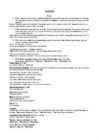
Word order :

conjunction
subject
verb(s)
Indirect object
Direct object
place
time
I
will tell
you
the story
at school
tomorrow.
because
I
don´t have
time
now.
    Questions

interrogative
auxiliary verb
subject
other verb(s)
indirect object
direct object
place
time
What
would
you
like to tell
me
Did
you
have
a party
in your flat
yesterday?
When
were
you
here ?
Articles
Rules :
  • Rule : When you have a single, countable English noun , you must always have an article before it. We cannot say " please pass me pen", we must say "please pass me the pen" or "please pass me a pen" or "please pass me your pen".
    Nouns in English can also be uncountable. Uncountable nouns can be concepts, such as 'life', 'happiness' and so on, or materials and substances, such as ' coffee ', or ' wood '.
  • Rule:Uncountable nouns don't use 'a' or 'an'. This is because you can't count them . For example, advice is an uncountable noun. You can't say "he gave me an advice", but you can say "he gave me some advice", or "he gave me a piece of advice".
    Some nouns can be both countable and uncountable. For example, we say "coffee" meaning the product, but we say "a coffee" when asking for one cup of coffee.
  • Rule:You can use 'the' to make general things specific . You can use 'the' with any type of noun - plural or singular, countable or uncountable.
    "Please pass me a pen" - any pen.
    "Please pass me the pen" - the one that we can both see.
    " Children grow up quickly" - children in general.
    "The children I know grow up quickly" - not all children, just the ones I know.
    " Poetry can be beautiful"- poetry in general.
    "The poetry of Hopkins is beautiful" - I'm only talking about the poetry Hopkins wrote.
  • Rule: Rivers , mountain ranges , seas, oceans and geographic areas all use 'the'.
    For example, "The Thames ", "The Alps ", "The Atlantic Ocean", "The Middle East".
    Unique things have 'the'.
    For example, "the sun", "the moon ".
    Some institutional buildings don't have an article if you visit them for the reason these buildings exist. But if you go to the building for another reason, you must use 'the'.
    "Her husband is in prison ." (He's a prisoner.)
    "She goes to the prison to see him once a month ."
    "My son is in school." (He's a student.)
    "I'm going to the school to see the head master.
    "She's in hospital at the moment." (She's ill.)
    "Her husband goes to the hospital to see her every afternoon."
    Musical instruments use 'the'.
    "She plays the piano ."
    Sports don't have an article.
    "He plays football ."
    Illnesses don't have an article.
    "He's got appendicitis."
    But we say "a cold " and "a headache".
    Jobs use 'a'.
    "I'm a teacher ."
    Countries
    We don't use 'a' if the country is singular. "He lives in England." But if the country's name has a "plural" meaning, we use 'the'. "The People's Republic of China ", "The Netherlands ", "The United States of America".
    Continents, towns and streets don't have an article.
    " Africa ", "New York ", "Church Street ".
    Theatres, cinemas and hotels have 'the'.
    "The Odeon", "The Almeira", "The Hilton ".
    We use 'the' before classes of people.
    "the rich ", "the poor ", "the British ".
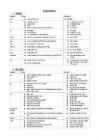
    Prepositions:
    • TIME:

    English
    Usage
    Example
    on
    On Monday
    in
    • months/seasons
    • time of day
    • year
    • after a certain period of time (when?)
    at
      At night
    • at the weekend
    • at half past nine
    Since
    • from a certain point of time (past till now)
      since 1980
    for
    • over a certain period of time (past till now)
    ago
    • a certain time in the past
      2 years ago
    before
    • earlier than a certain point of time
      before 2004
    to
      ten to six (5:50)
    past
    • telling the time
      ten past six (6:10)
    till/until
    by
    • in the sense of at the latest
    • up to a certain time
      I will be back by 6 o’ clock .
    • By 11 o'clock, I had read five pages.

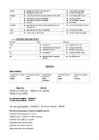
      PLACE:

    English
    Usage
    Example
    in
    • room, building, street, town, country
    • book, paper etc.
    • car, taxi
    • picture , world
      in the kitchen , in London
    • in the book
    • n the car, in a taxi
    • in the picture, in the world
    at
    • meaning next to, by an object
    • for table
    • for events
    • place where you are to do something typical (watch a film , study, work )
      at the door , at the station
    • at the table
    • at a concert, at the party
    • at the cinema , at school, at work
    on
    • attached
    • for a place with a river
    • being on a surface
    • for a certain side ( left , right)
    • for a floor in a house
    • for public transport
    • for television , radio
      the picture on the wall
    • London lies on the Thames.
    • on the table
    • on the left
    • on the first floor
    • on the bus, on a plane
    • on TV, on the radio
    by, next to, beside
    • left or right of somebody or something
      Jane is standing by / next to / beside the car.
    under
    • on the ground , lower than (or covered by) something else
      the bag is under the table
    below
    • lower than something else but above ground
      the fish are below the surface
    over
    • covered by something else
    • meaning more than
    • getting to the other side (also across)
    • overcoming an obstacle
      put a jacket over your shirt
    • over 16 years of age
    • walk over the bridge
    • climb over the wall
    across
    • getting to the other side (also over)
    • getting to the other side
      walk across the bridge
    • swim across the lake
    througt
    to
    • movement to person or building
    • movement to a place or country
    • for bed
      go to the cinema
    • go to London / Ireland
    • go to bed
    towards
    • movement in the direction of something (but not directly to it)
      go 5 steps towards the house
    onto
    • movement to the top of something
      jump onto the table
    from
    • n the sense of where from


    English
    Usage
    Example
    from
    • who gave it
      a present from Jane
    of
    • who/what does it belong to
    • what does it show
      a page of the book
    • the picture of a palace
    by
    • who made it
      A book by Mark Twain
    off
    • leaving a public transport vehicle

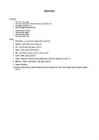
    Adverbs
    Types of adverbs
    1) Adverbs of manner
    quickly
    kindly
    2) Adverbs of degree
    very
    rather
    3) Adverbs of frequency
    often
    sometimes
    4) Adverbs of time
    now
    today
    5) Adverbs of place
    here
    nowhere
    Adjective
    Adverb
    Mandy is a careful girl.
    Mandy drives carefully.
    Mandy is very careful.
     
    We often play handball . - CORRECT
    We play often handball. - WRONG
    We often play handball. - CORRECT
    We play often handball. - WRONG

    The three main positions of adverbs in English sentences

    1) Adverb at the beginning of a sentence
    Unfortunately , we could not see Mount Snowdon.
    2) Adverb in the middle of a sentence
    The children often ride their bikes.
    3) Adverb at the end of a sentence
    Andy reads a comic every afternoon.
    Adjectives:
    Examples:
    • The cake looks good .
    • Your hair looks great. Where did you get your hair cut.
    • My mother lost her keys.
    • The boys play ball all the time.
    • Your hair grew slowly.
    • The dog grew angry.
    • The boys talk loudly.
    • My brother talks big.
    Order:
  • Determiner - a, an, her, five, many, much several etc.
  • Opinion - pretty, ugly , smart, cheap , etc.
  • Size - big, fat, thin , tall , large, small etc.
  • Shape - circle, square , tall, short etc.
  • Age - old, young 10 years, a year, a week, new etc.
  • Color - yellow, green , pink etc.
  • Origin - American, English, Asian, Middle Eastern, African, European, Chinese etc.
  • Material - cotton, wood, plastic, cloth, glass, gold etc.
  • Purpose /Qualifier -
  • hat box, sleeping bag, computer table, safe island , football field. (The words in green are the purpose/qualifer words.)
  • Word order-articles-prepositions-adverb-adjective #1 Word order-articles-prepositions-adverb-adjective #2 Word order-articles-prepositions-adverb-adjective #3 Word order-articles-prepositions-adverb-adjective #4 Word order-articles-prepositions-adverb-adjective #5
    Punktid 10 punkti Autor soovib selle materjali allalaadimise eest saada 10 punkti.
    Leheküljed ~ 5 lehte Lehekülgede arv dokumendis
    Aeg2011-02-09 Kuupäev, millal dokument üles laeti
    Allalaadimisi 37 laadimist Kokku alla laetud
    Kommentaarid 0 arvamust Teiste kasutajate poolt lisatud kommentaarid
    Autor susservusser Õppematerjali autor
    Võtab lühidalt kokku peamised inglise keele tähtsamad reeglid, ja kuidas moodutada lauseid jne.

    Sarnased õppematerjalid

    Inglise keele praktilise grammatika mõisted
    22
    pdf

    Inglise keele praktilise grammatika mõisted

    adjective + preposition omadussõna + eessõna proud of, good at, married to adverb particle Some verbs are followed by adverb particles. Examples are: put on, take off, give away, bring up, call in. Sometimes the particle is detached from the verb and put after the object. •He took his boots off. •They called the doctor in. apposition a grammatical construction in which two usually adjacent nouns having the same referent stand in the same syntactical relation to the rest of a sentence (as the poet and Burns in “a biography of the poet Burns”) back-reference In grammatical analysis, the term reference is often used to state a relationship of identity which exists between grammatical units, e.g

    Inglise keel
    English Grammar Book 1
    159
    pdf

    English Grammar Book 1

    All rights reserved. No part of this book may be reproduced in any form or by any means, electronic or mechanical, including photocopying, recording, or by any information storage and retrieval system, without the written permission of the publisher. ISBN 1-59905-201-6 Printed in the United States of America 13 12 11 10 09 08 07 9 8 7 6 5 4 3 2 1 Introduction Grammar is a very old field of study. Did you know that the sentence was first divided into subject and verb by Plato, the famed philosopher from ancient Greece? That was about 2,400 years ago! Ever since then, students all over the world have found it worthwhile to study the structure of words and sentences. Why? Because skill in speaking and writing is the hallmark of all educated people. Lesson by lesson, this book provides basic instruction in the eight parts of speech--nouns, pronouns, verbs, adjectives, adverbs, prepositions, conjunctions, and

    Inglise keel
    English structure revision for the exam
    40
    docx

    English structure revision for the exam

    Although you don’t need to know grammar to learn a language (children for example start speaking before they learn grammar), it makes studying a foreign language easier because it helps to understand the system of a specific language. Grammar divides into two:  Prescriptive grammar → Prescribes rules that tell to the speaker the way the language should be written or spoken in order for the speaker to appear correct or educated. It could be said that this is an academic and strictly correct language use. For example:  Never use ain’t  Don’t split an infinitive (To quickly run)

    Inglise keel
    Golden Grammar rules
    10
    doc

    Golden Grammar rules

    ) I'll see you on Friday ­ or rather, Saturday. 3. Use the simple present ­ play(s), rain(s) etc ­ to talk about habits and repeated actions. I play tennis every Saturday. (NOT I am playing tennis every Saturday.) It usually rains a lot in November. 4. Use will ..., not the present, for offers and promises. I'll cook you supper this evening. (NOT I cook you supper this evening.) I promise I'll phone you tomorrow. (NOT I promise I phone you tomorrow.) 5. Don't drop prepositions with passive verbs. I don't like to be shouted at. (NOT I don't like to be shouted.) This needs to be thought about some more. (NOT This needs to be thought some more.) 6. Don't use a present tense after It's time. It's time you went home. (NOT It's time you go home.) It's time we invited Bill and Sonia. (NOT It's time we invite Bill and Sonia.) 7. Use was/were born to give dates of birth. I was born in 1975. (NOT I am born in 1975.) Shakespeare was born in 1564. 8

    Inglise keel
    Inglise keele jaotusmaterjal
    37
    doc

    Inglise keele jaotusmaterjal

    · OK, thanks · Not so bad, thanks. / Can't complain, thanks. · So ­ so, thanks. / So and so, thanks. · Not so good, actually 1 The English alphabet Spelling Work with your partner and spell out first your name and then some names of places. Write down each letter as you hear it, and then say the word. The English alphabet on the phone: You might find the following alphabet (used by international airlines) useful when trying to spell a word on the telephone. A Alpha O Oscar Ä Alpha-Echo Ö Oscar-Echo B Bravo P Papa C Charlie Q Quebec D Delta R Romeo E Echo S Sierra

    Inglise keel
    The article
    20
    pdf

    The article

    Table of Contents General Rules....................................................................... 2 The Definite Article ............................................................... 5 Names that take the Definite Article...................................... 6 No article.............................................................................. 7 Countable and uncountable nouns ....................................... 9 General Rules There are two articles in the English language – the Indefinite Article and the Definite Article. The Indefinite Article has two forms – a and an (a precedes words beginning with a consonant sound and an precedes words beginning with a vowel sound). It comes from the Old English word ãn, which meant one. The Definite Article is the. It comes from the Old English word ţis, which meant this. Thus, in most general terms, a and an cannot be used with countable nouns in the plural and with uncountable nouns

    Akadeemiline inglise keel
    Inglise keele struktuur
    29
    docx

    Inglise keele struktuur

    What is grammar?: "The sounds and sound patterns, the basic units of meaning, such as words, and the rules to combine them to form new sentences constitute the grammar of a language" Prescriptive grammar vs. Descriptive garmmar: Descriptive grammar: the systematic study and description of a language. Descriptive grammar refers to the structure of a language as it is actually used by speakers and writers. Prescriptive grammar: a set of rules and examples dealing with the syntax and word structures of a language, usually intended as an aid to the learning of that language. Prescriptive grammar refers to the structure of a language as certain people think itshould be used. Phonology: the subfield of linguistics that studies the structure and systematic patterning of sounds in human language. Phonetics: of the acoustic detail of speech sounds and how they are articulated. Phone: [p] A phone is actual pronunciation of a phoneme. A phone is represented between brackets

    Inglise keel
    Grammar Terminology
    22
    docx

    Grammar Terminology

    1 Grammatical Terminology PRACTICAL ENGLISH GRAMMAR FLGR.01.042 Grammatical Terminology analytic analüütiline (= uninflected - grammar is focused in the sentence , e.g. English) synthetic sünteetiline (= inflected - grammar is focused in the word, e.g. Estonian, Latin, Russian, Old English) ending lõpp (käände- ja pöördelõpud) marker tunnus (mitmuse, oleviku, lihtmineviku, tingiva kõneviisi, käskiva kõneviisi, kaudse kõneviisi, umbisikulise tegumoe, ma- tegevusnime, oleviku kesksõna, mineviku kesksõna) derivational affix liide, tuletusliide, tuletusafiks (e.g. postwar, anti-American, wiser, greenish) parts of speech sõnaliigid

    Inglise keel


    Kommentaarid (0)

    Kommentaarid sellele materjalile puuduvad. Ole esimene ja kommenteeri


    Sellel veebilehel kasutatakse küpsiseid. Kasutamist jätkates nõustute küpsiste ja veebilehe üldtingimustega Nõustun