Vajad kellegagi rääkida?
Küsi julgelt abi LasteAbi
Logi sisse

US History: Native Americans and the first settlements (0)

1 Hindamata
Punktid
Notions for The New World
Native Americans
Origin of Native Americans
Nearly   one-third  of  Native  American  genes   come   from   west   Eurasian  people  linked  to  the   Middle    East  
and  Europe , rather  than  entirely from East Asians as previously  thought , according to a newly sequenced 
genome.  Native   peoples   of   North   and   South   America  descended  from  ancestors  who   arrived   via   land  
bridges from East Asia , possibly in a single migration.
Different tribes and their way of life
The men were hunters, warriors, and protectors, while the women tended to the children , their homes , and 
farmed. It depended on the  tribe  when it  came  to artwork. In some tribes, the men would actually weave 
baskets  and  blankets.  Natural   foods   were  consumed  and  hunted.  Deer,   buffalo ,  fish,  and  various  birds 
were  the   game   of  choice.   Corn ,  beans,  squash,   berries ,  nuts,  and  melons  were  the   fruits   and  vegetables 
that were consumed. Berries were also often used as a natural dye for fabrics.
For the Indians of the Northeast area, the  trees  of the  forest  were the  primary   material  for shelter, tools 
and fuel, and the  animals  of the forest were the primary food source. But the Northeast Woodland Native 
Americans were not solely hunters and gatherers, but also fishermen and farmers.
The people of the Southeast were farmers first and hunters, gatherers, and fishermen second.
Legend of Pocahontas
Pocahontas  is  most   famous   for   saving   the  life  of  John  Smith,  a  leader   among   the   English   colonists.  In 
1607,  Smith  was  captured  by  Powhatan  warriors  and   held   captive  for   four    days .  When  two  large  rocks 
were   brought   in,  the  legend  goes,  Smith  had  a  hunch  his  beheading  was   imminent .  But  Pocahontas 
begged Powhatan not to kill the Englishman and, being her father 's favorite, the chief obeyed his daughter  
and spared Smith.
It is true that Pocahontas had acted as an ambassador for her people to the English. In the first years of the 
colony , she served as a courier for traded goods and as a negotiator  between  the two  sides . But by 1609 
the  Powhatans'  relationship  with  the  newcomers  had  soured,  and  soon  war  broke  out.   Finally ,  in   1613
Pocahontas was kidnapped by the English and held at Jamestown .
While  captive,  Pocahontas  studied  English  and  converted  to  Christianity.  Then,  in  1614,  she  wed  John 
Rolfe, one of the first tobacco farmers, and the union brought a modicum of peace to tidewater Virginia .
Known   as  Lady   Rebecca   Rolfe,  Pocahontas  traveled  with  her   husband   and   infant   son,   Thomas ,  to 
England , where she was received as foreign royalty, an Indian Princess. 
On   March    17th ,  1617,  she  died  from  an  infection  in  Gravesend,  England  at  the  age  of   twenty -two. 
Immediately, the tenuous peace between the Powhatan and the English crumbled and the brutality rose on 
both sides.
Northwest Ordinance of 1787
"An Ordinance for the  Government  of the Territory of the United  States  North West of the  River  Ohio," 
was adopted by the Confederation  Congress  on  July  13, 1787. Also known as the the Ordinance of 1787, 
the  Northwest  Ordinance   established   a  government  for  the  Northwest  Territory,  outlined  the   process  
for  admitting  a  new  state  to  the  Union,  and  guaranteed  that  newly  created  states  would  be  equal  to  the 
original   thirteen  states.  Considered  one  of  the  most   important   legislative  acts  of  the  Confederation 
Congress,  the  Northwest  Ordinance  also  protected   civil   liberties  and  outlawed  slavery  in  the  new 
territories.
The  following  three principal provisions were ordained in the  document : (1) a division of the Northwest 
Territory  into  "not  less  than  three  nor  more  than   five   States";  (2)  a  three-stage   method   for  admitting  a 
new state to the Union—with a congressionally appointed governor, secretary, and three judges to  rule  in 
the first phase; an elected  assembly  and one nonvoting delegate to Congress to be elected in the second 
phase,  when  the  population  of  the  territory  reached  "five  thousand  free  male  inhabitants  of  full  age"; 
and  a  state  constitution  to  be  drafted  and   membership   to  the  Union  to  be  requested  in  the  third  phase 
when the population reached 60,000; and (3) a  bill  of  rights  protecting  religious   freedom , the right to a 
writ  of  habeas  corpus,  the   benefit   of  trial  by  jury,  and   other    individual   rights.  In   addition   the  ordinance 
encouraged education and forbade slavery
Indian Removal Act of 1830
The  Indian  Removal  Act  was   signed   into  law  by   Andrew    Jackson   on  May  28,  1830,  authorizing  the 
president   to  grant  unsettled  lands  west  of  the   Mississippi   in  exchange  for  Indian  lands   within   existing 
state borders. A few tribes  went  peacefully, but many resisted the relocation policy.  During  the  fall  and 
winter   of  1838  and  1839,  the  Cherokees  were  forcibly  moved  west  by  the  United  States  government. 
Approximately 4,000 Cherokees died on this forced march, which became known as the " Trail of Tears."
By   1837 ,  the  Jackson  administration  had  removed  46,000  Native  American  people  from  their   land   east 
of  the  Mississippi,  and  had  secured  treaties  which  led  to  the  removal  of  a  slightly  larger  number.  Most 
members   of  the  five  southeastern  nations  had  been  relocated  west,  opening  25  million  acres  of  land  to 
white settlement and to slavery.
Reservations
After  being  forced  off  their  native  lands,  many  American  Indians   found   life  to  be  most  difficult. 
Beginning   in  the  first   half   of  the   19th   century,  federal  policy  dictated  that  certain  tribes  be  confined  to 
fixed land plots to continue their traditional ways of life.
Besides the moral issue of depriving a people of life on their  historic  land, many economic  issues  plagued 
the  reservation.  Nomadic  tribes  lost  their  entire   means   of  subsistence  by  being  constricted  to  a  defined 
area.  Farmers  found  themselves  with  land  unsuitable  for   agriculture .  Many  lacked  the   know -how  to 
implement   complex  irrigation  systems.  Hostile  tribes  were  often  forced  into  the   same   proximity.  The 
results were disastrous.
Indian citizenship Act of 1924
Until   the  Indian  Citizenship  Act  of  1924,  Indians  occupied  an  unusual   status   under  federal  law.  Some 
had  acquired  citizenship by marrying white men.  Others  received citizenship  through   military  service, by 
receipt  of allotments, or through  special  treaties or special statutes. But many were  still  not citizens, and 
they  were  barred  from  the  ordinary  processes  of  naturalization  open  to   foreigners .  Congress   took   what 
some saw as the  final  step on  June  2, 1924 and  granted  citizenship to all Native Americans born in the 
United States.
Trail of Broken Treaties of 1972
The  Trail  of  Broken  Treaties  Caravan  is  primarily  known  as  an  American  Indian   Movement   (AIM) 
protest that occurred in 1972.  Events   such  as this were  designed  to bring  attention  to the mistreatment and 
bleak  future the First Nations found themselves facing as a result of the colonization process and its after 
effects. 
The  Trail  of  Broken  Treaties  was  designed  to   generate   media  coverage,   providing   a  useful   medium   to 
articulate  the   goals   and   changes   they   wanted   to  see   occur   in  federal  Indian  policy.  The  activists,  and 
in   particular   the  American  Indian  Movement,  used  the  mass  media  in  an  attempt  to  sway  depictions 
of  themselves,  which  allowed   them   to  generate  stronger  political   support   by  having  sympathetic  news 
reports.
Present situation
Today    there   are  more  than  half  a  million  Indians  in  the  United  States.  Economically  they  range  from 
pauperism  to affluence. A few have made  money  from oil and other natural  sources  found on their lands, 
but many thousands  live  at near-starvation levels. Some are educated and  completely  assimilated in white 
society;  many  live  in  nearly  complete  isolation  from  non-Indian  Americans.  Relocation  programs  have 
taken hundreds of Indians to  work  in cities; thousands of others  cling  to the  security  of their reservations, 
hoping  to   gain   education  and  assistance   necessary   to   develop   the  resources  of  their  lands  and  become 
self-sustaining.  Generally,  the  Indians  are  still  proud  of  their   traditions   and   heritage ,  and  many  of  them 
resist giving them up or allowing them to be submerged or corrupted by white civilization. But Indians 
generally  also  recognize  that  their  standards  of   living   must  be  raised.   Without   giving  up  their  unique 
cultural  heritage, they have organized into tribal councils to try to help the federal government settle on 
long-range  programs  of  education,  health   services ,  vocational  training,  resource   planning ,  and  financial 
credit.
First Settlements
Jamestown Colony (living conditions, population, plantations, import of slaves)
In 1607, 144 English men and boys established the Jamestown colony, named after King James I.
The colonists were  told  that if they did not generate any  wealth , financial support for their efforts would 
end. Many of the men spent their days vainly searching for gold .
As  a  consequence,  the  colonists  spent   little   time  farming.  Food  supplies  dwindled.   MALARIA   and  the 
harsh winter besieged the colonists, as well. After the first year , only 38 of the original 144 had survived.
The colony may well have perished had it not been for the  leadership  of John Smith. He imposed strict 
discipline on the colonists. "Work or  starve " was his motto, and each colonist was  required  to spend four 
hours per day farming.
A  new  boatload  of  colonists  and  supplies  sank  off  the  coast  of  Bermuda  on  its  way  to  help  the  hungry 
settlement. The winter of 1609-10, known as the "Starving Time," may have been the worst of all.
Disease   and   hunger   ravaged  Jamestown.  Two  desperate  colonists  were  tied  to  posts  and   left   to  starve 
as  punishment  for  raiding  the   colonies '  stores.  One  colonist   even   took  to  cannibalism,   eating   his  own 
wife . The  fate  of the  venture  was precarious. Yet still more colonists arrived, and their numbers  included  
women.
Despite the  introduction  of tobacco cultivation, the colony was a  failure  as a financial venture. The king 
declared the Virginia Company bankrupt in 1624.
Twenty slaves in Virginia Africans brought to Jamestown are the first slaves imported 
into Britain ’s North American colonies
Mayflower and Pilgrim Fathers
Over  a  hundred  travelers  embarked  on  the   voyage   of  the  Mayflower  in  September   1620 .  Less  than  one 
third were Separatists. The rest were immigrants , adventurers, and speculators.
Their voyage took about two months, and the  passengers  enjoyed a happier  experience  than most trans-
Atlantic trips .
 Lost at sea, they happened  upon  a piece of land that would become known as Cape Cod. After surveying 
the land, they set up  camp  not too far from Plymouth Rock. They feared venturing  further  south because 
winter was fast approaching.
The  Pilgrims  had  an  important  question  to   answer    before   they  set  ashore.   Since   they  were  not  landing 
within the jurisdiction of the Virginia Company, they had no Charter to govern them.
Mayflower Compact
In  the  landmark  Mayflower  Compact  of  1620,  the  Pilgrims  decided  that  they  would  rule  themselves, 
based   on   majority   rule  of  the  townsmen.  This  independent  attitude  set  up  a   tradition   of  self-rule  that 
would later lead to town meetings and elected legislatures in New England.
Without   good   harbors  or  extensive  tracts  of   fertile   land,   however ,  Plymouth  became  a  colony  of 
subsistence  farming  on  small  private  holdings   once   the  original  communal   labor   system  was   ended   in 
1623. 
Puritan Colony in Plymouth, New England; Puritan ethics and ideology
The  four  main   convictions   of  Puritanism  were  that  personal  salvation  was  completely   dependent   upon 
God,  that  the   Bible   was  the  final   authority   and   guide   to  good   Christian   life,  that  the   church   was  to  be 
organized from the scripture and that society was a single, unified entity. This is the Puritan Ethic: Strict 
self-discipline  and  devotion  to  God  and  church,  accompanied  by  contempt  for  sinful  pleasures  and 
luxuries.
Their  belief  that their destiny was predetermined, their self-imposed isolation, and religious exclusivity, 
would later lead to  witch  hunts beginning in 1688. The expulsion of  Roger   Williams  in  1636  and Anne 
Hutchinson in  1638  was caused by their neighbors'  fear  of " evil " in their midst. The  Puritans  also were 
responsible  for  the  first  free  schooling  in  America  and  established  the  first  American  college,  Harvard 
College, in Cambridge , Massachusetts.
Thanksgiving
In 1621, when their labors were rewarded with a bountiful harvest after a year of sickness and scarcity, 
the Pilgrims gave  thanks  to God and celebrated His  bounty  in the Harvest Home tradition with feasting 
and  sport  (recreation). To the Puritans, a true “thanksgiving” was a day of prayer and pious humiliation, 
thanking God for His special Providence.
Religious issues (freedom)
Europeans  came  to  America  to   escape   religious  oppression  and  forced   beliefs   by  such  state-affiliated 
Christian  churches  as  the   Roman   Catholic  Church  and  the  Church  of  England.  That  civil  unrest  fueled 
the  desire  of America’s forefathers to establish the organization of a  country  in which the separation of 
church and state, and the freedom to practice one’s faith without fear of persecution, was guaranteed. That 
guarantee was enshrined in the First Amendment to the Constitution.
Quakers
The  Religious  Society  of   Friends   began  as  a  movement  in  England  in  the  17th  century.  Quakers  have 
been a significant  part  of the movements for the abolition of slavery, to promote equal rights for women, 
and peace. They have also promoted education and the humane treatment of  prisoners  and the mentally 
ill, through the  founding  or reforming of various institutions. Quaker entrepreneurs played a central  role  
in forging the Industrial Revolution.
Vasakule Paremale
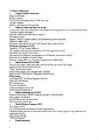
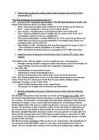
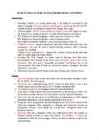
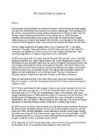
US History-Native Americans and the first settlements #1 US History-Native Americans and the first settlements #2 US History-Native Americans and the first settlements #3 US History-Native Americans and the first settlements #4
Punktid 50 punkti Autor soovib selle materjali allalaadimise eest saada 50 punkti.
Leheküljed ~ 4 lehte Lehekülgede arv dokumendis
Aeg2015-11-01 Kuupäev, millal dokument üles laeti
Allalaadimisi 1 laadimist Kokku alla laetud
Kommentaarid 0 arvamust Teiste kasutajate poolt lisatud kommentaarid
Autor merilin789 Õppematerjali autor
Lühikonspekt: Origin of Native Americans, Different tribes and their way of life, Legend of Pocahontas, Northwest Ordinance of 1787, Indian Removal Act of 1830, Reservations, Indian citizenship Act of 1924, Trail of Broken Treaties of 1972, Present situation, Jamestown Colony (living conditions, population, plantations, import of slaves), Mayflower and Pilgrim Fathers, Mayflower Compact, Puritan Colony in Plymouth, New England; Puritan ethics and ideology, Thanksgiving, Religious issues (freedom), Quakers

Sarnased õppematerjalid

Konspekt USA history
17
docx

Konspekt USA history

In tents, dark skin, hair is long, black and straight, women-agriculture, men- hunting. bands(chief. Travelled together) and tribes land was owned by the tribe that occupied it. 200 different tribes Apache- "enemy"- hunted buffalos, oil and natural gas from their land Cherokee- largest tribe Cheyenne- from Minnesota and S & N Dakota. High system of laws Northwest Ordinance of 1787 Signed in 1787 by Thomas Jefferson. The creation of the Northwest Territory as the first organized territory Ohio River was settled, 5 new states Advancement of education, maintenance of civil liberties, exclusion of slavery Promised not to invade or disturb Indians Northwest Indian War-> to stop white expropriation (sundkoormis) · Indian Removal Act of 1830 Destructive to tribes. Many died when travelled to the other side of Missisippi. Signed on May 28 by Andrew Jackson "Trade" land with the tribes Resolve the Georgia crisis (dispute with Cherokee)

Inglise keel
Revision Questions
14
pdf

Revision Questions

1. What is known about the earliest settlers from Estonia to the territory of the present-day US? *The first immigrants from Estonia in the US = 1627 ­ no trace of the "Estonians and Livonians" who left their homeland to settle at the mouth of the Delaware River (a Swedish colony) · 1654 ­ at least one Estonian in the settlement of New Sweden on the Delaware River ­ Johan Schalbrick, a drummer from Tallinn (Reval) · New Sweden ­ Swedish colony on the Delaware River from 1638­1655 · 1657 ­ Martinus Hoffman, born in Tallinn (Reval), came to New York (New Amsterdam), started to work as a saddlemaker. · His great-granddaughter Cornelia Hoffmann (b. 1734) married Isaac Roosevelt, which makes her the great-great-grandmother of Franklin Delano Roosevelt,

Inglise keel
Inglise keelt kõnelevate maade ühiskond ja kultuur
6
docx

Inglise keelt kõnelevate maade ühiskond ja kultuur

2. There are approx. 300-400 million speakers of English in the world. English occupies the 3rd place by its number of speakers; it is right behind Mandarin and Spanish. 3. ESL (English as a Second Language) ­ used in your own country (e.g. India) EFL (English as a Foreign Language) ­ used in a foreign country ESP (English for Specific Purposes) ­ used in business, airlines, hotels etc. 4. Settlement colonies ­ people migrated into them from Britain and started their own communities, they are the present English-speaking countries (USA, Australia, Canada, New Zealand) Trading Empire (dependencies) ­ mainly ESL countries; British people were seen more as a small ruling class (India, Africa) 5. Australia, The USA, Canada, Sri Lanka, India & Pakistan, Irish Free State, Newfoundland, New Zealand, South Africa were the British colonies that became

Inglise keel
History of the USA
2
doc

History of the USA.

The United States of America. History. For thousands of years America was unknown to Europe. There lived only the native people, who had come from Siberia many thousand years ago by a land bridge. They had spread over the country, varying enormously from nomadic food gatherers to fishing societies. Then the Vikings visited Canada around AD 1000, but they did not stay. In 1492 Christopher Columbus discovered America while trying to reach India. He named the native people Indians, because he though he had reached India. He didn't stay either and in the sixteenth century the first Europeans to settle in America were the Spanish, the English and the French. The first village founded by the English settlers was in Virginia in 1607. It was called Jamestown. They didn't have good relations with the Indians and many of them died. But Pocahontas, the daughter of an Indian chief, became their friend and helped them. They

Inglise keel
USA ajalugu
3
doc

USA ajalugu

cultures lived there. Such as the Tingits, the Nootka, the Yurok and many more. Indigenous people mostly fished, because there vas a vast stock of fish. But they also relied upon agriculture, hunting and trapping. They built stable villages, and lived either in birchcovered wigwams or in rectangular longhouses. Later the indigenous people were called indians, by Christopher Columbus who thought that he had reached to India. COLONIAL AMERICA As far as people know were the Vikings first European settlers to visit America. but in 1492, an Italian sailor called Christopher Columbus reached southern America when he was looking for a sea route from Europe to India. He is called to be the man who discovered America. In 1607 two very different groups of English people came to America. a group of farmers began a colony in Jamestown, Virginia. They had to fought with indians and most of them died because there were many diseases and the didn't have enough to eat

Inglise keel
Topic - USA
11
doc

Topic - USA

Topic The United States of America Tallinn 2007 1. Introduction The United States of America's territory is over 3.7 million square miles (over 9.6 million km²) and population more than 300 million people. The capital city is Washington D.C. Although the United States has no official language at the federal level, English is the de facto national language. English is the most common language for daily interaction among both native and non-native speakers. Spanish is the second language. The largest city is the New York City. The Government is Federal constitutional republic and the president is George W. Bush. 2. Geographical position The United States of America is located on the continent of North America. It has borders with two countries ­ Mexico and Canada. There are also the Atlantic Ocean, the Pacific Ocean and the Gulf of Mexico surrounding the big country. There are 50 states in America. Most of the

Inglise keel
U S A
6
rtf

U.S.A

them are the Afro-Americans. It is the world's third-largest country by size and by population. The population density is about 27 people per square kilometre. Most of the people live in towns. There are 50 states in America. The biggest of the state is Texas, next by size are California, Alaska and Montana. Six states - Maine, Vermont, New Hampshire, Connecticut ,Rhode Island and Massachusetts are called New England. They are all small states in the U.S. that lie in the north-east. The first colony of immigrants settled down in Virginia, in the eastern part of the U.S.A. The biggest cities are New York, Washington, Chicago, Los Angeles, San Francisco, etc. The official language of the USA is English; Spanish is also widely spoken. The currency of the USA is the United States Dollar. Lakes and rivers The Mississippi is the major river of North America and the United States. It flows from north-western Minnesota south to the Gulf of Mexico

Inglise keel
Society and culture of english-speaking countries
24
rtf

Society and culture of english-speaking countries

Society and culture of english-sspeaking countries Introduction 1. The countries of the world where the English language is spoken. 2. Approximate number of mother tongue speakers of English approximately 350-400 million native speakers. Which place does English occupy in the world by its number of speakers?After which language? English occupies second place by its number of speakers after Mandarin Chinese. 3. What is the difference between English as a Second Language, English as a Foreign Language and English for Specific Purposes? Give examples of situations where they are used. English as a Second Language (ESL or TESL) is a traditional term for the use or study of the

Inglise keel


Kommentaarid (0)

Kommentaarid sellele materjalile puuduvad. Ole esimene ja kommenteeri


Sellel veebilehel kasutatakse küpsiseid. Kasutamist jätkates nõustute küpsiste ja veebilehe üldtingimustega Nõustun