Vajad kellegagi rääkida?
Küsi julgelt abi LasteAbi
Logi sisse

Foursyte Saga - The Man of Property (1)

5 VÄGA HEA
Punktid
John Galsworthy
The Man of Property
PREFACE
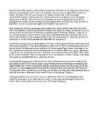
“The Forsyte Saga ” was the title originally destined for that part of it which is called “The Man of Property”; and to adopt it for the collected chronicles of the Forsyte family has indulged the Forsytean tenacity that is in all of us. The word Saga might be objected to on the ground that it connotes the heroic and that there is little heroism in these pages. But it is used with a suitable irony; and, after all, this long tale , though it may deal with folk in frock coats, furbelows, and a gilt -edged period , is not devoid of the essential heat of conflict. Discounting for the gigantic stature and blood -thirstiness of old days , as they have come down to us in fairy-tale and legend, the folk of the old Sagas were Forsytes, assuredly, in their possessive instincts, and as little proof against the inroads of beauty and passion as Swithin, Soames, or even Young Jolyon. And if heroic figures , in days that never were, seem to startle out from their surroundings in fashion unbecoming to a Forsyte of the Victorian era, we may be sure that tribal instinct was even then the prime force, and that “family” and the sense of home and property counted as they do to this day, for all the recent efforts to “ talk them out.”
So many people have written and claimed that their families were the originals of the Forsytes that one has been almost encouraged to believe in the typicality of an imagined species . Manners change and modes evolve, and “ Timothy ’s on the Bayswater Road” becomes a nest of the unbelievable in all except essentials; we shall not look upon its like again , nor perhaps on such a one as James or Old Jolyon. And yet the figures of Insurance Societies and the utterances of Judges reassure us daily that our earthly paradise is still a rich preserve, where the wild raiders, Beauty and Passion, come stealing in, filching security from beneath our noses. As surely as a dog will bark at a brass band, so will the essential Soames in human nature ever rise up uneasily against the dissolution which hovers round the folds of ownership.
“Let the dead Past bury its dead” would be a better saying if the Past ever died. The persistence of the Past is one of those tragi-comic blessings which each new age denies, coming cocksure on to the stage to mouth its claim to a perfect novelty.
But no Age is so new as that! Human Nature, under its changing pretensions and clothes, is and ever will be very much of a Forsyte, and might, after all, be a much worse animal .
Looking back on the Victorian era, whose ripeness, decline, and ‘ fall -of’ is in some sort pictured in “The Forsyte Saga,” we see now that we have but jumped out of a frying-pan into a fire. It would be difficult to substantiate a claim that the case of England was better in 1913 than it was in 1886 , when the Forsytes assembled at Old Jolyon’s to celebrate the engagement of June to Philip Bosinney. And in 1920, when again the clan gathered to bless the marriage of Fleur with Michael Mont, the state of England is as surely too molten and bankrupt as in the eighties it was too congealed and low-percented. If these chronicles had been a really scientific study of transition one would have dwelt probably on such factors as the invention of bicycle, motor -car, and flying -machine; the arrival of a cheap Press; the decline of country life and increase of the towns; the birth of the Cinema . Men are, in fact , quite unable to control their own inventions ; they at best develop adaptability to the new conditions those inventions create.
But this long tale is no scientific study of a period; it is rather an intimate incarnation of the disturbance that Beauty effects in the lives of men.
The figure of Irene , never, as the reader may possibly have observed , present, except through the senses of other characters , is a concretion of disturbing Beauty impinging on a possessive world.
One has noticed that readers, as they wade on through the salt waters of the Saga, are inclined more and more to pity Soames, and to think that in doing so they are in revolt against the mood of his creator. Far from it! He, too, pities Soames, the tragedy of whose life is the very simple , uncontrollable tragedy of being unlovable, without quite a thick enough skin to be thoroughly unconscious of the fact. Not even Fleur loves Soames as he feels he ought to be loved. But in pitying Soames, readers incline, perhaps, to animus against Irene: After all, they think, he wasn’t a bad fellow, it wasn’t his fault ; she ought to have forgiven him, and so on!
And, taking sides, they lose perception of the simple truth, which underlies the whole story, that where sex attraction is utterly and definitely lacking in one partner to a union, no amount of pity, or reason , or duty, or what not, can overcome a repulsion implicit in Nature. Whether it ought to, or no, is beside the point; because in fact it never does. And where Irene seems hard and cruel, as in the Bois de Boulogne, or the Goupenor Gallery, she is but wisely realistic—knowing that the least concession is the inch which precedes the impossible, the repulsive ell.
A criticism one might pass on the last phase of the Saga is the complaint that Irene and Jolyon those rebels against property—claim spiritual property in their son Jon. But it would be hypercriticism, as the tale is told. No father and mother could have let the boy marry Fleur without knowledge of the facts; and the facts determine Jon, not the persuasion of his parents . Moreover, Jolyon’s persuasion is not on his own account , but on Irene’s, and Irene’s persuasion becomes a reiterated: “Don’t think of me, think of yourself!” That Jon, knowing the facts, can realise his mother’s feelings , will hardly with justice be held proof that she is, after all, a Forsyte.
But though the impingement of Beauty and the claims of Freedom on a possessive world are the main prepossessions of the Forsyte Saga, it cannot be absolved from the charge of embalming the upper - middle class . As the old Egyptians placed around their mummies the necessaries of a future existence, so I have endeavoured to lay beside the, figures of Aunts Ann and Juley and Hester, of Timothy and Swithin, of Old Jolyon and James, and of their sons , that which shall guarantee them a little life here -after, a little balm in the hurried Gilead of a dissolving “Progress.”
If the upper-middle class, with other classes, is destined to “ move on” into amorphism, here, pickled in these pages, it lies under glass for strollers in the wide and ill-arranged museum of Letters . Here it rests, preserved in its own juice: The Sense of Property.
The man of property
Synopsis
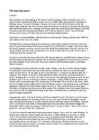
This episode covers the building of the house to the first moment of Forsyte family crisis . As it opens, Soames and Bosinney ride in a horse cart out to Robin Hill , where Soames is thinking of building a house. Soames is looking at cheaper sites lower on the hill, but Bosinney finds the perfect spot: at the top. The view is lovely, and even Soames is moved by it. He takes the site. Irene and June tell Bosinney, who's working on a design, about how much they dislike Soames. Irene tells Bosinney to put tall walls around the house, if he wishes to please its owner . June retorts that Soames loves to show off. Irene still hasn't officially been told by Soames.
Aunt Anne is old and bedridden. She hears the new from Forsyte 'Change, and tells Aunt Hester to warn Soames to be very very careful.
We find Soames ranting at Irene about something or other fairly unpleasant. He doesn't like June much. He gets the news about the house out under cover of the burst of irritation. She doesn't react. He clearly expected a reaction, and asks her if she heard. She already knew. She tells him that if he wants to know what she wants, he should ask her. Soames storms off. Irene reacts after he leaves, wondering what she's going to do.
Bosinney has finished the plans of the house. He presents them to a puzzled Soames. Soames knows about painting, but not about architecture. All this talk about regularity is all very well, but won't it look like a barrack? Won't it be cold ? Irene can't stand the cold! Bosinney explains. Eventually Soames consents.
The building of the house proceeds over the winter . Soames visits the site often. He looks happy . Bosinney talks to him about the color of tiles and this and that. He wants to consult with Irene, whom he finds artistic. He has plans to see a play with June. ("Coming to our place to meet her, I suppose ," says Soames in the novel , reflecting that Bosinney was always hanging around their house.) Bosinney does visit them. He walks over to Irene, who's playing the piano , and tells her that he doesn't flirt : if he sees something to admire, he admires it openly. Meaning that he admires her. Soames walks in and interrupts them, unknowing, with talk about the accounts of the house, which seem over budget . Irene sharply rebukes him for talking business in her drawing room , and Soames apologizes. She tells him to go off and change. He does so. Irene and Bosinney are alone again. June arrives for dinner , and creeps up on them unseen. She overhears some conversation that makes her suspicious. Her unchaperoned evening at the theater with Bosinney is ruined by her jealousy and his complete distraction.
Irene goes on a drive with Uncle Swithin, old " four -in-hand" Forsyte. They drive to see the house, which Swithin approves of. Bosinney settles him in a chair with a bottle of champagne. Swithin naps. Bosinney and Irene go on a walk in the trees below the house, where they embrace. They are lovers. On the drive back home, Swithin nearly gets into an accident with another carriage. His horses bolt. "Don't worry , you hang on, I'll get you home," he says to Irene. "I don't care if I never get home!" she says to him. He's impressed.
The only consistently warm and loving relationship in Soames's life is with his sister Winifred. He clearly shares affection with his father , but can't show it. With Winifred, he can show it. While Irene is off on a drive with Swithin, Soames listens sympathetically to Winifred's latest tale of financial misbehavior from Dartie. He starts to tell Winifred about his own troubles, but is interrupted by Irene's arrival home. She's flushed, excited, happy. Winifred comments on how lovely she looks and how unfair it is on other women . Soames says nothing, but looks stricken. He knows that excitement is not for him.
Meanwhile , on the other side of the Park at Timothy's, Swithin is already telling the story to the suitably shocked and titillated Aunts Juley and Hester. He shouldn't wonder if Bosinney was sweet on Mrs. Soames! He tells of catching him "slobbering" on her handkerchief. Swithin is just as captivated by Irene as Bosinney was, as Hester drily comments.Upstairs, the maid Smither tries to wake Aunt Anne, but fails. Aunt Anne is dead. (The crisis has struck deep at the root of the Forsytes: the most primal property-- a man's wife -- has been threatened.)
Foursyte Saga - The Man of Property #1 Foursyte Saga - The Man of Property #2 Foursyte Saga - The Man of Property #3 Foursyte Saga - The Man of Property #4
Punktid 50 punkti Autor soovib selle materjali allalaadimise eest saada 50 punkti.
Leheküljed ~ 4 lehte Lehekülgede arv dokumendis
Aeg2009-02-08 Kuupäev, millal dokument üles laeti
Allalaadimisi 14 laadimist Kokku alla laetud
Kommentaarid 1 arvamus Teiste kasutajate poolt lisatud kommentaarid
Autor B M Õppematerjali autor

Sarnased õppematerjalid

Jane Austen
234
pdf

Jane Austen

Chapter 20 Chapter 41 Chapter 61 Chapter 21 Chapter 42 Chapter 1 It is a truth universally acknowledged, that a single man in possession of a good fortune, must be in want of a wife. However little known the feelings or views of such a man may be on his first entering a neighbourhood, this truth is so well fixed in the minds of the surrounding families, that he is considered the rightful property of some one or other of their daughters. "My dear Mr. Bennet," said his lady to him one day, "have you heard that Netherfield Park is let at last?" Mr. Bennet replied that he had not. "But it is," returned she; "for Mrs. Long has just been here, and she told me all about it." Mr. Bennet made no answer. "Do you not want to know who has taken it?" cried his wife impatiently. "You want to tell me, and I have no objection to hearing it." This was invitation enough.

Kirjandus
Anna Karenina-kokkuvõte
17
odt

"Anna Karenina" kokkuvõte

"Anna Karenina" Lev Tolstoi Part 1 The novel opens with a scene introducing Prince Stepan Arkadyevitch Oblonsky, "Stiva", a Moscow aristocrat and civil servant who has been unfaithful to his wife Darya Alexandrovna, nicknamed "Dolly". Dolly has discovered his affair - with the family's governess - and the house and family are in turmoil. Stiva's affair and his reaction to his wife's distress shows an amorous personality that he cannot seem to suppress. In the midst of the turmoil, Stiva reminds the household that his married sister, Anna Arkadyevna Karenina is coming to visit from Saint Petersburg. Meanwhile, Stiva's childhood friend Konstantin Dmitrievich Levin ("Kostya") arrives in Moscow with the aim of proposing to Dolly's youngest sister Princess Ekaterina Alexandrovna Shcherbatskaya, "Kitty". Levin is a passionate, restless but shy aristocratic landowner who, unlike his Moscow friends, chooses to live in the country on his large estate. He discovers that Kitty is also be

Kirjandus
Oliver twist - kokkuvõte
9
doc

Oliver twist - kokkuvõte

Chapter1: An unknown woman was found lying in the street and brought into the workhouse. She delivered a sickly child who had trouble breathing. The woman, without a word of who she was, died and left her new born boy, Oliver, to the drunken nurse that stood by. Chapter2: The State gave Oliver to Mrs. Mann who housed a number of orphaned children. Mrs. Mann took a large portion of the money given to her by the authorities for each child's food so Oliver grew up small and malnourished. On his ninth birthday, the town beadle, Mr. Bumble, came to collect Oliver and take him to the board for an interview. They told him he was to live with other wards of the state to become educated and learn a trade. Oliver did not mind this, but soon after he arrived, the state decided to implement a plan that would save money by feeding the people very little. After a time on this diet, the boys at the table chose Oliver to go ask the head cook for more gruel. Oliver did this, and was taken away. A flye

Inglise keel
TARTUFFE-inglise keelne
64
docx

TARTUFFE (inglise keelne)

How About Tartuffe? DORINE Gently inclined to slumber, He left the table, went into his room, Got himself straight into a good warm bed, And slept quite undisturbed until next morning. ORGON Poor man! DORINE At last she let us all persuade her, And got up courage to be bled; and then She was relieved at once. ORGON And how about Tartuffe? DORINE He plucked up courage properly, Bravely entrenched his soul against all evils, And to replace the blood that she had lost, He drank at breakfast four huge draughts of wine. ORGON Poor man! DORINE So now they both are doing well; And I'll go straightway and inform my mistress How pleased you are at her recovery. SCENE VI ORGON, CLEANTE CLEANTE Brother, she ridicules you to your face; And I, though I don't want to make you angry, Must tell you candidly that she's quite right. Was such infatuation ever heard of? And can a man to-day have charms to make you Forget all else, relieve his poverty, Give him a home, and then . . . ? ORGON

Inglise keel
American Literature
10
docx

American Literature

Poe supported the agrarian democracy. The agriculture of Virginia has been declining for decades, because tobacco had exhausted the land. As a result farmers became very poor, they were forced to move. Virginia ­ the land of decay. One of the dominant moods was that of decadents and pessimism. Poe had neither land, slaves ­ he was poor. Poe defended slavery, he defended the right of poverty. He regarded abolitionism as an attack on property. He was very sceptical about democracy, he believed that in America it meant mobrule (rule of crowds). Yet he thought he belonged to upper class of society. Southern chivalrick idea ­ the famous southern myth (the southerners believed that they're somehow superior to the northerners, Yankees.) 1. His admiration for human intellect on the one hand and a sense of its tragic impedance 2. The highly logical structure of his works and a desire to create an emotional effect

Inglise keel
Ameerika kirjandus alates I maailmasõjast kuni tänapäevani
29
docx

Ameerika kirjandus alates I maailmasõjast kuni tänapäevani.

Eugene Debs-one of the greates leiva movements, Valentino-major hollywood star, thomas edison, president wilson and many more. Finally there are 51 camera eye sections, these are mostly fragments of stream of concsiousness, which present the authors view point. They show the viewpoint of disturbed artist. His reaction to the changing world, this is the most intimate and subjective part of the novel, the camera eye. All these four sections make up the very diverse and complex narrative structure of the novel. ,,42 Parallel" 1900 to 1917. Although the novel was published on 1930, it represents the young nations hopes. Hopes for the 20th century and most of the heros are chosen from the working class movement and the faith of these people is mostly unfortunate and they are chosen to illustrate the idea that american sociaty distorts and prostitutes his talents. Camera eye section deal with dos passos's own childhood

Ameerika kirjandus
Tsehhov daam koeraga Chekov Lady and the Lapdog
3
docx

Tsehhov daam koeraga Chekov Lady and the Lapdog

Chekov Lady and the Lapdog Reid about Chekov: The characters in Chekhov's plays are never fully "known" ­ as a writer, he seems to delight in maintaining a sense of indeterminacy, and unknowability, about them. The bare facts are always laughably inadequate to the complexity of "real" people. Anton Pavlovich Chekhov was born on 29 January (New Style), 1860, in Taganrog, a small port on the Sea of Azov, in southern Russia. As the son of a grocer and grandson of a serf, Chekhov was a first-generation intellectual. His modest background and upbringing are crucial to his development as a writer. Chekhov always felt that he missed out on childhood. It was a very hard lifeand it may have contributed to his poor health: he succumbed later on to the"family disease", tuberculosis, which led to his early death at the age of 44.His mother was a quiet, gentle soul who was full of stories of her early life. In later years, Chekhov would say that "we inherited our talent from our father,but mother

Kirjandus
E M Remarque-Läänerindel Muutuseta
13
docx

E.M.Remarque "Läänerindel Muutuseta"

Tjaden states that he would concentrate on getting revenge on Himmelstoss. Detering says that he would return to his farm. Himmelstoss approaches the men, who rudely ignore him. He orders Tjaden to stand, but Tjaden moons him in response. Tjaden rushes off to hide before Himmelstoss returns with the authorities. Müller continues with his questions. They calculate that there are only twelve men left out of the twenty from their class who joined the army. Seven are dead, four are wounded, and one went insane. They mockingly recite questions that Kantorek shot at them in school. Paul cannot imagine what he will do after the war. Kropp concludes that the war has destroyed everything for them. They are not impetuous youths anymore but men perpetually on the run. They cannot believe in anything except the war. Himmelstoss returns with the sergeant-major to punish Tjaden. Paul and the others refuse to tell him where Tjaden is hiding

Inglise kirjandus


Kommentaarid (1)

mann09 profiilipilt
mann09: hea materjal
15:03 04-05-2012


Sellel veebilehel kasutatakse küpsiseid. Kasutamist jätkates nõustute küpsiste ja veebilehe üldtingimustega Nõustun