Vajad kellegagi rääkida?
Küsi julgelt abi LasteAbi
Logi sisse

Old English Literature (1)

1 Hindamata
Punktid
Revision questions for the test on Old English and Medieval Literature .
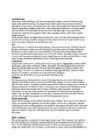
1.) How is literature analysed and studied? What is the difference between the diachronic and synchronic view?
Literature is studied and analysed by reading the piece of work profoundly and work on all the aspects of the piece.
Diachronic is development in history
Synchronic is particular state at any given moment
2.) Give a general overview of Celtic Britain , Roman invasion in 55-54 BC, Anglo- Saxon invasion and the second Roman “invasion” of Great Britain , who were the leaders, what influence did they leave on the culture of Great Britain?
Celtic Britain was during the Bronze Age, there were many small tribal kingdoms fighting one another . Many megalithic monuments were built around that time, e.g. Stonehenge, the Avebury ring.
The Roman Invasion – 55-54 BC, Julius Caesar ruled Rome, Rome built the Hadrian ’s wall (73 miles long, built in 121 – 127 AD) against the Picts and Scots , bits have survived till today .
The Romans bring along the Christian faith – The beginning of Christianization of the Celts . The Romans withdrew their forces together with the fall of the Roman empire.
Anglo Saxon Invasion – 5th – 6th century AD. Germanic tribes from Scandinavia: the Angles, the Saxons and the Jutes settle in what today is known as England and force the Celtic tribes to move to Scotland , Ireland , Wales .
The Angles settled in Northumberland, East Anglia, Mercia ; The Saxons in Essex, Sussex, Wessex and the Jutes in Kent.
569 AD Pope Gregory the great sends missionaries led by St. Augustine to Britain. The Benedictines establish a chain of monasteries; Britain is linked to the Latin civilization of the roman Church and Christian cultures of Western Europe .
Aethelbert 1 of Kent becomes the first Christian King of England. By the end of the 7th century all the kingdoms of the Anglo-Saxon Britain accepted the Christian faith.
3.) Describe Old English Poetry in terms of form and content.
Old English poetry is highly formal.
Each line of it is divides into two halves, separated by a caesura, or pause, and is often represented by a gap on the page.
The verse form contains complicated rules for alliteration designed to help scops, or poets , remember the many thousands lines they were required to know ny heart .
Each of the two halves of an Anglo-Saxon line contains two stressed syllables, and an alliterative must be carried over across the caesura.
Often features a distinctive set of rhetorical devices , like the kenning .
4.) Who is the Venerable Bede and what is he famous for?
The Venerable Bede is the author of “The Ecclesiastical History of the English People”, which is a record of the development of Christianity in England.
150 manuscripts have survived of the piece.
5.) Name the Fours significant volumes of Old English Verse that date back to the Anglo Saxon Period .
  • The Junius manuscript
  • The Beowulf
  • The Verchelli Book
  • The Exeter Book
    6.) Beowulf: who and when composed the epic ?, when does the action take place ?, who is the storyteller?(how do we know?), What kind of society is described in Beowulf?, when and by whom was Beowulf re- discovered ?, who are the writers Beowulf has influenced =, how many parts does the epic have?, what is its format ?, what are the main ideas the epic stresses? Describe the heroic code of the Anglo Saxons, how does it contradict the Christian value system?
    Beowulf was composed by an unknown Anglo-Saxon poet around 700 A.D
    The action of the poem takes place around 500 A.D
    The storyteller is a Christian poet, we know it, because he is often at pains to attribute Christian thoughts and motives to his characters , who frequently behave in un-Christian ways .
    Beowulf describes Saxon society.
    Beowulf was re-discovered in 19th century, when the interest in the poem was primarily historical. In 1936, Oxford scholar J.R.R. Tolkien discovered the literaturistic side of the epic.
    Beowulf has influenced Tolkien and all the other writers after him.
    The epic has 3 parts, each focusing on Beowulf’s fight with a particular monster.
    The mains ideas of the epic is:
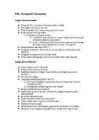
  • The importance of establishing identity
  • Tension between the heroic code and other value systems
  • Christian elements
  • The difference between a good warrior and a good king
  • Monsters
  • Oral traditions
  • The mead hall and the banquet
    Beowulf manifests the importance of patriarchal history. The way the fathers acted, influenced the life of their sons .
    7.) The Norman conquest – dates , influences of the Norman conquest to the culture, architecture , language , politics, law; What is the Bayeux Tapestry?
    Britain 1066 – 1485: The Middle Ages.
    Anglo-Saxon Britain was divided into many small kingdoms. King Alfred the Great of Wessex united most of them under his reign . England became the most powerful kingdom on the Island of Great Britain.
    Constant warfare with Wales and Scotland till 13th century.
    Edward the Confessor reigned 1042-1066. No male heir to the throne.
    William I, Duke of Normandy, later William the Conqueror reigned 1066-1087. Invaded Britain in 1066.
    The Battle of Hastings.
    The Bayeux Tapestry is a 50 cm by 70 m long embroidered cloth which depicts the events of the invasion itself.
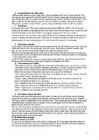
    Importance of the Norman Conquest:
  • Norman influence to Anglo Saxon culture
  • New buildings and fortification of England
  • French influences to the English language. French as the language of the ruling classes for nearly 300 years .
  • Adoption of the European feudalism. King – the most powerful man in the country ; Barons and lords – king’s closest advisors and friends , members of aristrocracy, had absolute power in their territories; Knights, merchants and yeoman – the middle classes, could own small pieces of land ; Villens and serfs – did not own land and worked for the aristocracy slaves – no land, owned by the lords and used as they wished.
  • 1086 Domesday Book to improve taxation
  • Reforms the legal system : The Common Law
  • 1215 – a first government is assigned
    8.) Types of literature most prominent in the middle ages ( didactic poems , Chivalric romance, Fables, Ballads). What is Chivalric romance, where does it originate from? What are the three categories – describe each of them? Geoffrey of Monmouth and Historia Regum Britanniae – importance, Ballads and the main themes in them.
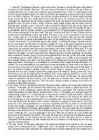
  • Didactic Poems – educating poems in the English language, stories from the Bible contained moral lessons, often performed in front of the churches before the service
  • Chivalric romance – court literature that originated from France . It is in the form of narrative poetry, which tell a story of a knight who undergoes several adventures ( to win the heart of his lady love).
  • The matter of Britain – about King Arthur and his court called Camelot
  • The Matter of Troy – about the myth of Britain’s lineage from the ancient city of Troy, by way of Britain’s Trojan founder, Brutus
  • Breton Lays – about unearthly magic
    The most famous collection of the King Arthur legends is Geoffrey of Monmouth’s History of the Kings of Britain.
    Ballads – short poetic folk tales that tell a story. Origins are in the oral tradition of story telling. They are of Anglo-Saxon origin . The author is usually unknown and the end is unhappy
    9.) Definitions to the following terms: Ballad , beast epic, Chivalric romance, didactic poem, epic, alliteration, assonance, alliterative verse, kenning, metaphor, Anglo-Saxon heroic code, antagonist, protagonist, setting .
    Beast Epic – humorous allegorical stories that contain a moral lesson, usually the main characters are animals . Originate in France and le Romain du renart
    Alliteration – Two syllables alliterate when they begin with the same sound.
    Alliterative verse – form of verse that uses alliteration as the principal structuring device to unify lines of poetry, as opposed to other devices such as rhyme
    Kenning – a short metaphorical description of a thing used in a place of a thing’s name.
    Protagonist – hero , main character
    Antagonist - character opposing the protagonist, not always a villain.
    Good luck fucking your brains up! 
  • Old English Literature #1 Old English Literature #2 Old English Literature #3
    Punktid 50 punkti Autor soovib selle materjali allalaadimise eest saada 50 punkti.
    Leheküljed ~ 3 lehte Lehekülgede arv dokumendis
    Aeg2008-11-19 Kuupäev, millal dokument üles laeti
    Allalaadimisi 30 laadimist Kokku alla laetud
    Kommentaarid 1 arvamus Teiste kasutajate poolt lisatud kommentaarid
    Autor lauri554 Õppematerjali autor

    Sarnased õppematerjalid

    History of English literature
    3
    docx

    History of English literature

    History of English literature Periods: 1. Anglo-saxon or early literature (499 - 1066) 2. Second or Norman or late Medieval period (1066 - 13/14 century) 3. Renaissance or Modern period (13-14 century ­ present) Anglo-Saxon period · All of the literature had its roots in folklore · Texts were orally transmitted, the anglosaxons had no written language · Two types of singers: 1) scop (attached to the royal court, wrote poetry and songs, performed them); 2) gleeman (travelled, mostly sang other peoples' songs, not their own songs; performers of scop songs) · The oldest known song ­ Widsith (The Far Traveller/Wonderer); tells of a gleeman who travels in Europe, of his love of noble deeds, speaks of the shortness of life

    Inglise kirjanduse ajalugu
    English literature
    4
    odt

    English literature

    ENGLISH LITERATURE Ancient Britain Lived on the British Isles in the 1st millenium. They most probably came from Eastern Europe and belonged to the Celtic race and also spoke Celtic. They were primitive hunters- gatherers, farmers. Some Celtic words are still used in modern English, however they are used mostly in place names. For example: · avon ­ river · cumb ­ valley · ford ­ shallow place in the river Ancient Britons had their own religion and priests or druids and temples. In the year 55 BC Britain became a Roman province. Romans were highly developed and had their own language ­ latin, which has also greatly influenced English. The military occupation of the Isles ended in 410 AD

    Inglise keel
    Anglo - Saxon
    5
    doc

    Anglo - Saxon

    headed openings. There are few remains of Anglo-Saxon architecture, with no secular work remaining above ground. All surviving churches, except one timber church, are built of stone or brick and in some cases show evidence of re-used Roman work. Art Anglo-Saxon art is mainly known today through illuminated manuscripts. Although they are the most well known to have survived. Perhaps the best known piece of Anglo-Saxon art is the Bayeux Tapestry which was commissioned by a Norman patron from English artists working in the traditional Anglo-Saxon style. The most common example of Anglo-Saxon art is coins, with thousands of examples extant. Anglo-Saxon artists also worked in fresco, ivory, stone carving, metalwork and enamel, but few of these pieces had survived. Literature Anglo-Saxon literary works include genres such as epic poetry, hagiography, sermons, Bible translations, legal works, chronicles, riddles, and others. The most famous works from this

    Inglise kirjandus
    The Germanic Invasions
    3
    docx

    The Germanic Invasions

    The Germanic Invasions Anglo-Saxon invasion During the 5th c. a number of Germanic tribes invaded The Angles, the Saxons, the Jutes Different peoples, but common language and customs Advance halted by King Arthur Distortions of popular history In folklore, myth (and films) ­ a great English hero, an example of medieval nobility and chivalry In fact ­ a Romanized Celt, lived before medieval times, fought the Anglo-Saxons (people who became "the English") Predominated by the end of the 6th c. Kingdoms established: Wessex, Essex, Sussex, Mercia, Northumbria, East Anglia etc. Kingdoms constantly at war with each other Celtic culture and language survived in Scotland, Wales and Cornwall

    British history (suurbritannia ajalugu)
    Suurbritannia ühiskond ja kultuur konspekt
    14
    doc

    Suurbritannia ühiskond ja kultuur konspekt

    Officials were appointed (governors, procurators to collect taxes, look after the estates and mines and se that the gold, silver, iron and lead were exported back to Rome). Introduced schools,a new language ­ Latin, large farms (villas), baths. In AD 410 they had to leave . roman occupation lasted nearly 400 years. They left behind very little. Roman province of Britannia covered most of present-day England and Wales. 4. Latin influence on English *The influence of Latin is noticeable also in the names of European cities: the Latin noun colonia (settlement, colony) may be found in numerous place-names: Lincoln, Colchester, Cologne ; from Latin word castrum (military camp) were derived English affixes -chester and -castle: Manchester, Lancaster, Newcastle; Latin word portus (seaport) in Portsmouth *-tor - person, doer, masculine form. The suffix is attached to the stem: victor (`winner', from the

    Suurbritannia ühiskond ja kultuur
    English literature
    4
    doc

    English literature

    He shows a very rich and leisurely portrayal of this Baltic world, providing many customs like the close relationship between lord and man in the war-band and others. All this encouraged the supposition that the unknown author of the poem was himself a bard of the ancient type portrayed within the poem (a lord's scoop). However, many people propose that the author could be Christian poet, perhaps a monk, versed not only in old native traditions, but also in the culture and literature of the Latin Church, and whose purpose of writing was highly moral. For example, the fate is a `providentia' and the monster Grendel is an embodiment of evil fighting against Christian militant. This contrast corresponds to the poem itself. The poet is looking back from his own Christian times to an old society with different customs and beliefs. The poem is set, as it is announced in the very first line: `in days gone by'

    Inglise keel
    British Literature
    2
    docx

    British Literature

    Old English Literature (449-1066) (Anglo Saxon) The Early Settlers · The Celts - river and town names, lifestyle primitive and crude(tahumatu) · Julius Caesar 55 B.C - the Romans for more than 300 years · 449 A.D - Jutes, Angles, Saxons - Germanic origin · Angle-land=England · Engleish, later Anglo-Saxon = Old English Literature · British literature begun in oral - by minstrels (laulik/poeet) · songs and poems of heroes · highest human qualities =bravery, honour, and loyalty to one's lord · Venerable Bede (673-735) - "the father of English history" - Ecclesiastical History of the English People 731 - in Latin · Venerable - auväärt, kõrge auline · Ecclesiastical -kiriklik, aulik Beowulf · the earliest English story-poem, pagan · about 700 by an unknown minstrel

    British literature
    ASPECTS OF BRITISH HISTORY
    188
    rtf

    ASPECTS OF BRITISH HISTORY

    стран мира. 6 INTRODUCTION Aspects of British History presents a brief outline of the most significant milestones in the long and eventful history of Great Britain, such as the five successful invasions of the island, the birth of Parliament and transformation of an absolute monarchy into a constitutional monarchy, the origin of the English language, the rise and fall of the British Empire. The units contain an informative reading text on an important issue, preceded by preparatory discussion questions and followed by notes offering some additional information, and a vocabulary with relevant language notes. The main reading text is accompanied by comprehension, vocabulary and grammar exercises and discussion activities. Some of the units include reading passages.

    Vene filoloogia


    Kommentaarid (1)

    ShineyStar profiilipilt
    ShineyStar: eriti ei saanud mida vaja .
    14:34 20-11-2009


    Sellel veebilehel kasutatakse küpsiseid. Kasutamist jätkates nõustute küpsiste ja veebilehe üldtingimustega Nõustun