Vajad kellegagi rääkida?
Küsi julgelt abi LasteAbi
Logi sisse

Leksikoloogia (5)

5 VÄGA HEA
Punktid

Leixcology revision questions


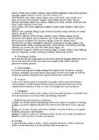
  • Composition of english vocabulary
    Vobabulary is the sum of a total of words used in a language by speekers or used in a dictionary. English vocabulary cosists of six units :
    Simple words- fall
    Complex words- prefall
    Phrasal word- face up to
    Compound word- face lift
    Multiword expression- face the music
    Shortened forms - prefab (prefabely?)
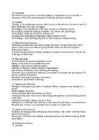
  • Core and pherifery
    English has been heavily influenced by other languages . 31.8 % comes from old english, 45% comes from french, 16,7% comes from latin , 4,2% other germanic languages and 2,3 other languages. The very core is mono - syllabic (93 of the first 100 words nad the other seven are two-syllabic). The core vocabulary is predominantly germanic.
  • Native and foreign elements
    Native vocabulary:
    INDO-EUROPEAN- mother , foot, heart , father , sea, night etc
    GERMANIC- friend, bidge, ship, life, heaven
    OLD-ENGLISH- bad, bird , woman, lady and gospel
    LATIN- cheap , pepper, street , mile, butter, cheese, wine , inch, ounce, pound, kitchen , plum, cup, dish , mint, leitchester, clorcester, colonia, lincoln, fossbrok, mass, monk , nunn, bishop, abbot , minster , apostle, pope, altar, hymn, democratic, juvenile, sophisticated, aboration, enthusiasm, permissions, imaginary, allusion, anacroism, dexterity, nucleous, formula , vertegra, corpuscle, atomic, carnivorous, incubate, molacule, i.e- that is, viz- videlicet, etc- et cetera, e.f- confer Latin adjectives for english nouns- nose -nasal, mouth-oral, sun- solar , moon -lunas, son- filial , daughter- filial, mother- maternal , father- paternal .
    GREEK- abbot, angel, apostle, bishop, school, cilinder, cycle , dialoge, cardiac , phonetic, gymansium, biathlon, pentathlon, decathlon, olympic , diagnoses, prognoses, analyses, technology , epic , drama , poem, tragedy, comedy , theatre , epilogue, prologue, methaphor
    CELTIC - welsh, walloon, wallnut, bannock , bin, brock , badger, caln, whiskey, lock, slogan, arthur , donald and mac.
    SCANDIAVIAN- take, taken, grasp, seire , catch , call , cast, hit, trive, want, raise , indow, husband , fellow, gate , sky, ski, skirt, skin, plought, ill, ugly , law, thrall, beck, tharp, breed, orientering and sorgasbord
    FRENCH- law, culture, fashion, religion , odour, slent, king, queen , lord, lady, duke, dutchess, baron, count , countess, page, marquise, prima, leisure, cards, chess, conversation , sport , veal , beef, mutton, venison, brown , parta, ham, gammon, question, mount , vapour, valentine , lediac, lone
    SPAIN- armada, comrade, renegade, flotilla, don, negro, cockroach, embargo , mosquito, vanilla , cargo, sombrero, siesta, anchovie, bonito, castanet, bonanza, salsa , cafeteria, canyon , cigar, cocoa, chocolate, tomato , cannibal, canoe , maize, potato , avocado, female , tobacco, hurricane , barbeque, tortilla , tango, chicle, gringo, tequila , afficienado, patio , cigarillo.
    ITALIA - opera, biano , solo, soprano, barritone, trio, concert, violin, allgero, andante , adagio, acapella, studio, fresco , miniature, attitude , corridore, balcony , cupola, sonnet, motto, umbrella , parasal, castume, squadran, squad, alarm, brigade, battalion, cartridge , cavalry, infintry, colonel, fiasco, bimbo, influence , mafia, graffito, papparazzo, pizza , pasta , macarony, vernicelli, spagetti , broccoli, ruconini, tutti-frutti, tiramisu, asti ,
    DUTCH - boom , buoy, cabose, sloop, skipper, smack, yacht, dock, cruise , freight, scow, spool, kink , easel, etch, landscape, isinglass, dollar, brandy , geneves, tattoo , newizer, gherkien, buckwheat, wagon , boor, bumkin, wallnut, boss , cookie, coleslaw , santaclause, the bronx , harlem , brooklyn , coney island
    ASIA- wallah, curry, coolie, juggernaut, bungalow, bundit, jungle , bandama, toddy, punch, verandah,
    AFRICA- trek, apartheid, biltong , hoppie, hottentot, bushman, mialie, aardwark, nocturanal, hartbust, springbok, kudu.
    AMERICA- wigwam, hickery, beckan, chipmonk, moose, terrapin, quahog, hominy, bemmican, totem, papose, squaw, tomahoow, igloo, kayak, opossum , squash, mugwump, alaska, arizona , chesapeake bay, cheyenne, chicago , connecticut, dakota, cansas, massachusetts, michigan, mianiappolis, milwaukee, minnesota, mississippi , niagara, ohio , oklahoma, pontiac, seattle, wiaoming, jazz, blues , rythm and blues, rock and roll, jukes lang, cakewalk, jive , banana, jelly , jam, tote, vodoo, banjo, reggae, ska.
    AUSTRALIA - kangaroo, kookaburra, boomerang, dingo, coolibah, wallaby, koala, billabong, jumbuck, budgerigar, wombat, currawong, corroboree, barramundi, jackeroo.
  • Etymologycal doublets
    Wors that have the same etymological roots but have entered the language differently. One of two or more words derived from one source for exsample. Cattle-chattle, road-raid, guarrantee-warranty- guaranty.
  • Folk etymology
    First of all commonly held misunderstanding of the original word. Rosmarine- rosemary, somblind- sand -blind. The second thing is when people themselves have made the word up- changed the grammar throughtout time- naperon became apron, nadre-addre.
  • Archaism
    Is the use of a form of speech or writing that is no longer current , many nursery rhymes conatin archaisms. Archaic elements that occur only in certain fixed expressions are not considered to be archaisms- be that, as it may. For exsample lyre- music instruments
  • Neologisms
    A word or a sense of a word, on the coining or use of new words and sense. (a word that is not yet in the dictionary). Soccer-mom, botox , speed -dating, fashionista
    8) Word formation by the means of affixation.
    A prefix - is an element placed in the beginnig of the word to adjust or to qualifiy its meaning .
    A suffix- is an element placed in the end of the word to form a derviative such as –ing and –fy.
    Prefixes : be- become, for- forget , with- within , ad-admit, ac-accurse, af-affrax, co-co-operate, de-destroy, dis-dismiss, sub- submarine
    Suffixes: er- maker , or- actor, eer- mountineer, ier/yer- lawyer , ant- assistant, ent- student , ee-detainee, ist-artist, en-vixen, ess- actress , ine-heroine
    9) Coversion
    A type of dervation where no suffix is used to change the word class. Catch as a verb and catch as a noun , brake -down as a verb and break-down as an adjective .
    10) compounds
    Are formed by joining two or more root morphemes. Compounds are often idiomatic in meaning or at least not entirely transparent. Coffe plus pot equals coffeepot
    11) Clipping
    Clipping ise the wordformation process which consists in the reduction of a word to one of its parts- shortening. Three types of clipping:
    Foreclipping- retain gthe fial part of the word- racoon-coon, telephone - phone
    Back -clipping- retains the beginnig crocodille- crock, doctor- doc, gasoline-gas
    Ambiclipping - middle part is retained- influenza - flu
    Clipping means beginning plus beginning situation comedy- sitcom
    But blending is if you take beginning plus the end- money plus energy=monergy
    12) Abbrevation and Acronyms
    Abbrevation in initial letters are taken to replace the phrase - shortened form of a word or phrase usually consists of a letter or a group of letters taken from the word or phrase. Abbrevation—abbrev.
    Acronyms are pronounced according to grapheme-phoneme conversation rule. They are one of the types of abbrevation.
    13) Meaning change
    A word typically has not one meaning but several .
    Fading- an old sense of a word fades away - dies
    Radiation - a new sense of words are created.
    Extention of meaning- widened meanings. Generalization
    Specialization of menaing- means narrowing the meaning.
    Denotative shift is movement in sideways, a combination of extention and specialization. Nt gossip— godfather and idle talk.
    Pejoration (worsening of meaning) deterioration
    Amelioration- improvement of meaning.
    14) Metaphor and Metonymy
    Metaphoe- based upone a perception of similarity. Mouse - computer mouse and quiet as a mouse.
    Dead metaphore- flowerbed
    Conduit metaphor-ideas and meanings are objects.
    Conceptual metaphore- the essence is understaning and experience one kind of thing in terms of the other.
    Orientational metaphor- happy is up, sad is down.
    Metonymy- is a word that is not called by its own name but by the name it is assosiated with. Nt hollywood- we know it as a filmindustry but acutally it is a palce name.
    15) polysemy and homosemy
    Polysemy- the meaning of the word depends on the sentence. The content- where the word is placed in the sentence.
    Homonymy- words have same spelling, same pronounciation, but different meaning. Nt fair - laat ja õiglane.
    16) Paradigmatic relations
    17) synonyms
    A word that shares the same denotatiove, with another word, different spelling, pronaunciation but the same meaning. Nt male masculine
    Absolute synonyms- absolute aspects of meaning
    Near-synonym- nearly similar meaning
    Cognitive -nt I´m firm, you are subbourn
    18) antonyms
    Opposite meaning.
    Contrary antonyms- gradable. Long-short
    Complementary- ungradable. Dead- alive
    Converse antonyms- relational by/sell, lend/ borrow
    19) hypernyms and hyponyms
    Hyponym- a word phrase or lexeme of narrower or mre specific meaning that comes under another- a wider or more general meaning. A rose is a hyponym but a flower is a hypernym.
    20) Meronym
    Semantic realtion used in linguistic . Meronymy means a part of a whole . Tree/ forest , finger/ hand
    21) syntagmatic relation
    Complete lingustic unit - relation between complex object and their parts, or between the prts of these objects and other parts. First of all- immediant dominance: X’’, X’. Second linear precedence: subject indirect object.... . fourth government relations: head, odifies, complement. Fifth: binding relations i saw John, when he came in.
    22) collocations
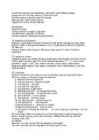
    Sequence of words or terms which co-occur ore often than words be expected by chance . There are 14 types of collcations. Types of collocations
  • adjective and noun bright/harsh
  • quantifier and noun a beam/ray of light
  • verb and noun cast light
  • noun and verb light glows
  • noun and noun a light source
  • preposition and noun by the light of the moon
  • noun and preposition the light from the window
  • adverb and verb choose carefully
  • verb and verb be free to choose
  • verb and preposition choose between sth
  • verb and adjective make/ keep safe
  • adverb and adjective perfectly/ not entirely
  • adjective and preposition safe from attack
  • short phrases including the headword the speed of light, pick and choose, safe and sound
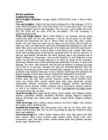
    23) Phraseology- studies such collacations of words phraseologism, phraseological units, idioms- were the meaning of the whole collacation is different from the sum of litteral meanings of the word
    24) methods
    Diacronic- over time. General. How the language has developed .
    Syncronic- particular state of a language at some given point in time.
  • Leksikoloogia #1 Leksikoloogia #2 Leksikoloogia #3 Leksikoloogia #4
    Punktid 50 punkti Autor soovib selle materjali allalaadimise eest saada 50 punkti.
    Leheküljed ~ 4 lehte Lehekülgede arv dokumendis
    Aeg2010-12-04 Kuupäev, millal dokument üles laeti
    Allalaadimisi 82 laadimist Kokku alla laetud
    Kommentaarid 5 arvamust Teiste kasutajate poolt lisatud kommentaarid
    Autor kai812 Õppematerjali autor
    kokkuvõte

    Sarnased õppematerjalid

    Inglise leksikoloogia 2012
    4
    doc

    Inglise leksikoloogia 2012

    Review questions English lexicology Size of English vocabulary. Average speaker 45,000-60,000 words, a total of about 200,000. Core and periphery. English has been heavily influenced by other languages. 31.8 % comes from Old English, 45% comes from French, 16,7% comes from Latin, 4,2% other germanic languages and 2,3 other languages. The very core is mono-syllabic (93 of the first 100 words and the other seven are two-syllabic). The core vocabulary is predominantly germanic. Native and foreign element. Native words belong to very important semantic group (modal verbs-shall, will, can, may; pronouns- I, you, he, my, his; preps- in, out, under; numerals and conjunctions::but, till, as. Native words are head, arms, back; mother, brother, son, wife; snow, rain, wind, sun; cat, sheep, cow; old, young, cold, hot, dark; do, make, go, come, see. Many native words have developed many meanings (nt, hand, man, head). Most native words have become parts of set expressions, borrowed words haven't.

    Inglise leksikoloogia
    Leksikoloogia konspekt-uus
    20
    doc

    Leksikoloogia konspekt (uus)

    English lexicology 1. Size of English vocabulary  Vocabulary is a sum total of words used in a language by speakers or for dictionary-making. Active and passive vocabulary.  The Old English vocabulary was homogenous. There were about 50 000 – 60 000 words, 1/3 of which have survived. o About 450 loans from Latin o About 2000 from the Viking invasions.  The Middle-English vocabulary became a heterogeneous hybrid of Germanic and Romanic languages. 100 000 to 125 000 words. o About 10 000 loans from Norman French, 75% are still in use o Continuing Latin influence  Early Modern English. 200 000 – 250 000 words o English becomes a pluricentric language. o Polyglot. Cosmopolitan language  Modern English. 500 000 words o At present at least 1 billion lexical units 2. Core and periphery.  Origin o

    Inglise keel
    Inglise leksikoloogia kordamisküsimuste vastused
    24
    doc

    Inglise leksikoloogia kordamisküsimuste vastused

    LEXICOLOGY 1. Size of English vocabulary 1) Old English – 50,000 to 60,000 words Vocabulary of Shakespeare OE – homogeneous; 1/3 of the vocabulary has survived • 884,647 words of running text About 450 Latin loans (Amosova) • 29,000 different words (incl. work, working, Viking invasions added 2,000 worked, which are counted here as separate 2) Middle English – 100,000 – 125,000 words) English becomes heterogeneous (Norman French, • 21,000 words English, Latin), hybrid of Germanic and Romance languages Norman French influence – about 10,000 words, 75 % are still in use (Baugh) Latin influence continues 3) Early Modern English – 200,000 – 250,000 English becomes a polycentric language; polyglot, cosmopolitan language 4) Modern English ?

    Leksikoloogia ja leksikograafia
    English lexicology revision review questions
    14
    doc

    English lexicology revision/review questions

    Review questions English lexicology 1. Size of English vocabulary – 1) Old English – 50,000 to 60,000 words OE – homogeneous; 1/3 of the vocabulary has survived About 450 Latin loans (Amosova) Viking invasions added 2,000 2) Middle English – 100,000 – 125,000 English becomes heterogeneous (Norman French, English, Latin), hybrid of Germanic and Romance languages Norman French influence – about 10,000 words, 75 % are still in use (Baugh) Latin influence continues 3) Early Modern English – 200,000 – 250,000 English becomes a polycentric language; polyglot, cosmopolitan language 4) Modern English – 500,000 words (OED) At present at least 1 billion lexical units 2. Core and periphery – Minkova & Stockwell,2006 Origin of the 10,000 most frequent words:  Old English 31.8 %  French 45 %  Latin 16.7 %  Other Germanic languages 4.2 %  Other languages 2.3 % The core vocabulary is predominantly Germanic (

    Inglise leksikoloogia
    English structure revision for the exam
    40
    docx

    English structure revision for the exam

    English structure revision for the exam 1. Terms Language → A systematic, conventional (tavakohane) use of sounds, signs or written symbols in a human society for communication and self-expression. Human language at all levels is rule- or principle- governed (valitsema) meaning that language corresponds to the grammar. Natural language is usually spoken, while language can also be encoded into symbols (such as letters, morse etc) For example: Estonian, English. Linguistics → The scientific study of human natural language. Broadly, there are three aspects to the study which are  Pragmatics (studies the use of language → interested in the gap between the sentence’s meaning and the speaker’s meaning).  Semantics (concerned with the meaning of the language aspects and the way they change, also how objects and language and thinking and language are related).  Syntax (concerned with the rul

    Inglise keel
    Inglise leksikoloogia
    5
    doc

    Inglise leksikoloogia

    1.Lexicology as a science L. studies the voc of lg as a system. Word-learning, lexis-logos. The task of L is to establish the general features of modern Engl voc. Theoretical L. gives a complete picture of voc. Practical value lies in using and appretiating the lg more conciously. There is diachronic (historical) L that studies origin and development; syncronic studies voc at a given historical period. There are general L (studies words disregarding particular features of any particular lg); special L (studies specific features of a separate lg, there is Engl that bases on general L); contrastive (compares vocabularys in different languages). 2. Connection of L with other linguistic disciplines a) the word performes a certain grammatical function (nt, he always misses the class, how many misses are there; the girl powders her nose, soliders face powder)In speech words are combined according to grammatical rules. The plural of nouns may carry a new meaning (nt, arms-weapons, looks-ap

    Inglise kirjanduse ajalugu
    Grammar Terminology
    22
    docx

    Grammar Terminology

    1 Grammatical Terminology PRACTICAL ENGLISH GRAMMAR FLGR.01.042 Grammatical Terminology analytic analüütiline (= uninflected - grammar is focused in the sentence , e.g. English) synthetic sünteetiline (= inflected - grammar is focused in the word, e.g. Estonian, Latin, Russian, Old English) ending lõpp (käände- ja pöördelõpud) marker tunnus (mitmuse, oleviku, lihtmineviku, tingiva kõneviisi, käskiva kõneviisi, kaudse kõneviisi, umbisikulise tegumoe, ma- tegevusnime, oleviku kesksõna, mineviku kesksõna) derivational affix liide, tuletusliide, tuletusafiks (e.g. postwar, anti-American, wiser, greenish) parts of speech sõnaliigid English Estonian Definition

    Inglise keel
    Exami kysimused-vastused
    13
    doc

    Exami kysimused-vastused

    1. STYLE The term "style" is polysemantic (has many meanings): a Latin word "stilus" originally meant a writing instrument used by ancient people. Already in classical Latin the meaning was extended to denote the manner of expressing one's ideas in written or oral form. Jonathan Swift defined style as "proper words in proper places". In present day English the word "style" is used in about a dozen of principle meanings: 1. the characteristic manner in which a writer expresses his/her ideas (e.g. style of Byron) 2. the manner of expressing ideas, characteristic of a literary movement or period 3. the use of language typical of a literary genre (e.g. the style of a comedy, drama, novel). 4. the selective use of language that depends on spheres / areas of human activity (e.g. style of fiction, scientific prose, newspapers, business correspondence, etc.). STYLISTICS Stylistics ­ is the study of style. The very term "stylistics" came in more com

    Stilistika (inglise)


    Kommentaarid (5)

    tullax profiilipilt
    tullax: Kokkuvõte iseenesest hea, aga uskumatult palju kirjavigu.
    10:47 20-12-2012
    m6mmikrissu profiilipilt
    m6mmikrissu: Suured tänud, kergendab õppimist!
    12:11 10-12-2012
    albertlec profiilipilt
    albertlec: Väga hea kokkuvõte.
    00:12 06-10-2011


    Sellel veebilehel kasutatakse küpsiseid. Kasutamist jätkates nõustute küpsiste ja veebilehe üldtingimustega Nõustun