
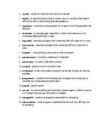
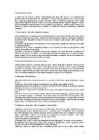
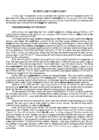
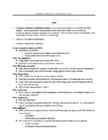
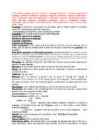
1. co-pilot - a pilot who helps the main pilot on an aircraft 2. disable - to cause someone to have an illness, injury, or condition that makes it difficult for them to do the things that other people do 3. repopluate - to provide a new population for an area in which the population has declined 4. recalculate - to calculate again, especially in order to eliminate errors or to incorporate additional factors or data 5. impossible - describes a situation that is extremely difficult to deal with or solve 6. international - describes a situation that is extremely difficult to deal with or solve 7. irregular - not according to usual rules or what is expected 8. misunderstood - incorrectly understood or interpreted 9. miscalculate - to count or estimate incorrectly 10. overpaid - paid too much or more than usual 11. overbooked - to sell more tickets or places for an aircraft, holiday, etc. than are available 12. pos...
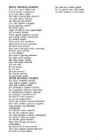
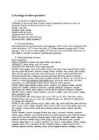
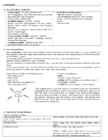
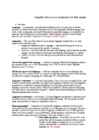
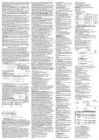
PREFIX- MEANING- EXAMPLE Ize- make into- sterilize, satirize A, in, on, of, up, to- ablaze, atop Ly- in a specific way- softly, kindly Circum- around- circumference Ity- state, condition, civility, acidity In- in, into, within- inhabit Post- after, following, later- postscript Sub- under, below- submerge Ab- from, off, away- absent Con- with, together- congregate In- not, opposing- insincere Pre- before- prefix Super- over, above, extra- superabundant Ad- to, toward- advance Contra- against, opposing- contradict Inter- among, between- international Pro- foward- proceed Trans- across, over- transfusion Ante- before, previous- antecedent De- down, from- descend Intra, intro- to the inside, within- intramural Re- back, again- rebound Un- not- unhappy Anti- against, opposing- antifreeze Dis- apart, away- disappear Mis- badly, wrong- mistake Semi- half, partly- semicircle Uni- one- u...
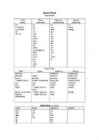
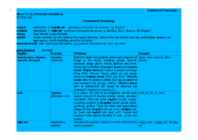
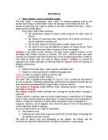
! breadth (laius)broaden (avardama) broad (lai) broadly (laialt) care care careful carefully chat chat chatty chattily widen !! width (kestvus, wide widely laius) deepen (süvenema) !! depth (sügavus) deep deeply lengthen !! length (pikkus) long - (pikendama) PREFIXES (eesliited) Verb Noun Adjective Adverb mis- un- un- - dis- dis- in- im- re- anti- in- mis- post- ir- pre- il- dis-
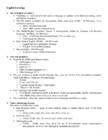
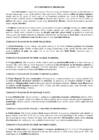
o Selfie, fauxhawk, vape, Tebowing 17. Affixation Affixation is the process whereby an affix is attached to a base, which may be simple (as in full, the base to which –ness is attached to yield fullness), or complex (like meditate, the base to which pre- is attached to yield premeditate). Affixes can be bound before, inside and after the base of the word o Prefixes o Infixes o Suffixes o Combining forms Productive vs Unproductive affixes - Productive refers to an affix which is active in the language; it is used by writers today to create new words 60 % of affixes have been borrowed, 40 % are native o Deodorize De – reversing prefix Odor – base 1)free – can be separate words 2)bound – can’t occur separately
b) root words have just a root (nt, car, post) c)compounds (liitsõnad) have 2 or more stems put together. Stems may be simple(nt, ice-cream, ice and cream are stems) d)compound derivatives -2 stems joined and an affix is added to them both (nt, kind-heart-ed) 8. Affixation Affixes are used to build new words and they have quite an abstract meaning (nt, mad-ness, ness is suffix) Prefix prefix plus stem (nt, verbs: to enrich, disagree; adj: antiwar, uneasy; noun: exwife) There are 25 prefixes that change the word to a different part of speech (nt, to debus to get off the bus) Suffixation stem plus suffix (nt, hood plus child is childhood, friendship, readyness, government). New forming suffixes (-ance, -dom, -ee, -er, -ing, -ness) Adj forming suffixes(suit-able, tempora-ry, beauti-ful, penny-less, famou-s) numeral forming suffixes(four-teen, four-ty, fif-th) Adverb forming suffixes(slow-ly, home-wards)
For exsample lyre- music instruments 7) Neologisms A word or a sense of a word, on the coining or use of new words and sense. (a word that is not yet in the dictionary). Soccer-mom, botox, speed-dating, fashionista 8) Word formation by the means of affixation. A prefix- is an element placed in the beginnig of the word to adjust or to qualifiy its meaning. A suffix- is an element placed in the end of the word to form a derviative such as ing and fy. Prefixes: be- become, for-forget, with-within, ad-admit, ac-accurse, af-affrax, co-co-operate, de-destroy, dis-dismiss, sub-submarine Suffixes: er- maker, or- actor, eer- mountineer, ier/yer- lawyer, ant- assistant, ent-student, ee- detainee, ist-artist, en-vixen, ess-actress, ine-heroine 9) Coversion A type of dervation where no suffix is used to change the word class. Catch as a verb and catch as a noun, brake-down as a verb and break-down as an adjective. 10) compounds
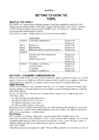
remember any previous experience you have had with the word. If not, guess, and continue to the next question. STRATEGIES TO REMEMBER • Do not waste time reading the sentences. Immediately look for the underlined word and search for a synonym among the answer choices. • The sentence will not help you understand the meaning of the underlined word. • Analyze words quickly. Don't spend too much time studying word roots, prefixes, and suffixes. • Work quickly, but carefully. Conserve time for the second part of Section 3. Try to spend only 30 seconds on each question. • Words that contain similar sounds and spelling are usually not correct answers. • Always answer every question. If you must guess, choose (B) or (C) as your answer. CHAPTER 3 IMPROVING YOUR TOEFL VOCABULARY READ A LOT
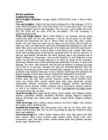
Archaic elements that occur only in certain fixed expressions are not considered to be archaisms - be that as it may. For example lyre- music instruments Neologisms A new word, expression, or usage (a word that is not yet in the dictionary). Soccer-mom, botox, speed-dating, fashionista Affixation The adding of a grammatical element that is an integral part of a word, but is not the main meaning-bearing part (known as the `root'). The -ed of walked and the dis- of dislike are examples. Prefixes an element placed in the beginning of the word to adjust or to qualify its meaning. (Become, forget, within, dismiss) Suffixes an element placed in the end of the word to form a derivative. (maker, actor, artist, vixen) Infixes an element placed in the middle of the word. Almost no true infixes in English, except for colloquial speech and chemical terminology. (Shiznit) Combining forms A modified form of an independent word that occurs only in
How do you pronounce these words? 12 Translate the italicized expressions and bold words in the text. Make sure that your translation is appropriate! 13 Derivation is the process of forming a new word from an existing word, often by adding a prefix or suffix. For example, from the word HAPPY we can derive the following words: happen, happily, happiness, unhappy, unhappiness. Make derivations from the following words, using prefixes and suffixes and translate each word: Able Common Entertain Apply Discover Use Invade Success EXERCISES 1. Fill in the correct word derived from the word in bold: The ............... with which surveillance cameras are used is FREQUENT increasing .............
smaller meaningful parts. morpheme – the minimal linguistic sign bound morpheme – a morpheme that can only occur if attached to some other phoneme • full • fullness • spoonful • cheerful “Most analysts of contemporary English prefer to distinguish three morphs: a root in full and fullness, a noun-forming affix inspoonful, and an adjective- forming affix in peaceful and cheerful.” 19. Prefixes A letter or group of letters attached to the beginning of a word that partly indicates its meaning. Common prefixes include anti- (against), co- (with), mis- (wrong, bad), and trans- (across). Prefixation (the process of adding a prefix to a word) is a common way of forming new words in English. Examples: anti-, auto-, circum-, co-, ex-, trans-, inter-, dis-. 20. Suffixes A letter or group of letters added to the end of a word or root (i.e
An adjunct can be realised by an adverb phrase, a prepositional phrase, a noun phrase or adverbial clause. affix afiks A syllable or group of syllables which are added to the unworkable un-prefix, -able suffix beginning or end of a word to make a new word. Affixes added to the beginning of a word are prefixes. Affixes added to the end of a word are suffixes. auxiliary abitegusõna Refers to a closed set of verbs (be, do, have) that are He was working over there. usually followed by a lexical verb. They typically help Have you been home? to denote grammatical contrasts of aspect, voice, polarity and clause type.
Initially these were formed in Australia, New Zealand and Germany but are now present in many other countries. By raising awareness about these issues, we can help contribute to a more environmentally conscious and friendly place for us to live. ADDITIONAL TASKS 1. Translate the italicized prepositional expressions and bold words in the text. Make sure that your translation is appropriate! 2. Make derivations from the following words, using prefixes and suffixes and translate each word: DERIVE, POLLUTE, CONSUME, DESTROY, CREATE. 3. Bring out some facts about the Estonian Green Party. PLASTIC POLLUTION As the world’s population continues to grow, so does the amount of garbage that people produce. On-the-go lifestyles require easily disposable products, such as soda cans or bottles of water, but the
This XML carries information about an HTML table, and a piece of furniture:


 annaabi.ee


