Vajad kellegagi rääkida?
Küsi julgelt abi LasteAbi
Logi sisse

Inglise leksikoloogia 2012 (4)

5 VÄGA HEA
Punktid
Review questions
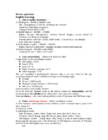
English lexicology
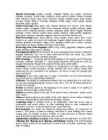
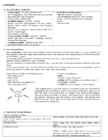
Size of English vocabulary . Average speaker 45,000-60,000 words , a total of about 200,000.
Core and periphery. English has been heavily influenced by other languages . 31.8 % comes from Old English, 45% comes from French, 16,7% comes from Latin , 4,2% other germanic languages and 2,3 other languages. The very core is mono - syllabic (93 of the first 100 words and the other seven are two-syllabic). The core vocabulary is predominantly germanic.
Native and foreign element. Native words belong to very important semantic group (modal verbs -shall, will, can, may; pronouns - I, you, he, my, his; preps- in, out, under; numerals and conjunctions ::but, till , as. Native words are head, arms, back ; mother, brother , son, wife ; snow, rain, wind, sun; cat, sheep , cow; old, young, cold, hot, dark ; do, make, go, come , see. Many native words have developed many meanings (nt, hand, man, head). Most native words have become parts of set expressions , borrowed words haven’t. (nt, heart - to break a heart, to take to heart, to have heart in one’s mouth). Most native words make up large groups of derived and compound words (nt, heart-ly, heart-less, to heart-en, hard hearted, sad hearted) The native elements play a very important role in English. Influence of borrowings – some say that English is so rich mainly due to loan words. The first effect of foreign influences is of course the volume of the vocabulary. Borrowings influence native words stilistically and semantically. If we have 2 words in the language : one native, other borrowed, then they become different in meaning and usage (nt, to meet or to encounter - meaning’s the same , but stilistically different) Under the influence of borrowings native words narrowed their meaning (nt stool-iste, chair was borrowed, chair infuenced stool and it is now a taburet). Borrowings have influenced the English language a lot but native elements should not be disregarded or overlooked.
Latin borrowings cheap , pepper, street , mile, butter, cheese, wine , inch, ounce, pound, kitchen , plum, cup, dish , mint, Leicester , Clocester, colonia, lincoln, fossbrok, mass, monk , nun, bishop, abbot, minster , apostle, pope, altar, hymn, democratic, juvenile, sophisticated, abortion, enthusiasm, permissions, imaginary, allusion, anachronism, dexterity, nucleus, formula , vertebra, corpuscle, atomic, carnivorous, incubate, molecule, i.e- that is, viz- videlicet, etc- et cetera, c.f- confer Latin adjectives for english nouns- nose -nasal, mouth-oral, sun- solar ,
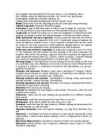
Greek borrowings abbot, angel , apostle, bishop, school, cilinder, cycle, dialogue , cardiac, phonetic , gymnasium, biathlon, pentathlon, decathlon, olympic, diagnosis, prognosis, analysis , technology, epic , drama, poem , tragedy, comedy , theatre, epilogue, prologue, metaphor
Celtic borrowings welsh, walloon, walnut, bannock , bin, brock , badger, caln, whiskey, lock, slogan, arthur , donald and mac.
Scandinavian borrowings take, taken, grasp , catch , call , cast, hit, thrive, want, raise , endow, husband , fellow, gate , sky, ski, skirt, skin, plough, ill, ugly , law, thrall, beck, tharp, breed, and sorgasbord
French borrowings law, culture, fashion, religion , odour, slent, king, queen , lord, lady , duke, duchess, baron, count , countess, page, marquis, prima, leisure, cards, chess, conversation , sport, veal , beef, mutton, venison, brown , parta, ham, gammon, question, mount , vapor, valentine , lone
Spanish borrowings armada, comrade, renegade, flotilla, don, negro, cockroach, embargo , mosquito, vanilla , cargo, sombrero, siesta, anchovy, bonito, castanet, bonanza, salsa , cafeteria, canyon , cigar, cocoa, chocolate, tomato , cannibal, canoe , maize, potato , avocado, female , tobacco, hurricane , barbeque, tortilla , tango, chicle, gringo, tequila , aficionado, patio , cigarillo.
Italian borrowings opera , piano, solo , soprano, baritone, trio, concert , violin, allegro , andante, adagio , a cappella, studio , fresco, miniature, attitude, corridor, balcony, cupola, sonnet, motto, umbrella, parasol, costume, squadron, squad, alarm , brigade, battalion, cartridge, cavalry, infantry, colonel , fiasco, bimbo, influence, mafia , graffito, paparazzo, pizza, pasta , macaroni, vermicelli, spaghetti, broccoli, tutti-frutti, tiramisu, asti ,
Dutch borrowings boom, buoy, caboose, sloop , skipper, smack, yacht, dock , cruise, freight, scow, spool, kink, easel, etch, landscape , isinglass, dollar , brandy, geneves, tattoo, newizer, gherkien, buckwheat, wagon, boor , pumpkin, walnut, boss, cookie , coleslaw, Santa Clause, the Bronx , Harlem, Brooklyn , Coney Island
Borrowings from Asian languages wallah, curry, coolie, juggernaut, bungalow, pundit, jungle, bandana, toddy, punch , verandah,
Etymological doublets Words that have the same etymological roots but have entered the language differently. One, two or more words derived from one source. E.g. Cattle-chattle, road-raid, guarantee-warranty- guaranty.
Folk etymology 1 - commonly held misunderstanding of the original word. Rosmarine- rosemary, somblind- sand -blind. 2 - when people themselves have made the word up- changed the grammar through time- naperon became apron, nadre-adder.
Archaisms Is the use of a form of speech or writing that is no longer current, many nursery rhymes contain archaisms. Archaic elements that occur only in certain fixed expressions are not considered to be archaisms - be that as it may. For example lyre- music instruments
Neologisms A new word, expression, or usage (a word that is not yet in the dictionary). Soccer-mom, botox , speed -dating, fashionista
Affixation The adding of a grammatical element that is an integral part of a word, but is not the main meaning-bearing part ( known as the ‘ root ’). The -ed of walked and the dis- of dislike are examples .
Prefixes an element placed in the beginning of the word to adjust or to qualify its meaning. (Become, forget , within, dismiss)
Suffixes an element placed in the end of the word to form a derivative. (maker, actor , artist, vixen)
Infixes an element placed in the middle of the word. Almost no true infixes in English, except for colloquial speech and chemical terminology. (Shiznit)
Combining forms A modified form of an independent word that occurs only in combination with words, affixes, or other combining forms to form compounds or derivatives, as electro - in electromagnet or geo- in geochemistry.
Back- formation new words are formed by taking away affixes. (nt, connection , to connect). This process is based on analogy. Back-form is word building and it means coining verbs. (nt, butcher, to butch; sculptor, to sculpt, television, to televise). Rarely some other parts of speech are found (nt, nasty, to nast )
Alphabetisms, initialisms, acronyms words made up of the initial letters (nt, USA, WC)
Clippings, fore clippings, back clippings, ambiclippings Clipping is the word formation process which consists of the reduction of a word to one of its parts- shortening. Three types of clipping:
Fore clipping- retain the final part of the word- racoon - coon, telephone- phone
Back clipping- retains the beginning crocodile- croc, doctor- doc, gasoline-gas
Ambiclipping - middle part is retained- influenza - flu
Clipping means beginning plus beginning, situation comedy- sitcom
Blends blends form if you take beginning plus the end- money plus energy=monergy
Clipped compounds compounds formed by clipping.
Conversion A type of derivation where no suffix is used to change the word class. Catch as a verb and catch as a noun , break-down as a verb and break-down as an adjective .
Compounds Are formed by joining two or more root morphemes. Compounds are often idiomatic in meaning or at least not entirely transparent. Coffe plus pot equals coffeepot
Solid , hyphenated, and open compounds An open compound means that the words of the compound are written separately ( credit card), a hyphenated compound separates the words by hyphen(s) (brother-in-law), a solid compound is formed when the two words are written as one word (typewriter), solid compounds typically begin as two separate words, then become hyphenated words, and finally become solid compounds.
Endocentric and exocentric compounds An endocentric compound consists of a head, i.e. the categorical part that contains the basic meaning of the whole compound, and modifiers, which restrict this meaning , doghouse. Exocentric compounds are hyponyms of some unexpressed semantic head (e.g. a person, a plant , an animal...), and their meaning often cannot be transparently guessed from its constituent parts. White-collar.
Meaning change A word typically has not one meaning but several . Fading- an old sense of a word fades away- dies; Radiation - a new sense of words are created. Denotative shift is movement in sideways, a combination of extension and specialization. e.g. gossip— godfather and idle talk.
Metaphor and metonymy Metaphor- based upon a perception of similarity. Mouse - computer mouse and quiet as a mouse. Metonymy- is a word that is not called by its own name but by the name it is associated with – Hollywood.
Meaning restriction and extension. Specialization of meaning- means narrowing the meaning, extended - widened meanings. Generalization.
Meaning degradation and elevation Pejoration (worsening of meaning) deterioration. Amelioration- improvement of meaning.
Monosemy Word only has one meaning.
Polysemy the meaning of the word depends on the sentence. The content- where the word is placed in the sentence.
Homonyms words with the same spelling and pronunciation but a different meaning. Skate , mouth
Homophones words that are pronounced the same. Rose, to-two-too
Homographs words that are spelled the same. Lead, close , wind.
Synonyms words that share the same denotative, different spelling and pronunciation but the same meaning. e.g. male masculine
Opposites (antonyms) words with opposite meanings, e.g. long-short, dead-alive, buy-sell
Hyponyms a word phrase or lexeme of narrower or more specific meaning that comes under another - a wider or more general meaning. A rose is a hyponym but a flower is a hypernym.
Hypernyms (hyperonyms) a word phrase or lexeme of wider or less specific meaning.
Meronyms Semantic relation used in linguistics. Meronymy means a part of a whole. Tree/forest, finger /hand
Holonyms Holonymy defines the relationship between a term denoting the whole and a term denoting a part of, or a member of, the whole.
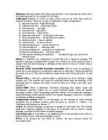
Collocations Sequence of words or terms which co-occur ore often than words be expected by chance . There are 14 types of collocations. Types of collocations
  • adjective and noun – bright/harsh light
  • quantifier and noun - a beam/ray of light
  • verb and noun - cast light
  • noun and verb - light glows
  • noun and noun - a light source
  • preposition and noun - by the light of the moon
  • noun and preposition - the light from the window
  • adverb and verb - choose carefully
  • verb and verb - be free to choose
  • verb and preposition - choose between sth
  • verb and adjective - make/ keep safe
  • adverb and adjective - perfectly/ not entirely safe
  • adjective and preposition - safe from attack
  • short phrases including the headword - the speed of light, pick and choose, safe and sound
    Idioms is a rendition of a combination of words that have a figurative meaning. The figurative meaning is comprehended in regard to a common use of the expression that is separate from the literal meaning or definition of the words of which it is made. Drop a line. Break a leg.
    Syntactic freezes (irreversible binomials, trinomials) refers to a pair or grouping of words that is used together as an idiomatic expression or collocation , usually conjoined by the words and or or. The order of elements cannot be reversed. Short and sweet . Lo and behold.
    Phrasal verbs a verb and a particle and/or a preposition co-occur forming a single semantic unit . This semantic unit cannot be understood based upon the meanings of the individual parts in isolation, but rather it must be taken as a whole. Look after, look forward to.
    Lexical fields There is diachronic (historical) lexicology that studies origin and development ; syncronic studies voc at a given historical period . There are general lexicology (studies words disregarding particular features of any particular language); special lexicology (studies specific features of a separate language); contrastive (compares vocabularies in different languages).
    Componential analysis refers to the description of the meaning of words through structured sets of semantic features, which are given as “present +”, “absent -” or “indifferent with reference to feature +/-”.
    Corpus the study of language as expressed in samples of " real world" text. This method represents a digestive approach to deriving a set of abstract rules by which a natural language is governed or else relates to another language.
    Concordance line A concordance is an alphabetical list of the principal words used in a book or body of work, with their immediate contexts.
    KWIC is an acronym for Key Word In Context, the most common format for concordance lines.
  • Inglise leksikoloogia 2012 #1 Inglise leksikoloogia 2012 #2 Inglise leksikoloogia 2012 #3 Inglise leksikoloogia 2012 #4
    Punktid 50 punkti Autor soovib selle materjali allalaadimise eest saada 50 punkti.
    Leheküljed ~ 4 lehte Lehekülgede arv dokumendis
    Aeg2012-12-28 Kuupäev, millal dokument üles laeti
    Allalaadimisi 98 laadimist Kokku alla laetud
    Kommentaarid 4 arvamust Teiste kasutajate poolt lisatud kommentaarid
    Autor tullax Õppematerjali autor
    Vastused 2012 inglise leksikoloogia kordamisküsimustele.

    Sarnased õppematerjalid

    English lexicology revision review questions
    14
    doc

    English lexicology revision/review questions

    Review questions English lexicology 1. Size of English vocabulary – 1) Old English – 50,000 to 60,000 words OE – homogeneous; 1/3 of the vocabulary has survived About 450 Latin loans (Amosova) Viking invasions added 2,000 2) Middle English – 100,000 – 125,000 English becomes heterogeneous (Norman French, English, Latin), hybrid of Germanic and Romance languages Norman French influence – about 10,000 words, 75 % are still in use (Baugh) Latin influence continues 3) Early Modern English – 200,000 – 250,000 English becomes a polycentric language; polyglot, cosmopolitan language 4) Modern English – 500,000 words (OED) At present at least 1 billion lexical units 2. Core and periphery – Minkova & Stockwell,2006 Origin of the 10,000 most frequent words:  Old English 31.8 %  French 45 %  Latin 16.7 %  Other Germanic languages 4.2 %  Other languages 2.3 % The core vocabulary is predominantly Germanic (

    Inglise leksikoloogia
    Inglise leksikoloogia kordamisküsimuste vastused
    24
    doc

    Inglise leksikoloogia kordamisküsimuste vastused

    LEXICOLOGY 1. Size of English vocabulary 1) Old English – 50,000 to 60,000 words Vocabulary of Shakespeare OE – homogeneous; 1/3 of the vocabulary has survived • 884,647 words of running text About 450 Latin loans (Amosova) • 29,000 different words (incl. work, working, Viking invasions added 2,000 worked, which are counted here as separate 2) Middle English – 100,000 – 125,000 words) English becomes heterogeneous (Norman French, • 21,000 words English, Latin), hybrid of Germanic and Romance languages Norman French influence – about 10,000 words, 75 % are still in use (Baugh) Latin influence continues 3) Early Modern English – 200,000 – 250,000 English becomes a polycentric language; polyglot, cosmopolitan language 4) Modern English ?

    Leksikoloogia ja leksikograafia
    Leksikoloogia konspekt-uus
    20
    doc

    Leksikoloogia konspekt (uus)

    English lexicology 1. Size of English vocabulary  Vocabulary is a sum total of words used in a language by speakers or for dictionary-making. Active and passive vocabulary.  The Old English vocabulary was homogenous. There were about 50 000 – 60 000 words, 1/3 of which have survived. o About 450 loans from Latin o About 2000 from the Viking invasions.  The Middle-English vocabulary became a heterogeneous hybrid of Germanic and Romanic languages. 100 000 to 125 000 words. o About 10 000 loans from Norman French, 75% are still in use o Continuing Latin influence  Early Modern English. 200 000 – 250 000 words o English becomes a pluricentric language. o Polyglot. Cosmopolitan language  Modern English. 500 000 words o At present at least 1 billion lexical units 2. Core and periphery.  Origin o

    Inglise keel
    Leksikoloogia
    4
    doc

    Leksikoloogia

    Leixcology revision questions 1) Composition of english vocabulary Vobabulary is the sum of a total of words used in a language by speekers or used in a dictionary. English vocabulary cosists of six units: Simple words- fall Complex words- prefall Phrasal word- face up to Compound word- face lift Multiword expression- face the music Shortened forms- prefab (prefabely?) 2) Core and pherifery English has been heavily influenced by other languages. 31.8 % comes from old english, 45% comes from french, 16,7% comes from latin, 4,2% other germanic languages and 2,3 other languages. The very core is mono-syllabic (93 of the first 100 words nad the other seven are two-syllabic). The core vocabulary is predominantly germanic. 3) Native and foreign elements Native vocabulary: INDO-EUROPEAN- mother, foot, heart, father, sea, night etc GERMANIC- friend, bidge, ship, life, heaven OLD-ENGLISH- bad, bird, woman, lady and gospel LATIN- cheap, pepper, street, mile, butter, cheese, wine, i

    Inglise keel
    Inglise leksikoloogia
    5
    doc

    Inglise leksikoloogia

    1.Lexicology as a science L. studies the voc of lg as a system. Word-learning, lexis-logos. The task of L is to establish the general features of modern Engl voc. Theoretical L. gives a complete picture of voc. Practical value lies in using and appretiating the lg more conciously. There is diachronic (historical) L that studies origin and development; syncronic studies voc at a given historical period. There are general L (studies words disregarding particular features of any particular lg); special L (studies specific features of a separate lg, there is Engl that bases on general L); contrastive (compares vocabularys in different languages). 2. Connection of L with other linguistic disciplines a) the word performes a certain grammatical function (nt, he always misses the class, how many misses are there; the girl powders her nose, soliders face powder)In speech words are combined according to grammatical rules. The plural of nouns may carry a new meaning (nt, arms-weapons, looks-ap

    Inglise kirjanduse ajalugu
    Stilistika materjalid
    19
    doc

    Stilistika materjalid

    STYLISTICS 1. Style, stylistics, a survey of stylistic studies The term ,,style" is polysemantic. Latin ,,stilus"--a writing instrument used by the ancients for writing on waxed tablets. Soon, the meaning was extended to denote the manner of expressing one's ideas in written or oral form. Jonathan Swift said: ,, Style is proper words in proper places" Present day--half a dozen meanings: · the characteristic manner in which a writer expresses his ideas (Style of Byron) · the manner of expressing ideas characteristic of a literary movement or period (symbolism, romanticism) · the use of lg. typical of a literary genre (comedy, drama, novel) · the selective use of lg that depends on spheres of human activity. These are called functional styles or registers (fiction, newspaper) Stylistics is the study of style. However, for some r

    Stilistika (inglise)
    Exami kysimused-vastused
    13
    doc

    Exami kysimused-vastused

    1. STYLE The term "style" is polysemantic (has many meanings): a Latin word "stilus" originally meant a writing instrument used by ancient people. Already in classical Latin the meaning was extended to denote the manner of expressing one's ideas in written or oral form. Jonathan Swift defined style as "proper words in proper places". In present day English the word "style" is used in about a dozen of principle meanings: 1. the characteristic manner in which a writer expresses his/her ideas (e.g. style of Byron) 2. the manner of expressing ideas, characteristic of a literary movement or period 3. the use of language typical of a literary genre (e.g. the style of a comedy, drama, novel). 4. the selective use of language that depends on spheres / areas of human activity (e.g. style of fiction, scientific prose, newspapers, business correspondence, etc.). STYLISTICS Stylistics ­ is the study of style. The very term "stylistics" came in more com

    Stilistika (inglise)
    Stilistika loeng
    31
    doc

    Stilistika loeng

    FGI 1081 Stilistika (Irina Ladusseva) Kab. 420 2 AP Ends with an exam; lasts only for 1 semester. At the exam you get 2 questions and an exercise (50 sentences: establish the device used, recognize it, and name it). Care about the pronunciation of the terms. Books: - I. Galperin "Stylistics" - I. Ladusseva "Rhythm and Text" - I. Ladusseva "Vocabulary and Style" - I. Ladusseva "Stylistic practice: Book I, Book II" - I. Ladusseva "A Guide to Punctuation" EXAMINATION TOPICS: 1. Style, stylistics, a survey of stylistic studies 2. Inherent connotations. Phonesthe

    Stilistika (inglise)


    Kommentaarid (4)

    tigermyfriend profiilipilt
    tigermyfriend: Esimesel silmapilgul tundub korralik, eks vaatan kriitiliselt veel üle, kuid hetkel tundub väga pro.
    16:15 09-01-2013
    Marike18 profiilipilt
    Marike18: Aitäh, tõepoolest väga sisutihe ja konkreetne :)
    01:21 15-01-2013
    annilaar profiilipilt
    Annika Laar: Materjal säästis palju mu aega!! Tänan!!
    20:26 11-01-2013


    Sellel veebilehel kasutatakse küpsiseid. Kasutamist jätkates nõustute küpsiste ja veebilehe üldtingimustega Nõustun