Vajad kellegagi rääkida?
Küsi julgelt abi LasteAbi
Logi sisse

Inglise keele kordamine (5)

3 KEHV
Punktid
Inglise keel - Kõik luuletused, mis on inglise keeles
Inglise keele kordamine
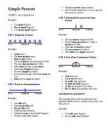
TIME CLAUSES
Present Simple

Time expressions used with present simple: usually, often, always, every day/week etc, in the morning / evening etc, at night /the weekend , on Fridays etc.
Present Continuous

Time expressions used with present continuous: now, at the moment, at present, these days , nowadays , still , today , tonight etc.
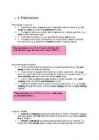
Present Perfect
  • Action happened at an unstated time in the past. Emphasis on the action, time is unimportant or unknown. (I have washed the car)
  • Action started in the past and continues up to the present, especially with stative verbs (I have known her for six years )
  • Recently completed action (I have finished my essay )

Time expressions used with present perfect: for, since , already , always, just, ever, never , so far, today, this week/month etc. lately, recently, still (in negations) etc.
Present Perfect Continuous
  • To put emphasis on the duration of an action which started in the past and continues up to the present (We have been cleaning the house all morning)
  • To express anger, irritation or annoyance (She has been using my computer without asking )
  • Fo repeated actions in the past continuing to the present. (She has been going to the gym)

Time expressions used with present perfect continuous: how long..?, for, since, all day/morning etc, lately, recently
Past Simple
  • Action occurred at a definite time in the past (Postman delivered the parcel ..)
  • Actions that happened immediatly after one another in the past (She opened the curtains and looked out of the window )
  • Habits and states which are now finished (Paul worked in a factory when he was younger)

NB! Used to can be used instead of past simple for habits and states
Time expressions used with past simple: yesterday, then, how long ago..?, last night/week/Friday etc three days etc ago, in 1990 etc
Past Continuous
  • Action which was in progress when another action interrupted it. Past continuous for the action in progress and past simple for action that interrupted it. (We were playing in the garden when in started to rain)
  • 2 or more simultaneous actions in the past (I was cooking while Mary was watching TV)
  • Action which was in a progress at a started time in the past. We don’t mention when it was started or finished. (at 11 o’ clock I was driving home)
  • To describe the atmosphere, setting etc and to give background information to a story (The birds were singing , sun was shining..)

Time expressions used with past continuous: while, when, as, all morning/day etc
Past Perfect
  • Action which happened before another past action or bf a started time in the past (Lucy had finished her homework by 6)
  • Action which finished in the past and whose result was visible at a later point in past (He had sprained his ankle few days ago and he was still limping)
  • General situation in past (Everything had seemed normal at first )

Time expressions used with past perfect: before, after, already, just, fot, since, until , when, by the time, never etc.
Past Perfect Continuous
  • Emphasis on duration of an action which started and finished in past or bf a started time (I had been walking a lot bf I realised I was lost )
  • Action which lasted for some time in the past and result was visible (She had been swimming and her hair were still wet)

Time expressions used with past perfect continuous: for, since, before, until etc
Future Simple
  • Decisions made at the moment of speaking (It’s hot, I’ll open the window)
  • Predictions, based on what we think, believe, or imagine (He will probably call you)
  • Promises, threats, warnings, requests, hopes , offers (Will you help me?)
  • Actions, events , situations, which will definately happen in future and we can’t control (Sue will be 3 years in June )

Future Continuous
  • Actions which will be in pogress at a started time in future (This time text bank I’ll be working ..)
  • Actions which will definately happen as a result of routine or arrangement (I will be visiting my parents this weekend)
  • Asking politely or someone ’s plans for near future (Will you be finishing this book soon?)

Future Perfect
  • Actions that will have finished before started time. (We will have finished our course by July )

Time expressions used with future perfect: before, by, by then, by the time, until/ till (only in neg.)
Future Perfect Continuous
  • Emphasise duration of an action up to a certain time in the future. (By May Luke will have been living in Manchester for five years)

Time expressions used with future perfect continuous: by...for
NB! Future is NOT use with words : while, before, after, until, as, when (if not a question word), whenever, once , as soon as, as long as, by the time, unless , if (if it doesn’t show uncertainity, ignorance), suppose /supposing, in case
Used to
We use used to + infinitive to refer to past habits or states. Not at a definite time! (When they were younger they walked/used to walk to school; NOT I used to walk to work yesterday)
Be going to
  • Plans, intentions, ambitions for the future (I’m going to be a doctor , when I grow up)
  • Actions already decided to do in near future (Steve is going to work with his dad..)
  • Predictions based on wht we see, or know , especially if there ’s evidence (The sky is very clear, it’s going to be cold tonight)

CONDITIONALS
Type 0 – general truth or scientific fact : If/when + present simple -> present simple (If you mix red and white, you get pink )
Type 1real or very probable situation: If + present simple -> future simple, imperative, can/must/may etc + bare infinitive (If I finish the essay, I will/might go out tonight)
NB! Unless + affirmative verb = if + negative verb (Unless he gives me..= if he does not give..)
Type 2unreal present, imaginary situations: If + past simple/past continuous -> would/ could /might + perfect bare infinitive (If I were you, I would tell her the truth)
Type 3 – unreal past, regrets, criticism: If + past perfect/past perfect continuous -> would/could/might + perfect bare infinitive ( If they had invited me, I would have gone..)
Definite article „the“
We use „The“:
  • With noun, talking about sth specific (Jo owns a car. The car is red.)
  • Unique nouns (The Earth)
  • Newspapers, cinemas, theaters, museums , ships, organisations (The United Nations)
  • Rivers , groups of islands , mountain ranges , deserts, oceans, countries (with States, Republic , Kingdom), names /nouns with of, geographical terms (the North )
  • Musical instruments , dances (the piano )
  • Families, nationalities (The Chinese )
  • Titles (the President ) NB! NOT with real names (Prince Charles)
  • With adjectives/adverbs in superlative form (Most mustn’t be followed by a noun!)
  • With words day, afternoon, morning, evening NB! At night, at noon etc
  • Historical periods/events
  • With Only, last, first
  • Words station , cinema, theatre , library, coast, shop, sea, beach , country , city, jungle, world, ground , weather

We don’t use „The“:
  • Uncountable an plural nouns when talking about sth general (Coffee is a popular drink )
  • Proper nouns ( Harry works in a bookshop)
  • Names of sports , games, activities , days, months, elebrations, colours , drinks, meals .
  • Languages, unless they’re followed by „ language “ (I speak Spanish, BUT the French language is spoken in Canada )
  • Countries like Germany , India, Australia NB! Exeptions are The Netherlands , the Gambia , the Vatican .
  • Streets, squares, bridges, parks , railway stations, mountains, individual islands, lakes , continents
  • Posessive adjectives or posessive case (That is my car)
  • Restaurants, shops, hotels etc which are named after people who started them (McDonald’s)
  • Words: bed, hospital , college, court , prison, school, university when refferred to the purpose , why they exist. (The injured girl had to be taken to hospital. BUT we went to the hospital to visit Tina)
  • Word work (= place of work)
  • Words: home, mother , father etc when we talk about home/parents
  • By + means of transport (They travelled to Glasgow by train )
  • Illnesses (He’s got pneumonia ) NB! The flu, the measles , the mumps

Inglise keele kordamine #1 Inglise keele kordamine #2 Inglise keele kordamine #3 Inglise keele kordamine #4
Punktid 10 punkti Autor soovib selle materjali allalaadimise eest saada 10 punkti.
Leheküljed ~ 4 lehte Lehekülgede arv dokumendis
Aeg2009-05-28 Kuupäev, millal dokument üles laeti
Allalaadimisi 210 laadimist Kokku alla laetud
Kommentaarid 5 arvamust Teiste kasutajate poolt lisatud kommentaarid
Autor RiinR Õppematerjali autor
Kokkuvõte inglise keele aegadest, nende asutamisest, conditionals (type 0, 1, 2, 3), artikli "the" kasutamisest ja kasutamata jätmisest.

Sarnased õppematerjalid

Inglise keele ajavormid
10
odt

Inglise keele ajavormid

FUTURE SIMPLE BE GOING TO Will + infinitive (will go) Am/is/are going to + infinitive (is going to rain) 1.A decision at the moment of 1.Future plans made before the speaking: moment of speaking: A: 'I'm cold'. A: 'We've run out of milk.' B: 'I'll close the window'. B: 'I know, I'm going to buy some.' 2.Prediction based on opinion: 2.Prediction based on present I think the Conservatives will win the evidence: next election. Look at those boys playing football! 3.A future fact: They're going to break the window. He will be ten next year. 4.Promises / requests / refusal / willingness: I'll help you with your homework. Will you give me a hand? 5.In the same way as the future continuous, but with state verbs: I'll be at the

Inglise keel
Ajavormide teooria
18
doc

Ajavormide teooria

Windows are not made of wood. Simple Present · · New York is a small city. It is not important that this fact is untrue. [VERB] + s/es in third person USE 3 Scheduled Events in the Near Examples: Future · You speak English. · Do you speak English? · You do not speak English. USE 1 Repeated Actions Examples: · The train leaves tonight at 6 PM. · The bus does not arrive at 11 AM, it arrives at 11 PM. ·

Inglise keel
Past tenses
3
doc

Past tenses

· · Past tenses Past Simple is used for: Past actions which happened one immediately after the other. E.g. She stood up, went up to her and grabbed her wrists. Completed actions or events, which happened at a stated past time. E.g. I went to the cinema last night. Past habits or states. E.g. my grandfather always wore a hat. Complete actions not connected to the present with a stated or implied time reference. E.g. Beethoven created wonderful classical pieces. Time expressions used with Past Simple: yesterday, last week/month etc, ago, then, just, now, when, in 1991, etc Past continuous is used for: Actions in the middle of happening at a stated past time. E.g. She was flying to Paris this time last Monday. A past action in progress interrupted by another past action. The longer action is in the Past Continuous, the shorter action is in the past Simple. E.g. I was watching television when my mother came h

Inglise keel
Tenses and article
5
doc

Tenses and article

tense Affirmative/Negative/Question Use Signal Words always, every ..., action in the present Simple Present A: He speaks. never, normally, N: He does not speak. taking place once, never or often, seldom, Q: Does he speak? several times sometimes, usually if sentences type I facts (If I talk, ...)

Inglise keel
Tenses
1
doc

Tenses

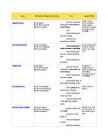
Tense Form Use Hints Example + I pv ((e)+s) Present Simple 1. daily routines, habits or repeated actions Every hour/day/week etc , I always play football in -? do/does not+I pv 2. permanent states usually, always, in the the evenings morning/evening/night, at night Present Am/is/are+Iing 1. actions happening now, at the moment of speaking Now, at the moment, these I am writing a lettesat Continuous 2.actions happening around the time of speaking days,

Inglise keel
Chpt 12 Verb Tenses
38
ppt

Chpt 12 Verb Tenses

Verbs! Verb forms Review of tenses Chapter 12, Pg 215 1 Timeline Draw a timeline of your life. List 810 events on the time line. Make sure you list your future graduation date! Moved to Cali 2005 Was Born Traveled to Europe Husband 1978 School graduates @ Oxford 1999 Started Got married School 1983 2008 2 The Six English Verb Tenses Three Simple Tenses Simple continuous Present ­ You walk. You are walking I run. I am running. Past ­ You Walked You were walking. I ran.

Inglise keel
Future forms
2
doc

Future forms

FUTURE FORMS Future Simple (will +I) a) in predictions about the future usually with the verbs think, believe, expect, etc., the expressions be sure be afraid, etc., and the adverbs probably perhaps, certainly, etc I'm afraid we won't be on time for the meeting. b) for on-the-spot decisions. c) for promises (usually with the verbs promise, swear, guarantee, etc.), threats, warnings, requests, hopes (usually with the verb hope) and offers. d) for actions/events/situations which will definitely happen in the future and which we cannot control. The temperature will reach 40°C tomorrow. Be going to a) for plans, intentions or ambitions we have for the future. Now that they've won the lott

Inglise keel
Future Forms- slaidid-
28
ppt

Future Forms ( slaidid )

Future Forms Future Forms · 1) Future Simple will work · 2) Be going to am/is/are going to work · 3) Present Continuous am/is/are working · 4) Present Simple start(s) Future Forms · 5) Future Continuous will be working · 6) Future Perfect will have worked · 7) Future Perfect Continuous will have been working Future Simple · We do our morning exercises and think, "I think we will have a nice day " · Prediction (ennustused kõhutunde põhjal) · verbs think, believe, guess, expect, hope etc · expressions be sure, be afraid etc · adverbs probably, perhaps, certainly Future Simple · You see your little brother carrying a very heavy suitcase and you think, "I will help him carry the suitcase." · on-the-spot decision (hetkeotsused) Future Simple "Will you help me if I forget my moves?" "Don't worry! I will take care of everything." · reque

Inglise keel


Kommentaarid (5)

belladonnakillz profiilipilt
belladonnakillz: Kõige parem!!!!!! VÄÄRT!
20:37 13-12-2009
bbritu profiilipilt
bbritu: Tõeliselt hea!
18:42 14-11-2010
magxi profiilipilt
erlend kk: väga hea
23:23 09-05-2011


Sellel veebilehel kasutatakse küpsiseid. Kasutamist jätkates nõustute küpsiste ja veebilehe üldtingimustega Nõustun