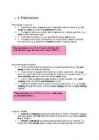
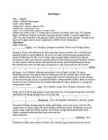
Biting lips generally mean the person is worried. Also, worry lines show up on the forehead. The mouth is downturned and the lips often become pursed. Their body is usually crooked and head is slightly tilted down. Showing regret Bowing the head and looking down is a classic sign of regret. The mouth is closed and the eyes, while open, usually look at the floor. They have crooked pose. Their head is leaned on knees. Showing annoyance Annoyed people are staring directly and their mouth is straight or open. They are rolling their eyes. They have wrinkled eyebrows Click to edit Master text styles and pursed lips. Second level Third level Their one lip corner is raised Fourth level in a sneer
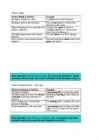
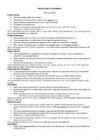
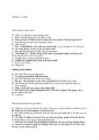
· Folded arms Showing joy · Big smile · Raised eyebrows · Leaned head · Legs crossed · Arms open · Touching other person Showing worry · Head lowered · Hand touching the forehead · Eyes closed or narrowed · Body crooked · Steady gaze Showing regret · Sad look · Head leaned on hands · Sight pointed down · Crooked pose Showing annoyance · Mouth straight or open · Rolling eyes or eyes wide open · Wrinkled eyebrows Showing sorrow · Red eyes - tears · Eyes pointed to one place · Face cowered with hands · Head lowered · Twisted pose · Legs steadily side by side
THAILAND GETAWAY 12/01/2008 Dear Sirs I have just returned from a holiday in Thailand Getaway. I am writing to express my annoyance about a number of points. First of all, the beaches were dirty and crowded. As a result, I didn't see any clean and free places where for suntanning. I like snorkelling, but you have not snorkelling equipment for all the family. Take a tour by elephant was impossible because queue was too long. Even bikes were out of order. All these points made me very annoyed. I insist on paying back a half of the sum I paid for the holiday. Yours faithfully M. Mets (Mr) words (109)
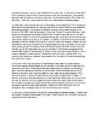
Dear Sir or Madam, I am writing to you to express my annoyance at the supreme quality of service that was promised but never delivered. I am talking about the intensive 4-wekk language course provided by you, International Language Centre. First things first the "highly qualified staff" had a terrible sense of time and always arrived late. Not to mention their insufficient language level, which I found quite displeasing. In addition to that, the provided free course materials were in reality just old and used
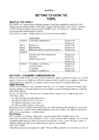
Time expressions used with present simple: Every day/week/month/year, usually, sometimes, always, rarely, never, often, on Monday, in the morning, evening, etc. Present Continuous (to be + verb -ing) Present Continuous is used for... Example Temporary situations I am paying off my car loan this month Frequently repeated actions with always, He is always leaving his dirty clothes on constantly expressing annoyance or the floor! criticism Actions happening at or around the I'm making coffee, would you like some moment of speaking Fixed arrangements in the near future I am meeting Diana for dinner on Friday night. (= It is arranged that wee meet no Friday night.) Time expressions used with Present continuous: now, at the moment, at present,
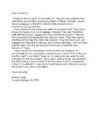
Dear John Price Thank you for tour letter of December 15. This was very unpleasent to read about your problem durning tour flight to Atlanta, Georgia. I would like to apopogize on behalf of airline for the annoyance and inconvenience you suffered. I have looked into the matter and talked to the airline staff. They didint know nothing about your lost luggage. However, they said that airline staff didnt found your luggage and they need these receipts. I showed them your letter and explained how upset you were. They now regeret that they did not take the control the situation. They had found your lost luggage and they want to offer you their sincere apologies. I am sure that
scream into your face. Unfortunately television producers do not want to know anything about laws and regulations that bear on commericials. Furthermore there are too much violence in television and it might be addictive. Also, radio has its disadvantages. Firstly, there is no picture. It means that deaf people couldn't get any information via radio. In addition, you have to know the frequency by heart because it differs when you move. When you use the Internet, then your biggest annoyance should be spam. Spam is everywhere from e-mails to newsportals. Spam involves also commercials like they are in TV. Moreover, newspaper has the smallest disadvantages. It takes time to find information from the newspaper. Also newspaper migh be inconvenient beacause of its size. In conclusion, media channels have all kind of advantages and disadvantages. It seems that advantages outweigh disadvantages. All modern media channels are convenient and people can get quick fresh information.
signal of interest. General Characteristics Expressions: Facial expressions are highly flexible and changeable. The face can encode() a variety of communicative and informative messages. 8 Raise of eyebrows express astonishment.( ) 8 We frown in displeasure or confusion. ( ) 8 Envy or disbelief may be displayed by a raised eyebrow. ( ) Emotions: The face is the most reliable indicator of a wide range of emotions : Joy and happiness , fear , annoyance, surprise, anger, sadness etc. When we are shocked we open our mouth. Blushing() is another facial phenomenon that expresses emotion. A shy person becomes red in face when attention is focussed on him. Smiling and frowning are two major facial expressions. A genuine smile means `I appreciate you'; `I accept your ideas'. A frown means `I find you puzzling Laughter: Laughter is composed of a broad range of gesture & sounds. Ha-Ha' is a genuine laughter
Personal experiences or changes, which have happened. E.g. Sally has gained some weight recently. Present Perfect Continuous is used for: Actions in the pas and continuing up to the present. E.g. I have been studying for the Math's test for three hours. Past actions of certain duration having visible results or effects in the present. E.g. She has been lying in the sun and now she has sunburn. Expressing anger, irritation, annoyance, explanation or criticism. E.g. He has been playing that horrible music all day long. Time expressions used with Present Perfect and Present Perfect Continuous: just, ever, never, already, yet, always, how long, so far, recently, since, today, this week/month, etc Note how the following words are used: Ago is used with past Simple Before is used with present or past tense forms to point out that an action preceded another.
Most people were working at their desks, but Jane was staring out the window and pretending to write something at the same time. • Changing states The car was getting worse all the time. One of the headlights was gradually falling off, and the engine was making more and more funny noises. • Repeated actions - criticism With a frequency adverb, this use is similar to the use of Present Continuous to express annoyance. When Jane was at school, she was always losing things. Past Continuous is not used to describe general habitual actions, without the sense of criticism mentioned above. Past Simple is used for this meaning. When I lived in London, I walked through the park every day. 4 Used to & would Used to This often contrasts with the present. The contrast may be stated or understood.
for six years) · Recently completed action (I have finished my essay) TIME EXPRESSIONS USED WITH PRESENT PERFECT: for, since, already, always, just, ever, never, so far, today, this week/month etc. lately, recently, still (in negations) etc. Present Perfect Continuous · To put emphasis on the duration of an action which started in the past and continues up to the present (We have been cleaning the house all morning) · To express anger, irritation or annoyance (She has been using my computer without asking) · Fo repeated actions in the past continuing to the present. (She has been going to the gym) TIME EXPRESSIONS USED WITH PRESENT PERFECT CONTINUOUS: how long..?, for, since, all day/morning etc, lately, recently Past Simple · Action occurred at a definite time in the past (Postman delivered the parcel..) · Actions that happened immediatly after one another in the past (She opened the curtains and looked out
4. Fall into pattern of the familiar task tuttava ülesande mustrisse (rutiini) laskuma 5. Lumber into the living room tagasi elutuppa komberdama 6. Lapse back into silence tagasi vaikusesse laskuma 7. From a peripheral peek kontekstis: silmanurgast piiludes 8. In haste ruttamisi 9. Their stares boring into my back nende pilgud mu selga puurimas 10. Hamming it up just a bit pisut üle pingutama, üle mängima 11. Their high was wearing off in the wake of my annoyance nende elevus hakkas järgemööda koos mu pahameelega vähenema, (hajuma) 12. Hold off ära hoidma 13. Tip off reetma 14. Beam at a memory mälestuse peale naeratama 15. Been on the wagon ree peal olnud 16. Carving of Adonis perched on my faded quilt istus mu luitunud tekil nagu Adonise kuju 17. Mind over matter hea tahtmise korral kõik võimalik? Mõttejõud ületab füüsilised piirangud? 18. On agenda päevakorral 19
He comes to Cyprus in the end of the play and tells about the death of Brabantio's. Lodovico he is one of Gratiano and Brabantio's kinsmen. He comes to Cyprus with Gratiano. He says Othello that he must leave Cyprus to Cassio's rule. He sais the final words of the play. Emilia she is Iago's wife and Desdemona's maidservant. She is strong, forthright and honest. Iago treats her with disdain and annoyance, but Emilia loves Iago. She doesn't believe, that Iago is a cruel man, but soon the secret is revealed. Later Iago kills her. Bianca she is a seamstress and the wife of Cassio. She is often referred to as a prostitute, because she is of lower class than Desdemona and Emilia. Sailor, Messenger, Herald, Officers, Gentlemen, Musicians, Attendants, Other senators but Brabantio Plot Summary:
Out we get. Let's hope all the tyres are hard when we come out. We are without a spare at the moment. MARY: Come on, Susan; let us go first. I do hope the news-reel isn't finished. =============== 1 windscreen = glass that protects the driver from the wind. 2. Half a minute = wait a short time. 3. a red light against us = telling us to stop. 4. Get it seen to = hire someone to repair it. 5. scared = frightened. 6. to bump=to knock roughly. 7. Confound it! = a mild curse, spoken out of annoyance. 8. pull up = to stop a horse by pulling the reins; now used of cars. 9. flat = not pumped up; no air in it. 10. jack = instrument for raising a heavy weight.
n. analyzed into parts for study n. analysis Syn. examine Scientists must analyze problems thoroughly. Analysis of the substance confirms the presence of nitrogen. ancient adj. something from a long time ago, very old. Syn. old Archaeologists analyze ancient civilizations. Dave found an ancient Roman coin. annoying adj. a slight bother, disturbing to a person n. annoyance Syn. bothersome v. annoy adv. annoyingly Mosquitoes can be an annoying part of a vacation at the beach. She annoyed her parents by coming home late. anticipate v. to think about or prepare for something ahead of adj. anticipatory time n. anticipation Syn. predict No one can anticipate the results of the games. They planned their vacation with anticipation. conform v
I shook my head. "Too embarrassing." "That's really frustrating, you know," he complained. "No," I disagreed quickly, my eyes narrowing, "I can't imagine why that would be frustrating at all -- just because someone refuses to tell you what they're thinking, even if all the while they're making cryptic little remarks specifically designed to keep you up at night wondering what they could possibly mean... now, why would that be frustrating?" He grimaced. "Or better," I continued, the pent-up annoyance flowing freely now, "say that person also did a wide range of bizarre things -- from saving your life under impossible circumstances one day to treating you like a pariah the next, and he never explained any of that, either, even after he promised. That, also, would be very non-frustrating." "You've got a bit of a temper, don't you?" "I don't like double standards." We stared at each other, unsmiling. He glanced over my shoulder, and then, unexpectedly, he snickered. "What?"
Task Priorities The IBM PC architecture has been used for all number of applications. It is a well-documented standard with an enormous number of compatible soft- ware packages available. But it has some drawbacks, including the non-real- time nature of the standard Windows operating system. You have probably experienced having your PC stop responding for a few seconds while it thrashes the hard disk for some unknown reason. If you are typing a docu- ment on a word processor, this is a minor annoyance—whatever you typed is captured (as long as it isn’t too many characters) and shows up on the screen whenever the operating system gets back to processing the keyboard. What happens if you are getting a continuous stream of data from an audio or video device when this happens? If your system isn’t constructed to permit your data stream to have a high priority, some data may be lost. If you are using a PC-like architecture, be sure the hardware and operating system soft-
 annaabi.ee