Vajad kellegagi rääkida?
Küsi julgelt abi LasteAbi
Logi sisse

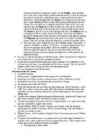
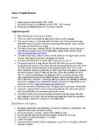
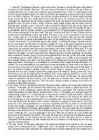
English literature of the 14th, 15th century (0)

5 VÄGA HEA
Punktid
Literature of the 14th century
The highpoint of medieval literature, the best writer of late medieval lived then.
William Langland 1332 -1376 – the last important poet of alliterative verse . His masterpiece “The Vision of Piers Ploughman“ – how important working hard is, the labour of peasants is the base of the welfare of the people. A passionate protest against social injustice. A time when peasants were slowly rising against their feudal lords. Descriptions of different social classes . Religious mysticism. Two great principles: 1) all men are equal before God; 2) honest labour is dignified. It is a dream allegory. A young maiden named Youth , Greed is an old witch .
The greatest writer of this period and the whole of medieval times – Geoffrey Chaucer (1340?- 1400 ):
  • The father of English poetry
  • The creator of English versification
  • The first poet to use various metres
  • Laid the foundation of the new literary English language
  • Wrote in Middle English
  • An active man of affairs, who belonged to the middle class
  • Spoke Latin , French , Italian – the important languages of the time
  • Worked as a diplomat for a time
  • Translated works into English (from Latin, French, Italian)
  • Favourite of the royal court
  • At the time of his death was regarded as a great poet and was buried in Westminster
  • As a writer he was very prolific
  • His early works show a strong influence of French and Italian poets, especially the great Italian Renaissance geniuses – Boccaccio , Dante, Petrarch
  • His masterpiece – “The Canterbury Tales“:
    • He imitates what Boccaccio does in Decameron . Introduces frame story/ narrative . A springtime pilgrimage to Canterbury cathedral (which contained the important relics of St Thomas à Becket). Pilgrims would gather in groups because it was easier to protect themselves. The protagonists gather at an inn and wait for others . GC chooses people from the three major classes of the society: feudal – the Knight , the Squire (a smaller landowner), the Yeoman (farmer), the Miller , the Ploughman etc; ecclesiastical – the Parson (a priest in charge of the parish), the Summoner (an official in a church court), the Monk , the Prioress (a lady at the head of a religious group of women), the Pardoner (sells indulgencies), the Student ( studies theology); urban – the Physician, the Lawyer , the Merchant , the Shipman (sailor), the Cook , the Wife of Bath (a widow from Bath), the Innkeeper. At first, each pilgrim was to tell two stories on the way to Canterbury and two on the way back ; the innkeeper would give a good meal and a night at the inn to the best storyteller. Altogether 144 stories, GC only managed to write 24 before his death. It is studied as a faithful reflection of 14th century life in England . GC was amused by his own characters and rarely criticises them sharply; shows a very deep understanding of human motivation. His comments reveal his profound understanding of the social problem of his day.
    • The Prologue – paints the setting of the story. Introduces each character (30). GC himself functions as the narrator . He tries to be objective and tries to keep a distance from the characters. The descriptions are very vivid and economic . He pays attention to the pilgrims’ clothes. E.g. the Knight – has come back from some war, is high-minded, gentle-humoured and tries to live according to the ideals of courtly love, although he doesn’t understand that this code of behaviour is slowly disappearing. The Squire is his young son who has curly hair, is high-spirited and wears a white-sleeved gown embroidered with red flowers who also thinks he is a typical courtly lover . Most of the clerics are ridiculed. E.g. the Monk doesn’t pray , he hunts. He is fat, doesn’t fast a lot, rides a good horse and is richly dressed. He is still presented in good nature. The Parson is poor but is rich of holy thought and work . The Student rides an extremely lean horse, is poor, dresses threadbare – his clothes are shabby – because he spends all his money on books. He represents the spirit of learning. The Shipman represents many of his countrymen, other sailors, including pirates , who were making a name for England as a powerful maritime nation .
    • They each tell a story suitable for their class, different genres. The Knight – a romance, the Miller – a fabliau, the Prioress – a religious legend. Each story has its own prologue and epilogue. There are numerous interruptions, characterised by the pilgrims’ own actions . The whole tales are a broad panorama of human nature including everything that is noble and base (the opposite of noble).
  • GC was in a transitional stage into the Renaissance. There is humanity and humanism in his works and it is why he has sympathy for people.
  • GC decided to break free from Italian and French literature. His vocabulary is very informal , easy, he doesn’t use alliteration and his verse is musical. He uses lines of 10 syllables with 5 stresses each. His lines run in rhyming couplets.
  • GC was a forerunner of the Renaissance.
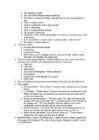
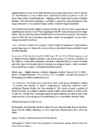
Literature of the 15th century
  • The barren century
  • Ethnic groups in England had become a more or less unified nation
  • Beginning of the English nation, no longer Saxon or French Norman, or Celtic
  • An earlier consciousness of nationality than elsewhere in Europe
  • The Hundred Years War 1337 -1453
  • When the external war was lost , there was the internal war: War of the Roses – 1455-1485; York (white) vs Lancaster (red). 1485, Henry Tudor united both families and ended the civil war, he became Henry VII, the first Tudor monarch . The end of the Middle Ages.
  • Chivalry was changing . Major technological advancement – gunpowder. Knights and their armour became useless. No need for enormous castles.
  • The previously rigid set of classes were not so rigid anymore. E.g. a poor man with a gun was a match for a knight with a sword .
  • Thomas Mallory “Morte D’ Arthur ”. In prose, very simple, vivid, the last great representative of medieval romances. Even as he was writing it, the whole idea of chivalry was losing its status .
  • William Caxton – the first printer in England. One of his earlier prints was of “Morte D’Arthur”
  • The genre of the ballad became very popular and very well developed . A ballad is a song that tells a story, usually they were accompanied by music. They usually consist of four lines called a quatrain. Features of a ballad:
    • The beginning is often sudden
    • The language is simple
    • The story is told through dialogue and action
    • The theme is usually fairly tragic, although there are some comic ballads as well
    • There is usually a refrain
    • A ballad usually deals with a single episode
    • There is little setting
    • There is a strong dramatic element
    • The narrator is impersonal
    • Fairly trite or stock similes and metaphors are used (e.g. blood red wine , a milk white horse)
    • A lot of parallelism is used as well as mystical numbers such as 3 and 7
    • The author is usually unknown
  • The subject matter:
    • Everyday life of common people
    • Local history
    • Legend and folklore
    • Most common motifs: disappointed love, jealousy, revenge, sudden disaster, adventure , war and death, the supernatural
  • The most famous group of ballads – the Robin Hood cycle . He is said to have been a yeoman but his real life is overshadowed by the ballads. Characters:
    • Friar Tuck
    • Little John
    • Maid Marian
    • The Sheriff of Nottingham – feudal authorities
    • Guy Gisborne
    • King Richard I AKA Richard the Lionheart
    • Prince John
  • The cycle represents the growing tensions between the farmers and the feudal lords.
  • Other ballads:
    • Historical ballads - “ Chevy Chase” A rivalry between an English and a Scottish family
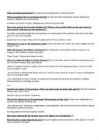
    • Love ballads – “ Childe Waters” Celebrates the eternal love of Ellen for Childe Waters who doesn’t love her and treats her cruelly. In the end he falls in love with her and marries her.
    • Ballads of domestic tragedy – “The Two Sisters ” The older sister drowns her younger sister, because the older sister’s sweetheart paid too much attention to the younger sister. “The Cruel Brother ” A brother stabs his sister on her wedding day, because she didn’t ask his permission to marry .
    • Ballads of humour – “Get Up and Bar the Door ” A husband and wife are too lazy to lock the door and whoever speaks first has to get up and do it.
    • Ballads of the supernatural – ghosts, witches , fairies etc. “Thomas Rymer” Thomas’ love for a fairy who takes him to Elfland.
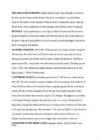
  • Medieval drama – began in the Middle Ages, is deeply rooted in folklore (pagan rites). Four stages of development. The earliest drama began as liturgical (a kind of sermon in church) drama.
  • Miracle plays or miracles, were performed by guilds of artisans in town squares. There were several cycles of miracle plays (around 50). They all had some kind of religious component, the lives of saints or stories of the Bible .
  • Morality plays were the beginning of secular (non-religious) drama. Mostly allegorical characters, a lot of moralising, the struggle of good and evil etc. The plot is closer to everyday lives.
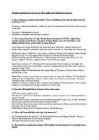
  • Interludes – comic episodes, close to farce and fabliau. These mocked religion.
English literature of the 14th-15th century #1 English literature of the 14th-15th century #2 English literature of the 14th-15th century #3 English literature of the 14th-15th century #4
Punktid 50 punkti Autor soovib selle materjali allalaadimise eest saada 50 punkti.
Leheküljed ~ 4 lehte Lehekülgede arv dokumendis
Aeg2013-03-11 Kuupäev, millal dokument üles laeti
Allalaadimisi 14 laadimist Kokku alla laetud
Kommentaarid 0 arvamust Teiste kasutajate poolt lisatud kommentaarid
Autor Lisyda Õppematerjali autor
Lühiülevaade 14.-15. sajandi kirjandusest

Sarnased õppematerjalid

English literatutre - Authors-history
3
docx

English literatutre - Authors, history

THE ANGLO-SAXON PERIOD ­English literature came when the Angles, the Saxons, the Jutes and the Frisians invaded Britain. During this time English was called Anglo- Saxon or Old English. In the chronicles of Roman history (composed in Latin) is said that Britain makes its first appearance in written language when Romans invade the England. BEOWULF ­ most important poem, surviving in a 10th-cent manuscript. The historical period of the poem's events can be dated in the 6th to 8th century. Much of the material of the poem is legendary and paralleled in other Germanic historical-mythological literature in Norse, Old English, and German. GEOFFREY CHAUCER (1340-1400) ­ Politician and writer, fought in France during the 100 years war. He visited Genoa and Florence where he became acquainted with Italian literature and in particular with the works of Dante, Petrarch and Boccaccio. The French period (up to 1370). ­ early works were based mostly on French models

British literature
History of English literature
3
docx

History of English literature

History of English literature Periods: 1. Anglo-saxon or early literature (499 - 1066) 2. Second or Norman or late Medieval period (1066 - 13/14 century) 3. Renaissance or Modern period (13-14 century ­ present) Anglo-Saxon period · All of the literature had its roots in folklore · Texts were orally transmitted, the anglosaxons had no written language · Two types of singers: 1) scop (attached to the royal court, wrote poetry and songs, performed them); 2) gleeman (travelled, mostly sang other peoples' songs, not their own songs; performers of scop songs) · The oldest known song ­ Widsith (The Far Traveller/Wonderer); tells of a gleeman who travels in Europe, of his love of noble deeds, speaks of the shortness of life

Inglise kirjanduse ajalugu
English literature
4
doc

English literature

He shows a very rich and leisurely portrayal of this Baltic world, providing many customs like the close relationship between lord and man in the war-band and others. All this encouraged the supposition that the unknown author of the poem was himself a bard of the ancient type portrayed within the poem (a lord's scoop). However, many people propose that the author could be Christian poet, perhaps a monk, versed not only in old native traditions, but also in the culture and literature of the Latin Church, and whose purpose of writing was highly moral. For example, the fate is a `providentia' and the monster Grendel is an embodiment of evil fighting against Christian militant. This contrast corresponds to the poem itself. The poet is looking back from his own Christian times to an old society with different customs and beliefs. The poem is set, as it is announced in the very first line: `in days gone by'

Inglise keel
English literature summary
38
pdf

English literature summary

English   literature   is   one   of   the  oldest   literatures   in   Europe;   dates   back   to   the   6th   century   AD.   Oral   literature,   i.e.   not   written   down,   spread   from   person   to   person.   In   449   AD   Anglo-­‐Saxon   tribes   invaded   England   –   beginning   of   the   Anglo-­‐Saxon   period   in   English   literature.  The  first  form  of  literature  was  folklore,  carried  by  scops  and  gleemen,  who  

Inglise keel
Geoffrey chaucer
5
doc

Geoffrey chaucer

courtier, a diplomat, and a civil servant, as well as working for the king, collecting and inventorying scrap metal How many periods are his works divided into? What are they called? What are the main works of each period? What/who are they inspired by? His poetry is generally divided into three periods the French period ("The romance of the rose"), the Italian period ("Troilus and Criseyde", inspired by his own trip to Italy) and the English period ("The Canterbury Tales") What type of a work is The Canterbury Tales ? Poetry (two tales are in prose: the Tale of Melibee and the Parson's Tale) When did Chaucer die? Where is he buried? He is believed to have died of unknown causes on 25 October, 1400. Geoffrey Chaucer is buried in 'Poets' Corner', Westminster Abbey, London. Why is he called the f ather of English literature?

Inglise kirjandus
Outstanding figures in British literature
26
pptx

Outstanding figures in British literature

Outstanding figures in British literature Eva Martina Põder 11.b British literature Refers to all literature produced by British authors from the United Kingdom, which includes England, Scotland, Northern Ireland, Wales, the Channel Islands, and Isle of Man Includes early works written in Gaelic, Welsh, and Latin, works in Old, Middle, and Modern English, each of which represents a different period Full of great works British works in Latin Venerable Bede He lived between 673 and 735 AD The greatest of all the AngloSaxon scholars He's the earliest English historian, whose work has shed light on a period of English history that would have otherwise been unknown ,,The Father of English History" Wrote / translated about 40 books on almost every area of knowledge, i.e. nature, astronomy, and poetry

British literature
Old English Literature
3
doc

Old English Literature

Revision questions for the test on Old English and Medieval Literature. 1.) How is literature analysed and studied? What is the difference between the diachronic and synchronic view? Literature is studied and analysed by reading the piece of work profoundly and work on all the aspects of the piece. Diachronic is development in history Synchronic is particular state at any given moment 2.) Give a general overview of Celtic Britain, Roman invasion in 55-54 BC, Anglo-Saxon invasion and the second Roman "invasion" of Great Britain, who were the leaders, what

Inglise kirjandus
Ameerika kirjandus alates I maailmasõjast kuni tänapäevani
29
docx

Ameerika kirjandus alates I maailmasõjast kuni tänapäevani.

These criminals are doing what nature, environment, their unconscious tells them to do. Naturalists do not judge their characters, they simply report. Try to describe facts like they are. Naturalists depict the lower, coarser forms of life. · Drab, squallid set of scene. Revolting, disgusting · Characters are people with strong animal desires · Neurotic characters unable to understand the forces that control them · By the end of the 18th century the naturalism depicts in europe, but stars to become the literature method no 1 in america · Naturalism appealed American authors because they found it very right to describe what was going on in the turn of century in America · They wanted something fresh, new · They were disgusted by romantics · Showed the harsh tone in moral life · Refleced the development of science · Period of intense urbanisation, the city is in the center of the novel, often

Ameerika kirjandus


Kommentaarid (0)

Kommentaarid sellele materjalile puuduvad. Ole esimene ja kommenteeri


Sellel veebilehel kasutatakse küpsiseid. Kasutamist jätkates nõustute küpsiste ja veebilehe üldtingimustega Nõustun