Vajad kellegagi rääkida?
Küsi julgelt abi LasteAbi
Logi sisse

Discuss the representation of the generation of fathers in Turgenev’s novel “Fathers and Sons” (0)

1 Hindamata
Punktid
Inglise keel - Kõik luuletused, mis on inglise keeles
Discuss the representation of the generation of fathers in Turgenev ’s novel “Fathers and Sons
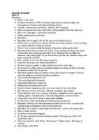
Turgenev always had two tasks before him – to depict the body and pressure of time, and to depict the rapidly changing face of cultured Russian society (Freeborn 1960:48). Kluchevsky (1993:40) defined one case of the generation gap in the beginning of the XIX century as “merry cosmopolitan sentimentality of the fathers now transformed in a patriotic grief of their children . The Fathers were Russians, who passionately wanted to become French ; the sons were raised as French and passionately wanted to become Russians. Fathers and Sons situates this generational conflict within family relations . In this essay , the ways how Turgenev represents the generation of Fathers in Fathers and Sons is discussed.
Fathers and Sons is set in between Russia 's defeat in the Crimean War and the Emancipation of the Serfs – a socially challenging area. Mid-19th century Russian intellectual life was characterized by a radical split between the ‘fathers' and ‘sons’. The older generation was young during the heavily oppressive rule of Tsar Nikolai I. For them , Tsar Alexander II’s reforms were very anticipated and progressive. However , the ‘sons' or younger intellectuals saw these reforms were not fast or far-reaching enough. Thus, the generation of fathers is seen in the prevailing gentry, ‘дворянства’, who ruled over the serfs and lands. Turgenev himself states , that «Вся моя повесть направлена против дворянства как передового класса. Вглядитесь в лица Николая Петровича, Павла Петровича, Аркадия. Слабость и вялость, ограниченность. Эстетическое чувство заставило меня взять именно хороших представителей дворянства, чтобы тем вернее доказать мою тему: если сливки плохи, то что же молоко? Они лучшие из дворян — и именно поэтому выбраны мною, чтобы доказать их несостоятельность». (Pisma IV, 380). Accordingly, Sukikh ( 1971 :312) agrees that the progressive thinkers of the forties had lost their edge . This evaluation by the author himself sets a tone through which the connotation of the portrayal of the ‘generation of fathers’ in Fathers and Sons can be assessed.
By taking the title in the broader sense as indicating a generational, rather than a parental and filial relationship , the “generation of fathers” is represented by Nikolai Petrovich Kirsanov, Pavel Petrovich Kirsanov and Yevgeny Vassilievich Bazarov. The ‘fathers’ can be seen as the contemporaries of the “superfluous man” and romantic idealists, who had a carefully shaped taste of arts and sense in beauty. Vishnyakova (2011) puts it, “The "fathers" were reading the German idealists, admired French romanticism , unconditionally worshiped beauty, and strongly believed in a hierarchy of moral values that were not human conventions.” Indeed, this characterisation is mainly brought forward by typical Turgenev’s literary tools; he presents his ‘fathers’ with a radically different generation of ‘nihilists’ and from this contrast , the main critique and description of the very generation of Turgenev himself arises. Freeborn (1960:99) comments that radicalism/ nihilism (Turgenev used radicalism) aimed to “to present as objectively as possible the ideological and class antagonisms existing between the fathers and the sons in that crucial year on 1859 when the two wings of the intelligentsia were in open disagreement”.
From the beginning of the novel, Turgenev allows the reader to unveil the similarities and differences between the generations by portraying their interactions, moods , thoughts and eby their manners of speaking. At the beginning, as Nikolai is waiting for his son, some of the qualities of the fathers’ generation are displayed. The lengthy description of Nikolai’s bibliography associates him with the gentry. The reader learns that Nikolai acts on emotion, marrying Masha despite his parents will, and found joy in a love-filled marriage . This can be somewhat descriptive of the ideals represented by the gentry – romanticism, aesthetic virtues, sentimentality. Also noticeable in this scene is the use of diminutive forms when portraying Nikolai -“подогнувши под себя ножки “, “заслужил прозвище трусишки” that belittle Nikolai as a serious man and portray that the owner is “not a part of the adult world” (Bialyi 1968:13). The portrayal of rather clumsy and non-adult continues in Chapter 4 where Nikolai “без всякой видимой причины потопал ногами”. All in all, the first impression of the older generation is rather naïve, yet unserious.
As chapter 3 embarks, the koliaska moves towards the poorly managed  Kirsanov estate, Marino , which is a reflection of Nikolai's lack of practical and organizational abilities. Nikolai himself says that “Вообще ты больших перемен в Марьине не найдешь.” And truly, there is no improvement - there’s “деревеньки с низкими избенками под темными, часто до половины разметанными крышами… опустелых гумен, и церкви, то кирпичные с отвалившеюся кое-где штукатуркой, то деревянные с наклонившимися крестами и разоренными кладбищами”. The peasantry is poor and disobedient – “как нищие в лохмотьях”. In chapter 4, it is described that even Nikolais best efforts do not bare fruits – “молодые деревца плохо принимались, в пруде воды набралось очень мало, и колодцы оказались солонковатого вкуса”. Witnessing this situation makes Arkdays heart ache – perhaps in a way that Turgenev himself felt with the fate of ill-organised estates. Marino’s lacklustre management symbolises the futility of the gentry’s attempts to modernize - Nikolai stands as the „the economic failings of the gentry” (Dunaev: 1983:196). The shortcomings of the Kirsanov management are even more obvious when subtly contrasted with the well-organised Nikolskoe, ran by Odintsova – a representative of the new generation. Therefore the sad state of Marino can be seen as a symbol to the ineffective establishment of the gentry, the generation of fathers.
Moreover , one of the climaxing issues of the era – the liberation of serfs- surfaces in the conversation , and Nikolai, despite adapting the obrok method, is not fully holding modernist views - “Я решился не держать больше у себя вольноотпущенных, бывших дворовых, или по крайней мере, не поручать им никаких должностей, где есть ответственность..“ Ripp (1980) emphasizes, that although Nikolai finds himself as progressive and liberal, having tried to improve to conditions of the serfs, he cannot disguise his somewhat superior tone when speaking of peasants – for example, has sold off the land that would be given to the freed serfs (“притом же эта земля отходит к мужикам”). Therefore Turgenev presents the reader with an image of noblemen who, despite trying to modernize, still seek to gain profit at the expense of the to-be free peasantry before the reforms. Initially, Nikolai refuses to marry Fenichka based on their social status . The attitude towards peasantry is the key difference between fathers and sons, and the older generation, despite being open to reform , is still representing class differences.
Similarily, Bazarovs parents are eager to represent that they have been progressive in the countryside , referring to himself as “homo novus”. Also refers to applying obrok system and given serfs some land. The fathers, both trying to win the approval of their sons. As Vasiilii also is troubled with some disobeying serfs, the shame is similar to that of Nikolais when speaking of Fenichka.
The two Kirsanov brothers adhere to certain ideals and standards which form the basis of their existence. The Insinuating traditional values are evident in Pushkins poetry , rhapsodizing about nature , but also in holding firm principal views. Such is the degree of disagreement between Pavel and nihilism that he states for the whole fathers generation that “Мы, люди старого века, мы полагаем, что без принсипов , принятых, как ты говоришь, на веру, шагу ступить, дохнуть нельзя. Vous avez changesatire when sketching Pavel (eg his French accent). his English sink as a sign of “progeress” (albeit the doors in Marino do not close ). Freeborn (1960:104) notes , that “for Pavel civilization is an aristocratic principle, a priceless artistic and cultural heritage far removed from the mundanities of economics”. The traditional values are irrelevant to the peoples basic (economic) needs.
Bazarov gives a harsh evaluation to Nikolai as “ славный малый. Стихи он напрасно читает и в хозяйстве вряд ли смыслит, но он добряк”. Evidently, one of the traits that is omitted to the generation of 1840s – the fathers - is the sentimentality and overly romantic feelings that contrast strongly with that of the new men of the 1960s .
Nikolai is depicted as sentimental and dreamy as he awaits his son. He ponders long in his thoughts, and sighs overly emotionally "Сын... кандидат... Аркаша...", while also thinking of his long-lost wife . Throughout the novel he does not hesitate to kiss his son, initiate physical contact and openly express his fondness – qualities which are not overly ‘manly’ or adult, but rather emotional and child -like. In nature, he thinks "Как хорошо, Боже мой!" .. и любимые стихи пришли было ему на уста”. Nikolais fondness of poetry is also deemed silly as he starts to quote verses by Pushkin in Chapter 2 –“А впрочем, я согласен с Пушкиным -- помнишь, в Евгении Онегине: Как грустно мне твое явленье, Весна, весна, пора любви!” – which is abruptly ended by Bazarovs request for matches. The aesthetic sense of the gentry is shown as Nikolai plays Schubert 's "Erwartung" on his cello - albeit being not that skilful.
As of Pavel – he is beautifully appointed room is more likely a reflection of his social status and Anglomania than of any particular aesthetic sensibilities. Bazarov feels some kind of pity towards Pavel, he finds that a man must be his own master, not trapped in the aristocratic emotionality. the true aristocrats - the anglomaniacs, westernists, the „Pechorin types “.
Larding their chatter with foreign phrases typical to the gentry.. e destruction of patriarchal and monarchical illusion Religion allied with feudalism, odd aristocratic sentimentality, Bucolic life.
The love-story between the peasant and the landlord symbolises an underlying problem of the society on the eve of Emancipation in 1861 (the serfs were emancipated by royal decree in 1861, novel set in 1959 ). Such a relationship between landowner and peasant girl takes the reader further into ideology, calling to mind the social scene in Russia on the eve of Emancipation. Some (contemporary) critics found this illegal affair as proof of the weak morals of the gentry – despite their high ideals and ideologies of class. As Nikolai is initially ashamed of his affair and illegitimate son, offering to hide Fenichka while Bazarovs stays, he later transforms and decides to marry her. The wedding between these two suggests Turgenev's  optimism for Russia's future. ( Jahn , 1977)
-Turgenev concluding that in some way, the old generation will find its place ???,
Negative attitude towards the younger generation is only represented by Pyotr .
As Vyashnikova finds, “One of the novel's major themes is that it is the children's fate to become like their fathers.”
However, Nikolais ability to feel fulfilment in nature and love, to enjoy music and arts is something that in a way, makes him the hero of the novel. He – together with changed arkadii – is capable to enjoy and lead a life fulfilment, unlike others .
While Nikolai is a man of the forties, Pavel is seemingly more a man of the 30s - similar to Pechorins (Woodward 1996:30) Pavels views ar shown to bwelong to ‘ narrow class boundaries’ (Dunaev 1883:199) Pavel is heavily satirised- anglomania, use of french, style. The figure of the true aristocrat is represented by Pavel.
In Chapter X Bazarov criticises Pavels manner of speech -- Аристократизм, либерализм, прогресс, принципы, -- говорил между тем Базаров, -- подумаешь, сколько иностранных... и бесполезных слов! Русскому человеку они даром не нужны. As noted by Woodward (1996:62) as “abstractions without meaning for the mass of the people with which the gentry, he contents, contrieve to justify their indolence”.
Bilay (56-57) coments that Nikolais XI chapter tender heart shows that he has “had his day”.
Vassiili sayd “ I love to medidate n this spot as I watch sunset”
Pavel believes that a true Russian believes in the peasantry in terms of faith .

Bibliography


Turgenev's Russia : from Notes of a hunter to Fathers and sons / by Victor Ripp.Detail Only Available By: Ripp, Victor. Ithaca ; London : Cornell University Press, 1980. 01/01/1980 218 p. ; 23 cm. Language : English
Turgenev:a study By: Freeborn, Richard. [London] Oxford University Press, 1960. 01/01/1960 201 p. 23 cm. Language : English
V Kluchevskyi, Course of Russian History, part 3, Moscow , 1993,
p. 420.
Turgenev Letter to K.K. Sluchevsky, 26/14 April 1862 . Sobr. Soch. 1958, 339-41
O. Vishnyakova Her most recently published paper is “Russian Nihilism: The Cultural Legacy of the Conflict Between Fathers and Sons”, Comparative & Continental Philosophy Journal (Equinox Publishing, London), Vol. 3, Number 1 (2011).
Turgenev (Pisma IV, 380) IN Turgenev’s Fathers and Sons, Woodward, J. page 30.
http://www1.umn.edu/lol-russ/Other/Fathers.pdf ) (Jahn, 197)
Bialyi, G.A., V. Arkhipov protiv Turgeneva, Novyi mir, XXXIV :8 (1958), 225-9, Roman Turgeneva Ottsyi i deti , 2nd edn. (Moscow- Leningrad , 1968)
Sukhikh, I.N Roman I.S Turgeneva, Ottsy i deti v russkoi kritike (Leningrad 1971), 108-19.
Dunaev, M.M Ivan Turgenev: Zhizn i tvorchestvo (Moscow 1983) – Uroki urgeneva in I.S ottsY I DETI (Moscow 1991), 5-16
To be read:
http://www.tandfonline.com/doi/abs/10.1080/00806767108600570
http://www.inter-disciplinary.net/wp-content/uploads/2009/06/saburova-paper.pdf
http://thelectern.blogspot.co.uk/2009/03/fathers-and-sons-turgenev.html
5
Discuss the representation of the generation of fathers in Turgenev’s novel-Fathers and Sons #1 Discuss the representation of the generation of fathers in Turgenev’s novel-Fathers and Sons #2 Discuss the representation of the generation of fathers in Turgenev’s novel-Fathers and Sons #3 Discuss the representation of the generation of fathers in Turgenev’s novel-Fathers and Sons #4 Discuss the representation of the generation of fathers in Turgenev’s novel-Fathers and Sons #5
Punktid 100 punkti Autor soovib selle materjali allalaadimise eest saada 100 punkti.
Leheküljed ~ 5 lehte Lehekülgede arv dokumendis
Aeg2013-03-20 Kuupäev, millal dokument üles laeti
Allalaadimisi 3 laadimist Kokku alla laetud
Kommentaarid 0 arvamust Teiste kasutajate poolt lisatud kommentaarid
Autor junglette Õppematerjali autor
inglise keeles: 2000 sona koos venekeelsete naidetega tekstist.

Kasutatud allikad

Sarnased õppematerjalid

Ameerika kirjandus alates I maailmasõjast kuni tänapäevani
29
docx

Ameerika kirjandus alates I maailmasõjast kuni tänapäevani.

the literature method no 1 in america · Naturalism appealed American authors because they found it very right to describe what was going on in the turn of century in America · They wanted something fresh, new · They were disgusted by romantics · Showed the harsh tone in moral life · Refleced the development of science · Period of intense urbanisation, the city is in the center of the novel, often · New characters were businessmen, salesman, immigants, poor farmers · These characters were in new settings, skyscrapers, departments store, apartment building, ghetto, stockyard (cattle, cows were slaughtered), commercial trust · Their world is not one of culture or high moral standards · For these new writers controlling new american social experience · Naturalists offered a view that questioned the belief that now was a conscious and

Ameerika kirjandus
Russian philology
30
docx

Russian philology

Consonants include a fricative //, a semivowel /wu/ and /xxvxw/, whereas the Standard and Northern dialects have the consonants //, /v/, and final /l/ and /f/, respectively. The morphology features a palatalized final /t/ in 3rd person forms of verbs (this is unpalatalized in the Standard and Northern dialects). Some of these features such as akanye and yakanye, a debuccalized or lenited //, a semivowel /wu/ and palatalized final /t/ in 3rd person forms of verbs are also present in modern Belarusian and some dialects of Ukrainian (Eastern Polesian), indicating a linguistic continuum. The city of Veliky Novgorod has historically displayed a feature called chokanye or tsokanye ( or ), in which /t/ and /ts/ were switched or merged. So, ('heron') has been recorded as . Also, the second palatalization of velars did not occur there, so the so-called ² (from the Proto-Slavic diphthong *ai) did not cause /k, , x/ to shift to /ts, dz, s/;

Inglise keel
All Our Kin
95
pdf

All Our Kin

E8/ ll3 04 05 hO 59 58 57 56 55 54 53 52 51 50 Generosity and Poverty 105 ,y CONTENTS 7. Vomen and 1'len: ''I'm Not in Love with No ?fan Really" 108 Charts and Tables Mothers and Fathers 109 Fathers and Children 117 CHARTS J'vlen and IVIothers 120 A: Grandparental Link Broken 56 8. Conclusion B: Parental Link Broken 56 WRITTEN IN COLLABORATION WITH JOHN R

Antropoloogia
Anna Karenina-kokkuvõte
17
odt

"Anna Karenina" kokkuvõte

He is concerned about his and his wife's public image, although he believes that Anna is above suspicion. Vronsky, a keen horseman, takes part in a steeplechase event, during which he rides his mare Frou-Frou too hard and she falls and breaks her back. Vronsky escapes with minimal injuries but is devastated that his mare must be shot. Anna tells him that she is pregnant with his child, and is unable to hide her distress when Vronsky falls from the racehorse. Karenin is also present at the races and remarks to her that her behaviour is improper. Anna, in a state of extreme distress and emotion, confesses her affair to her husband. Karenin asks her to break off the affair to avoid society gossip and believes that their relationship can then continue as previously. Kitty goes with her mother to a resort at a German spa to recover from her ill health. There they meet the Pietist Madame Stahl and the saintly Varenka, her adopted daughter.

Kirjandus
American Literature
10
docx

American Literature

philosophers such as Plato and Aristotle. Individual Liberty: "Life, Liberty, and the pursuit of Happiness" developed as the motto of this era, which forms the cornerstone of the U.S. Constitution today. Since the colonies had very few individual rights, they declared certain fundamental rights that they deemed "inalienable." Democracy: The colonies had no say in the formation of the government, and had no representation in the lawmaking process. Consequently, they were attracted to the idea of democracy, where the government is "of the people, by the people, for the people," as Lincoln later expressed in his Gettysburg Address. Religious Tolerance: Much impetus for the ideas of religious tolerance came from the rule of King George II, who was a staunch Catholic and did not allow freedom of religion to Protestants in New England. Voltaire was among the first to

Inglise keel
Blandings Castle
3
doc

Blandings Castle

At the start of the book, Freddie is still single and still living with his father. But then he meets Aggie and they start to meet secretly. Freddie is very resourceful and finds ways to get himself out of many different situations. Whenever he gets into trouble he always tries to make it look better, hoping that others would take it easier then. A good example is how he let his father know that he was engaged. Instead of just saying it out he tried to distract his fathers attention and just say it out in the middle of some other text (Quotes 4,10). Freddie also comes up with all sorts of plans on how to make something work. This is because he has seen a lot of movies and even written some himself. He tries to apply the plot to real life and through that help someone close in trouble. He is also very resourceful in this field (Quotes 4,6). Freddie works as a salesman in Donaldson's Dog-Joy and does everything he can think of to sell the product

Inglise kirjandus
Tsehhov daam koeraga Chekov Lady and the Lapdog
3
docx

Tsehhov daam koeraga Chekov Lady and the Lapdog

to be the queen of spades, whose image on the card appears to wink at him ­ uncannily resembling ..."the old woman!". A short "Conclusion" reports that Hermann has gone out of his mind, Lizaveta Ivanovna has married the prosperous son of the former steward of the Countess and is bringing up a poor female relation, and Tomsky is marrying a society princess. Questions for the seminar on Monday: 1. Explain the symbolic meaning of the title. How does it relate to the representation of the Queen of Spades as the Venus of Moscow? 2. Explain the role of chance in Pushkin's story and the role of card game in the psychological profile of his protagonist. 3. Is it important to see Hermann presented as a German person? 4. How does Pushkin view the Russian upper class society? Give examples of some ironic and/or satirical description of Russian society and its fascination with European values. 5. Describe the role of madness and the representation of the surreal overtones in the

Kirjandus
Translation history
14
docx

Translation history

This inspired many other translators during that period. • What happened in the 19th and 20th century in translation studies? When and who created the term ‘translation studies’? Translation Studies – James S. Holmes - 1972 Ferdinand de Saussure – Lived during the 19th and 20th century. He was a Swiss linguist and a semiotician. He is widely considered one of the fathers of 20th-century linguistics and one of two major fathers (together with Charles Sanders Peirce) of semiotics/semiology. Saussure's most influential work, Course in General Linguistics (Cours de linguistique générale), was published posthumously in 1916 by former students Charles Bally and Albert Sechehaye on the basis of notes taken from Saussure's lectures in Geneva. The Course became one of the seminal linguistics works of the 20th century, not primarily for the content (many of the ideas had been anticipated in the works of other 20th century

Inglise keel


Kommentaarid (0)

Kommentaarid sellele materjalile puuduvad. Ole esimene ja kommenteeri


Sellel veebilehel kasutatakse küpsiseid. Kasutamist jätkates nõustute küpsiste ja veebilehe üldtingimustega Nõustun