Vajad kellegagi rääkida?
Küsi julgelt abi LasteAbi
Logi sisse

The Queens of England (1)

1 Hindamata
Punktid
Mary I
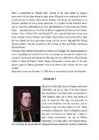
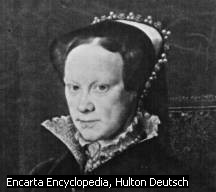
Mary I, called Mary Tudor (1516-1558), Queen of England ( 1553 -1558). Mary was born in London on February 18, 1516, the daughter of Henry VIII by his first wife , Catherine of Aragón. Because Henry divorced Catherine, Mary was declared illegitimate. Nonetheless, Henry included her in his will, and on the death of her half - brother , Edward VI, on July 6, 1553, she became the legal heir to the throne. Although Lord High Chamberlain John Dudley, Duke of Northumberland, favoured the succession of his daughter-in-law, Lady Jane Grey , and proclaimed her queen on July 10, the country supported Mary.
As a Roman Catholic , Mary began her reign by sweeping away the religious innovations of her father and her brother. Henry VIII had separated England from the Church in Rome; Edward VI had replaced Roman Catholicism with a Protestant settlement. Mary restored the Mass and re- established the authority of the papacy, but, although she handed back Crown property to the Church, Parliament refused to restore Church lands seized by Henry VIII. Even with the help of Mary’s cousin, Cardinal Reginald Pole, a return to the state of affairs that existed before the Dissolution of the Monasteries was impossible: there were too many legal and financial intricacies.
Even more disastrous was Mary’s marriage in 1554 to Philip II, King of Spain, which was conducted at Winchester Cathedral rather than in London, owing to Philip’s unpopularity. Although Philip was never crowned in England, important documents bore his signature and were issued in the name of the “King and Queen”. There was opposition to his involvement in English affairs. One expression of this was the serious rebellion under the leadership of Sir Thomas Wyatt (the Younger) to depose Mary and put her half- sister , Elizabeth , later Elizabeth I, on the throne.
Philip was an uncompromising Roman Catholic and unpopular in England. At his order , Mary joined in a war against France, with the result that Calais, the last relic of the English conquests won during the Hundred Years ’ War with France, was lost in 1558. Its loss upset her deeply: “When I am dead and opened, you shall find Calais lying in my heart ”, she is reported to have said.
Mary is characterized as “Bloody Mary” because of the large number of religious persecutions that took place during her reign; almost 300 people were condemned to death as a result of trials for heresy. These actions , however , must be put into perspective, as by European standards this was a limited persecution. It is possible too that Protestant writers such as John Foxe, particularly in his Acts and Monuments of These Latter and Perilous Dayes ..., popularly known as The Book of Martyrs, exaggerated the ferocity of the Catholic reaction. Some of Henry VIII’s and Edward VI’s most important Protestant bishops were burnt, including Thomas Cranmer, John Hooper, Hugh Latimer, and Nicholas Ridley. Mary has been blamed for these persecutions along with her advisers: Reginald Pole, Bishop Stephen Gardiner (who had presided over the wedding of Mary and Philip), and Bishop Edmund Bonner.
Personally, Mary suffered from depression, anxiety , and neuralgia . Her phantom pregnancies were very probably the result of severe stress , and perhaps the extension of a character that was pious, conventional, and introspective. Her reign, too, was a difficult one. War in Europe , failure to reform the English Church, famine , and epidemics obscure some of the more positive aspects of Marian government such as the reform of the currency , the navy, and customs.
Mary died in London on November 17, 1558, and was succeeded by her half-sister Elizabeth.
Elizabeth I
Elizabeth I (1533- 1603 ), Queen of England and Ireland (1558-1603), and the last ruler of the Tudor dynasty. She succeeded her sister, Mary Tudor, on November 17, 1558. Elizabeth chose not to marry , and declined to settle the succession. Her reign was punctuated by clashes with Parliament over the succession, and her reluctance to deal with Mary, Queen of Scots. Within two decades of Elizabeth’s death, the Elizabethan period had come to be known as a “ golden age”, a period of great literary achievements, the age of William Shakespeare , Sir Philip Sidney, and Edmund Spenser, but, at the time, the regime often felt beleaguered at home and abroad . Internally, Elizabethan England was marked by religious divisions, as “ officialProtestantism was consolidated in the local communities, and there was intense commercial rivalry and expansion abroad. The Religious Settlement of 1559 was the defining moment of the English Reformation, while the late 1580s and the 1590s were dominated by war with Spain and the French Catholic League , and by rebellion in Ireland. The iconography associated with the Queen herself, however, as Gloriana and the Virgin Queen, together with the length of her reign, has made her one of the most dominant characters of British history, a source of fascination to historians and the general public alike.
Victoria
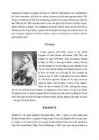
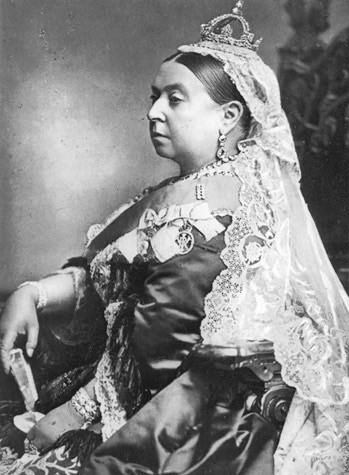
Victoria (queen) (1819-1901), Queen of the United Kingdom of Great Britain and Ireland ( 1837 -1901) and Empress of India (1876-1901). Born Alexandrina Victoria on May 24, 1819, in Kensington Palace , London, Victoria was the daughter of Victoria Mary Louisa, daughter of the Duke of Saxe-Coburg-Saalfeld, and Edward Augustus, Duke of Kent, the fourth son of George III. She ascended the throne on June 20, 1837, on the death of her uncle , William IV, who had no legitimate children . At this stage she was an unknown figure , even by name, to most of her subjects . When she died on January 22, 1901, outliving the century , she was one of the best -known figures , by reputation as well as name, not only in the United Kingdom but also in a greatly expanded British Empire and in the world, including the United States . Her reign had been the longest in British history, and she had given her name to an age—the age of Victorian Britain.
Elizabeth II
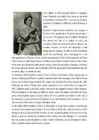
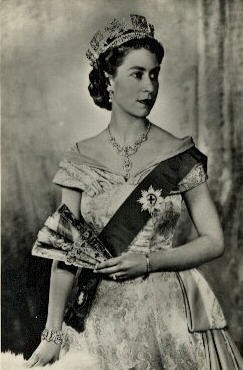
Elizabeth II, full name Elizabeth Alexandra Mary (1926- ), Queen of Great Britain and Northern Ireland (1952- ), daughter of King George VI and Lady Elizabeth Bowes-Lyon, born in London. In 1944 she served as a councillor of state while her father was on the war front in Italy . She married Prince Philip, Duke of Edinburgh , in 1947, and a year later gave birth to a son, Charles. In 1950 she gave birth to a daughter, Anne. Elizabeth succeeded to the throne on the death of her father in February 1952. A second son, Andrew , was born to Elizabeth in 1960 and a third, Edward, in 1964.
Elizabeth’s reign has been marked by vast changes in the lives of her people and in the power and prestige of her country. The primary role of Elizabeth throughout this period was that of a symbol of unity and continuity within the Commonwealth of Nations, the member countries of which she frequently visited along with her husband . In 1992 a series of disasters struck the royal family, with a damaging fire in the state apartments at Windsor Castle, and the announcement of the formal separation of Prince Charles from his wife Diana , Princess of Wales, and of Prince Andrew from his wife, Sarah . In the same year, Elizabeth made private enquiries about the possibility of paying a voluntary tax on her personal income, and in February 1993 the government duly announced that she would be subject to normal tax rules .
In December 1995 Elizabeth wrote to Prince Charles and Princess Diana urging them to divorce , following the Princess’s public statements about their marriage, which led to formal divorce proceedings being instituted. The couple were formally divorced on August 28, 1996. Following the death of Diana from injuries received in a car crash in Paris on August 31, 1997, Elizabeth came in for some public criticism for the apparent coolness of her response. Her live broadcast to the nation in tribute to Diana, which she made a week after the crash, partly restored public opinion. Diana’s death, however, sparked much debate on the role of the monarchy, its perceived lack of “ populartouch , the formality of its institutions , and its size in terms of the number of royals with public duties.
In November 1999 Australia voted in a referendum to retain their country’s constitutional monarchy, thus maintaining Australia ’s ties with Britain. Elizabeth visited the country in 2002 during her tour of Commonwealth countries to mark the golden jubilee of her accession to the throne; a year also marked by the deaths of her mother , and sister Margaret. It is estimated that two million people attended the Golden Jubilee celebrations around Buckingham Palace, which included concerts and fireworks , in June.
The Queens of England #1 The Queens of England #2 The Queens of England #3 The Queens of England #4
Punktid 10 punkti Autor soovib selle materjali allalaadimise eest saada 10 punkti.
Leheküljed ~ 4 lehte Lehekülgede arv dokumendis
Aeg2009-02-16 Kuupäev, millal dokument üles laeti
Allalaadimisi 14 laadimist Kokku alla laetud
Kommentaarid 1 arvamus Teiste kasutajate poolt lisatud kommentaarid
Autor KristinK Õppematerjali autor

Sarnased õppematerjalid

Queen Elizabeth I lifestory
17
pptx

Queen Elizabeth I lifestory

Queen Elizabeth I Elin Palumäe 10B Elizabeth I Reign - 17 Nov. 1558 ­ 24 March 1603 (44 years) Coronation - 15 January 1559(25 years) Predecessor - Mary I Successor - James I House - House of Tudor Father - Henry VIII Mother - Anne Boleyn Born - 7 September 1533 Greenwich, England Died - 24 March 1603 (aged 69) Burial - Westminster Abbey Anne Boleyn Queen consort of England Mother of Elizabeth I Tenure - 28 May 1533 ­ 17 May 1536 Coronation 1 June 1533 Anne Boleyn was Queen of England from 1533 to 1536 as the second wife of Henry VIII of England and the 1st Marquess of Pembroke in her own right for herself and her descendants. House - House of Tudor Father - Thomas Boleyn, 1st Earl of Wiltshire Mother - Lady Elizabeth Howard Born c.1501/1507 Blickling Hall/ Hever Castle, England Died 19 May 1536 (aged 29-35)Tower of London Religion - Anglican, formerly Roman Catholic King of England Henry VIII Reign - 21 April 1509 ­ 28 January House - House of Tudor

British history (suurbritannia ajalugu)
Queen Mary I of England
2
doc

Queen Mary I of England

1.SLAID Queen Mary I of England was born February 18, 1516. She was the daughter of King Henry VIII and his first of six wives, Catherine of Aragon. Mary was the only child from that union to survive infancy. She ruled as Queen of England from July 19, 1553 until her death on November 17, 1558. This era was known as the Marian Exile 2.SLAID Queen Mary I was rejected by her father during his divorce from her mother. Her parents' marriage was thought meaningless so for a while she was stripped of her statud as and heir to the throne.

Inglise keel
Inglise keelt kõnelevate maade ajaloo eksamiküsimused
28
doc

Inglise keelt kõnelevate maade ajaloo eksamiküsimused

History exam *Stonehenge - is a monument located in England. It is one of the most famous prehistoric sites in the world and is composed of earthworks surrounding a circular setting of large standing stones. The surrounding circular, earth bank and ditch, have been dated to about 3100 BC. Stonehenge was produced by a culture with no written language. Many aspects of Stonehenge remain subject to debate. There is little or no direct evidence for the construction techniques used by the Stonehenge builders.

Inglise keel kõnelevate maade ajalugu
Inglise keelt kõnelevate maade ajalugu lühikonspekt
168
odp

Inglise keelt kõnelevate maade ajalugu lühikonspekt

Legacy- new types of animals, plants; miles, feet, inches-roman measurements;christianity; Roman basilica in curches; reading, writing; buildings, roads Christianity in Roman Britain Until 4th C christians were persecuted 313 AD Emperor Constantine legalised christianity 380 AD Emperor Theodosius I made it the official religion of the empire Paganism had been eclipsed but continued to pose a political, religious challenge Boudicca Queen of Iceni people of Eastern England, led an uprising against Roman forces Prasutagus(ruler) was first allowed to rule when romans conquered England, after his death, romans decided to rule Iceni and flogged Boudicca and raped her daughters 60-62 AD Iceni rebelled, Boudicca´s warriors defeated Roman Ninth Legion, destroied capital-Colchester Finally Boudicca was defetated, she poisoned herself to avoid capture Hadrian´s wall

Inglise keel
House of Winsdor
2
docx

House of Winsdor

names and faces, the line of succession to the throne, and even the family's rarely- used last name. But let's start from the beginning. The House of Windsor is the reigning royal house of the United Kingdom and the other Commonwealth realms. The dynasty is of German paternal descent and was originally a branch of the House of Saxe-Coburg and Gotha, itself derived from the House of Wettin, which succeeded the House of Hanover to the British monarchy following the death of Queen Victoria, wife of Albert, Prince Consort. The name was changed from Saxe-Coburg and Gotha to the English Windsor (from "Windsor Castle"[1]) in 1917 because of anti-German sentiment in the British Empire during World War I.[2] There have been four British monarchs of the house of Windsor to date: three kings and the present queen, Elizabeth II. During the reign of the Windsors, major changes took place in British society. The British Empire participated

Inglise keel
British kings and queens
10
docx

British kings and queens

British kings and queens Kings King Henry VIII King Henry VIII is arguably the most well-known king of England. Famous for beheading his wives, of which he had six, King Henry VIII also had several children. King James I King James I was already King of Scotland when he got the English crown. King James I was the first ruler to call himself King of Great Britain, as he ruled England, Scotland and Wales. King James was the first King of Great Britain. King William I, the Conqueror King William I, otherwise known as William the Conqueror was born in France on 1028. He became friendly with the current English King, Edward the Confessor. He invaded and attacked England on Edward's death, as he was promised the English crown, but then denied it by the Saxon Harold. King George VI King George VI did not expect to become king, he was the shy brother of Edward VIII who

Inglise keel
Suurbritannia ühiskond ja kultuur konspekt
14
doc

Suurbritannia ühiskond ja kultuur konspekt

laws to a new province of the Roman Empire and started to build good roads. Officials were appointed (governors, procurators to collect taxes, look after the estates and mines and se that the gold, silver, iron and lead were exported back to Rome). Introduced schools,a new language ­ Latin, large farms (villas), baths. In AD 410 they had to leave . roman occupation lasted nearly 400 years. They left behind very little. Roman province of Britannia covered most of present-day England and Wales. 4. Latin influence on English *The influence of Latin is noticeable also in the names of European cities: the Latin noun colonia (settlement, colony) may be found in numerous place-names: Lincoln, Colchester, Cologne ; from Latin word castrum (military camp) were derived English affixes -chester and -castle: Manchester, Lancaster, Newcastle; Latin word portus (seaport) in Portsmouth *-tor - person, doer, masculine form

Suurbritannia ühiskond ja kultuur
The Tudor Dynasty
19
pptx

The Tudor Dynasty

THE TUDOR DYNASTY THE TUDOR DYNASTY The Tudor dynasty or House of Tudor was a European royal house of Welsh origin that ruled the Kingdom of England and its realms, including the Lordship of Ireland, later the Kingdom of Ireland. Its first monarch was Henry VII. Henry VII THE TUDOR DYNASTY The Tudors extended their power beyond modern England, achieving the full union of England and the Principality of Wales in 1542 and successfully asserting English authority over the Kingdom of Ireland. They also maintained the traditional claims to the Kingdom of France, but none of them tried to make substance of it, though Henry VIII fought wars with France to try to reclaim that title. After him, his daughter Mary I lost the claim on France forever with the Fall of Calais. THE TUDOR

Inglise ajalugu


Meedia

Kommentaarid (1)

kr2w profiilipilt
kr2w: selle hinna eest piisav
14:56 02-01-2011


Sellel veebilehel kasutatakse küpsiseid. Kasutamist jätkates nõustute küpsiste ja veebilehe üldtingimustega Nõustun