Queen Elizabeth I lifestory (0)
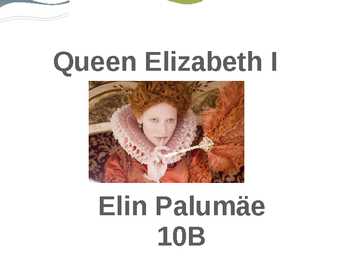
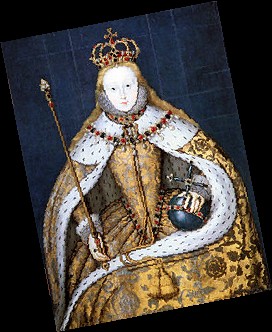
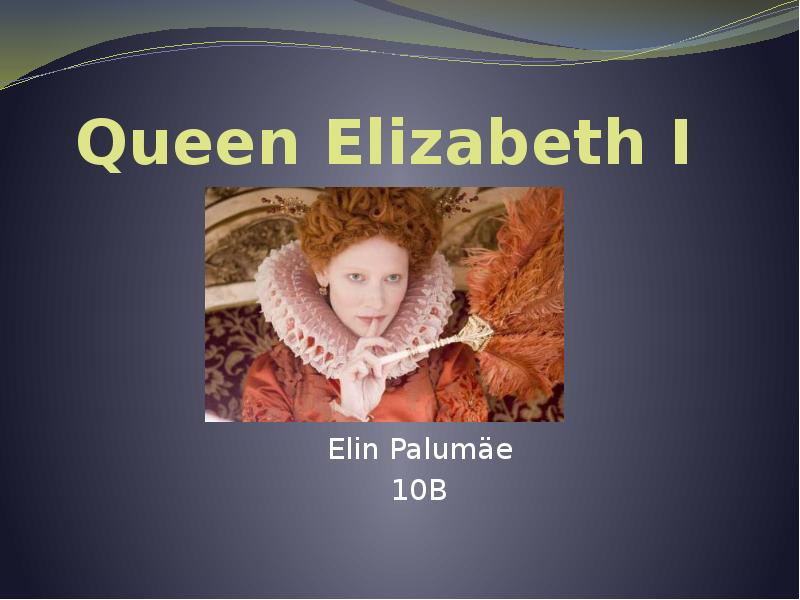
Queen Elizabeth I
Elin Palumäe
10B
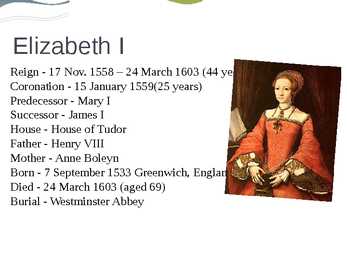
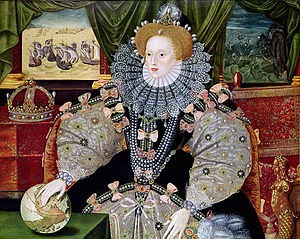
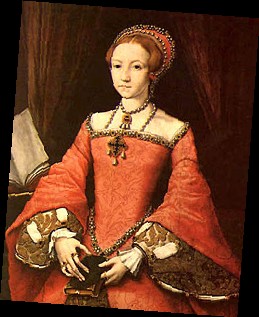
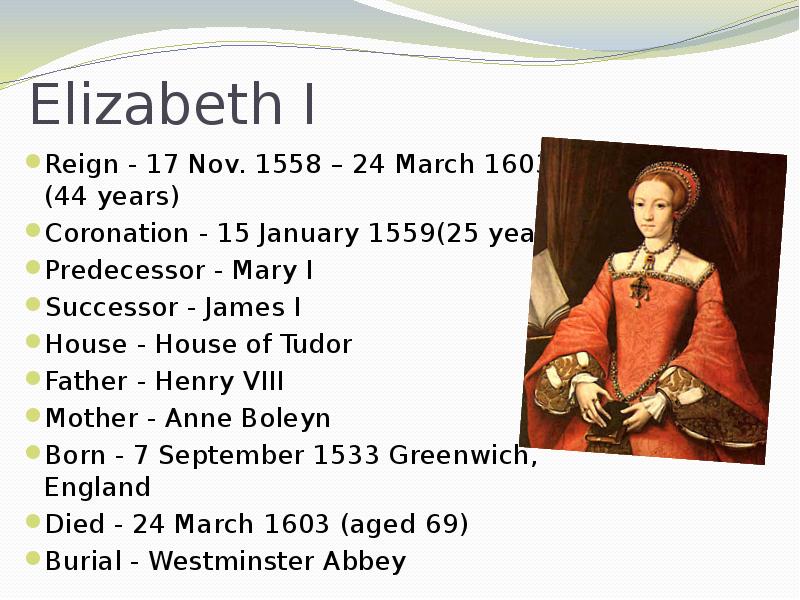
Elizabeth I
Reign - 17 Nov. 1558 24 March 1603 (44 years)
Coronation - 15 January 1559(25 years)
Predecessor - Mary I
Successor - James I
House - House of Tudor
Father - Henry VIII
Mother - Anne Boleyn
Born - 7 September 1533 Greenwich, England
Died - 24 March 1603 (aged 69)
Burial - Westminster Abbey
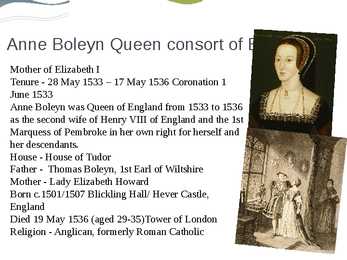
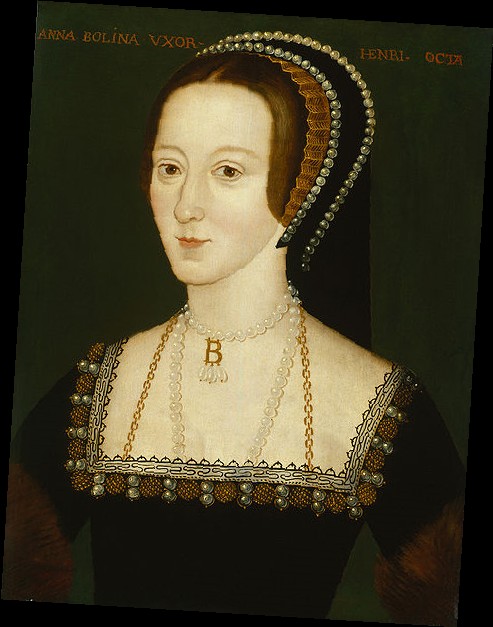
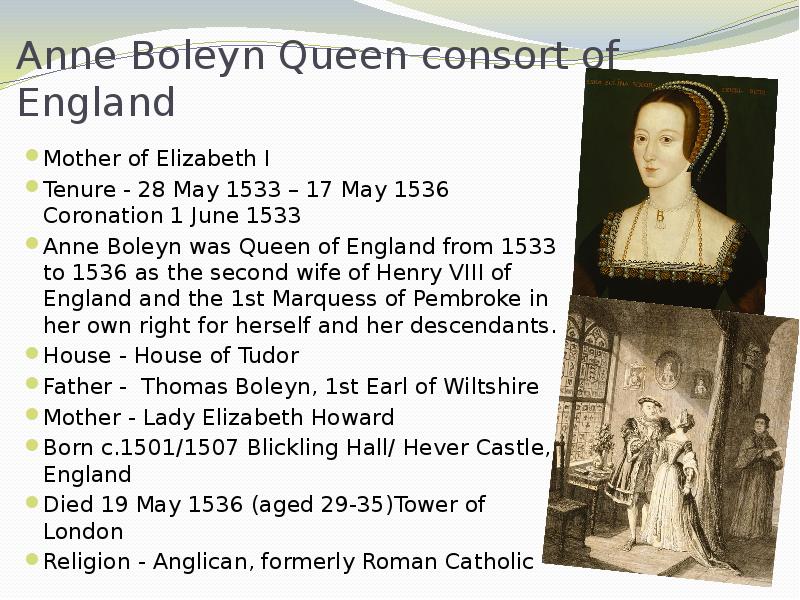
Anne Boleyn Queen consort of England
Mother of Elizabeth I
Tenure - 28 May 1533 17 May 1536 Coronation 1
June 1533
Anne Boleyn was Queen of England from 1533 to 1536
as the second wife of Henry VIII of England and the 1st
Marquess of Pembroke in her own right for herself and
her descendants.
House - House of Tudor
Father - Thomas Boleyn, 1st Earl of Wiltshire
Mother - Lady Elizabeth Howard
Born c.1501/1507 Blickling Hall/ Hever Castle,
England
Died 19 May 1536 (aged 29-35)Tower of London
Religion - Anglican, formerly Roman Catholic
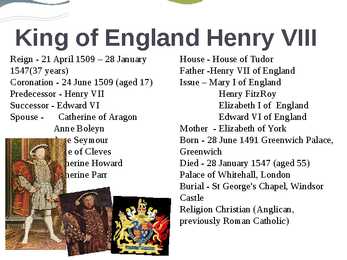
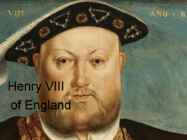
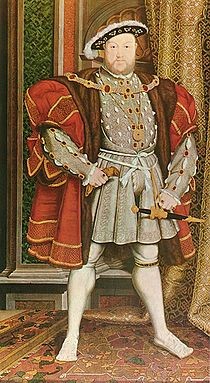
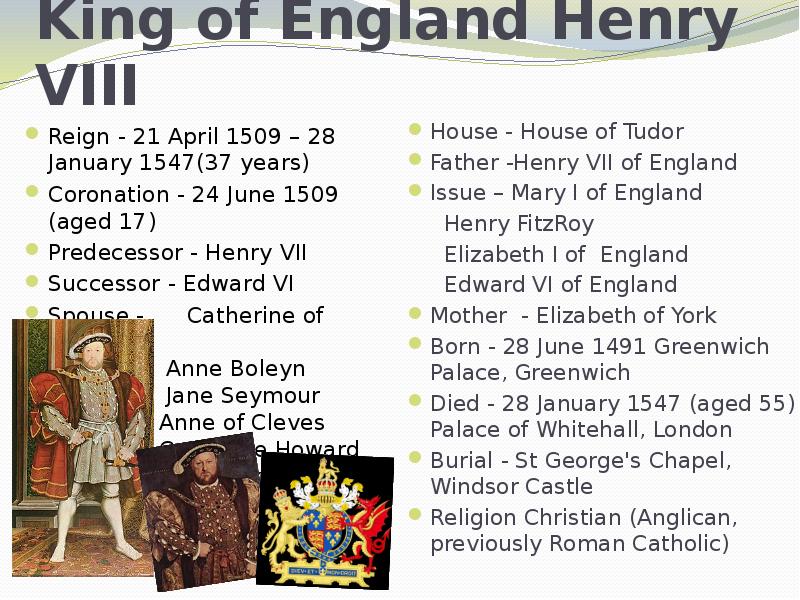
King of England Henry VIII
Reign - 21 April 1509 28 January House - House of Tudor
1547(37 years) Father -Henry VII of England
Coronation - 24 June 1509 (aged 17) Issue Mary I of England
Predecessor - Henry VII Henry FitzRoy
Successor - Edward VI Elizabeth I of England
Spouse - Catherine of Aragon Edward VI of England
Anne Boleyn Mother - Elizabeth of York
Jane Seymour Born - 28 June 1491 Greenwich Palace,
Anne of Cleves Greenwich
Catherine Howard Died - 28 January 1547 (aged 55)
Catherine Parr Palace of Whitehall, London
Burial - St George's Chapel, Windsor
Castle
Religion Christian (Anglican,
previously Roman Catholic)
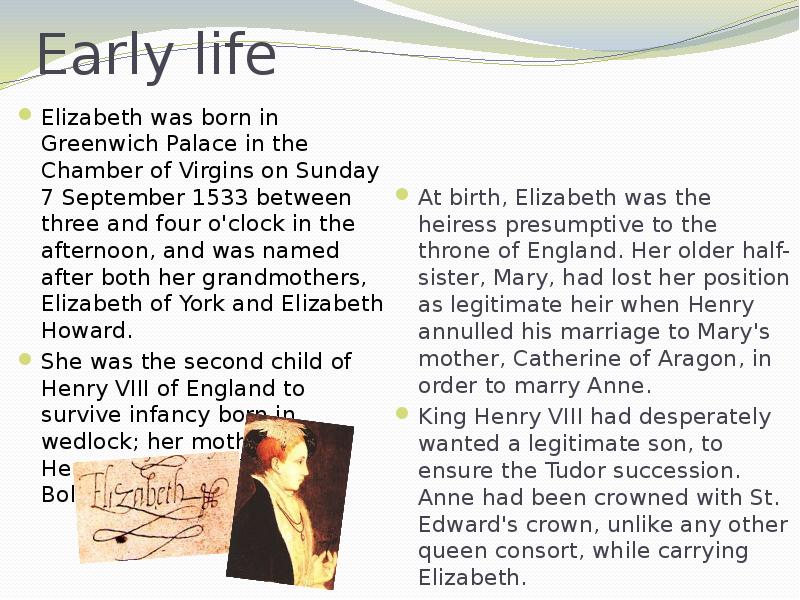
Early life
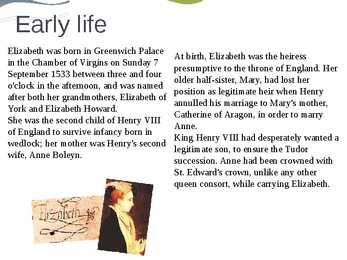
Elizabeth was born in Greenwich Palace
At birth, Elizabeth was the heiress
in the Chamber of Virgins on Sunday 7
presumptive to the throne of England. Her
September 1533 between three and four
older half-sister, Mary, had lost her
o'clock in the afternoon, and was named
position as legitimate heir when Henry
after both her grandmothers, Elizabeth of
annulled his marriage to Mary's mother,
York and Elizabeth Howard.
Catherine of Aragon, in order to marry
She was the second child of Henry VIII
Anne.
of England to survive infancy born in
King Henry VIII had desperately wanted a
wedlock; her mother was Henry's second
legitimate son, to ensure the Tudor
wife, Anne Boleyn.
succession. Anne had been crowned with
St. Edward's crown, unlike any other
queen consort, while carrying Elizabeth.
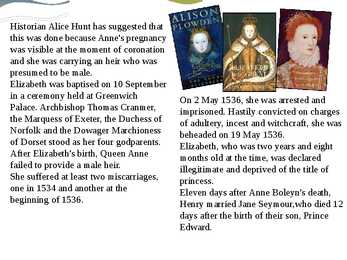
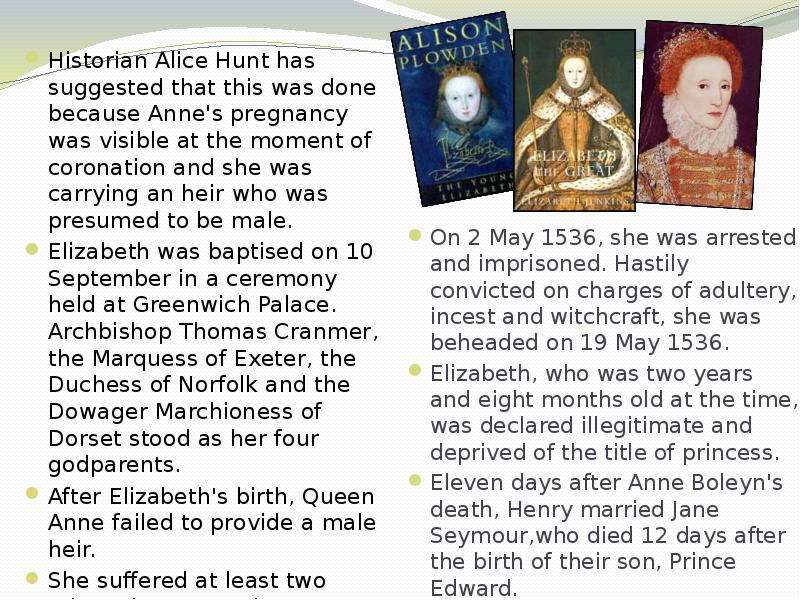
Historian Alice Hunt has suggested that
this was done because Anne's pregnancy
was visible at the moment of coronation
and she was carrying an heir who was
presumed to be male.
Elizabeth was baptised on 10 September
in a ceremony held at Greenwich On 2 May 1536, she was arrested and
Palace. Archbishop Thomas Cranmer, imprisoned. Hastily convicted on charges
the Marquess of Exeter, the Duchess of of adultery, incest and witchcraft, she was
Norfolk and the Dowager Marchioness beheaded on 19 May 1536.
of Dorset stood as her four godparents. Elizabeth, who was two years and eight
After Elizabeth's birth, Queen Anne months old at the time, was declared
failed to provide a male heir. illegitimate and deprived of the title of
She suffered at least two miscarriages, princess.
one in 1534 and another at the Eleven days after Anne Boleyn's death,
beginning of 1536. Henry married Jane Seymour,who died 12
days after the birth of their son, Prince
Edward.
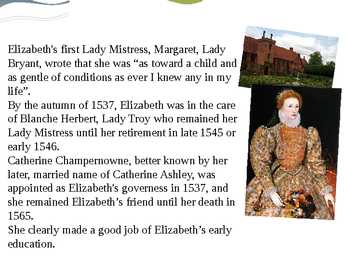
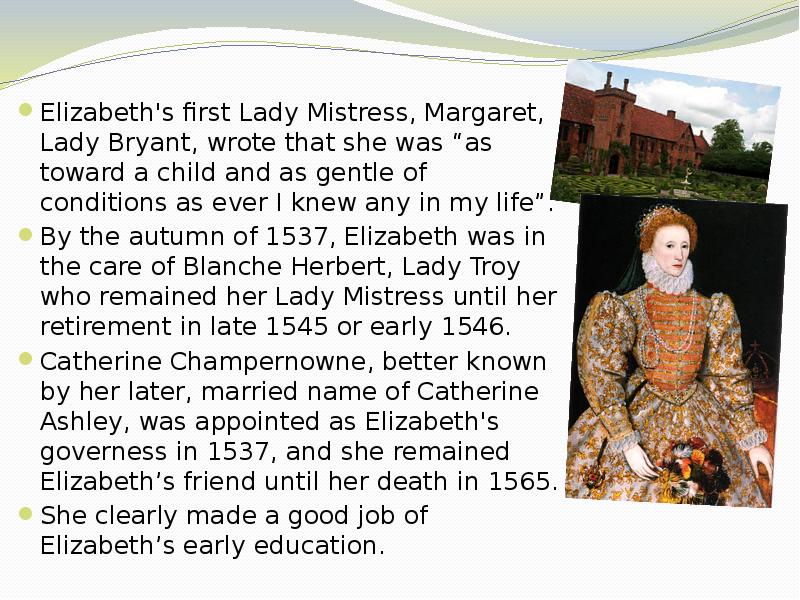
Elizabeth's first Lady Mistress, Margaret, Lady
Bryant, wrote that she was "as toward a child and
as gentle of conditions as ever I knew any in my
life".
By the autumn of 1537, Elizabeth was in the care
of Blanche Herbert, Lady Troy who remained her
Lady Mistress until her retirement in late 1545 or
early 1546.
Catherine Champernowne, better known by her
later, married name of Catherine Ashley, was
appointed as Elizabeth's governess in 1537, and
she remained Elizabeth's friend until her death in
1565.
She clearly made a good job of Elizabeth's early
education.
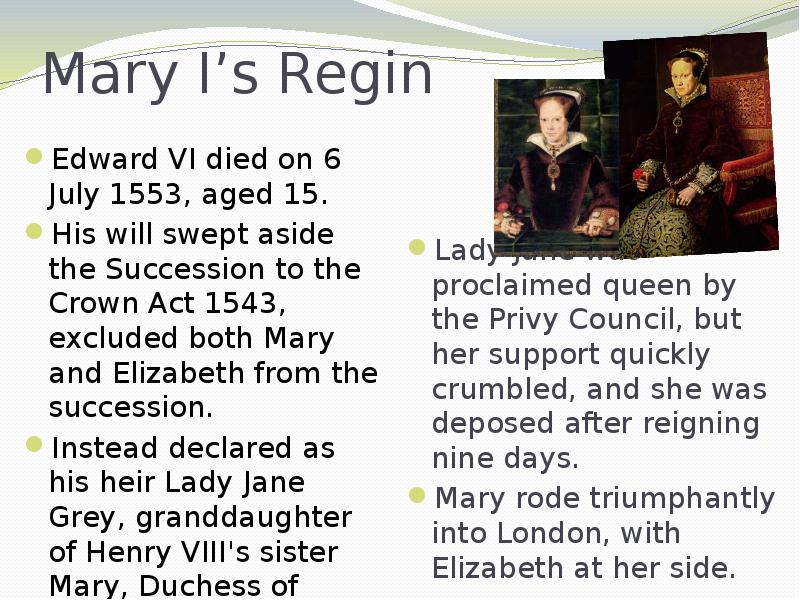
Mary I's Regin
Edward VI died on 6 July
1553, aged 15.
His will swept aside the
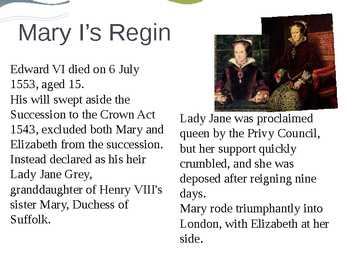
Succession to the Crown Act Lady Jane was proclaimed
1543, excluded both Mary and queen by the Privy Council,
Elizabeth from the succession. but her support quickly
Instead declared as his heir crumbled, and she was
Lady Jane Grey, deposed after reigning nine
granddaughter of Henry VIII's days.
sister Mary, Duchess of Mary rode triumphantly into
Suffolk. London, with Elizabeth at her
side.
Mary, the country's first undisputed Elizabeth was brought to court and
queen regnant, was determined to crush interrogated.
the Protestant faith in which Elizabeth Though it is unlikely that she had
had been educated. plotted with the rebels, some of them
This included Elizabeth, who had to were known to have approached her.
outwardly conform. Elizabeth's supporters in the
Mary's initial popularity ebbed away government, including Lord Paget.
when it became known that she planned On 22 May, Elizabeth was moved
to marry Prince Philip of Spain. from the Tower to Woodstock, where
Discontent spread rapidly through the she was to spend almost a year under
country, and many looked to Elizabeth house arrest in the charge of Sir
as a focus for their opposition to Mary's Henry Bedingfield.
religious policies.
Accession
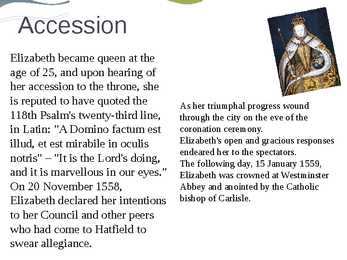
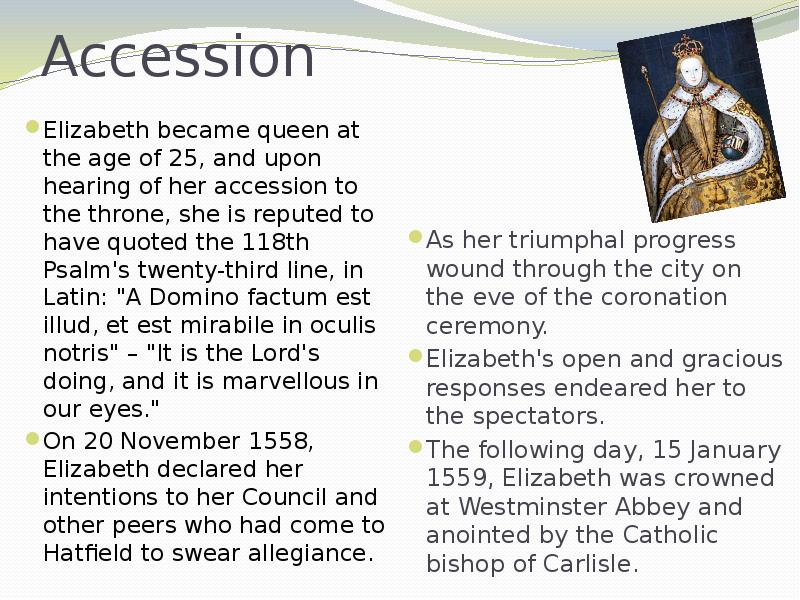
Elizabeth became queen at the
age of 25, and upon hearing of
her accession to the throne, she
is reputed to have quoted the As her triumphal progress wound
118th Psalm's twenty-third line, through the city on the eve of the
in Latin: "A Domino factum est coronation ceremony.
illud, et est mirabile in oculis Elizabeth's open and gracious responses
endeared her to the spectators.
notris" "It is the Lord's doing, The following day, 15 January 1559,
and it is marvellous in our eyes." Elizabeth was crowned at Westminster
On 20 November 1558, Abbey and anointed by the Catholic
Elizabeth declared her intentions bishop of Carlisle.
to her Council and other peers
who had come to Hatfield to
swear allegiance.
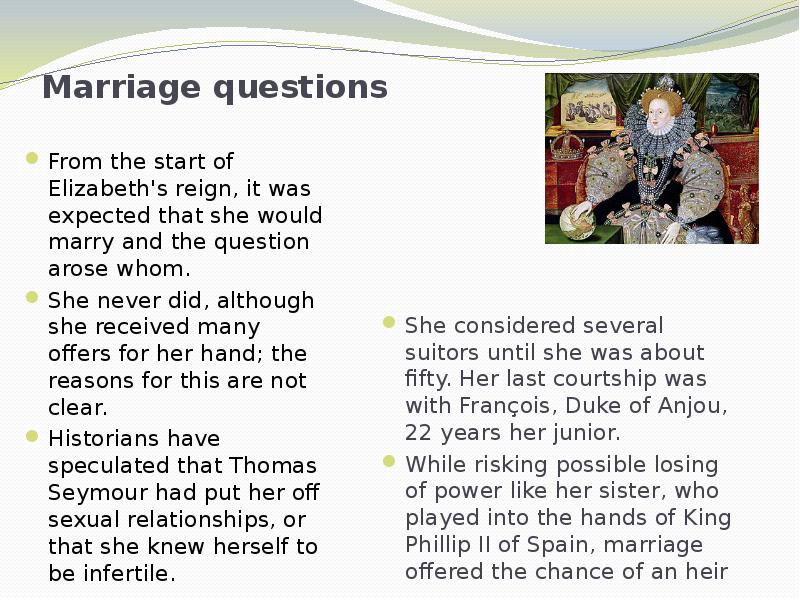
Marriage questions
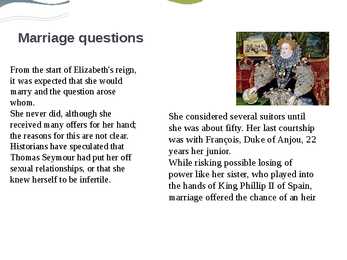
From the start of Elizabeth's reign,
it was expected that she would
marry and the question arose
whom.
She never did, although she She considered several suitors until
received many offers for her hand; she was about fifty. Her last courtship
the reasons for this are not clear. was with François, Duke of Anjou, 22
Historians have speculated that
years her junior.
Thomas Seymour had put her off
While risking possible losing of
sexual relationships, or that she
power like her sister, who played into
knew herself to be infertile.
the hands of King Phillip II of Spain,
marriage offered the chance of an heir
Wars and overseas trade
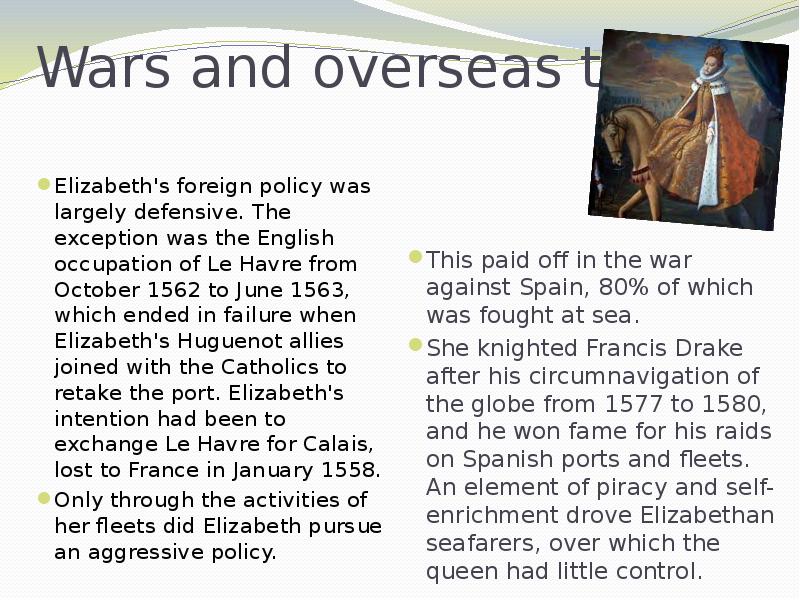
Elizabeth's foreign policy was
largely defensive. The exception
was the English occupation of Le This paid off in the war against
Havre from October 1562 to June Spain, 80% of which was fought
1563, which ended in failure when at sea.
Elizabeth's Huguenot allies joined
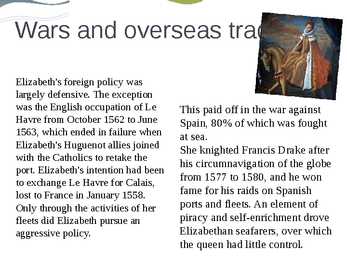
She knighted Francis Drake after
with the Catholics to retake the
his circumnavigation of the globe
port. Elizabeth's intention had been
to exchange Le Havre for Calais,
from 1577 to 1580, and he won
lost to France in January 1558. fame for his raids on Spanish
Only through the activities of her ports and fleets. An element of
fleets did Elizabeth pursue an piracy and self-enrichment drove
aggressive policy. Elizabethan seafarers, over which
the queen had little control.
Later years
The period after the defeat of During this time, repression of
the Spanish Armada in 1588 Catholics intensified, and
brought new difficulties for Elizabeth authorised
Elizabeth that lasted the fifteen commissions in 1591 to
years until the end of her interrogate and monitor
reign. Catholic householders.
The conflicts with Spain and To maintain the illusion of
in Ireland dragged on, the tax peace and prosperity, she
burden grew heavier, and the increasingly relied on internal
economy was hit by poor spies and propaganda.
harvests and the cost of war. In her last years, mounting
Prices rose and the standard of criticism reflected a decline in
living fell. the public's affection for her
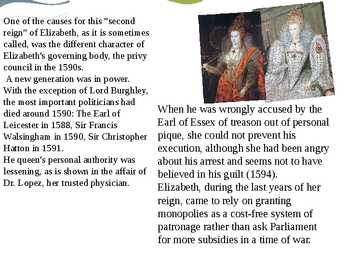
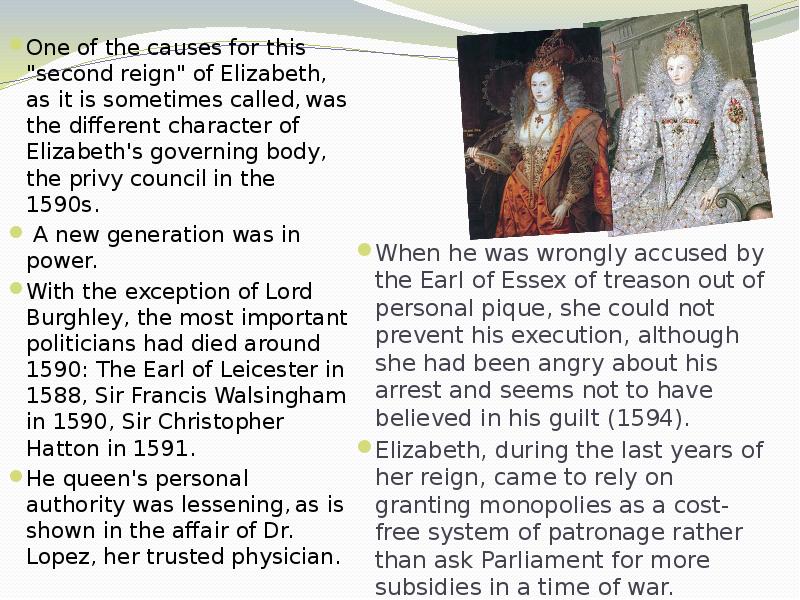
One of the causes for this "second
reign" of Elizabeth, as it is sometimes
called, was the different character of
Elizabeth's governing body, the privy
council in the 1590s.
A new generation was in power.
With the exception of Lord Burghley,
the most important politicians had
died around 1590: The Earl of When he was wrongly accused by the
Leicester in 1588, Sir Francis Earl of Essex of treason out of personal
Walsingham in 1590, Sir Christopher pique, she could not prevent his
Hatton in 1591. execution, although she had been angry
He queen's personal authority was about his arrest and seems not to have
lessening, as is shown in the affair of believed in his guilt (1594).
Dr. Lopez, her trusted physician.
Elizabeth, during the last years of her
reign, came to rely on granting
monopolies as a cost-free system of
patronage rather than ask Parliament
for more subsidies in a time of war.
This same period of economic and political
uncertainty, however, produced an
unsurpassed literary flowering in England.
The first signs of a new literary movement
had appeared at the end of the second decade
of Elizabeth's reign, with John Lyly's
Euphues and Edmund Spenser's The The notion of a great Elizabethan age
Shepheardes Calender in 1578. depends largely on the builders,
dramatists, poets, and musicians who
During the 1590s, some of the great names of were active during Elizabeth's reign.
English literature entered their maturity,
including William Shakespeare and
They owed little directly to the queen,
Christopher Marlowe.
who was never a major patron of the
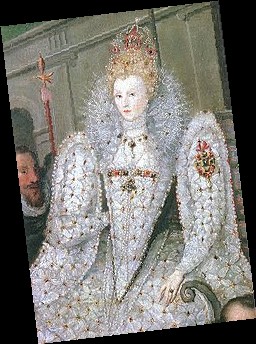
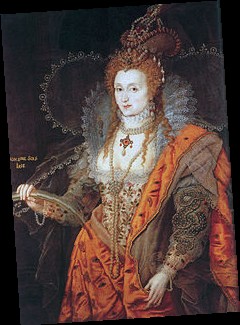
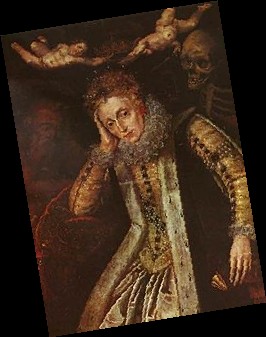
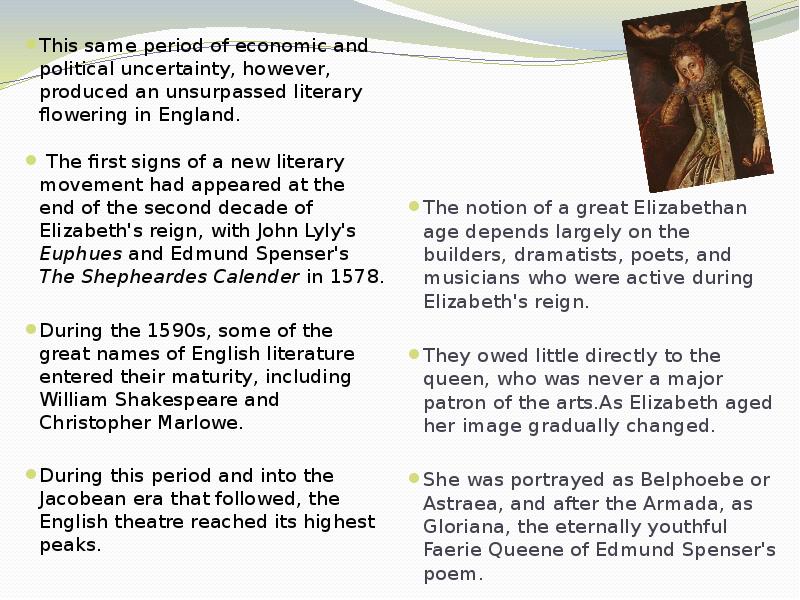
During this period and into the Jacobean era arts.As Elizabeth aged her image
that followed, the English theatre reached its gradually changed.
highest peaks.
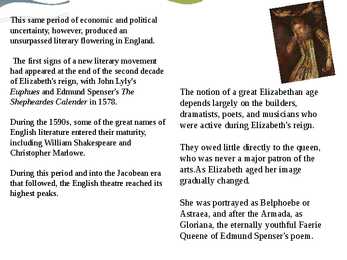
She was portrayed as Belphoebe or
Astraea, and after the Armada, as
Gloriana, the eternally youthful Faerie
Queene of Edmund Spenser's poem.
Death
Despite the presence of
several other claimants to
the throne, the transition of To rectify this, James had
power went smoothly. Parliament pass the
James's succession set aside Succession to the Crown Act
Henry VIII's Third 1603. The question of
Succession Act and will in whether Parliament could
favour of the line of Henry's control the succession to the
younger sister, Mary Tudor. crown by statute was
controversial throughout the
17th century.
Used Pages
http://en.wikipedia.org/wiki/Elizabeth_I_of_England
http://www.elizabethi.org/uk/biography.html
http://www.spartacus.schoolnet.co.uk/TUDelizabeth1.htm
http://tudorhistory.org/elizabeth/
http://www.luminarium.org/renlit/elizabio.htm
http://www.poemhunter.com/queen-elizabeth-tudor-i/biography/
Life story
Parents
Wars
Death
Sarnased õppematerjalid
![The Queens of England]()
4
doc
The Queens of England
Mary I
Mary I, called Mary Tudor (1516-1558), Queen of England
(1553-1558). Mary was born in London on February 18,
1516, the daughter of Henry VIII by his first wife, Catherine
of Aragón. Because Henry divorced Catherine, Mary was
declared illegitimate. Nonetheless, Henry included her in his
will, and on the death of her half-brother, Edward VI, on
![Queen Elizabeth I]()
13
pptx
Queen Elizabeth I
King Henry VIII (1491 - to edit Master text styles
1547) Second level
Anne Boleyn (Executed 19 Third level
Fourth level
May 1536) Fifth level
Mary I (1516-1558)
-
Half-sister
Edward VI (1537-1553)
-
Half-brother
Janeli Õim 11A
� From childhood to becoming Queen
Anne Boleyn was beheaded on the Tower Green 1536. Elizabeth, who was two
years and eight months old at the time, was declared illegitimate and deprived
of the title of princess like her half-sister Mary.
Elizabeth was sent away from court , as she was a reminder to Henry of Anne.
Her last stepmother Katherine Parr, brought both Elizabeth and her half-sister
Mary back to court.
In eight short years she had lost her mother and had had three stepmothers,
two of whom were now dead.
![The Tudor Dynasty- Tudorite dünastia-Powerpoint Show]()
14
pptx
The Tudor Dynasty ( Tudorite dünastia) Powerpoint Show
to the Kingdom of France, but none of them tried to make
substance of it, though Henry VIII fought wars with France to try
to reclaim that title. After him, his daughter Mary I lost the claim
on France forever with the Fall of Calais.
� THE TUDOR
DYNASTY
Henry VII Henry VIII Edward VI
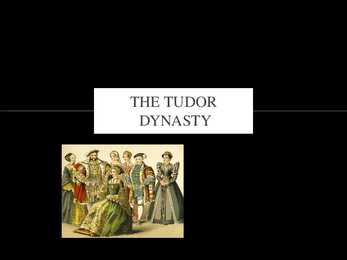
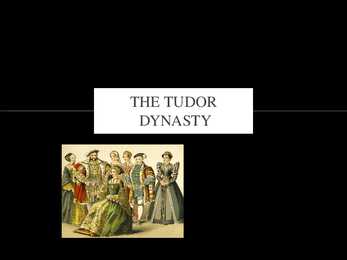
There were six rulers of Tudors Dynasty.
Jane Grey Mary I Elizabeth I
� THE TUDOR
DYNASTY
The most powerful and wellknown rulers of Tudors are Henry
VIII and Elizabeth I.
� THE TUDOR
DYNASTY Henry VIII
Henry VIII was King of England from
21 April 1509 until his death. Henry
VIII is known for his role in the
separation of the Church of England
from the Roman Catholic Church.
Besides ruling with absolute power,
he also engaged himself as an author
British history (suurbritannia ajalugu)
![The Tudor Dynasty]()
19
pptx
The Tudor Dynasty
to the Kingdom of France, but none of them tried to make
substance of it, though Henry VIII fought wars with France to try
to reclaim that title. After him, his daughter Mary I lost the claim
on France forever with the Fall of Calais.
� THE TUDOR
DYNASTY
Henry VII Henry VIII Edward VI
There were six rulers of Tudors Dynasty.
Jane Grey Mary I Elizabeth I
� THE TUDOR
DYNASTY
The most powerful and wellknown rulers of Tudors are Henry
VIII and Elizabeth I.
� THE TUDOR
DYNASTY Henry VIII
Henry VIII was King of England from
21 April 1509 until his death. Henry
VIII is known for his role in the
separation of the Church of England
from the Roman Catholic Church.
Besides ruling with absolute power,
he also engaged himself as an author
![Queen Mary I of England]()
2
doc
Queen Mary I of England
1.SLAID
Queen Mary I of England was born February 18, 1516.
She was the daughter of King Henry VIII and his first of six wives, Catherine of Aragon.
Mary was the only child from that union to survive infancy.
She ruled as Queen of England from July 19, 1553 until her death on November 17, 1558.
This era was known as the Marian Exile
2.SLAID
Queen Mary I was rejected by her father during his divorce from her mother.
Her parents' marriage was thought meaningless so for a while she was stripped of her statud
as and heir to the throne.
![British kings and queens]()
10
docx
British kings and queens
He
became friendly with the current English King, Edward the Confessor. He invaded and
attacked England on Edward's death, as he was promised the English crown, but then denied
it by the Saxon Harold.
King George VI
�King George VI did not expect to become king, he was the shy brother of Edward VIII who
only took the thrown when Edward abdicated. King George VI ruled during World War two
and bravely refused to leave London during the blitz. The two princesses; Elizabeth and
Margaret, spent the war years in Windsor Castle away from harm.
King Henry VI
King Henry VI still holds the record for being the youngest king of England, it is unlikely that
the record will be broken any time soon. He came to the thrown at just 9 months old. For the
first 20 years of his life England and France were ruled by his uncles and advisors.
King Stephen
King Stephen was king of England (and not Normandy), although he was born in France. He
![Henry VIII]()
26
odp
Henry VIII
Henry VIII
of England
� Henry VII
Born on 21 June 1491.
Died in January 28 1547.
Is the 2nd son of King Henry VII and Elizabeth of
York.
Was crowned King at Westminster Abbey,
London, on the 23 June 1509 at the age of 17.
�Elizabeth of York | King Henry VII
� Henry VIII is known for...
Establishing the Church of England.
Having six wives.
Beind a big, fierce-looking man.
� Early life
Not much is known about his early life, because
he was not expected to become king.
Around the age of ten his brother Arthur died,
thus leaving the crown to him.
![Inglise keelt kõnelevate maade ajalugu lühikonspekt]()
168
odp
Inglise keelt kõnelevate maade ajalugu lühikonspekt
Legacy- new types of animals, plants; miles,
feet, inches-roman measurements;christianity;
Roman basilica in curches; reading, writing;
buildings, roads
� Christianity in Roman Britain
Until 4th C christians were persecuted
313 AD Emperor Constantine legalised
christianity
380 AD Emperor Theodosius I made it the
official religion of the empire
Paganism had been eclipsed but continued to
pose a political, religious challenge
� Boudicca
Queen of Iceni people of Eastern England, led
an uprising against Roman forces
Prasutagus(ruler) was first allowed to rule
when romans conquered England, after his
death, romans decided to rule Iceni and
flogged Boudicca and raped her daughters
60-62 AD Iceni rebelled, Boudicca´s warriors
defeated Roman Ninth Legion, destroied
capital-Colchester
Finally Boudicca was defetated, she poisoned
herself to avoid capture
� Hadrian´s wall
Meedia
Kommentaarid (0)
 100 punkti
Autor soovib selle materjali allalaadimise eest saada 100 punkti.
100 punkti
Autor soovib selle materjali allalaadimise eest saada 100 punkti.
 ~ 17 lehte
Lehekülgede arv dokumendis
~ 17 lehte
Lehekülgede arv dokumendis
 2011-04-23
Kuupäev, millal dokument üles laeti
2011-04-23
Kuupäev, millal dokument üles laeti
 14 laadimist
Kokku alla laetud
14 laadimist
Kokku alla laetud
 0 arvamust
Teiste kasutajate poolt lisatud kommentaarid
0 arvamust
Teiste kasutajate poolt lisatud kommentaarid
 Elin Palumäe
Õppematerjali autor
Elin Palumäe
Õppematerjali autor
 annaabi.ee








Kõik kommentaarid