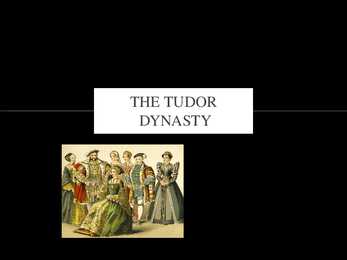
The Tudor Dynasty (0)
THE TUDOR
DYNASTY
THE TUDOR
DYNASTY
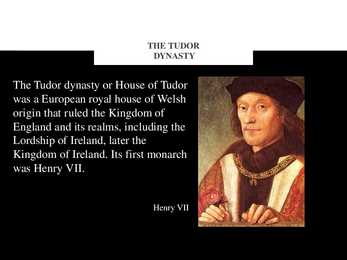
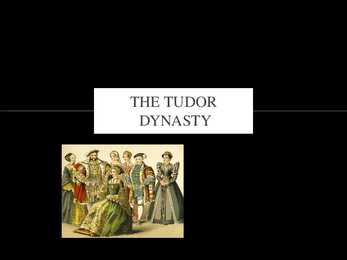
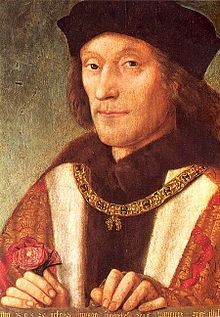
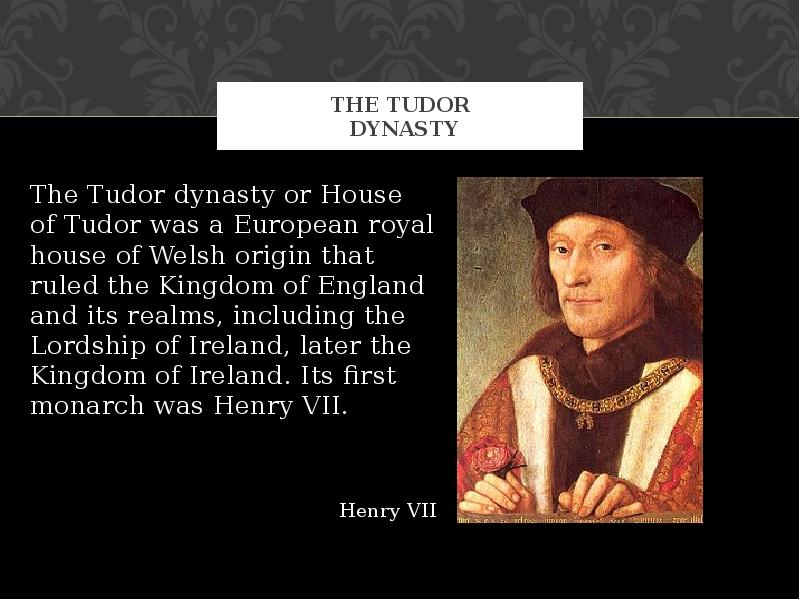
The Tudor dynasty or House of Tudor
was a European royal house of Welsh
origin that ruled the Kingdom of
England and its realms, including the
Lordship of Ireland, later the
Kingdom of Ireland. Its first monarch
was Henry VII.
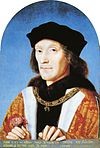
Henry VII
THE TUDOR
DYNASTY
The Tudors extended their power beyond modern England,
achieving the full union of England and the Principality of Wales
in 1542 and successfully asserting English authority over the
Kingdom of Ireland. They also maintained the traditional claims
to the Kingdom of France, but none of them tried to make
substance of it, though Henry VIII fought wars with France to try
to reclaim that title. After him, his daughter Mary I lost the claim
on France forever with the Fall of Calais.
THE TUDOR
DYNASTY
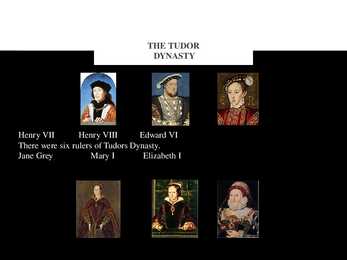
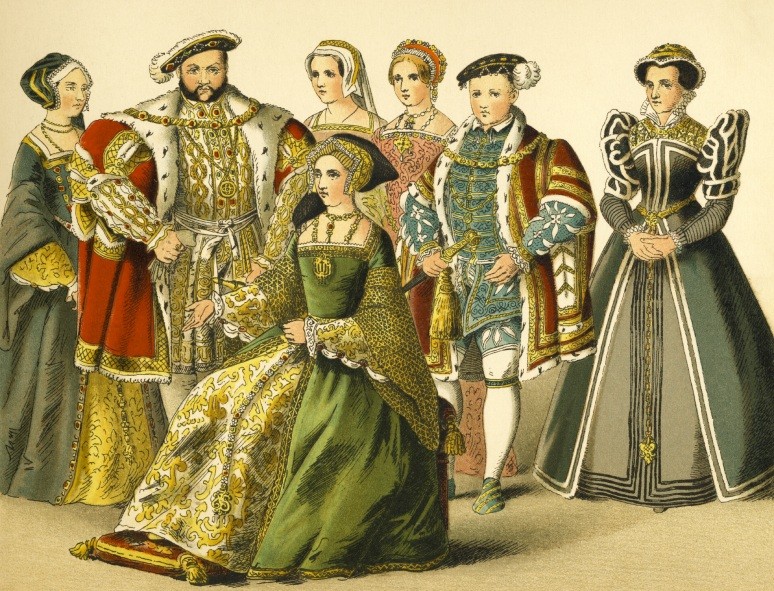
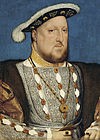
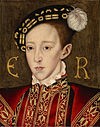
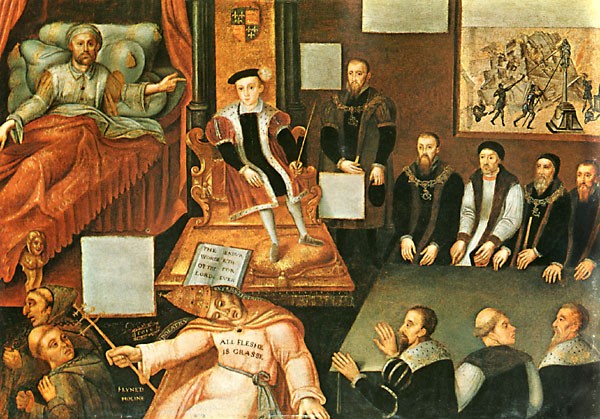
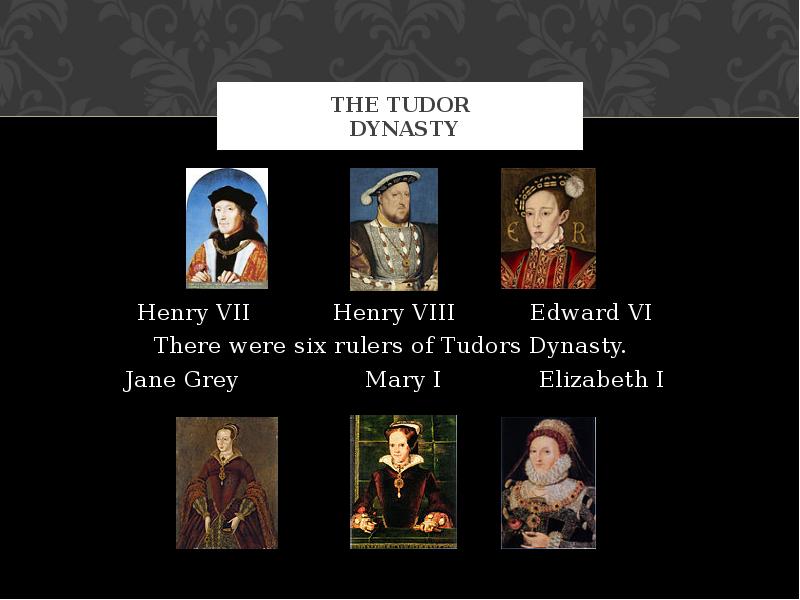
Henry VII Henry VIII Edward VI
There were six rulers of Tudors Dynasty.
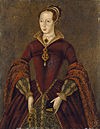
Jane Grey Mary I Elizabeth I
THE TUDOR
DYNASTY
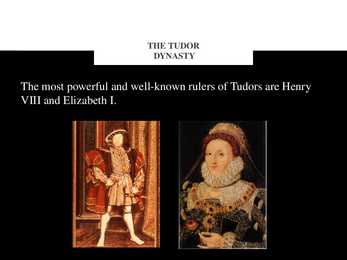
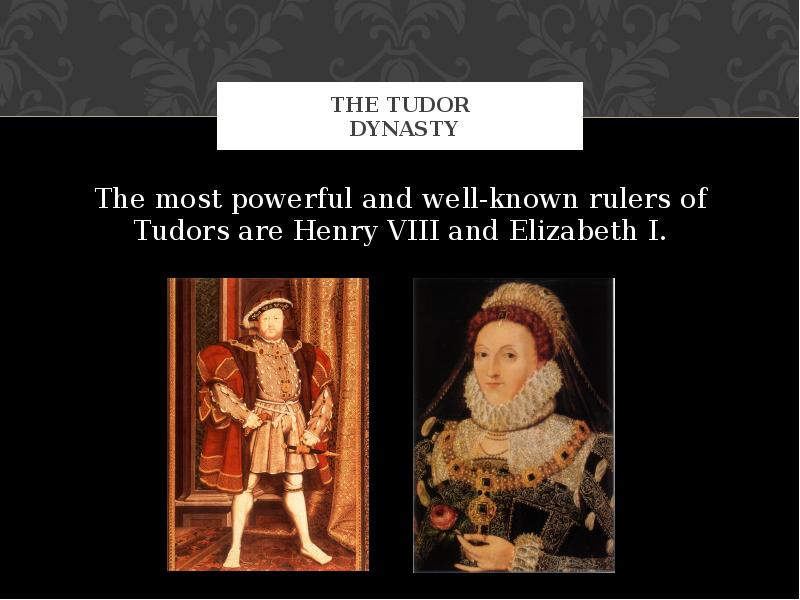
The most powerful and wellknown rulers of Tudors are Henry
VIII and Elizabeth I.
THE TUDOR
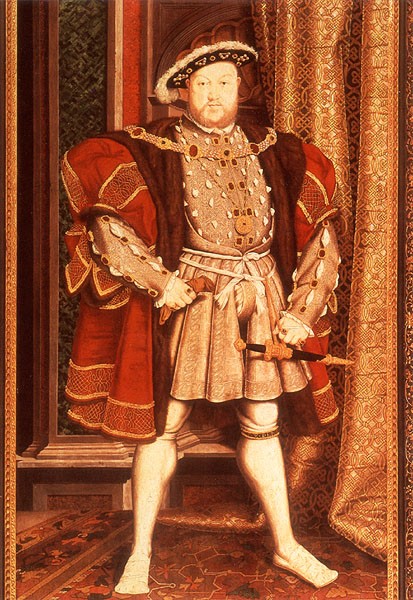
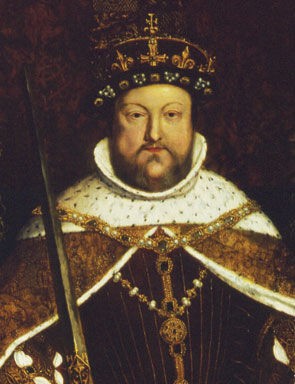
DYNASTY Henry VIII
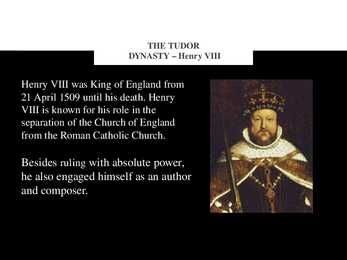
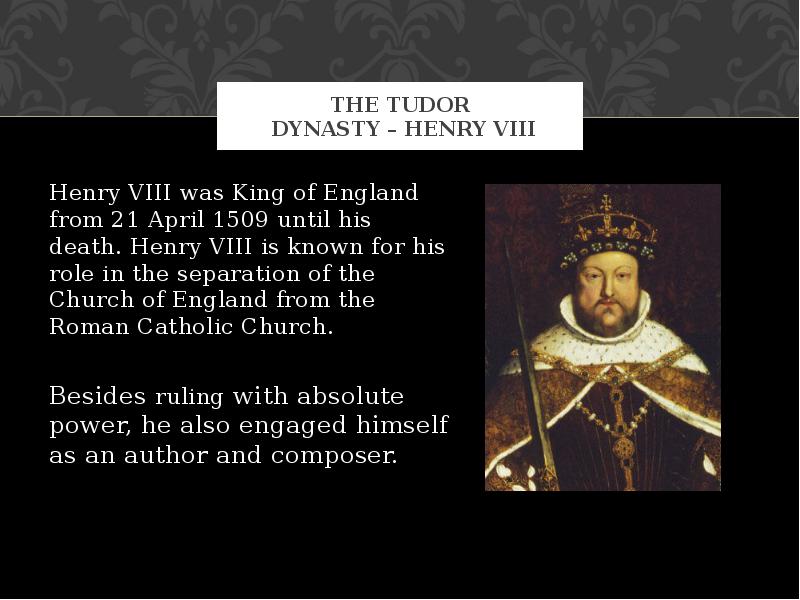
Henry VIII was King of England from
21 April 1509 until his death. Henry
VIII is known for his role in the
separation of the Church of England
from the Roman Catholic Church.
Besides ruling with absolute power,
he also engaged himself as an author
and composer.
THE TUDOR
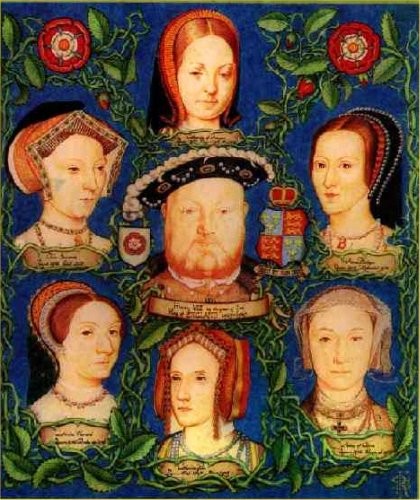
DYNASTY Henry VIII
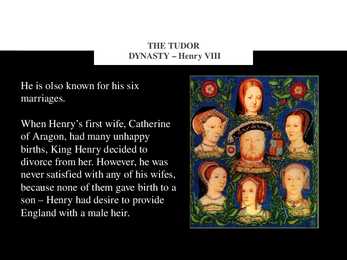
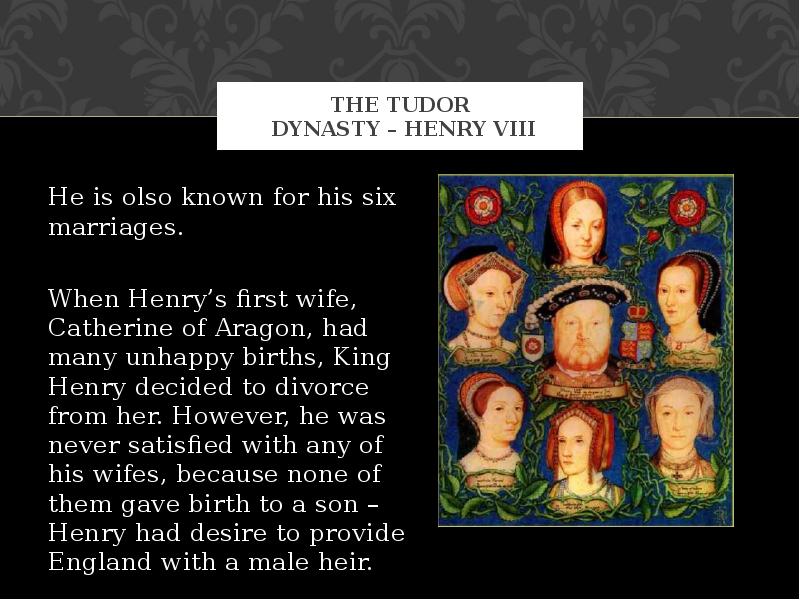
He is olso known for his six
marriages.
When Henry's first wife, Catherine
of Aragon, had many unhappy
births, King Henry decided to
divorce from her. However, he was
never satisfied with any of his wifes,
because none of them gave birth to a
son Henry had desire to provide
England with a male heir.
THE TUDOR
DYNASTY Henry VIII
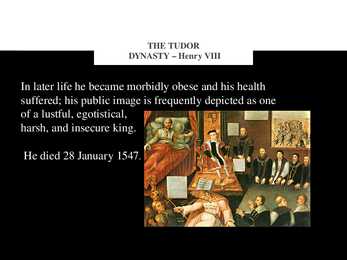
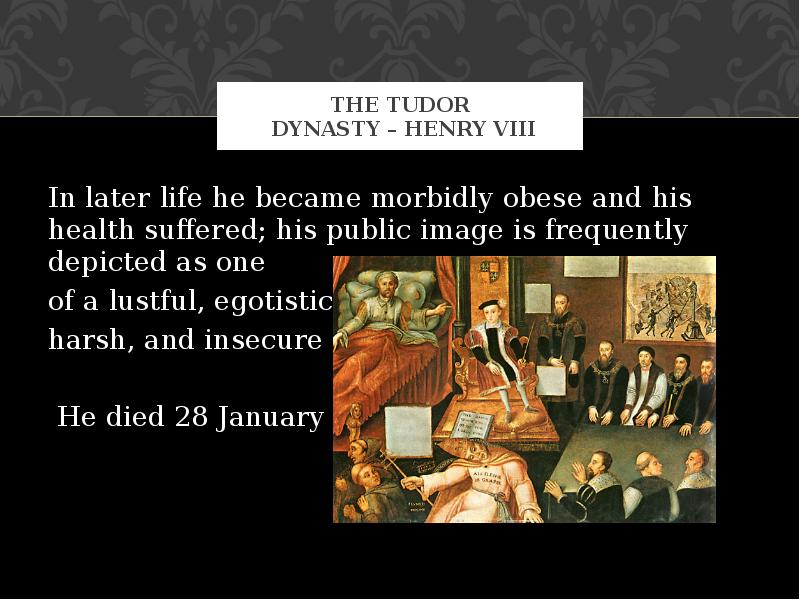
In later life he became morbidly obese and his health
suffered; his public image is frequently depicted as one
of a lustful, egotistical,
harsh, and insecure king.
He died 28 January 1547.
THE TUDOR
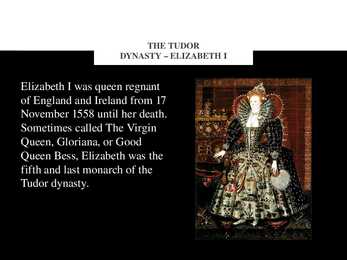
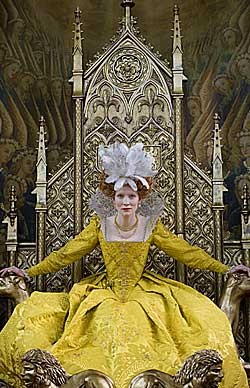
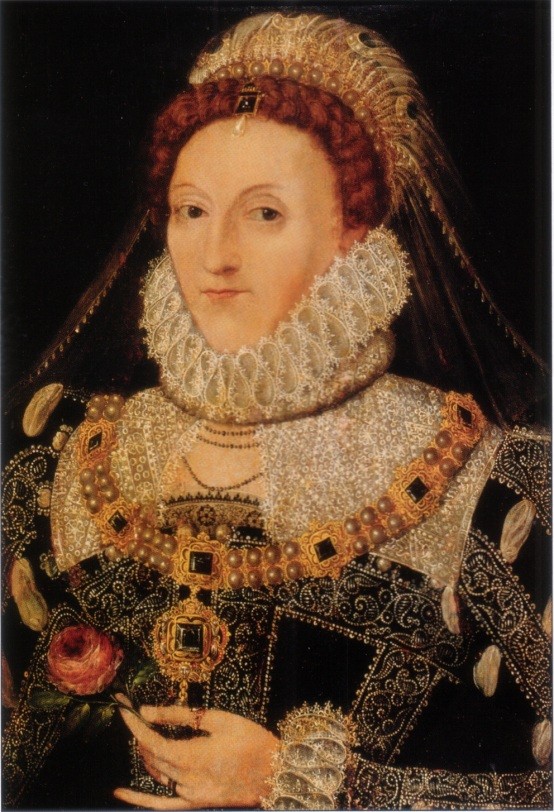
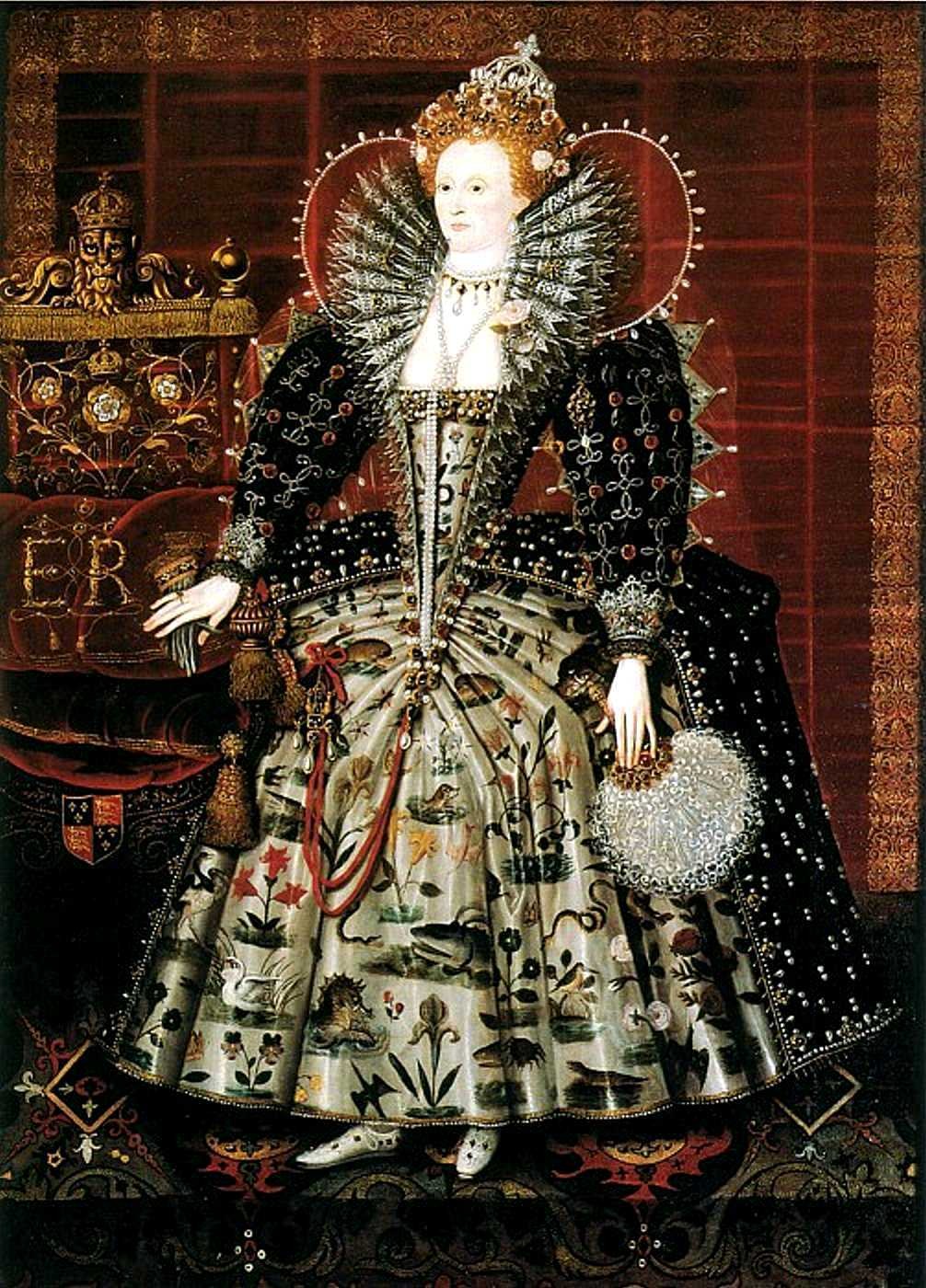
DYNASTY ELIZABETH I
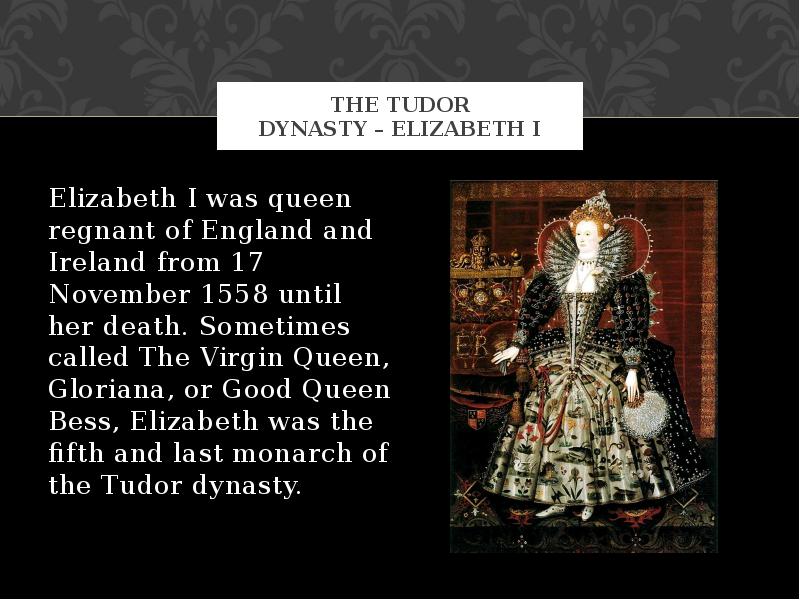
Elizabeth I was queen regnant
of England and Ireland from 17
November 1558 until her death.
Sometimes called The Virgin
Queen, Gloriana, or Good
Queen Bess, Elizabeth was the
fifth and last monarch of the
Tudor dynasty.
THE TUDOR
DYNASTY ELIZABETH I
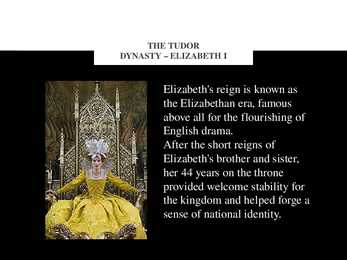
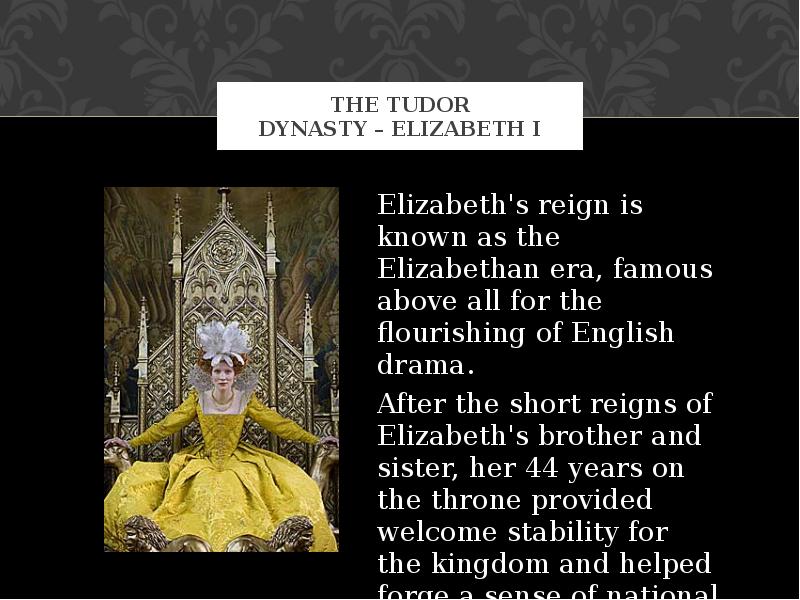
Elizabeth's reign is known as
the Elizabethan era, famous
above all for the flourishing of
English drama.
After the short reigns of
Elizabeth's brother and sister,
her 44 years on the throne
provided welcome stability for
the kingdom and helped forge a
sense of national identity.
THE TUDOR
DYNASTY ELIZABETH I
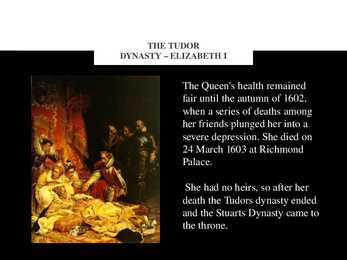
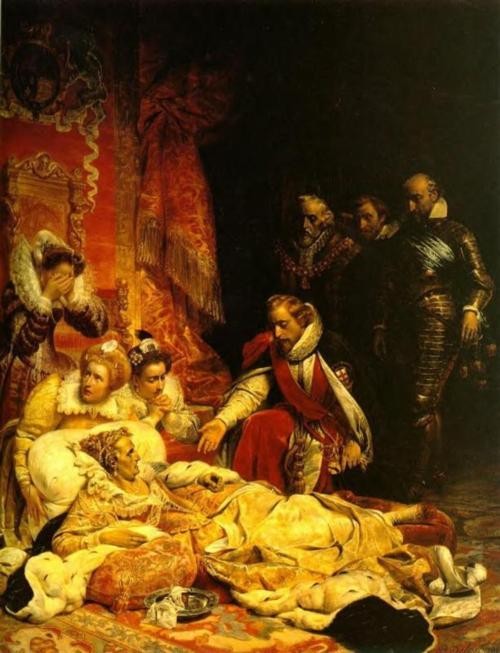
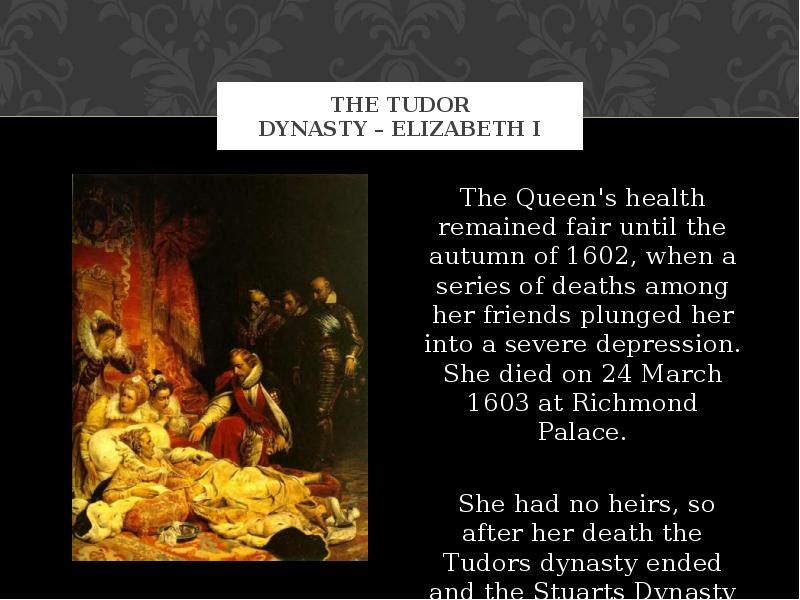
The Queen's health remained
fair until the autumn of 1602,
when a series of deaths among
her friends plunged her into a
severe depression. She died on
24 March 1603 at Richmond
Palace.
She had no heirs, so after her
death the Tudors dynasty ended
and the Stuarts Dynasty came to
the throne.
THE TUDOR
DYNASTY
In total, five Tudor monarchs ruled their domains for just over a
century. Henry VIII of England was the only maleline male heir
of Henry VII to live to the age of maturity. Issues around the
Royal succession (including marriage and the succession rights
of women) became major political themes during the Tudor era.
The Tudor line failed in 1603.
Tudors England
Life had many problems. Towns were becoming overcrowded, roads were muddy tracks
and travelling was difficult. The overcrowding caused danger from fire and disease.
What did the Tudors do for Britain?
During 118 years of Tudor rule, England became richer than ever before. As the
country became wealthier, towns grew, beautiful houses were built and schools and
colleges were set up. Arts and crafts flourished too. England was home to great
painters, writers and musicians.
School in tudors time
Not many children went to school in Tudor times. Those that did go were mainly the
sons of wealthy or working families who could afford to pay the attendance fee. Boys
began school at the age of 4 and moved to grammar school when they were 7. Girls
were either kept at home by their parents to help with housework or sent out to work to
bring money in for the family.
Boys were educated for work and the girls for marriage and running a household. The
wealthiest families hired a tutor to teach the boys at home.
Many Tudor towns and villages had a parish school where the local vicar taught boys to
read and write.
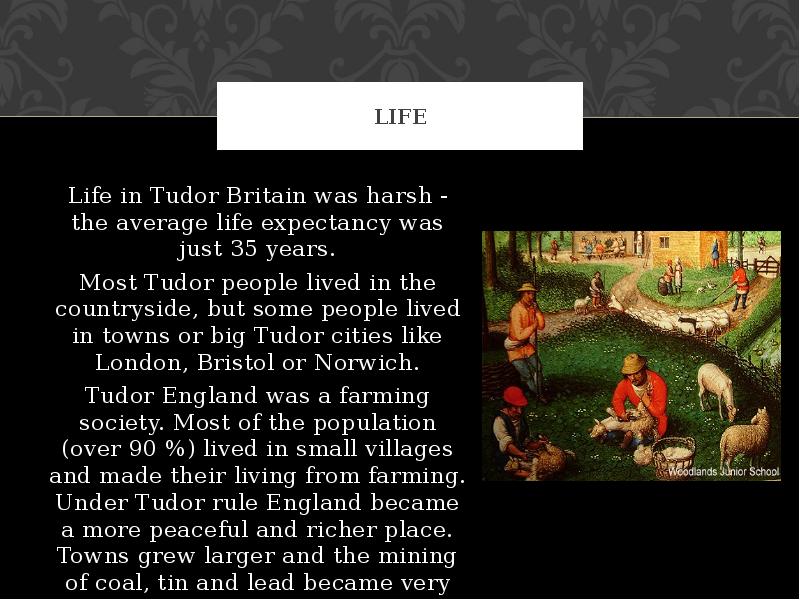
Life
Life in Tudor Britain was harsh the average life
expectancy was just 35 years.
Most Tudor people lived in the countryside, but
some people lived in towns or big Tudor cities like
London, Bristol or Norwich.
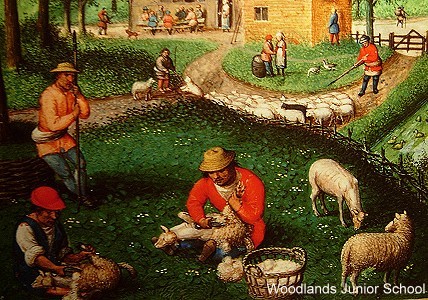
Tudor England was a farming society. Most of the
population (over 90 %) lived in small villages and
made their living from farming. Under Tudor rule
England became a more peaceful and richer place.
Towns grew larger and the mining of coal, tin and
lead became very popular.
The poor
The poor had to work hard and struggled to survive. They worked six days a week and
only had holy days and public holidays off work. They ate coarse grey bread made from
rye and barley. Soups were made from vegetables and herbs. Meat was a luxury but
poor people sometimes kept animals to provide milk, cheese and eggs.
Life for the poor in Tudor times was harsh. When the harvest failed it was tempting for
poor people to steal food. When people did break the law, they risked public flogging
or being hanged.
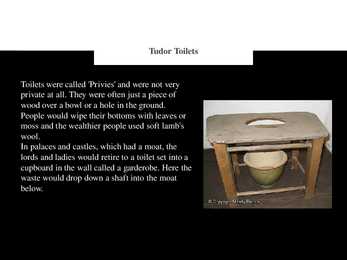
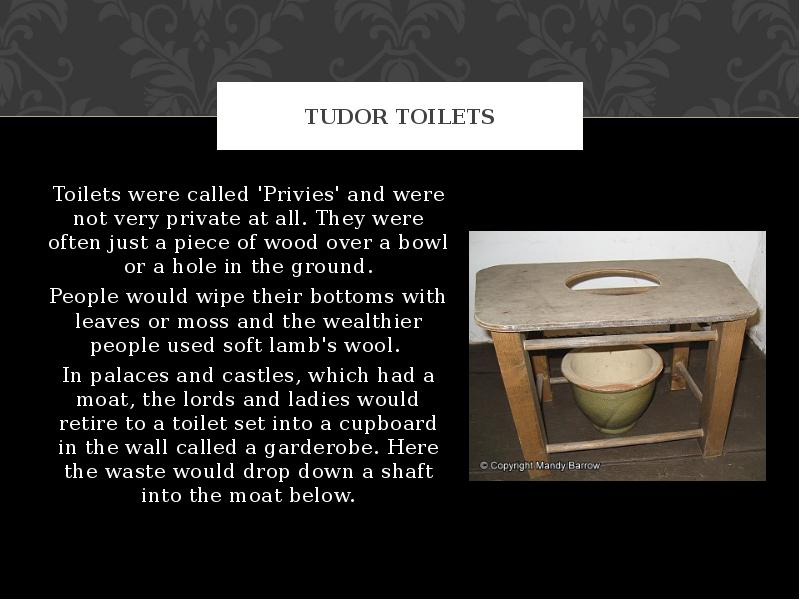
Tudor Toilets
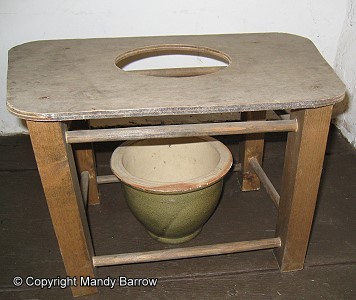
Toilets were called 'Privies' and were not very
private at all. They were often just a piece of
wood over a bowl or a hole in the ground.
People would wipe their bottoms with leaves or
moss and the wealthier people used soft lamb's
wool.
In palaces and castles, which had a moat, the
lords and ladies would retire to a toilet set into a
cupboard in the wall called a garderobe. Here the
waste would drop down a shaft into the moat
below.
THE TUDOR
DYNASTY
Used materials:
http://tudorhistory.org/
http://en.wikipedia.org/wiki/Tudor_dynasty
http://en.wikipedia.org/wiki/Elizabeth_I_of_England
http://en.wikipedia.org/wiki/Henry_VIII_of_England
THE TUDOR
DYNASTY
Thank you for your attention!
Raimo & Volodymyr
Sarnased õppematerjalid
![The Tudor Dynasty- Tudorite dünastia-Powerpoint Show]()
14
pptx
The Tudor Dynasty ( Tudorite dünastia) Powerpoint Show
THE TUDOR
DYNASTY
� THE TUDOR
DYNASTY
The Tudor dynasty or House of Tudor
was a European royal house of Welsh
origin that ruled the Kingdom of
England and its realms, including the
Lordship of Ireland, later the
Kingdom of Ireland. Its first monarch
was Henry VII.
Henry VII
� THE TUDOR
DYNASTY
The Tudors extended their power beyond modern England,
achieving the full union of England and the Principality of Wales
in 1542 and successfully asserting English authority over the
Kingdom of Ireland. They also maintained the traditional claims
to the Kingdom of France, but none of them tried to make
substance of it, though Henry VIII fought wars with France to try
to reclaim that title. After him, his daughter Mary I lost the claim
on France forever with the Fall of Calais.
British history (suurbritannia ajalugu)
![Inglise keelt kõnelevate maade ajaloo eksamiküsimused]()
28
doc
Inglise keelt kõnelevate maade ajaloo eksamiküsimused
could argue against a tax demand. William ordered the survey of England to take place about
twenty years after the Battle of Hastings. The whole survey took less than a year to complete
and the books can be found in the Public Records Office. The Domesday Book forms a
remarkable record of the state of England in the mid-1080's.
*The House of Anjou/the Plantagenets/the Angevins (kings, centuries) was a royal
house founded by Henry II of England. The First Angevin Dynasty also called the House of
Plantagenet, ruled England from the reign of Henry II, in the beginning 12th century, until the
House of Tudor came to power when Richard III fell at the Battle of Bosworth Field. Richard
I Lionheart had a reputation as a great military leader and warrior. John I (13 th century) is
known for sealing Magna Carta, a document limiting his power. Henry III, Edward I (14 th
century), Edward II, Edward III, Richard II (14th century).
Inglise keel kõnelevate maade ajalugu
![Keskaegne Inglismaa-1066-1485]()
27
ppt
Keskaegne Inglismaa (1066-1485)
Medieval England
1066-1485
Eva Asper
Anna Pohlak
11.c
�The Norman Dynasty
� The Norman Conquest
In the 11th century, Normans conquered
England
- The Battle of Hastings 14.10.1066
The Anglo-Saxon forces had more soldiers but
the Normans had better military tactics and won
in the end thanks to a clever strategy
William I, also known as William the Conqueror,
replaced King Harold on the throne
The invasion was completed by 1071
- The Norman invasion is depicted on the Bayeux
Tapestry a long embroidered cloth
![Inglismaa ajalugu 16-20-sajand]()
3
docx
Inglismaa ajalugu 16-20. sajand
People had good lives and were entertained. Mary
(catholic), The queen of Scots, was executed by Elizabeth I. Elizabeth had no heir.
The power of the English monarch increased in this period.
Bubonic plaguse killed one third of the population in England during its first
outbreak and continued to reappear periodically for another 300 years.
1605 The Gunpowder plot
The 17th century
James I became the first English king of the Stuart dynasty, he was already
James VI of Scotland so the crowns of these two countries were united
The goverments continued to seperate, but the linguistic differences were
lessened
The kind of Middle English spoken in lowland Scotland had developed into a
written language known as Scots
Scottish Protesntant church adopted English Bibles.
English became the written standard in Scotland as well
British history (suurbritannia ajalugu)
![Inglise keelt kõnelevate maade ajalugu lühikonspekt]()
168
odp
Inglise keelt kõnelevate maade ajalugu lühikonspekt
quarrel with Duke of York. Richard confiscated
Lancastrian estates that were to become Henry´s. Finally
king surrened his crown to him and was sent to
imprisoned where he died
�The War of the Roses 1455-1485
Series of dynastic wars between the House of
Lancaster(red rose) and the House of
York(white rose) for the English throne.
Many battles, huge massacres. Disaster for
nobility.
It ended with the marriage of Henry VII Tudor
and Elizabeth of York which united roses into
red-white Tudor rose
�Edward IV and Elizabeth Woodwille
Edward IV was twice the king. Defeated the
Lancastrians and became the Lancastrian
king. Henry VI overthrown, Edward was
crowned as Edward IV.
Earl of Warwick(powerful supporter) was
furious when king married Elizabeth secretly,
he allied with kings brother George and led a
revolt. They joined Henry VI´s wife Margaret of
Anjou, invaded England
![Queen Elizabeth I lifestory]()
17
pptx
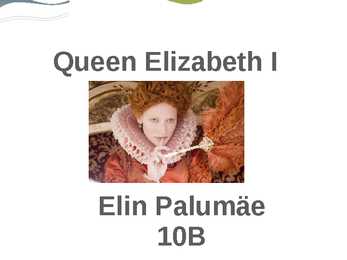
Queen Elizabeth I lifestory
Queen Elizabeth I
Elin Palumäe
10B
�Elizabeth I
Reign - 17 Nov. 1558 24 March 1603 (44 years)
Coronation - 15 January 1559(25 years)
Predecessor - Mary I
Successor - James I
House - House of Tudor
Father - Henry VIII
Mother - Anne Boleyn
Born - 7 September 1533 Greenwich, England
Died - 24 March 1603 (aged 69)
Burial - Westminster Abbey
�Anne Boleyn Queen consort of England
Mother of Elizabeth I
Tenure - 28 May 1533 17 May 1536 Coronation 1
June 1533
Anne Boleyn was Queen of England from 1533 to 1536
as the second wife of Henry VIII of England and the 1st
Marquess of Pembroke in her own right for herself and
her descendants.
House - House of Tudor
British history (suurbritannia ajalugu)
![The Queens of England]()
4
doc
The Queens of England
Mary I
Mary I, called Mary Tudor (1516-1558), Queen of England
(1553-1558). Mary was born in London on February 18,
1516, the daughter of Henry VIII by his first wife, Catherine
of Aragón. Because Henry divorced Catherine, Mary was
declared illegitimate. Nonetheless, Henry included her in his
will, and on the death of her half-brother, Edward VI, on
![London History]()
3
doc
London History
Westminster Palace and
Westminster Hall.
The 14th century a turbulent 1337 Hundred Years War against
period France
1348 the Black Death, a quarter of
the British people died
The Tudor era (1485 1603) Henry Tudor end to the
Wars of the Roses (1455-
1488)
Henry VIII - 1534 the
Breach with the papacy Act of Supremacy made
The formation of the Anglican the crown the spiritual
Meedia
Kommentaarid (0)
 50 punkti
Autor soovib selle materjali allalaadimise eest saada 50 punkti.
50 punkti
Autor soovib selle materjali allalaadimise eest saada 50 punkti.
 ~ 19 lehte
Lehekülgede arv dokumendis
~ 19 lehte
Lehekülgede arv dokumendis
 2012-09-15
Kuupäev, millal dokument üles laeti
2012-09-15
Kuupäev, millal dokument üles laeti
 4 laadimist
Kokku alla laetud
4 laadimist
Kokku alla laetud
 0 arvamust
Teiste kasutajate poolt lisatud kommentaarid
0 arvamust
Teiste kasutajate poolt lisatud kommentaarid
 AnnaAbi
Õppematerjali autor
AnnaAbi
Õppematerjali autor
 annaabi.ee







Kõik kommentaarid