Vajad kellegagi rääkida?
Küsi julgelt abi LasteAbi
Logi sisse

The Inchcape Rock (0)

5 VÄGA HEA
Punktid
And the Blue Sky My Fretted Dome Shall Be”-
Nature vs Society In the Works of British Romanticists
Research paper
Liisi Pajula
11 b
The Inchcape Rock
by Robert Southey
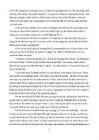
The Inchcape Rock is a poem about Sir Ralph the Rover , an evil man, who wants to sink other ships, so he could use his own ship to blunder villages and towns. He removes a warning bell that warns sailors about a secret underwater rock. By doing this, he signs his own death sentence. At a dark night , he crashes his ship to the Rock, because there was no bell to warn him.
In the first stanza of the poem Southey describes the surroundings. The tone of the poem is set, at the begging it is very serene and relaxed. The weather and sea are calm, the ship stands , undisturbed, in the water. The reader is supposed to feel joy and relax when this description is given , it brings to mind a sunny and warm summer -day, when everything is just perfect. The point on the first stanza is only to set the tone, it has no real artistic value .
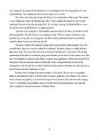
The second stanza states that there was no sign of the Inchcape Rock, which lay below the water surface. The water gave no sign of that deadly rock and the low, calm waves did not move , or sound the Inchcape Bell - the warning bell, put there to alert the sailors of a nearby peril . Southey creates tension by describing the location of the bell “ Without either sign or sound of their shock / The waves flow'd over the Inchcape Rock;” - the ships are left clueless about the Rock that awaits, to tear them apart, under the clam surface. The mood immediately changes with this stanza. The word “shock” has an ominous under-tone, which gives the reader a hint of the future horrors, which are going to happen near the rock.
In the third stanza we are explained how the Bell came to be there, where it now stands. The Abbot of Aberbrothok put it there, on a buoy near the Rock to warn ships of the hidden danger . During a storm the buoy swings and the Bell rings, by doing so, alerts the ships of nearby peril.
The fourth stanza is pretty much the same as the third one, just written in different words . It says that although the Rock is hidden beneath the waves, sailors are able to hear the warning bell, can avoid the Inchcape Rock and thank the Abbot of Aberbrothok for putting the bell there.
With the fifth stanza, we turn back to the beginning , repeating the first stanza, in a slightly different manner . The location is described – it is a sunny day, everything seems to be joyful and lovely. The seabirds are screaming with joy, as they are flying high in the sky. The only thing worth noticing in this stanza is the word “scream'd” (“The sea- birds scream'd as they wheel'd round , / And there was joyaunce in their sound.”), which would normally not be used if the tone is calm and lovely, but on the other hand, screaming does most closely describe the sound sea gulls and other such birds make.
In the next stanza, Southey uses contrast to distinguish the bell from the surrounding ocean . The buoy on which the bell stands on, seems like a darker speck on the smooth water surface. It stands out so clearly that it catches the eye of Sir Ralph the Rover.
Next, the mood of the Rover is expressed. It is stated that his heart was filled with joy for spring , he whistled and sung , but his joy was wicked – he was happy because he had seen the bell and planned on doing something bad.
As his eye lay, fixed upon the Inchcape Bell, he commanded his men to lower a boat to the water and row him to the Rock. He wanted to “ plague ” the Abbot of Aberbrothok, so no man would ever thank him again .
“The boat is lower'd, the boatmen row, / And to the Inchcape Rock they go; / Sir Ralph bent over from the boat, / And he cut the Bell from the Inchcape float.” This stanza is quite literal, it does not take a genius to understand what it is about - the sailors take the evil man to the buoy and he cuts the Bell free.
In the tenth stanza, Sir Ralph the Rover lets the bell sink to the depths of the ocean- “Down sunk the Bell with a gurgling sound. / The bubbles rose and burst around ;”. He then enviously and with malice says that the next man who comes to the Rock, will not thank the Abbot (because his ship will crash the Rock and he will die in a very painful manner). In this stanza, Southey takes the gut- feeling of something bad happening to the next level, by describing the bubbles that appear after Ralph has thrown the bell into the water, such words as “gurgling” and “burst” also have a negative undertone and add to the feeling of the approaching danger.
We are then told that Sir Ralph then went scouring for treasure , and became a very rich man. He then wants to return to Scotland , and sets his course towards the homeland shore . In the mean time, however , the weather has changed – there is such a thick fog the sailors can not see even the sun and the wind had also died away , so they were at the mercy of the sea.
The Rover stands on the deck of the ship, worrying. It is now a very dark night - there are no stars , nor the moon to give them light . He hopes the moon will soon rise , so they would be able to know where they are. Then one of sailors says that he can hear the sound of the waves breaking and he believes they are near a shore. Sir Ralph answers him that he is not sure where they are, but he wishes he could hear the Inchcape Bell. Here again, the sensation of something bad happening is very strong , the description of the dead-silent sea is no longer lovely and relaxing, but vice versa, very disturbing. The complete darkness also has a part in it, of course.
The sailors, obviously, do not hear the Bell (as it is in the bottom of the ocean). The current is very strong and it carries the floating ship with it. Then, suddenly the ship hits a rock and the understand they have found the Inchcape Rock. As the ship is sinking, Sir Ralph the Rover curses himself for removing the Bell from it's rightful position .
“But even in his dying fear / One dreadful sound could the Rover hear, / A sound as if with the Inchcape Bell, / The Devil below was ringing his knell.” The last stanza is written in a very powerful way. It says that at his dying hour, the Rover finally understands that he himself had signed his death sentence by removing the bell.
The poem is filled with romanticist images and is quite literally understandable. But, if we consider that a ship was an ancient symbol for civilization, the poem acquires a wholly different dimension. Also, the contrast between society and nature then becomes very distinct . We are then presented with the idea of civilization going down the drain just because of some human vices, like envy. Sir Ralph let his jealousy of the Abbot cloud his clear sightedness. When throwing the bell to the depths of the sea, he did not perceive that in the future, he might need the services of the warning device for himself. So it could be said that Southey believed the doom for mankind to lie in the selfishness and short-sightedness of men.
Southey used very typical romanticist images in this poem. The sea was a very popular theme at that period , because it is the best proof of nature's supremacy over humans. The scene at sea can change very quickly, at one moment being calm and smooth, and at the next with a raging storm. It is absolutely uncontrollable, and so is the best way to show people how small they are when compared to the awesome power of Mother Nature.
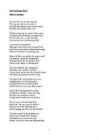
The Inchcape Rock
Robert Southey
No stir in the air, no stir in the sea,
The ship was still as she could be,
Her sails from heaven received no motion ,
Her keel was steady in the ocean.
Without either sign or sound of their shock
The waves flow'd over the Inchcape Rock;
So little they rose, so little they fell ,
They did not move the Inchcape Bell.
The Abbot of Aberbrothok
Had placed that bell on the Inchcape Rock;
On a buoy in the storm it floated and swung,
And over the waves its warning rung.
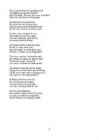
When the Rock was hid by the surge's swell ,
The mariners heard the warning bell;
And then they knew the perilous Rock
And blest the Abbot of Aberbrothok.
The Sun in heaven was shining gay,
All things were joyful on that day;
The sea-birds scream'd as they wheel'd round,
And there was joyaunce in their sound.
The buoy of the Inchcape Bell was seen
A darker speck on the ocean green ;
Sir Ralph the Rover walk 'd his deck,
And he fixed his eye on the darker speck.
He felt the cheering power of spring.
It made him whistle, it made him sing ;
His heart was mirthful to excess,
But the Rover's mirth was wickedness.
His eye was on the Inchcape float;
Quoth me, 'My men, put out the boat,
And row me to the Inchcape Rock,
And I'll plague the Abbot of Aberbrothok.'
The boat is lower'd, the boatmen row,
And to the Inchcape Rock they go;
Sir Ralph bent over from the boat,
And he cut the Bell from the Inchcape float.
Down sunk the Bell with a gurgling sound.
The bubbles rose and burst around;
Quoth Sir Ralph, 'The next who comes to the Rock
Won't bless the Abbot of Aberbrothok.'
Sir Ralph the Rover sail'd away,
He scour'd the seas for many a day;
And now grown rich with plunder'd store ,
He steers his course for Scotland's shore.
So thick a haze o'erspread the sky
They cannot see the Sun on high;
The wind hath blown a gale all day,
At evening it hath died away.
On the deck the Rover takes his stand ,
So dark it is they see no land .
Quoth Sir Ralph, 'It will be lighter soon,
For there is the dawn of the rising Moon.'
'Canst hear,' said one, 'the breakers roar?
For methinks we should be near the shore.'
'Now where we are I cannot tell ,
But I wish I could hear the Inchcape Bell.'
They hear no sound, the swell is strong;
Though the wind hath fallen they drift along ,
Till the vessel strikes with a shivering shock,-
'Oh, Christ ! It is the Inchcape Rock!'
Sir Ralph the Rover tore his hair ;
He curst himself in his despair;
The waves rush in on every side,
The ship is sinking beneath the tide.
But even in his dying fear
One dreadful sound could the Rover hear,
A sound as if with the Inchcape Bell,
The Devil below was ringing his knell.
5
The Inchcape Rock #1 The Inchcape Rock #2 The Inchcape Rock #3 The Inchcape Rock #4 The Inchcape Rock #5
Punktid 50 punkti Autor soovib selle materjali allalaadimise eest saada 50 punkti.
Leheküljed ~ 5 lehte Lehekülgede arv dokumendis
Aeg2009-01-10 Kuupäev, millal dokument üles laeti
Allalaadimisi 7 laadimist Kokku alla laetud
Kommentaarid 0 arvamust Teiste kasutajate poolt lisatud kommentaarid
Autor pliisi Õppematerjali autor
Tegu on uurimistööga antud luuletusest. Põhjalik analüüs ja sisu kirjeldus.
INGLISEKEELNE TEKST

Sarnased õppematerjalid

William Shakespeare - Hamlet
406
pdf

William Shakespeare - Hamlet

Hamlet Shakespeare, William Published: 1599 Categorie(s): Fiction, Drama Source: Feedbooks 1 About Shakespeare: William Shakespeare (baptised 26 April 1564 – died 23 April 1616) was an English poet and playwright, widely regarded as the greatest writer in the English language and the world's pre-eminent dramatist. He is often called England's national poet and the "Bard of Avon" (or simply "The Bard"). His surviv- ing works consist of 38 plays, 154 sonnets, two long narrative poems, and several other poems. His plays have been trans- lated into every major living language, and are performed more often than those of any other playwright. Shakespeare was born and raised in Stratford-upon-Avon. At the age of 18 he married Anne Hathaway, who bore him three children: Susanna, and twins Hamnet and Judith. Between 1585 and 1592 he began a successful career in London as an actor, writer, and part ow

Inglise keel
Topics-step 8-kokkuvõtted mõnedest peatükkidest
14
doc

Topics, step 8, kokkuvõtted mõnedest peatükkidest

1) INDIAN ROCK ART: A NATIONAL TREASURE IN DANGER Unrecognized, unprotected, this priceless legacy of primitive art has endured the ravages of nature only to fall victim to wanton destruction by ,,civilized" man. Like the huge stone statues of Easter Island and prehistoric cave paintings of Altamira and Lascaux, North American Indian rock art is surrounded by an atmosphere of mystery. Although examples of rock art exist at some 15000 sites in canyons, deserts, caves and river gorges. Nowadays, however, primitive rock art in the United States has become a new field of scientific study. Klaus F Wellmann wrote two books about rock art. He is a professor of medicine. Rock art represents the history of aboriginal Americans. In the most cases the art is an expression of ideas and way of life, ritual ceremonies, hunting, fighting. The pictures of people and animals are often strikingly lifelike and artistic

Inglise keel
Videvik kogu raamat Inglise keeles
274
docx

Videvik(kogu raamat Inglise keeles)

Color-- -1- -2- -3- -4- -5- -6- -7- -8- -9- Text Size-- 10-- 11-- 12-- 13-- 14-- 15-- 16-- 17-- 18-- 19-- 20-- 21-- 22-- 23-- 24 TWILIGHT By Stephenie Meyer Contents PREFACE 1. FIRST SIGHT 2. OPEN BOOK 3. PHENOMENON 4. INVITATIONS 5. BLOOD TYPE 6. SCARY STORIES 7. NIGHTMARE 8. PORT ANGELES 9. THEORY 10. INTERROGATIONS 11. COMPLICATIONS 12. BALANCING 13. CONFESSIONS 14. MIND OVER MATTER 15. THE CULLENS 16. CARLISLE 17. THE GAME 18. THE HUNT 19. GOODBYES 20. IMPATIENCE 21. PHONE CALL 22. HIDE-AND-SEEK 23. THE ANGEL 24. AN IMPASSE EPILOGUE: AN OCCASION twilight STEPHENIE MEYER LITTLE, BROWN AND COMPANY New York Boston Text copyright © 2005 by Stephenie Meyer All rights reserved. Little, Brown and Company Time Warner Book Group 1271 Avenue of the Americas, New York, NY 10020 Visit our Web site at www.lb-teens.com First Edition: September 2005 The characters and events portrayed in this book are fictitious. Any similarity to real persons, living or dead, is coincidental and not intende

Kirjandus
Ameerika kirjandus alates I maailmasõjast kuni tänapäevani
29
docx

Ameerika kirjandus alates I maailmasõjast kuni tänapäevani.

Ameerika Kirjandus 30.01.13 Naturalism · France, Emile Zola · Put down his theory in 1879: Le Roman Experimental, attempt to explain the development of human society throuch biological laws · Outlook is deterministic, pessimistic, fatalistic (fate or biology) · Man as an animal-clever than other beasts, still explainable within the framework · Man is not a free agent, is govern by something · Unable to determine his own faith · Hereditary · Naturalists tried to apply in fiction the processes of natural sciences · Writers task is to record facts, systems of behaviour, living conditions, never revealing any natural unbiased (completely natural) · Point of view: amoral-outside the category of morality, neither good or bad · Naturalist find it absurd to blame the wicked. These criminals are doing what nature, environment, their unconscious tells them to do. Naturalists do not judge their characters, they sim

Ameerika kirjandus
Philip Larkin poetry analysis
2
doc

Philip Larkin poetry analysis

Philip Larkin poetry analysis For my poetry analysis paper I chose Philip Larkin's works, because he was the first British poet whose works I read. I think that his poems are interesting. They reveal much about Larkin's life and about the social issues in the 20th century. Larkin is also considered to be one of the greatest English poets in the 20th century. I think that Larkin was quite interested in politics. For example his poem ´´Talking in Bed´´ begins with the lines /Talking in bed ought to be easiest, Lying together there goes back so far/. At first it gives the reader an idea that he is talking about two lovers, but actually he is talking about England and USA. He describes the darkness that is creeping up. In my opinion he is talking about USA, which is beginning to creep up on England or on Europe. And because of that England is becoming a less dominant and more isolated place. He is saying that intimacy is dying and that may repr

Inglise kirjandus
Stilistika loeng
31
doc

Stilistika loeng

FGI 1081 Stilistika (Irina Ladusseva) Kab. 420 2 AP Ends with an exam; lasts only for 1 semester. At the exam you get 2 questions and an exercise (50 sentences: establish the device used, recognize it, and name it). Care about the pronunciation of the terms. Books: - I. Galperin "Stylistics" - I. Ladusseva "Rhythm and Text" - I. Ladusseva "Vocabulary and Style" - I. Ladusseva "Stylistic practice: Book I, Book II" - I. Ladusseva "A Guide to Punctuation" EXAMINATION TOPICS: 1. Style, stylistics, a survey of stylistic studies 2. Inherent connotations. Phonesthe

Stilistika (inglise)
Jane Austen
234
pdf

Jane Austen

The Project Gutenberg EBook of Pride and Prejudice, by Jane Austen This eBook is for the use of anyone anywhere at no cost and with almost no restrictions whatsoever. You may copy it, give it away or re-use it under the terms of the Project Gutenberg License included with this eBook or online at www.gutenberg.org Title: Pride and Prejudice Author: Jane Austen Release Date: August 26, 2008 [EBook #1342] [Last updated: August 11, 2011] Language: English Character set encoding: ASCII *** START OF THIS PROJECT GUTENBERG EBOOK PRIDE AND PREJUDICE *** Produced by Anonymous Volunteers, and David Widger PRIDE AND PREJUDICE By Jane Austen Contents Chapter 1 Chapter 22 Chapter 2 Chapter 23 Chapter 43 Chapter 3 Chapter 24 Chapter 44 Chapter 4 Chapter 25 Chapter 45

Kirjandus
TARTUFFE-inglise keelne
64
docx

TARTUFFE (inglise keelne)

TARTUFFE A COMEDY CHARACTERS MADAME PERNELLE, mother of Orgon ORGON, husband of Elmire ELMIRE, wife of Orgon DAMIS, son of Orgon MARIANE, daughter of Orgon, in love with Valere CLEANTE, brother-in-law of Orgon TARTUFFE, a hypocrite DORINE, Mariane's maid M. LOYAL, a bailiff A Police Officer FLIPOTTE, Madame Pernelle's servant The Scene is at Paris ACT I SCENE I MADAME PERNELLE and FLIPOTTE, her servant; ELMIRE, MARIANE, CLEANTE, DAMIS, DORINE MADAME PERNELLE Come, come, Flipotte, and let me get away. ELMIRE You hurry so, I hardly can attend you. MADAME PERNELLE Then don't, my daughter-in law. Stay where you are. I can dispense with your polite attentions. ELMIRE We're only paying what is due you, mother. Why must you go away in such a hurry? MADAME PERNELLE Because I can't endure your carryings-on, And no one takes the slightest pains to please me. I leave your house, I tell you, quite disgusted; You do the opposi

Inglise keel


Kommentaarid (0)

Kommentaarid sellele materjalile puuduvad. Ole esimene ja kommenteeri


Sellel veebilehel kasutatakse küpsiseid. Kasutamist jätkates nõustute küpsiste ja veebilehe üldtingimustega Nõustun