Vajad kellegagi rääkida?
Küsi julgelt abi LasteAbi
Logi sisse

Baaslogistika Module 1-5 Konspekt (0)

5 VÄGA HEA
Punktid
Module 1. Introduction
1)When did the industrial revolution start? 19th century
2)How did the Americans improve the Western European economy ? Marshal aid
3)When did world trade start booming before or after 1950? After
3 top exporting continents in the world: Asia 56%, Europe 19%, North America 10%.
Area is considered to be the biggest emerging market : The Indian Sub- continent (India, Pakistan , Bangladesh and Sri Lanka ).
Products are exported from …
Europe: motor cars, mashinery, chemicals .;Asia: video/ audio equipment , clothes, shoes .;
Australia : iron ore(руда\ maak ), dairy products, meat .; Middle East : oil, gas, chemicals.;Africa: fruits , cacao, coffee .;
North America: peanuts, grain, coal.; South America: meat, poultry( linnuliha ), iron ore.
WTO- the World Trade Organisation is the driver to ensure trade between countries has no barriers world wide .
340 mln container are circling the globe ! 500.000 ships ensure that cargo is shipped around the world.
Import duties have dropped to less than 5%.
4)Which industry is still heavily subsidized and needs further liberalization? Agriculture
Since 1950 World Trade has grown 20 fold.
The North American Free Trade agreement ( NAFTA ) belongs to Canada, Mexico and the Unites States .
Liner trade means liner shipping is the service of transporting goods by means of high-capacity, ocean - going ships that transit regular routes on fixed schedules.
A boat or  ship  engaged in the  tramp  trade is one which does not have a fixed schedule or published ports of call
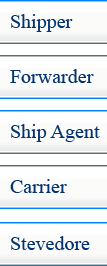
Ship agent’s responsibilities:
  • Representing the shipowner;
  • Act as mandatory of the shipper.
  • engage pilots, tugs and boatmen for his pricipal;
  • arrange for ship’s store and supplies and bunkers to be delivered ;
  • handle inward and outward clearance;
  • arrange moorings(sildamine);
  • pay harbour dues and other fees;
  • arrange for the vessel to be loaded and unloaded;
  • have the cargo stowed(paigutada) and lashed(sidemetega kinnitatud);
  • handle personnel matters, such as the crew change;
  • accept cargo for the shipment and much else besides .
Front office work . They are kind of Marketing and Sales offices that mainly deal with canvassing(agitatsioon) and booking of cargo.
Back office mainly carries out documentary processes, e.g. invoicing.
Top 5 the largest markets share :
  • Maersk Line 14,6%
  • MSC 13,3%
  • CMA CGM 8,5%
  • EVERGREEN 4,8%
The ship’s agent , as coordinator and intermediary between shipper and carrier , has:
  • Information about cargo and means of transport;
  • A profound knowledge of loading/discharging, storage and handling ;
  • Knowledge of (intermodal) transport and distribution.
Electronic Data Interchange (EDI) is the computer-to-computer exchange of business documents in a standard electronic format between business partners .
Transport document Bill of Lading is a detailed list of a ship's cargo in the form of a receipt given by the master of the ship to the person consigning the goods.
The European Community Association of Ship Brokers and Agents (ECASBA) is a sub- committee of FONASBA. 
Areas of interest include
• Seaport and port services policy  
• Short sea shipping 
• Safety and quality shipping 
• Customs and administrative procedures 
• EDI  The Federation of National Associations of Ship Brokers & Agents (FONASBA) provides a united voice for the world’s ship brokers and agents. Founded in 1969
Essential for sea worthy packiging: shock resistant, avoid moisture, stackable.
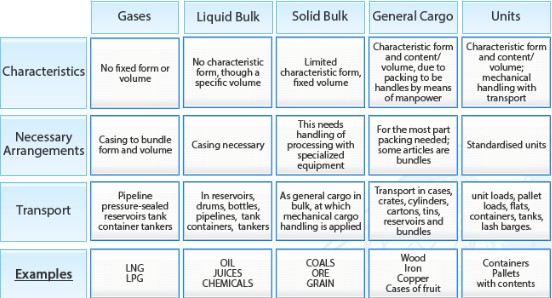
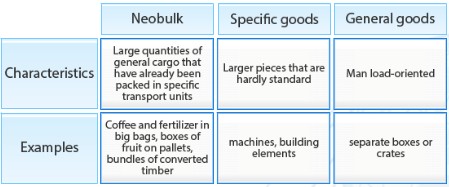
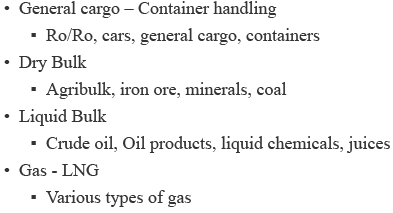
General cargo can be subdivided: general goods, specific goods and neo bulk .
Bulk cargo means weight or measure of item.
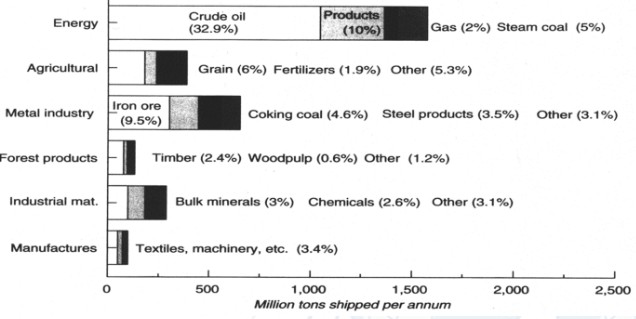
Some examples of major  dry bulk commodities include coal, ore and grain.
Break Bulk cargo is transported in bags, boxes, crates, drums, or barrels.
Luquid Bulk refers to material in either liquid or granular, particulate form, as a mass of relatively small solids, such as petroleum /crude oil, grain, coal, or gravel.
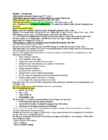
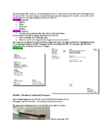
Containers
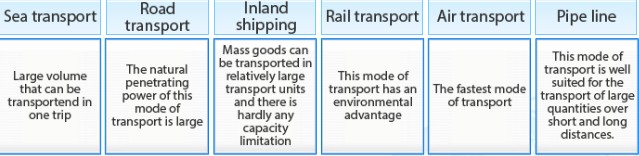
Means of transport
Module 2. Carriers and intermediaries
Carrier is the transporter of goods and commodities.
Ship- owner owns a ship.
A consortium is an association of two or more individuals, companies , organizations or governments with the objective of participating in a common activity or pooling their resources for achieving a common goal .
In an alliance, the agreements between the lines are geared around using each other vessels.
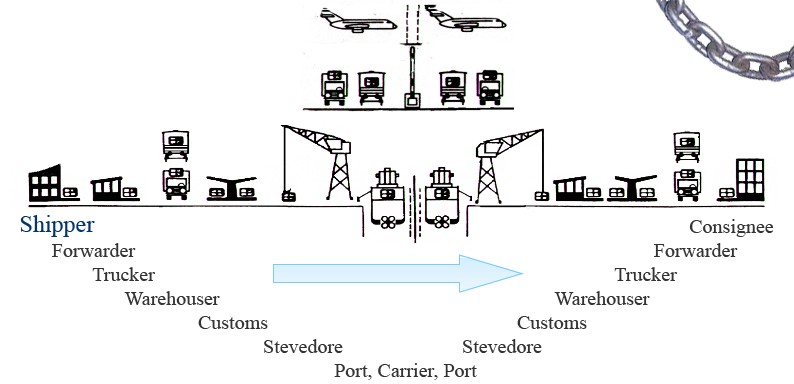
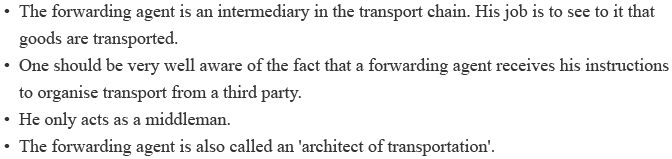
The forwarder controls the total transport chain on behalf of the shipper.
Consolidators
If you wish that your parcels are delivered to separate receivers you should contact a forwarder.
N.V.O.C.C
The N.V.O.C.C does not operate in a Vessel Sharing Agreement, but operates in a Slot Charter Agreement.
Terminal operators load and discharge seagoing vessels.
The discharged cargo is thereafter loaded on another mode of transport; Either by barge, train or truck .
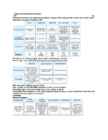
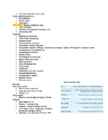
Structure of terminal operators
Module 3. Globalisation
New markets via export
Companies can become involved in export in many ways :
  • Incidental contact;
  • Forced choice to grow ;
  • Free choice to grow.
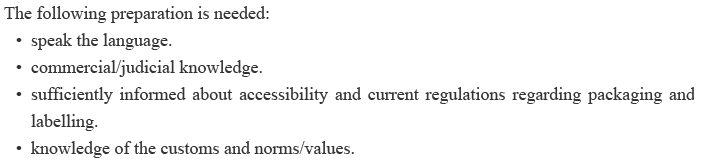
Thorought preparation
Passive export means that only foreign request are handled.
Active export means that daily focus is given to exporting goods.
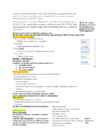
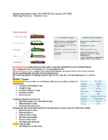
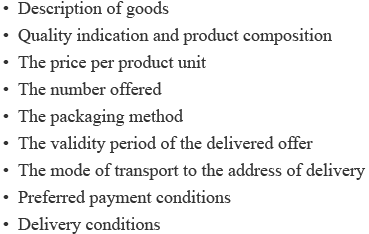
Types of offers :
In a offer the following items need to be discussed:
Terms of payment :
Advanced payment;
Documentory collection – cash against documents.
Delivery credit
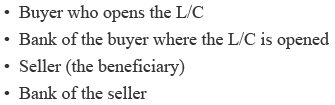
Letter of credit (аккредитив)– a letter issued by a bank to another bank (especially one in a different country ) to serve as a guarantee for payments made to a specified person under specified conditions .
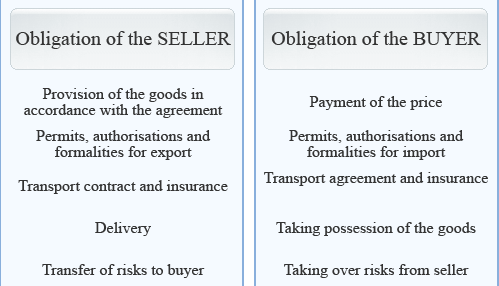
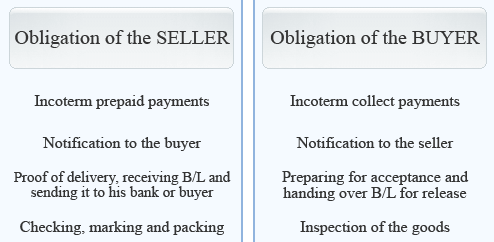
Incoterms are international delivery conditions that regulate the transfer of goods between buyer and seller , with regard the the:
The delivery conditions determine how payment between both parties is regulated concerning the following issues:
  • Taxes , export levies(сборы/ maksud ) and import duties;
  • Other official levies;
  • Insurance;
  • Transport costs ;
  • Expenses and efforts for the fulfilment of customs formalities.

Critical points :
  • Cost;
  • Risk;
  • Documents.

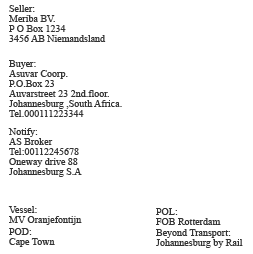
If cargo moves FOB (Free ob board ; "FOB shipping point" (or origin ) means that the buyer is at risk while the goods are shipped, and "FOB destination" states that the seller retains the risk of loss until the goods reach the buyer) and container drops from the crane in the loading port, it is the risk for the seller.
If cargo moves EXW (Ex works ; This rule places minimum responsibility on the seller, who merely has to make the goods available , suitably packaged, at the specified place , usually the seller’s factory or depot), the loading of the container at sellers warehouse an obligation for the buyer.
If cargo moves CIF (Cost, insurance and freight; The CIF term requires the seller to clear the goods for export) , the sea transport pays seller.
If cargo moves FOB and goes over board during a storm , the risk bears buyer.
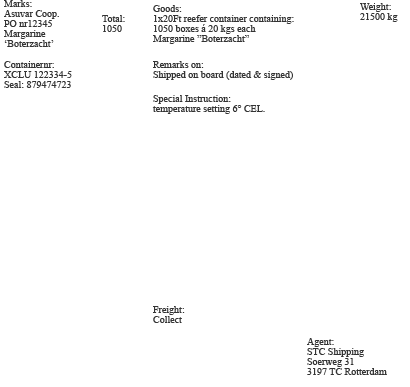
The bill of lading (B/L) works as a receipt of freight services, a contract between a freight carrier and shipper and a document of title. The bill of lading is a legally binding document providing the driver and the carrier all the details needed to process the freight shipment and invoice it correctly.
The shipper stands for:
  • Exporter;
  • Trader;
  • Wholesaler;
  • Producer.
The carrier stands for:
  • The ship owner or line operator, who charters ships from owners.
Date in relation to the Bill of lading is important because it ables:
  • Correct handling of the trade agreement;
  • When the contract of carriage between shipper and carriers has started .`
The contract of carriage has been agreed between shipper and carrier. The shipper provides the shipping instructions for the ship agent to prepare the B/L. Consignee pays the sea freight in the B/L. The ship agent signs the bill of lading on the date of departure for release to shipper.
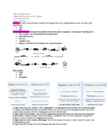
Bill of Lading
Module 4. Maritime & Intermodal Transport
What changed shipping in size after the second World War? Economies of scale.
The biggest trade lane nowadays is Asia-Europe&Asia-North America.
The international shipping industry is the life blood of the global economy.
General cargo ships: 39%
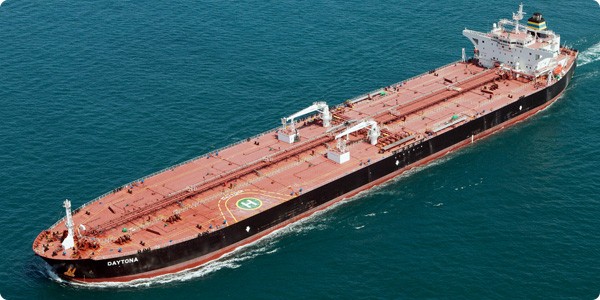
Tankers: 25%
Bulk carriers: 13%
Passanger ships: 12%
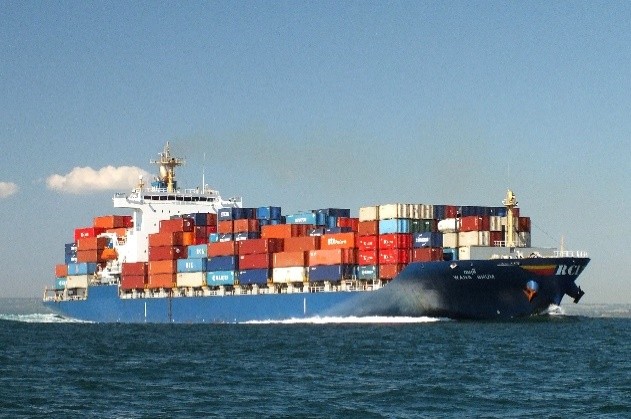
Container ships: 7%
SOLAS – Safety of life at sea.
MARPOL ensures that we do not cause marine pollution.
There are 2 types of general cargo vessels:
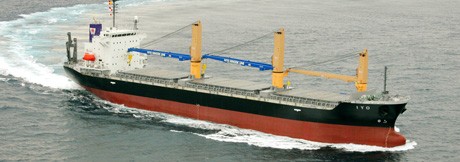
Conventional cargo vessel: is employed in the carrying of traditional general cargo and ( a part of) bulk cargo.
Multi- purpose vessel: part of this vessel is used for general cargo, and a part of the loading capacity has been prepared to carry containers.
Postpanamax vessel is a ship, which is more than 13 containers wide.
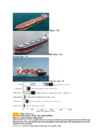
Currently largest container carrier – ULCC MSC OSCAR ( capacity is 19224 TEU).
World’s largest bulk carrier – Vale Rio de Janeiro .
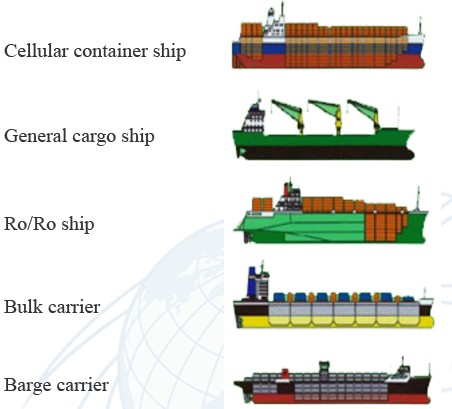
Various vessel types:
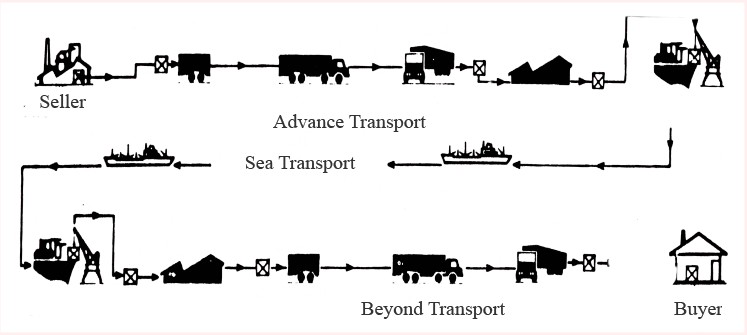
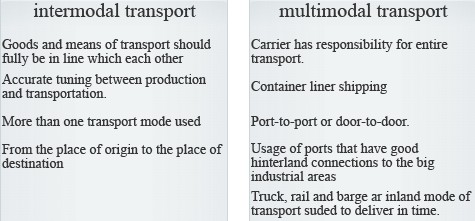
In intermodal transport more than one transport mode is being used. Intermodal transport is performed from the place of origin to the place of destination, via a few transshipment points.
Multimodal transport is very common in the container liner shipping: port to port or door -to-door. Carriers use ports that have good hinterland connections to the big industrial areas.
The 3 marketing segments in shipping are general cargo and bulk cargo, liner and tramp shipping, deep sea and short sea.
Module 5. The port
Commercial port is an area where sea and land meet with means and facilities to achieve the following goals:
  • Loading and discharging of ships;
  • Storage of cargo;
  • Acceptance/delivery of cargo;
  • Sea related activities .
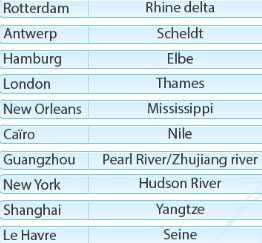
  • Port and its river

A mainport’s infrastructure consists of:
  • Quay (Причальные) walls with sufficient depth;
  • Modern terminal facilities;
  • Good hinterland connections.
Statements that make a port modern and desirable for ship owners to call and make part of their liner scheduls:
  • Modern terminal facilities;
  • Deep port approach ;
  • Politically stable country;
  • Safe and secure handling;
  • Fast and relieble service;
  • Good hinterland connections.
Terminal a part of a port:
  • Consisting of one or more quays;
  • Specially designed for certain cargo.
Can be owned by/operated by:
  • Port authorities;
  • Private capital;
  • Ship owners.
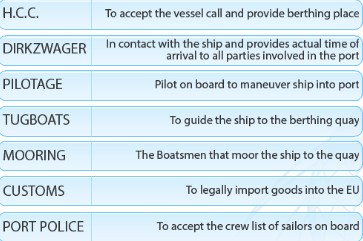
Tasks of HCC, Harbour coordination centre :
  • Safety in the port;
  • Control on incoming and outcoming vessels;
  • Information centre.
Consists of:
  • Planning en coordination;
  • Central traffic management;
  • Dangerous goods.
  • Service providers in the port:
  • Government : Customs; Port police .
  • Inderpendent companies: Pilotage; Communication company; Tugboats; Mooring; Port community system.
  • The main tasks of the port police are:
  • Maintaining law and order ;
  • Boarder control;
  • Providing help on around port.
  • Business when ship in port:
  • Bunkering of fuel;
  • Intake of drinking water;
  • Ship chandler;
  • Laudry firm;
  • Maintainance and repair company;
  • Doctor /hospital/farmacy;
  • Lashing material supplier;
  • Expertise bureaus;
  • Port state control.

Service provider’s tasks
Port dues
Costs to use sea port:
  • Based on gross register ton;
  • Sometimes also amount of cargo.
  • Pilotage costs

Sea/river pilot:
Port pilot:
  • Basis length over all.
  • Boatmen – mooring of ship.
  • Tugboats – amount of tugboats to berth.
  • Vessel traffic system – length ship according to International tonnage certificate.
  • Reporting – costs providing information ETA.

Vasakule Paremale
Baaslogistika Module 1-5 Konspekt #1 Baaslogistika Module 1-5 Konspekt #2 Baaslogistika Module 1-5 Konspekt #3 Baaslogistika Module 1-5 Konspekt #4 Baaslogistika Module 1-5 Konspekt #5 Baaslogistika Module 1-5 Konspekt #6 Baaslogistika Module 1-5 Konspekt #7 Baaslogistika Module 1-5 Konspekt #8 Baaslogistika Module 1-5 Konspekt #9
Punktid 50 punkti Autor soovib selle materjali allalaadimise eest saada 50 punkti.
Leheküljed ~ 9 lehte Lehekülgede arv dokumendis
Aeg2016-11-09 Kuupäev, millal dokument üles laeti
Allalaadimisi 5 laadimist Kokku alla laetud
Kommentaarid 0 arvamust Teiste kasutajate poolt lisatud kommentaarid
Autor piirn Õppematerjali autor
Vastused modulite küsimustele. Peamised joonised. Peamised faktid. Inglise keeles.

Sarnased õppematerjalid

General terms SMCP
20
pdf

General terms SMCP

MÕISTED JA SELGITUSED Mõisted ja selgitused sisaldavad ka piiratud arvu tehnilisi mõisteid, mis ei esine IMO SMCP tekstis, kuid võivad osutuda kasulikuks kui konkreetse standardväljendi selgitus vajab uuendamist. 1 General terms 1 Üldised mõisted Abandon vessel (to) To evacuate crew and passengers from a vessel Laeva maha jätma Merehäda tingimustes following a distress laevapere ja reisijate laevast lahkumine Accommodation ladder Ladder attached to platform at vessel's side with Pardatrepp, Lamedate astmete ja flat steps and handrails enabling persons to paraadtrepp käsipuuga laeva emba

inglise teaduskeel
Optional use of ECDIS
120
pdf

Optional use of ECDIS

Facts about charts and carriage requirements Primar Stavanger – IC-ENC Working Group on information (PSIWG) 1st edition - November 2004 Kort & Matrikelstyrelsen Graphic design: Peter M. Bastrup, KMS This compendium may be reproduced in whole or in part provided that all extracts quoted are reproduced verbatim without adaptation and the source and date are stated. Primar Stavanger and IC-ENC shall be indentified as the originators of the compendium. 2 Facts about chart carriage reguirements CONTENTS Introduction . . . . . . . . . . . . . . . . . . . . . . . . . . . . . . . . . . . . . . . . . . . . . . . . . . . . . . . . . .4 Where are the rules for professional marine navigation written down? . . . . . . . . . . .6 What are the IMO requirements for the carriage of nautical charts? . . . . . . . . . . . . .6 What is a nautical chart? . . .

Merendus
Investors Handbook-A Legal Guide to Business in Georgia
133
pdf

Investors Handbook. A Legal Guide to Business in Georgia

Investor's Handbook A Legal Guide to Business in Georgia · Start Up · Privatization · Labor Legislation February 2011 1st Edition 1 CYAN MAGENTA YELLOW BLACK 1 This brochure is a publication by the Georgian National Investment Agency (GNIA) and was prepared by Georgian law firm Mgaloblishvili, Kipiani, Dzidziguri (MKD). The Brochure is intended to be a general guidance on start up, privatization and labor relations. It is thus not expected to be a substitute for detailed research or exercise of professional judgment on above mentioned topics. Companies and individuals operating in Georgia or planning to operate, are strongly advised to obtain current and detailed information from experienced professionals. None of the organizations mentioned above, nor their members, employees or agents accept liability for the consequences

Inglise keel
äri-inglisekeel sõnad
15
doc

äri-inglisekeel sõnad

4 tegevdirektor - a Managing Cirector tootmisjuht - a Production Manager firma töötajad - employees at the firm kaadriülem - a group leader müügijuht - a Sales Manager tootmisinsener - a Production engineer 5 töökas, hõivatud kontor - working, busy office vastutustunne - responsibility algpalk - starting salary sõltuvalt east ja kogemustest - depending on age and experience edutamise väljavaated - promotion prospects kandideerima / soovi avaldama kohale - to apply for a post lisama väljavõtte kvalifikatsioonidest - to enclose an outline of qualification ma olen nõus proovima - I'm willing to try huumorimeel - a sense of humor võime hakkama saada - an ability to cope with (something) thuande krooni ulatuses - within rnge of võõrkeeled on eeliseks - foreign languages are an advantage kuulutus sekretäri kohale - an advertisment for a secretary teadmisi omandama - to obtain knowledge eelneva kontoritöö kogemus - a previous office experience ustavalt teie - yours faithfu

Inglise keel
ICC müügileping
23
doc

ICC müügileping

RAHVUSVAHELINE OSTU-MÜÜGILEPING Õppeaines: TARNEAHELA HALDAMINE Tallinn 2012 SISUKORD A-1 GOOD SOLD..............................................................................................................................................................5 A-2 CONTRACT PRICE (ART. 4)...................................................................................................................................5 A-3 DELIVERY TERMS..................................................................................................................................................5 A-5 INSPECTION OF THE GOODS BY BUYER (ART. 3)...........................................................................................6 A-6 RETENTION OF TITLE (ART. 7)............................................................................................................................6 A-7 PAYMENT CONDITIONS (ART. 5)..

Majandus
ELEA Organisatsioon
398
ppt

ELEA Organisatsioon

ELEA organisatsioon ELEA EESTI LOGISTIKA ja EKSPEDEERIMISE ASSOTSIATSIOON asutatud 06.12.1994.a. ühendab 71 rahvusvahelise transpordi ja ekspedeerimise ning logistikateenuste pakkumisega tegelevat firmat. Kuidas jaotatakse organisatsioonid? FIATA, a nongovernmental organisation, represents today an industry covering approximately 40,000 forwarding and logistics firms, also known as the "Architects of Transport", employing around 8 10 million people in 150 countries. ELEA on rahvusvahelise ekspedeerimisega ja logistikateenuste pakkumisega tegelevate juriidiliste isikute vabatahtlik ühendus. Organisatsiooni eesmärgiks on esindada ja kaitsta liikmete ühiseid tööalaseid huve, vältida ebaausat konkurentsi ja aidata kaasa oma valdkonna õigusaktide väljatöötamisele ning sellealase info levikule. ELEA Juriidiliste isikute vabatahtlik ühendus ­ mittetulundusü

Logistika
Introduction of SCM
40
doc

Introduction of SCM

INTRODUCTION OF SUPPLY CHAIN MANAGEMENT (SCM) A supply chain is a network of facilities and distribution options that performs the functions of procurement of materials, transformation of these materials into intermediate and finished products, and the distribution of these finished products to customers. Supply chains exist in both service and manufacturing organizations, although the complexity of the chain may vary greatly from industry to industry and firm to firm. Supply chain management is typically viewed to lie between fully vertically integrated firms, where the entire material flow is owned by a single firm and those where each channel member operates independently. Therefore coordination between the various players in the chain is key in its effective management. Cooper and Ellram [1993] compare supply chain management to a well-balanced and well-practiced relay team. Such a team is more competitive when each player knows how to

Kategoriseerimata
Business peciliarities in Ukraine and Bealrus
106
pdf

Business peciliarities in Ukraine and Bealrus

TRADERUN MOODUL TRADERUN MODULE BUSINESS PECULIARITIES IN THE EU, RUSSIA AND EASTERN PARTNERSHIP COUNTRIES ÄRI ERIPÄRAD EUROOPA LIIDUS, VENEMAAL JA IDAPARTNERLUSRIIKIDES Lecturers: Ryhor Nizhnikau (responsible) Giorgi Gaganidze, Sergei Proskura, Andres Assor P2EC.00.202 (UT code), RIE 7044 (TLU code) Reading materials: Business peculiarities in Ukraine and Belarus Lugemismatejal: Äri eripärad Ukrainas ja Valgenenes

Inglise keel


Meedia

Kommentaarid (0)

Kommentaarid sellele materjalile puuduvad. Ole esimene ja kommenteeri


Sellel veebilehel kasutatakse küpsiseid. Kasutamist jätkates nõustute küpsiste ja veebilehe üldtingimustega Nõustun