to the mid11th century. The Vikings came from three countries of Scandinavia: Denmark, Norway and Sweden. The Viking age in European history was about AD 700 to 1100. During this period many Vikings left Scandinavia and travelled to other countries, such as Britain and Ireland. Some went to fight and steal treasure. Others settled in new lands as farmers, craftsmen or traders. ships There were two distinct classes of Viking ships: the longship and the knarr. The longship is characterized as a graceful, long, narrow, light, wooden boat with a shallow draft hull designed for speed. Typically, a longship is narrower, longer, and shallower than a knarr, and is powered by oars. It is completely open and is built for speed and maneuverability. The knarr was a cargo ship, the
responsibility that Nelson had in 1798. He bored responsibilities that are also described in modern books, there he mentioned important themes. Those themes, for example developing teamwork, are still very valuable. In 1798 he faced challenge when in continental Europe controlled by revolutionary France,. In Toulon French were making big fleet and army. When Nelson wasn't even 40 yet, he was choosed to find and defeat the 17 French ships and 300 troop ships. He never haven't commanded a fleet before. Before he put together his own ships, he knew captains and rest by reputation. When all team came together then everybody were working well together because he knew how to open people. He involved them into open-minded discussions and he never reproofed or brainstormed the team because of that. At the same time team always knew who have responsibility and because of all that good
Britain and the sea The sea has always attracted people. It is beautiful, it offers them food, and it carries them to different places round the world. Both countries lost many people in the long series of battles. Seaman suffering from illnesses and hunger died in the streets of coastal villages even several months after returning to land. During the eighteenth and nineteenth centuries the number of ships increased more than four times as trade between Britain and other countries was growing. The ships were small and they were needed in great numbers to carry all the cargoes. Hundreds of then were wrecked off the coasts of the British Isles.
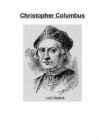
During this time Columbus tried to interest the kings of France and England in his plans. They were not interested either. Then, in the summer of 1492, Queen Isabella suddenly agreed to finance the plan. If Columbus succeeded in reaching the East, he was to receive the Spanish noble title of don. He would also become admiral and ruler of all the lands discovered, and he would be entitled to one tenth of gold, silver, gems and spices found there. The tiny fleet consisted of three ships. Columbus himself commanded the flagship, the Santa Maria. She carried a crew of 40 men. The two other ships, the Niña and the Pinta, were smaller and together they had the crews of 50 men. Expect for four of the crewmen and Columbus himself all the men who made the voyage were Spaniards. Columbus' fleet set sail from Palos on August 3, 1492. On August 12 they reached the Canary Islands. There they stopped for almost a month because the ships needed
Products are exported from … Europe: motor cars, mashinery, chemicals.;Asia: video/audio equipment, clothes, shoes.; Australia: iron ore(рудаmaak), dairy products, meat.;Middle East: oil, gas, chemicals.;Africa: fruits, cacao, coffee.; North America: peanuts, grain, coal.;South America: meat, poultry(linnuliha), iron ore. WTO- the World Trade Organisation is the driver to ensure trade between countries has no barriers world wide. 340 mln container are circling the globe! 500.000 ships ensure that cargo is shipped around the world. Import duties have dropped to less than 5%. 4)Which industry is still heavily subsidized and needs further liberalization? Agriculture Since 1950 World Trade has grown 20 fold. The North American Free Trade agreement (NAFTA) belongs to Canada, Mexico and the Unites States. Liner trade means liner shipping is the service of transporting goods by means of high-capacity, ocean-going ships that transit regular routes on fixed schedules.
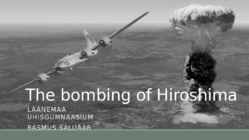
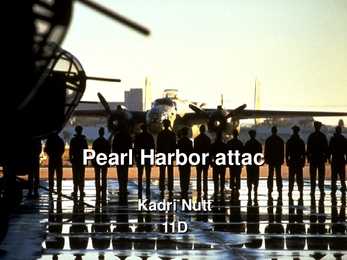
The bombing of Hiroshima L Ä ÄNEMA A ÜHISGÜMNA ASIUM RASMUS SALUÄ ÄR 06.08.1945 · Hiroshima was the primary target of the US on august 6, 1945 · Enola Gay, Artiste and Necessary Evil Why did the americans attack Japan? The attack on Pearl Harbour Hawaii · 4 battleships sunk · 4 battleships damaged · 2 other ships sunk · 3 cruisers damaged · 3 destroyers damaged · 3 other ships damaged · 188 aircrafts destroyed · 159 aircrafts damaged · 2,335 killed · 1,143 wounded Aftermath · Total destruction of Hiroshima · 70 000 killed instantly · Another 70 000 dead by the end of 1945 Little Boy The codename for the atomic bomb · Weight - 4,400 kg · Length - 3.0 m · Diameter - 71 cm · Blast yield - 15 kilotons Interesting facts · The Flame of Peace in Hiroshima
seas. He didn't get to go to school very much, but he learned to read and write Spanish during his travels. He also taught himself Latin because all the geography books were written in Latin. He was a navigator, colonizer and explorer. He wanted to find a short way to get to the Indies by ship. He tried for eight years to get King Ferdinand and Queen Isabella to supply him with ships and money. Finally they agreed. In 1492 Christopher left from Spain with a crew of 90 men and a fleet of three ships. His three ships were called the Niña, the Pinta, and the Santa María. There were 24 men on the Niña, 26 men on the Pinta, and 40 men on the Santa María. The Niña and the Pinta were caravels. The Santa María was a larger and slower-sailing supply ship. They left Spain on August 3, 1492. They made one stop, then sailed on toward the west
kurusel olles laevas palju lihtsam ja kergem ning sain ette antud ülesannetega hästi hakkama. Arvamus õppepraktika kohta Õppepraktika laevas Victoria oli õpetlik ja kogemusterikas. Kuid kui tahaksin minna sellisele suurele laeval tööle, siis oleks veel nii mõndagi õppida ja palju juurde omandada ning palju vaeva näha, et selleni üldse jõuda. Kasutatud kirjandus http://www.tallink.ee/ee/ships/victoria/shops/ http://www.tallink.ee/ee/ships/victoria/restaurants/bars.htm http://www.tallink.ee/ee/ships/victoria/restaurants/eating.htm http://www.tallink.ee/ee/ships/victoria/wellnessServices/
the Industrial Revolution. In the early 18th century, Englishman Abraham Darby (1678-1717) discovered a cheaper, easier method to produce cast iron, using a coke-fueled (as opposed to charcoal-fired) furnace. In the 1850s, British engineer Henry Bessemer (1813-1898) developed the first inexpensive process for mass-producing steel. Both iron and steel became essential materials, used to make everything from appliances, tools and machines, to ships, buildings and infrastructure. The steam engine was also integral to industrialization. In 1712, Englishman Thomas Newcomen (1664-1729) developed the first practical steam engine (which was used primarily to pump water out of mines). By the 1770s, Scottish inventor James Watt (1736-1819) had improved on Newcomen's work, and the steam engine went on to power machinery, locomotives and ships during the Industrial Revolution. Pages used: http://www.history.com/topics/industrial-revolution
At that time, a trading ship built inNZ, Sir George Murray was seized in Sydney by Customs officials for sailing without a flag or register. Australia, which was the most important trading partner for NZ had British navigation laws which ruled that every ship must carry an official certificate detailing construction, ownership and nationality of the ship. The problem was that during that period of time, NZ was not yet a colony ofGreat Britan, thats why the NZ-built ships could not sail under a British flag or register. Without a flag to represent the new nation, trading ships and their valuable cargoes would continue to be seized (held by the Australian customs (toll) The Australians called for signing a legislation to remove any obstacles to New Zealand's increasing trade with the ports in Australia. While a temporary licence was granted in August 1831 allowing the Sir George Murray to return to Sydney for trading, the need for an official
He is commonly known as "the painter of light". One of his main themes was the helplessness and smallness of man against the destructive forces of nature. One of my favourite paintings is "The Fighting `Temeraire' tugged to her Last Berth to be broken up. Turner was in his sixties when he painted this painting. It shows his mastery of painting techniques to suggest sea and sky. It depicts one of the last second-rate ships of the line which played a distinguished role in the Battle of Trafalgar in 1805. Turner's main concern was to evoke a sense of loss, rather than to give an exact recording of the event. The painting "The Fighting 'Temeraire' " was painted in the years 1838-1839. The painting technique is oil, 91 x 122 cm. The painting type is landscape. Now the painting "The Fighting 'Temeraire' " locates in National Gallery, London.
The Maritime Administration may provide financial assistance for specific domestic reefing projects. Artificial Reefing Example A big ship is sinking near of Honduras coast at 5th November 2002. It was a controlled sinking. Artificial Reefing Example 3. Ship Donations The Maritime Administration may convey obsolete NDRF vessels to a non-profit organization, state, commonwealth, or U.S. possession for such vessel reutilization including historic restoration of ships as memorials and museums and the operational restoration of ships to support non-profit humanitarian missions 4. SINKEX Joint Navy and Maritime Administration ship disposal projects through the Navy's sink at-sea live-fire training exercises (SINKEX Program). SINKEX Example Retired USS NAVY war ship hit by submarine torpedo in SINKEX Program. SINKEX Example SINKEX Program SINKEX Program SINKEX is live fire training exercises conducted by the U.S. Navy to practice
Quebec, Canada from April 27 to October 29 The "Canadian Railroad Trilogy" is a song by Gordon Lightfoot that describes the building of the Canadian Pacific Railway. "Farewell to Nova Scotia" is a popular folk song from Nova Scotia of unknown authorship. It is believed to have been written just prior to or during the First World War. "Farewell to Nova Scotia" brings the listener back to an age when Nova Scotia was renowned for "wooden ships and iron men". Wooden Ships and Iron Men, now-classic 1924 book about the last days of the Age of Sail in Maritime Canada. Written by Frederick William Wallace. · The Age of Sail was the period in which international trade and naval warfare were dominated by sailing ships. · The Maritime provinces, also called the Maritimes or the Canadian Maritimes, is a region of Eastern Canada.
• French Creole 1.2million • Caribbean Hindustani 15000 Flag • The flag was chosen by the Independence committee in 1962. Red, black and white symbolise the warmth of the people, the richness of the earth and water respectively. Currency • Trinidad and Tobago Dollar (TTD) Coat of Arms • The coat of arms was designed by the Independence committee, and features the scarlet ibis (native to Trinidad), the cocrico (native to Tobago) and hummingbird. The shield bears three ships, representing both the Trinity, and the three ships that Columbus sailed. Population • 2015 estimate 1,349,667 Total area • 5,131 km2 Administrative divisions • Trinidad is split into 14 regional corporations and municipalities, consisting of 9 regions and 5 municipalities, which have a limited level of autonomy. Largest island • Trindidad Higest Point • El Cerro del Aripo, at 940 metres (3,084 ft) Lowest point • Lowest point is the Carribean sea 0m Cultural life
Kulibin's project was praised by Leonhard Euler and Daniel Bernoulli, but was never realized. After 1780, Kulibin worked on possibilities for a metallic bridge, but these projects were also rejected by the government. Altogether Kulibin designed three projects for wooden and three projects for metallic bridges. In 1779, he built a lantern that could emit a powerful light using a weak light source. This invention was used industrially for lighting workshops, lighthouses, ships, etc. In 1791, Kulibin constructed a push-cycle cart, in which he used a flywheel, a brake, a gearbox and roller bearing. The cart was operated by a man pressing pedals.[1] [2] [3] [4] [5] In the same year, he also designed "mechanical legs", a prosthetic device, which was later used by a French entrepreneur. In 1793, Kulibin constructed an elevator that lifted a cabin using screw mechanisms. In 1794, he created an optical telegraph for transmitting signals over distance.
It is apart of the United Kingdom. Scotland is divided into three natural regions: the Southern Uplands, the Central Lowlands and the Highlands and islands. A lot of places in Scotland are a natural paradise, still untouched by man. Glasgow · Glasgow is the largest city in Scotland and the third largest in the United Kingdom. Before 1750 Glasgow was a small town. It had a cathedral and a university but it was not a rich town. After 1707 Scottish ships could go to the English colonies in America. Ships brought tobacco to Glasgow and took back Scottish goods. In 1776, the American colonies became independent and the tobacco trade stopped. Heavy industry began to develop. It used coal and iron from the Clyde valley. Glasgow became rich but very dirty. Sport · Scotland is famous for football teams: Rangers and Celtic. Most people in Scotland are fans of one of teams.
1)Main machinery On a ship, the engine room, or ER, is the propulsion machinery spaces of the vessel. To increase the safety and damage survivability of a vessel, the machinery necessary for operations may be segregated into various spaces. The engine room is one of these spaces, and is generally the largest physical compartment of the machinery space. The engine room houses the vessel's prime mover, usually some variations of a heat engine - diesel engine, gas or steam turbine. On some ships, the machinery space may comprise more than one engine room, such as forward and aft, or port or starboard engine rooms, or may be simply numbered. 1.1)Main engine The engine room of a motor vessel typically contains several engines for different purposes. Main, or propulsion engines are used to turn the ship's propeller and move the ship through the water. They typically burn diesel oil or heavy fuel oil, and may be able to switch between the two
Night of Dec. 6, Morning of Dec. 7: U.S. intelligence decodes a message pointing to Sunday morning as a deadline for some kind of Japanese action. The message is delivered to the Washington high command more than 4 hours before the attack on Pearl Harbor. But the message is not forwarded to the Pearl Harbor commanders and finally arrives only after the attack has begun. At 07:55, Hawaiian time, the first wave of Japanese aircraft begin the attack. Along with the ships in Pearl Harbor, the air stations at Hickam, Wheeler, Ford Island, Kaneohe and Ewa Field are attacked. The Japanese attack continues for two hours and 20 minutes. When it's over, more than 2,400 Americans are dead and nearly 1,200 wounded. Eighteen ships have been sunk or damaged. More than 300 aircraft are damaged or destroyed. Dec. 8: President Roosevelt addresses Congress and asks for a declaration of war against Japan, which he receives. Consequences
Tallink has got 3 hotels in Tallinn. Recently they also started with taxis. Tallink was founded in 1989. On 8th January 1990 the first recently purchased ship by Tallink made its first voyage. A ship called Transestonia was the first ship to sail with an Estonian flag. In 1996 the leading crew of the company changed. The previous leading crew had been experienced captains. The new crew was more into marketing and saving. They also made big preparations for buying ships instead of renting them. Tallink has been a quite successful company all the way since then.
It is: Odourless Colourless Flammable gas Consists: Methane Ethane Butane Propane What is LNG? Cooled natural gas 160 0C 1/600th the volume of the same amount of natural gas LNG is: Clear Colourless Nontoxic liquid Liquefaction and regasification terminals Liquefaction terminal Export Receive gas by pipeline Cleans gas Liquefies Regasification terminal Import Receive gas by ships Regasifies Storage and transport 50 years and 128 million miles Doublehulled tankers Atmospheric pressure Doublewalled tanks 1 meter thick concrete wall Sophisticated monitoring system Heating it to regasify Questions?
Nature vs Society In the Works of British Romanticists Research paper Liisi Pajula 11 b The Inchcape Rock by Robert Southey The Inchcape Rock is a poem about Sir Ralph the Rover, an evil man, who wants to sink other ships, so he could use his own ship to blunder villages and towns. He removes a warning bell that warns sailors about a secret underwater rock. By doing this, he signs his own death sentence. At a dark night, he crashes his ship to the Rock, because there was no bell to warn him. In the first stanza of the poem Southey describes the surroundings. The tone of the poem is set, at the begging it is very serene and relaxed. The weather and sea are calm, the ship stands, undisturbed, in the water
WOMEN's IDEALS OF BEAUTY THROUGH THE AGES Renaissance 15th century High forehead In the warmer climate hair in plaits, jeweled turbans or caps Using bleach A few extra pounds of weight. Used white lead powder Elizabethan 16th century Queen Elizabeth Naturally pale complexion Red hair Healthy glow to cheeks 18th Century Women had trim Crimped or curled heads Powdered Decorated with garlands(vanikud) Wire cages Three feet in the air Feathers Ribbons Jewels Even ships, gardens Victorian Natural beauty Without makeup Used cosmetics less Hygiene and health 1840s heads were sleek, demure Heavy knot of curls Plaits in back 1920s "Bobbed" Waved or shingled hairstyles Louise Brooks Clara Bow Powder Circles to the cheeks Plucked eyebrows Penciled in thin arches Lips very red 1940s Feminine hairstyles Bette Davis' curls Rita Hayworth's gleaming waves A lock of hair that covered one eye. 1950s "Doe eye" Pale complexion Intensely colored lips Curls
Nice or Nica is a city in southern France located on the Mediterranean coast. With its natural beauty and sandy beaches, Nice, is the perfect destination for those who like sun and sea. Nice, is one of the most beautiful cities you will ever see. The main place of interest is the promenade des Anglais, which is a celebrated promenade along the Mediterranean at Nice, France. It is a walkway along the sea, where you can enjoy amazing view and see many luxurious private ships. Another place worthy of visiting is the small street parallel to the promenade des Anglais; leading from Nice's downtown, beginning at Place Massena, and shadowing the promenade towards the airport for a short distance about 4 blocks. This area of the city is off limits to cars, and by eliminating traffic creates a more serene setting. On this small strip tourists can find a fine selection of restaurants, where you can try local cuisine, cafes and
His famous saying "England expects that every man will do his duty. " With these words Nelson successfully inspired his squadron before the Battle of Trafalgar, in 1805, during which he died Battles Battle of Cape St Vincet Battle of the Nile Battle of Santa Cruz de Tenerife Battle of Copenhagen Battle of Trafalgar Victory in the Battle of Trafalgar Victory Victorywas an ancient Earth sailing vessel and one of the most famous ships in British naval history She served as the flagship for Admiral Horatio Nelson at the Battle of Trafalgar in 1805 Victory Memory of him England` s greatest sailor Best known as the hero of the Battle of Trafalgar "I have done my duty, thank God for that", were his last words Used material http://en.wikipedia.org/wiki/Horatio_Nelson,_1st_Viscoun http://www.bbc.co.uk/history/historic_figures/nelson_ horatio.shtml http://www.answers
House of Tudor. The town became a popular resort in the 17th century and many grand houses were built there. The maritime connections of Greenwich were celebrated in the 20th century. Greenwich area is the most famous thing about London. Greenwich is the Old Royal Observatory from where time all over the world is measured. The Greenwich Time Ball is the bright red Time Ball on top of Flamsteed House. That is one of the world's earliest public time signals, distributing time to ships on the Thames and many Londoners. It was first used in 1833 and still operates today. Each day, at 12.55, the time ball rises half way up its mast. At 12.58 it rises all the way to the top. At 13.00 exactly, the ball falls.
Wind power is very old power source, sailing ships have been using wind power for at least 5,500 years. The first practical windmills were built in Afghanistan, from the 7th century to grind corn and draw up water. The first windmill for electricity production was built in Scotland in 1887 to power the lighting in the cottage, thus making it the first house in the world to have its electricity supplied by wind power. During the Second World War, small wind generators were to recharge submarine batteries. In the 1990s, wind power became more important, because fossil fuels pollute the atmosphere and humanity needed alternative fuels. That's because wind power is so necessary. Wind power is also renewable energy and it doesn't cause greenhouse gases. Building windmills is actually quite expensive and they need repairing or replacing about every 12-15 years. And strong winds can also break the wind turbines. Considering these thin...
The original island was quite small , but it was expanded with land reclamation between 1892 adn 1934. the name ellis island came from samuel ellis who brought the island in 1775. Ellis dies in 1794, and in 1808 New York State buys the island from his family for $10,000. The U.S. War Department pays the state for the right to use Ellis Island to build military fortifications and store ammunition The first Ellis Island Immigration Station officially opens on January 1, 1892, as three large ships wait to land. Seven hundred immigrants passed through Ellis Island that day, and nearly 450,000 passed throught Ellis Island first year. Over the next five years, more than 12 million people will pass through the island on their way into the United States. The Ellis island was designed by Edward Lippincott Tilton and William Alciphron Boring. Ellis Island offical name is Statue of Liberty National Monument and The Ellis Island is in register of historic places
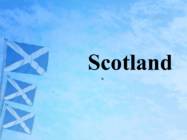
Monumental stelae Remaining evidence of the Picts From the 6th to 9th centuries The purpose of the stones Original sites Wars of Independence The First War 12961328 The Second War 13321357 Between the Kingdom of Scotland and the Kingdom of England Great national crisis Independent nation Union with England 18th century Political union between Scotland and England Treaty of Union It replaced the Scottish systems of currency First World War In 19141918 Provided manpower, ships, machinery, food etc Scotland sent 690,000 men to the war The Battle of Loos They made up 15 per cent of the national armed forces Second World War In 19391945 Shipyards and heavy engineering factories Winston Churchill Industry developed Scottish monarchs The head of state First King of Scots was Kenneth MacAlpin Founded the state The Coronation Oath Elizabeth II Flag of Scotland Saint Andrew's Cross Adopted in 16th century Earliest use as a national symbol
Regulaarsed konfliktid Regular conflicts Oma võimu all hoidma Keep on the control Usulised erinevused Religious differences Arvukad merelahingud Numerous sea battels Haiguste ja nälja käes kannatama Suffer from illnesses and hunger Tugevate tuulte tõttu Due to strong winds Karile jooksma Struck rocks Elatist teenima Make a living Laialtlevinud kuulujutud Windespread numerous Meelega laevu eksiteele juhtima Misled ships on purpose Artikli kasutamine: · Osariigid (the USA...) · Veed (jõed, mered, kanalid) · Saarte rühmad ja mäe ahelikud · Kõrbed · Laevade nimed · Perekonnanimed (kogu pere, mitte üks isik) · Inimeste tehtud kohtadega · Nimed mis silaldavad üldist nime ja kohta · Olemas sõna of · Rahvus
and the House of Representatives; The executive: the Federal Executive Council, in practice the Governor-General as advised by the Prime Minister and Ministers of State The judiciary: the High Court of Australia and other federal courts, whose judges are appointed by the Governor-General on advice of the Council. Australia's day Australia Day, 26 January, is the anniversary of the arrival of the First Fleet of 11 convict ships from Great Britain in 1788 On Australia Day Australians come together as a nation to celebrate what's great about Australia and being Australian. Sources http://australia.gov.au/topics/australian-facts-and-figures/natio http://en.wikipedia.org/wiki/Australia Google's picture search
DEFINITE ARTICLE (THE) THE IS USED BEFORE: · nouns which are unique (the moon) · names of: o cinemas (the Opera) o hoteles (the Hilton) o theaters (the Palladium) o museums (the Louvre), o newspapers/magazines (the European but: Newseek) o ships (the Titanic), o galleries (the Tate Gallery) o rivers (the Thames) o seas (the Black Sea) o groups of islands/states (the USA) o mountain ranges (the Alps) o deserts (the Negev Desert) o oceans o canals o names or nouns with ''of'' (the Queen of Spain) · musical intruments (the piano) · dances (the samba) · names of families (the Browns) · nationalities ending in sh, -ch or ese (the Welsh)
kasutegur effeciency kaubalaev cargo ship kombineeritud jõuseade combined power (generation) plant konteinerlaev containership käitur propulsion device, propulsion unit, propulsor kütuse erikulu specific fuel(oil) consumption (SFOC, SFC) kütuse kulu fuel (oil) consumption laeva elektrijaam ships electrical powerplant laeva kiirus ships speed laevakütus marine fuel (oil) laevaseadmed ships gears laevasüsteemid ships piping systems masinaruum engine room mehaaniline ülekanne mechanical transmission mootorlaev motorship ökonoomne kiirus economical speed otseülekanne direct drive peajõuseade propulsion plant, propulsion machinery
1. Meelitama jõukaid turiste-to attract up-market travellers 2. Napi eelarvega reisima- travel on shoestring budget 3. Majanduslangus-a downturn in the national economy 4. Kohalikud võimud- the local authorities 5. Meelitama sukeldujaid- to attract divers 6. Julgustama loodusturismi-to encourage eco- tourism 7. Kaitsma mereelustikku- to protect marine life 8. Kunstlikud korallrifid, mis loodud mahajäetud laevade poolt-artificial reefs created from redundant ships p. 103 9. linna varemed the ruins of the town 10. Reisimine avardab silmaringi travel broadens the mind 11. teele asuma-to set off 12. magevesi fresh water 13. Tormine meri a rough sea 14 .hingemattev vaade breathtaking view Rephrase (seleta oma sõnadega) in English p.103 Globetrotter 2. Pilgrim- a religious person who travels to a holy place that is important to his religion 3
• The Commander-in-Chief is the British monarch, Elizabeth II, to whom members of the forces swear an oath of allegiance • The UK is an active and regular participant in NATO and other coalition operations • Britain remains one of five recognised nuclear powers, with a total of 225 nuclear warheads Royal Navy • The Royal Navy is a technologically sophisticated naval force, and as of April 2015 consists of 77 commissioned ships • The Surface Fleet consists of amphibious warfare ships, destroyers, frigates, patrol vessels, mine-countermeasure vessels, and other miscellaneous vessels • A submarine service has existed within the Royal Navy for more than 100 years • The Submarine Service's four Vanguard-class nuclear-powered submarines carry Lockheed Martin's Trident II ballistic missiles, forming the United Kingdom's nuclear deterrent Royal Marines
Yet, this was not a catastrophe and people would pray for the next years' crop to be a proper one but it was even worse and on top of that, the winter of 1846 was the "severest in living memory". The crop, which previously had provided 60% of the nations' food needs, failed. Many families were evicted because they couldn't pay for their land. Hand in hand, starvation and diseases spreaded all across the country. As soon as spring began, people started emigrating to Canada - ships bringing lumber to England were glad to receive paying passengers. Almost every ship had a third of their passenger's die at sea or upon their arrival. On the shores of Quebec eyewitnesses saw hundreds literally flung on the beach, left in the mud, dying. Yet, it was only the potato crop that failed wheat, oats, pork, mutton etc. were excellent, but all was shipped to Europe to ease the starvation there. The British government
Usually they don't move alone, they are always in a tourist group or in some other group. Young Japanese are like old Brits. They always carry a camera with them and take pictures of everything. And one weird thing is that only younger Japanese get lost here at least I haven't seen any middle-age Japanese. The Yanks Americans are here usually with their familys, they are huge and very loud. They visit all the sightseeings only because everybody does that. They get here with cruise ships and a lot of them even won't come out of the ship. The Turks Turks looks like Russians but they are here for girls. Some richer young Turks can afford to travel and they are here in Estonia. Turks don't do anything beside watching Estonian teenagers. That is a little bit sick but this is also tourism. I'm not a girl so I don't have anything to do with Turks. But sometimes in summer they are here.
the most important timber roofs in Scotland. was used for meetings of the Parliament of Scotland. it became a military hospital until 1887 still sometimes used for ceremonial occasions. Stained glass in the Great Hall One O'Clock Gun It is fired every day (except Sunday) at precisely 13:00, allowing citizens and visitors to check their clocks and watches. The origin of the tradition lies in the days before accurate timepieces, when sailing ships in the Firth of Forth needed a reliable time signal to check their marine chronometers. One O'Clock Gun
expensive too. Travelling by train is slower than by plane, but it has its advantages. You can see much more interesting places of the country you are travelling through. Modern trains have very comfortable seats. There are also sleeping cars and dining cars which make even the longest journey enjoyable. Speed, comfort and safety are the main advantages of trains and planes. That is why I prefer travelling by train. Travelling by sea is popular mostly for pleasure trips. On board large ships and small river boats people can visit foreign countries and different places of interest within their own country. It is very pleasant to see the rise and fall of the waves, to feel the fresh sea wind blowing and hear the cry of the seagulls. Trips on the Volga, the Dnieper, the Yenisei, the Black Sea are very popular today. Many people like to travel by car. It is interesting too, because you can stop when and where you like, you do not have to buy tickets or carry your suitcases.
language . English is the only language spoken in the home for close to 81% of the population . The next most common languages spoken at home are Mandarin (1.7%), Italian (1.5%), rabic(1.4%) . Australia has a sign language known as Auslan, which is the main language of about 5,500 deaf people . RELIGION 61.1% of Australians were counted as Christian ; 25.3% as Roman Catholic ; 17.1% as Anglican . Since the arrival of the First Fleet of British ships in 1788, Christianity has grown to be the major religion. EDUCATION Australia has 37 government-funded universities and two private universities . Children are required to attend school from the age of about 5 up until about 16.[ The University of Sydney is Australia's oldest university, having been founded in 1850 . HEALTH Australia has the fourth highest life expectancy in the world after Iceland, Japan and Hong Kong.
skills have reverted. A century ago nobody knew technical instruments such as calculator or computer. People calculated by themselves, the letters were sent by post and people had more time to spend with family than nowadays, because now the majority of us are spending time on the Internet. So is the development of technique our fortune or accident? Of course the technique makes our lives easier. New agricultural machines are able to do more work than we. Planes and ships enable us to discover foreign countries thousands of miles away and broaden the mind. Moreover we have a chance to find interesting and educating information from computer, but with what price? All these robots and facilities prevent us from thinking ourselves. We create traps, from which is difficult to get out. For example the using of the calculator generates in us the fixation. We can excellently calculate but we still use a calculator and so we are forgetting all these elementary things
diseases. 2. Jobs created by tourism are often poorly paid and seasonal. Tourism can push up local property prices and the cost of goods and services. 3. A huge amount of tourism returns are taken away from the target country. There are many reasons: quarters with a foreign heritage, travel agency, commercial expences and raw materials for the tourists. ENVIRONMENT 1. Pollution The cruise ships of the Mediterrean Sea are polluting water and coast areas and the bottom of the sea. One cruise ship creates about 50 tons of solid garbage a year. There are floating plastic garbage islands in the ocean. 2. Air transport is the most polluting transport type. Plane flings carbon dioxide and other pollution to the atmosphere. 3. Biodeversity Due to humans about 500 plants are extincting by the Mediterrean Sea. In the water the divers can damage coral reefs. 4
Cricket, Football (soccer), athletics and horse-racing are several popular sports. The climate The climate in Jamaica is tropical, with hot and humid weather. Jamaica lies in the hurricane belt of the Atlantic Ocean: as a result, the island sometimes experiences significant storm damage. The biggest river in Jamaica - Black River, Rio Cobre, Milk River, Rio Grande ja Martha Brae Church Port Antonios Fishing boats and bauxite cargo ships share the waterways near Alligator Pond. Jamaica-Beach Coffeeberries Enjoy these photos from beautiful Jamaica
!! the koala, emu, kookaburra and kangaroo originated in Australia more venomous snakes than any other continent Bob Hawke's name was listed in the Guinness Book of world Record in the year 1954, for having 2.5 pints of beer in 11 seconds time. Later Bob Hawke was also the Prime minister of Australia. Historical facts o How cool is this?? Female vote Australia was the second country to give women the vote. o Australia day January 26, Australia day, is the anniversary of ships arriving in Sydney carrying a load of Convicts. o Swimming In 1838 it was declared illegal to swim at public beaches during the day! This law was enforced until 1902. o Cartoonists A cartoon is a drawing that makes a satirical, witty, or humorous point. On 17 July 1924, the world's first society of cartoonists, the Black and White Artists' Society, was formed in Sydney. FUN PICTURES Muutke teksti laade Muutke teksti laade
TEST – The history of London 1) London was definitely not an important place during the Celtic period. It was just a mosquito-infested swamp. 2) London became a trading centre during the Roman occupation. It was an important crossing point for the Romans over the river Thames. Market forces began to operate. With troops stationed and ships calling, merchants will inevitably set up shops. 3) The Celtic warrior queen Boudicca and her tribesmen fought against the Roman conquest and devastated Londinium. The city was burned down and its inhabitants massacred. 4) London was rapidly rebuilt and in AD 122 the Roman walls were built around it as a defence. 5) The Romans left Britain early in the 5th century because they had to cope with troubles elsewhere in the Empire. 6) Around AD 400 the Germanic tribes invaded Britain.
" - Ennustused, mida näeme ( tugevneb mingil faktil ) ,,The Sky is very cloudy. It's going to rain today." Modal Verbs Reported speech Can -> could Could -> had been able to May -> might Must -> had to Mustn't -> was/were not allowed to have to Had to -> had had to The Definite Article The is used before: · Nouns which unique · Names of cinemas, hotels, theatres, museums, newspapers/magazines, ships, institutions, galleries · Names of rivers, seas, groups of islands/states, mountain ranges, deserts, oceans, canals, and names or nouns with ,,of" · Musical instruments, dances · Names of families, nationalities ending in -sh, -ch or -ese, other plural nationalities are used with or without ,,the" · Titles , ,,The" is ommited before titles with proper names · Adjectives used as plural nouns and the superlative degree of adjectives/adverbs · Ülivõrre- the most beautiful
plan for the prediction and prevention of these horrible assaults. The men of the seas are always on the lookout for another natural disaster: whirlpools. These massive swirling vortexes of water are the cause of many lost sailors every year. With our primitive technology and archaic maps, seafarers sail the vast seas virtually blind, and can only hope to reach their destination. But sadly, all too often they will unknowingly navigate their ships straight into a tremendous whirlpool. As the trapped schooners swirl helplessly into these black holes of the seas, they are lost forever. It is believed that they end up in some alternate dimension, but this is only theory at this time. We can only hope to one day locate, and contain all the whirlpools in the expansive oceans of our world. Speaking of worlds, we come to our last natural disaster: meteors. These missiles from space
Should the ship enter or leave ports, you may be required to work twelve hours a day depending upon the type of ship’s contract. During the off duty time, you are free to do anything as you want, but you will seldom actually complete your rank duties during shifts, so you will actually have to over-work after those. It will depend on which type of ship you are sailing with. From time to time, you will fly really far to join ships by plane, depending upon which company you work with. Practicing you will get head to head with difficulties and become a professional. In conclusion, I want to say, that to me, this job is worth studying and working hard. It is actually more than a few reasons why I choose it. It is just what I think, I should do. TTÜ EMARA 12.05.15 Oleksiy Krasnoperov LL-13
● They made an fundraiser to get the money to build The Statue of Liberty ● It was an gift from the French ● In France they have the original, but smaller. ● At the beginning it was used as an lighthouse, due to the similiarities to an ancient bronze statue of the Greek god of the sun, Helios. This statue is believed to have been over 100 feet (30 m) high, and it similarly stood at a harbor entrance and carried a light to guide ships. ● In 1875, Laboulaye proposed that the French finance the statue and the Americans provide the site and build the pedestal. Bartholdi completed the head and the torch-bearing arm before the statue was fully designed, and these pieces were exhibited for publicity at international expositions.
The capital is the charming city of Victoria on Vancouver Island. More than three-fourths of all the manufacturing that goes on in Canada is carried on in the provinces of Quebec and Ontario, much of it in the cities of Montreal and Toronto. Montreal is Canada's biggest city. Toronto is next in size. It is easy to Canada to send its products abroad. Novas Scotia stretches far out into the Atlantic. Ocean-going ships travel up the St. Lawrence River to Montreal. The St. Lawrence Seaway makes Toronto and other cities on the Great Lakes into inland seaports. The maple leave is the Canada's symbol. It is on the flag and in 1974-1976 it was situated on the coins.
Milestones in Estonian History The Estonians are a Finno-Ugric people who came from the area near the Urals and the Volga and Oka rivers. They migrated westward to the Baltic shores some 5, 000 years ago. In the ninth century A.D. Viking ships invaded Estonia and the country became a vital link in the sea-trade between East and West. By the 12th century, the Arabian geographer al-Idrisi had placed the city on his maps. In the 13th century, Tallinn joined the Hanseatic League, the union of European commercial towns that stretched from London to Novgorod. Pärnu, Viljandi and Tartu were also members. Estonia became a vital link in the sea-trade between East and West.
 annaabi.ee