Vajad kellegagi rääkida?
Küsi julgelt abi LasteAbi
Logi sisse

All about High Tech (1)

5 VÄGA HEA
Punktid
All about High Tech
High tech is technology that is at the cutting edge—the most advanced technology currently available . There is no specific class of technology that is high tech—the definition shifts over time—so products hyped as high tech in the 1960s would now be considered , if not exactly low tech, then at least somewhat obsolete . This fuzzy definition has led to marketing departments describing nearly all new products as high tech.
Economy
Because the high-tech sector of the economy develops or uses the most advanced technology known , it is often seen as having the most potential for future growth . This perception has led to high investment in high-tech sectors of the economy. High-tech startup enterprises receive a large portion of venture capital. However , if, as has happened in the past, investment exceeds actual potential, then investors can lose all or most of their investment. High tech is often viewed as high risk, but offering the opportunity for high profits.
Like Big Science , high technology is an international phenomenon , spanning continents , epitomized by the worldwide communication of the Internet . Thus a multinational corporation might work on a project 24 hours a day, with teams waking and working with the advance of the sun across the globe ; such projects might be in software development or in the development of an integrated circuit . The help desks of a multinational corporation might thus employ , successively, teams in Kenya, Brazil , the Philippines , or India, with the only requirement fluency in the mother tongue, be it Spanish , Portuguese or English .
OECD has two different approaches: sector and product (industry) approaches.
High-tech sectors
The sector approach classifies industries according their technology intensity, product approach according to finished products.
  • Aerospace technology
  • Biotechnology
  • Information technology
  • Nanotechnology
  • Robotics

  • Aerospace technology -In most industrial countries, the aerospace industry is a cooperation of public and private industries. For example, several countries have a space program under the command of the government , such as NASA in the United States, ESA in Europe , the Canadian Space Agency in Canada, Indian Space Research Organisation in India, RKA in Russia , China National Space Administration in China, and Iranian Space Agency in Iran.

Along with these public space programs, many companies produce technical tools and components such as spaceships and satellites. Some known companies involved in space programs include Lockheed Martin, Northrop Grumman, EADS, and Boeing . These companies are also involved in other areas of aerospace such as the construction of aircraft. Many countries have air transport companies, such as Air France and Air India.
Biotechnology-Biotechnology is technology based on biology, especially when used in agriculture , food science, and medicine . United Nations Convention on Biological Diversity defines biotechnology as:[1]
Any technological application that uses biological systems, living organisms, or derivatives thereof, to make or modify products or processes for specific use.
Biotechnology is often used to refer to genetic engineering technology of the 21st century, however the term encompasses a wider range and history of procedures for modifying biological organisms according to the needs of humanity, going back to the initial modifications of native plants into improved food crops through artificial selection and hybridization. Bioengineering is the science upon which all biotechnological applications are based. With the development of new approaches and modern techniques, traditional biotechnology industries are also acquiring new horizons enabling them to improve the quality of their products and increase the productivity of their systems.
Before 1971 , the term, biotechnology, was primarily used in the food processing and agriculture industries. Since the 1970s, it began to be used by the Western scientific establishment to refer to laboratory -based techniques being developed in biological research, such as recombinant DNA or tissue culture-based processes, or horizontal gene transfer in living plants, using vectors such as the Agrobacterium bacteria to transfer DNA into a host organism. In fact , the term should be used in a much broader sense to describe the whole range of methods, both ancient and modern, used to manipulate organic materials to reach the demands of food production . So the term could be defined as, "The application of indigenous and/or scientific knowledge to the management of (parts of) microorganisms , or of cells and tissues of higher organisms, so that these supply goods and services of use to the food industry and its consumers.[2]
Biotechnology combines disciplines like genetics, molecular biology, biochemistry, embryology and cell biology, which are in turn linked to practical disciplines like chemical engineering, information technology, and biorobotics. Patho-biotechnology describes the exploitation of pathogens or pathogen derived compounds for beneficial effect.
Information technology -Information technology (IT), as defined by the Information Technology Association of America (ITAA), is "the study , design, development, implementation, support or management of computer-based information systems, particularly software applications and computer hardware." IT deals with the use of electronic computers and computer software to convert , store, protect , process, transmit, and securely retrieve information.
Today , the term information technology has ballooned to encompass many aspects of computing and technology, and the term has become very recognizable. The information technology umbrella can be quite large, covering many fields. IT professionals perform a variety of duties that range from installing applications to designing complex computer networks and information databases. A few of the duties that IT professionals perform may include data management, networking, engineering computer hardware, database and software design, as well as the management and administration of entire systems.
When computer and communications technologies are combined, the result is information technology, or "infotech". Information Technology (IT) is a general term that describes any technology that helps to produce, manipulate, store, communicate, and/or disseminate information. Presumably, when speaking of Information Technology (IT) as a whole, it is noted that the use of computers and information are associated.
The term Information Technology (IT) was coined by Jim Domsic of Michigan in November 1981.[ citation needed] Domsic created the term to modernize the outdated phrase "data processing". Domsic at the time worked as a computer manager for an automotive related industry.
In recent years ABET and the ACM have collaborated to form accreditation and curriculum standards for degrees in Information Technology as a distinct field of study separate from both Computer Science and Information Systems. SIGITE is the ACM working group for defining these standards.
Nanotechnology - Nanotechnology, which is sometimes shortened to "Nanotech", refers to a field whose theme is the control of matter on an atomic and molecular scale. Generally nanotechnology deals with structures of the size 100 nanometers or smaller, and involves developing materials or devices within that size.
Nanotechnology is extremely diverse, ranging from novel extensions of conventional device physics , to completely new approaches based upon molecular self- assembly , to developing new materials with dimensions on the nanoscale, even to speculation on whether we can directly control matter on the atomic scale.
There has been much debate on the future of implications of nanotechnology. Nanotechnology has the potential to create many new materials and devices with wide -ranging applications, such as in medicine, electronics, and energy production. On the other hand, nanotechnology raises many of the same issues as with any introduction of new technology, including concerns about the toxicity and environmental impact of nanomaterials [1], and their potential effects on global economics , as well as speculation about various doomsday scenarios. These concerns have led to a debate among advocacy groups and governments on whether special regulation of nanotechnology is warranted.
  • Robotics Robotics is the science and technology of robots, and their design, manufacture , and application.[1] Robotics has connections to electronics, mechanics, and software.[2]
  • History
  • High-tech industries
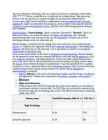
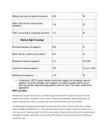
  • Further analysis from OECD has indicated that using research intensity as only industry classification indicator is also possible. The OECD does not only take the manufacturing but also the usage rate of technology into account . The OECD's classification is following (stable since 1973):
    Industry name
    Total R&D-intensity (1999, in %)
    ISIC Rev. 3
    High-Technology
    Pharmaceuticals
    10.46
    2423
    Aircraft & spacecraft
    10.29
    353
    Medical , precision & optimal instruments
    9.69
    33
    Radio , television & communication equipment
    7.48
    32
    Office, accounting & computing machinery
    7.21
    30
    Medium -High-Technology
    Electrical machinery & apparatus
    3.60
    31
    Motor vehicles, trailers & semi-trailers
    3.51
    34
    Railroad & transport equipment
    3.11
    352+359
    Chemical & chemical products
    2.85
    24 (excl. 2423)
    Machinery & equipment
    2.20
    29
  • Furthermore, OECD’s product-based classification supports the technology intensity approach. It can be concluded, that companies in a high-technology industry do not necessary produce high-technology products and vice versa. This creates a problem of aggregation.
Best Location
Most high-tech companies want to locate in cities that have highly ranked universities , institutes, or research centers with expertise in their industries. Universities can assist companies through research partnerships, sharing laboratory space and equipment, providing below -market- cost incubator space, and facilitating tech transfer and commercialization.
Considerable high-tech growth has occurred around universities and research centers in San Jose and San Diego , California; Boston ; Philadelphia; and Washington, D.C. “Some of the largest pharmaceutical companies in Europe have relocated in U.S. cities to gain access to American research,” says Kah. A recent example is Novartis, which recently moved its worldwide research headquarters to Cambridge, Massachusetts, to take advantage of the synergies of being part of one of the most vibrant biotech clusters in the world.
“High-tech firms prefer cities that have a critical mass,” says Dennis Donovan, principal with Wadley-Donovan Group, a site location firm . “This mass must have a compatible talent pool, universities or institutes with related R&D, and comparable companies and suppliers.”
Other universities are making names for themselves in homeland security . “Several universities, including Texas A&M University and University of Minnesota, have positioned themselves as Homeland Security Centers of Excellence,” says Kah. “As their research become more established , more companies with a connection to homeland defense will cluster around them.”
The Future of High Technology
In a single word — nanotechnology. All high-tech industries will advance as nanotechnology advances. Nanotech is the manipulation and management of matter at the atomic level. One nanometer equals one billionth of a meter. Today’s technology can manipulate matter in the 20nm range, where molecules begin to take on different properties, creating fantastic possibilities for high-tech sciences such as advanced materials. According to Lux Research, by 2015 consumer spending on nanotech-enabled products could reach $2.6 trillion annually (right now it’s about $132 billion ).
“By 2020, the smallest features on a semiconductor chip will be about 10 nanometers,” says Greenagel. “By that time, new technologies will not be silicon -based and assembly methods will be quite different. Right now, the industry is exploring a variety of nanotech ideas to see which ones have the most promise.”
To accelerate this research, the Semiconductor Industry Association has launched its Nanoelectronics Research Initiative, which will bring government, academia, and the private sector together to identify the best applications as quickly as possible and expedite funding.
“Innovative research in nanotechnology will impact a variety of critical areas in the future,” says Alain E. Kaloyeros, Ph.D., vice president of CNSE. “In healthcare, for example, nanotech will be used to develop biochips for blood testing and DNA sequencing, smart chips for spinal cord injury and other physical challenges, chip-controlled patches for drug delivery and monitoring of bodily functions , and non-intrusive sensors for detection of disease, such as cancer cells.”
Other key sectors that will benefit are alternative renewable energy (environmentally friendly biofuels), solar cells and photovoltaics, and national defense.
“The power of nanotechnology is rooted in its ability to impact multiple industries,” says Kaloyeros. “Nanotechnology is quite simply the most critical and enabling science and engineering discipline of the 21st century. As such, it will drive technological innovation and economic prosperity far into the future.”
All about High Tech #1 All about High Tech #2 All about High Tech #3 All about High Tech #4 All about High Tech #5
Punktid 100 punkti Autor soovib selle materjali allalaadimise eest saada 100 punkti.
Leheküljed ~ 5 lehte Lehekülgede arv dokumendis
Aeg2009-04-29 Kuupäev, millal dokument üles laeti
Allalaadimisi 24 laadimist Kokku alla laetud
Kommentaarid 1 arvamus Teiste kasutajate poolt lisatud kommentaarid
Autor kellly Õppematerjali autor
Uurimustöö tehnoloogiast usas ja maailmas. Väga põhjalik ja äsja valminud 12kl lõputööks. Sobib väga hästi ettekandeks!

Sarnased õppematerjalid

Public Administration and Innovation
26
docx

Public Administration and Innovation

universities and public research institutes, including joint research, co-patenting, co-- publications and more informal linkages; 3) diffusion of knowledge and technology to enterprises, including industry adoption rates for new technologies and diffusion through machinery and equipment; and 4) personnel mobility, focusing on the movement of technical personnel within and between the public and private sectors. Attempts to link these flows to firm performance show that high levels of technical collaboration, technology diffusion and personnel mobility contribute to the improved innovative capacity of enterprises in terms of products, patents and productivity. There are many different approaches to analysing national innovation systems. Firm level innovation surveys question enterprises on their sources of knowledge most relevant to innovation and allow a ranking of different linkages by industrial sector and country

Public Administration
Introduction of SCM
40
doc

Introduction of SCM

total cost of clinical trials. An integrated supply chain can reduce the overproduction of drug products by efficient demand management, planning, and inventory management. Traditionally, marketing, distribution, planning, manufacturing, and the purchasing organizations along the supply chain operated independently. These organizations have their own objectives and these are often conflicting. Marketing's objective of high customer service and maximum sales dollars conflict with manufacturing and distribution goals. Many manufacturing operations are designed to maximize throughput and lower costs with little consideration for the impact on inventory levels and distribution capabilities. Purchasing contracts are often negotiated with very little information beyond historical buying patterns. The result of these factors is that there is not a

Kategoriseerimata
Industry of television and video technics
10
doc

Industry of television and video technics

THE INDUSTRY OF TELEVISION AND VIDEO TECHINCS Report Table of Contents 1. Video Technics Inc.................................................................................3 1.1 About Video Technics........................................................................................... 3 1.2 Apella ­ Proven IT-Centric Technology................................................................3 1.3 Corporate Mission..................................................................................................4 2. Panasonic................................................................................................5 2.1 Introduction............................

Geograafia
STEP Analysis
3
doc

STEP Analysis

water pollution from increased use of agricultural fertilizers. Education: The education system in Switzerland is very diverse, because the constitution of Switzerland delegates the authority for the school system mainly to the cantons. The Swiss constitution sets the foundations, namely that primary school is obligatory for every child and is free in public schools. The minimum age for primary school is about six years in all cantons but Obwalden, where it is five years and three months. After primary schools, the pupils split up according their abilities and intentions of career paths. Roughly 20% of all students attend secondary schools leading, normally after 12 school years in total which grants access to all universities. The other students split in two or more school-types (depends on the canton) differing in the balance of theoretical and practical education. It is obligatory for all children

Inglise keel
Thesis Kivimaa August 2022
140
pdf

Thesis Kivimaa August 2022

The research question for this research project is – “How is it possible to calculate IT security effectiveness?”. The aim of this research is to use this reference model to calculate and to optimize major university’s and a small CSP-s (Cloud Service Provider) security posture and their spending’s on security measures. Aim is to develop a reference model to support IT Security team and business side to make reasoned and optimal decisions about IT security and all that with a reasonable number of manhours. In this Graded Security Expert System (GSES) aka Graded Security Reference Model (GSRM) the quantitative metrics of the graded security approach are used to express the relations between security goals, security confidence and security costs. What makes this model unique, is the option to use previous customers security templates/models – cutting the implementation time from 500+ manhours to as low as 50 manhours. The first

Infotehnoloogia
Liha töötlemine
1168
pdf

Liha töötlemine

EDITOR A John Wiley & Sons, Inc., Publication Edition first published 2010 © 2010 Blackwell Publishing Blackwell Publishing was acquired by John Wiley & Sons in February 2007. Blackwell’s publishing program has been merged with Wiley’s global Scientific, Technical, and Medical business to form Wiley-Blackwell. Editorial Office 2121 State Avenue, Ames, Iowa 50014-8300, USA For details of our global editorial offices, for customer services, and for information about how to apply for permission to reuse the copyright material in this book, please see our website at www.wiley.com/ wiley-blackwell. Authorization to photocopy items for internal or personal use, or the internal or personal use of specific clients, is granted by Blackwell Publishing, provided that the base fee is paid directly to the Copyright Clearance Center, 222 Rosewood Drive, Danvers, MA 01923. For those organizations that have been

Inglise keel
Integration of Lean Con-and Building Information Modelling
109
pdf

Integration of Lean Con. and Building Information Modelling

also to guarantee safety, human satisfaction and minimal negative environmental impact (Vanegas, DuBose and Pearce 1996). Traditional construction project delivery methods and models have failed to satisfy the expectations of both contractors and clients. The main problems and their causes are analysed in the second chapter of this thesis. Thus people in the AEC industry, including scholars and practitioners, have come together to find new solutions for delivering projects and fulfilling high requirements. 1.1 Problem formulation The construction industry makes up a great share of the Gross Domestic Product (GDP) in many countries all over the world and provides employment to a great number of people. Thus, it is important to conduct research in this field, with a view to making it more productive, safe and free of waste. This can all happen only with a better understanding of the concepts, principles and physics of the construction industry

Ehitusjuhtimine
Kuidas muudab mudelprojekteerimine teraskonstruktsioonide valmistamist ja ehitamist
228
pdf

Kuidas muudab mudelprojekteerimine teraskonstruktsioonide valmistamist ja ehitamist

remarkable shift in the building industry. Intelligent 3D technology in the form of Building Information Modeling (BIM) not only promises to improve the notoriously inefficient construction process, but also opens the door for designing new geometric shapes, which until recently have been considered unbuildable. Steel has been extensively used to build some of the most challenging architectural icons of the 21st century, due to its low weight and high strength in both compression and tension. Therefore, the steel design and construction industry has been on the forefront of technical innovation. The purpose of this study is to determine how 3D and BIM are changing the design, fabrication and construction of complex steel structures. The thesis is qualitative in nature, in that it tries to determine the effects of virtual design and construction based on in-depth analysis of two case studies

Ehituskonstruktsioonid


Kommentaarid (1)

mario20031 profiilipilt
mario20031: väga põhjalik asi
20:05 13-05-2009


Sellel veebilehel kasutatakse küpsiseid. Kasutamist jätkates nõustute küpsiste ja veebilehe üldtingimustega Nõustun