Vajad kellegagi rääkida?
Küsi julgelt abi LasteAbi
Logi sisse

Saudi-arabia deserts (0)

1 Hindamata
Punktid

MIINA HÄRMA GYMNASIUM

Deserts

Saudi-Arabia


Tartu 2007

Deserts


In geography, a desert is a landscape form or region that receives very little precipitation. Generally, deserts are defined as areas that receive an average annual precipitation of less than 250 mm (10 inches). Deserts cover at least one- fourth of the Earth's land surface. Desert biomes can be classified according to several characteristics .
There are four major types of deserts:

Location
The four major North American deserts of hot and dry deserts are the Chihuahuan, Sonoran, Mojave and Great Basin. Others outside the U.S. include the Southern Asian realm, Neotropical ( South and Central America), Ethiopian (Africa) and Australian .
The major deserts of semiarid deserts include the sagebrush of Utah, Montana and Great Basin. They also include the Nearctic realm (North America, Newfoundland , Greenland, Russia , Europe and northern Asia).
Coastal deserts occur in moderately cool to warm areas such as the Nearctic and Neotropical realm. A good example is the Atacama of Chile .
Cold deserts occur in the Antarctic, Greenland and the Nearctic realm.

Climate


In hot and dry deserts temperatures exhibit daily extremes because the atmosphere contains little humidity to block the Sun's rays. Many mean annual temperatures range from 20-25° C. The extreme maximum ranges from 43.5-49° C. Minimum temperatures sometimes drop to -18° C. Rainfall is usually very low and/or concentrated in short bursts between long rainless periods.
In semiarid deserts summer temperatures usually average between 21-27° C. It normally does not go above 38° C and evening temperatures are cool, at around 10° C. The average rainfall ranges from 2-4 cm annually.
In coastal deserts the average summer temperature ranges from 13-24° C; winter temperatures are 5° C or below . The maximum annual temperature is about 35° C and the minimum is about -4° C. In Chile, the temperature ranges from -2 to 5° C in July and 21-25° C in January . The average rainfall measures 8-13 cm in many areas. The maximum annual precipitation over a long period of years has been 37 cm with a minimum of 5 cm.
In cold deserts the mean winter temperature is between -2 to 4° C and the mean summer temperature is between 21-26° C. The winters receive quite a bit of snow . The mean annual precipitation ranges from 15-26 cm.

Vegetation


Canopy in most deserts is very rare . Plants are mainly ground -hugging shrubs and short woody trees . Leaves are "replete" (fully supported with nutrients) with water-conserving characteristics. They tend to be small, thick and covered with a thick cuticle ( outer layer). These plants include: yuccas, ocotillo, turpentine bush , prickly pears , false mesquite, sotol, ephedras, agaves and brittlebush.
The spiny nature of many plants in semiarid deserts provides protection in a hazardous environment. Many plants have silvery or glossy leaves, allowing them to reflect more radiant energy. These plants often have an unfavourable odor or taste . Semiarid plants include: Creosote bush, bur sage, white thorn, cat claw , mesquite, brittle bushes, lyciums, and jujube.

Animals


In hot and dry deserts the animals include small nocturnal ( active at night ) carnivores. The dominant animals are burrowers and kangaroo rats. There are also insects , arachnids, reptiles and birds . The animals stay inactive in protected hideaways during the hot day and come out to forage at dusk, dawn or at night, when the desert is cooler.
In semiarid deserts many animals find protection in underground burrows where they are insulated from both heat and aridity. These animals include mammals such as the kangaroo rats, rabbits, and skunks ; insects like grasshoppers and ants; reptiles are represented by lizards and snakes ; and birds such as burrowing owls and the California thrasher.
The animals living in coastal deserts are: insects, mammals (coyote and badger ), amphibians (toads), birds (great horned owl, golden eagle and the bald eagle), and reptiles (lizards and snakes).
Widely distributed animals in cold deserts are jack rabbits, kangaroo rats, kangaroo mice, pocket mice, grasshopper mice, and antelope ground squirrels. The burrowing habit also applies to carnivores like the badger, kit fox, and coyote. Several lizards do some burrowing and moving of soil. Deer are found only in the winter.

Something characteristic


Desert biome is the driest of all the biomes. In fact , the most important characteristic of a desert is that it receives very little rainfall. Most deserts receive less than 300 mm a year . The temperature in the desert can change drastically from day to night because the air is so dry that heat escapes rapidly at night. The temperature also varies greatly depending on the location of the desert.

Saudi- Arabia peninsula


Climate


Extreme heat and aridity are characteristic of most of Saudi Arabia. It is one of the few places in the world where summer temperatures above 50°C (120°F) are common, while in winter frost or snow can occur in the interior and the higher mountains. The average temperature range in January is 8° to 20°C (47° to 68°F) in Riyadh and 19° to 29°C (66° to 83°F) in Jiddah. The average range in July is 27° to 43°C (81° to 109°F) in Riyadh and 27° to 38°C (80° to 100°F) in Jiddah. Precipitation is usually sparse, although sudden downpours can lead to violent flash floods in wadis. Annual rainfall in Riyadh averages 100 mm (4 in) and falls almost exclusively between January and May; the average in Jiddah is 54 mm (2.1 in) and occurs between November and January.

Vegetation


Vegetation in Saudi-Arabia deserts is very rare. Plants are almost all ground-hugging shrubs and short woody trees. All of the leaves are replete (packed with nutrients). Some examples of these kinds of plant are Turpentine Bush, Prickly Pears, and Brittle Bush. For all of these plants to survive they have to have adaptations. Some of the adaptations in this case are the ability to store water for long periods of time and the ability to stand the hot weather .

Animals


Animals in Saudi-Arabia deserts include small nocturnal (only active at night) carnivores. There are also insects, arachnids, reptiles, and birds. Some examples of these animals are Borrowers, Mourning Wheatears, and Horned Vipers.

Agriculture


It has long been recognized that the importance of agriculture to the Kingdom extends beyond that of its contribution to national output alone. At the end of the Third Plan period almost half of the Kingdom's population was living in rural areas and a significant proportion of total Saudi employment was in agriculture. Apart from the strategic significance of increasing domestic food production for a growing population, the planned development of agriculture fulfills other important roles. It generates employment both within the sector and in closely related agro-industries. It contributes to the diversification of the economic base and to import substitution, while raising income levels and improving rural living standards for both settled and nomadic communities alike. This has a positive influence on the population balance and helps to prevent population drift to urban centers. A further important aspect of agricultural development in the Kingdom is its role in maintaining the ecological balance through combating desertification .

Something interesting


Sixty million years ago, a thick layer of limestone was slowly formed at the bottom of a shallow sea. Today , that same rock formation lies beneath the vast deserts of Saudi Arabia. Alongside the Dahna sand dunes, not far from Riyadh, the Umm-Er-Radhuma limestone is riddled with countless holes known locally as Dahls. Since the 1980's a number of beautiful and sometimes curious caves have been found in this area and reports on them have appeared in various publications
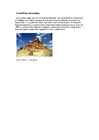
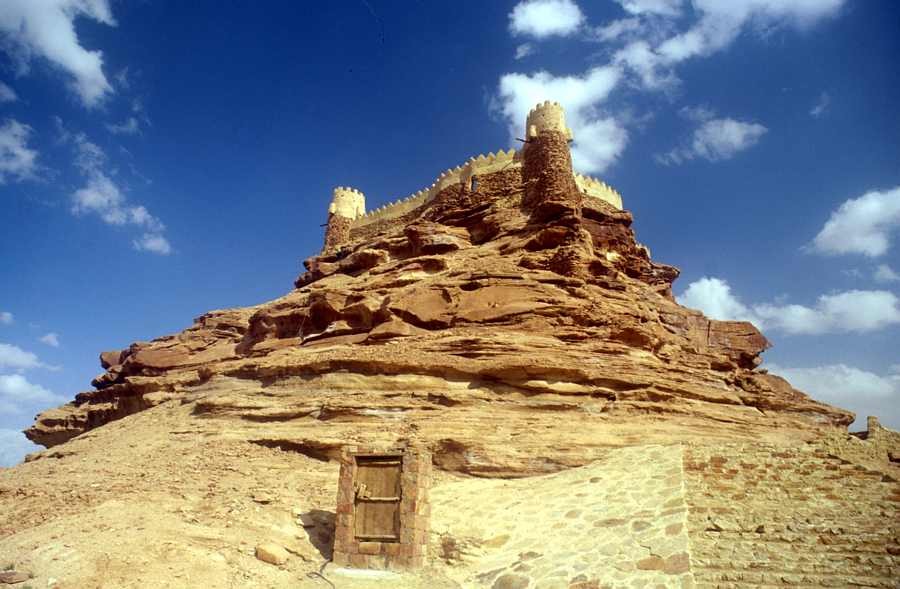
Qasr Zabal at Sakakah.

Words


  • Shrub-puhmas
  • Adaptation -mugandus, kohandamine
  • Aridity-kõrbekuivus
  • interior-sisemine
  • plateau- platoo
  • fertile-viljakas
  • deciduous-pudenev
  • low- lying -madalal asuv
  • plain-tsandik
  • bound- suunduv
  • escarpment- astang
  • realm- kuningriik
  • mean-kekmine
  • stem- vars
  • toad-kärnkonn
  • semiarid-poolkõrbeline
  • hazardous-ohtlik
  • glossy-läikiv
  • radiant-särav
  • unfavourable-ebasoodus
  • odor-lõhn
  • burrow-urg
  • nocturnal-öine
  • arachnid-ämblikulaadne
  • humidity-niiskus

    References


  • Vasakule Paremale
    Saudi-arabia deserts #1 Saudi-arabia deserts #2 Saudi-arabia deserts #3 Saudi-arabia deserts #4 Saudi-arabia deserts #5 Saudi-arabia deserts #6 Saudi-arabia deserts #7
    Punktid 50 punkti Autor soovib selle materjali allalaadimise eest saada 50 punkti.
    Leheküljed ~ 7 lehte Lehekülgede arv dokumendis
    Aeg2014-10-14 Kuupäev, millal dokument üles laeti
    Allalaadimisi 1 laadimist Kokku alla laetud
    Kommentaarid 0 arvamust Teiste kasutajate poolt lisatud kommentaarid
    Autor ats105 Õppematerjali autor

    Kasutatud allikad

    Sarnased õppematerjalid

    All studied biomes
    2
    docx

    All studied biomes

    The average rainfall is 30 to 60 inches a year. In deciduous forests there are five different zones. The deciduous forest has four distinct seasons, spring, summer, autumn, and winter. In the autumn the leaves change color. During the winter months the trees lose their leaves. The animals adapt to the climate by hibernating in the winter and living off the land in the other three seasons. DesertDeserts cover about one fifth of the Earth's land surface. Deserts temperature ranges from 20 to 25° C. The extreme maximum temperature ranges from 43.5 to 49°. Hot and Dry Deserts usually have very little rainfall and concentrated rainfall in short periods between long rainless periods. Most Hot and Dry Deserts don't have very many plants. The only animals they have that can survive have the ability to burrow under ground. They only come out in the night when it is a little cooler.

    Inglisekeelne geograafia
    Geograafia KT-8 klass
    2
    doc

    Geograafia KT-8.klass

    2. Where is prairie, pampas, steppe, and veldt situated? Eurasia­Steppe, North America-Prairie, South America­Pampa, South Africa­Veldt 3. Using the climate diagram describe the climate of the region. Temperate deciduous forest -Well-defined seasons with a distinct winter characterize this forest biome. Moderate climate and a growing season of 140-200 days during 4-6 frost-free months distinguish temperate forests. Temperature varies from -15° C to 25° C. Precipitation (750-1500 mm) is distributed evenly throughout the year. Temperate grassland- Semiarid, continental climates of the middle latitudes typically have between 25 cm and 50 cm of precipitation a year. Much of this falls as snow, serving as reservoir of moisture for the beginning of the growing season. Warm to hot summers are experienced, depending on latitude. In the winter, grassland temperatures can be as low as -40° C, and in the summer it can be as high 20° C. There are two real seasons: a growing season and a dor

    Inglisekeelne geograafia
    Topic – Australia
    10
    doc

    Topic – Australia

    3. Relief Australia is the smallest continent in the world It is often called the island continent because is too big for an island but rather small for a continent. Australia is 1,800 miles from the mainland of Asia and almost half way round the world from Europe. More than 6,000 miles of ocean separate in from the America. Australia is the only continent except for Antarctica that lies all south of the equator. The natural zones of Australia are very various. There are deserts, semi deserts, grasslands, savannas, bushlands and rainforests. The wet forests occupy the narrow region in the east. Most of the animals, birds and insects live in that region, because there is enough food. The savannas which are grasslands with some trees are mostly in the west. Farther west are the bushlands. The real deserts occupy the centre of the Western Plateau. In the very south ­ west there are thin forests of evergreens trees.

    Inglise keel
    Austraalia kohta inglise keelne referaat
    11
    doc

    Austraalia kohta inglise keelne referaat

    The continent it fills is called Australia too. So, Australia is both a country and a continent. If you want to make clear that you are speaking about the country, you may call it the Commonwealth of Australia. It’s the official name of the country. Australia is the smallest continent, but one of the largest countries on Earth. It’s 6th largest country. Its area is about 7.6 million sq km. One third of it is occupied by deserts. It’s both the flattest and, except for Antarctica the driest. Neighbouring countries include Indonesia, East Timor and Papua New Guinea in the north, the Solomon Islands, Vanuatu in the northeast, and New Zealand in the southeast. Its capital is Canberra. Other big cities are Melbourne, Sydney, and Brisbane. National language in Australia is English. Monetary unit is Australian dollar. Their national holiday is on the 26th of January

    Inglise keel
    Tundra
    2
    pdf

    Tundra

    Tundra Tundra is the world's youngest biome. It was formed 10 000 years ago. Located at latitudes 55° to 70° North. Almost all tundras are located in the Northern Hemisphere, encircling arctic desert and extending south to the coniferous forests of the taiga. The ecotone (ecological boundary region) between the tundra and the forest is known as the tree line or timberline. Tundra comes from the Finnish word tunturi, meaning treeless plain. It is noted for its frost-moulded landscapes, extremely low temperatures, little precipitation, poor nutrients, and short growing seasons. Dead organic material functions as a nutrient pool. The two major nutrients are nitrogen and phosphorus

    Inglisekeelne geograafia
    Australia
    6
    doc

    Australia.

    as polyp. There are more than 300 varieties of coral, which is a ultimate dream of every shell- collector. There are undersea observations, glass-bottomed boats and water scopes for undersea viewing, as well as skin-diving equipment. The Great Barrier Reef is and ideal place for a sunny holiday. The relief: Australia is an old and low continent with simple relief. Plains cover the greater part of the land. Most of the rocks have turned into sand and there are big sand deserts on the Western Plateau. In the centre of Australia are lowlands which are covered with sedimentary rocks. Deserts cover most of the land in Australia. Most of the deserts lie in the central and north-western part of the country. The deserts in Australia occupy 18% of the continent. The biggest deserts are the Great Victory Desert, the Great Sandy Desert, the Tanami Desert, the Simpson Desert and the Gibson Desert.

    Inglise keel
    Temperate deciduous forests-woodlands and shrub
    4
    sxw

    Temperate deciduous forests, woodlands and shrub

    Temperate deciduous forests, woodlands and shrub Tartu 2008 Location: Temperate forests are typical of all European continent, the Eastern region of Asia (in special, Chinese and Japan) and North America. Also are finded in tempered areas of South America. Climate: The average temperature in temperate forests is 50° F. Summers are mild, and average about 70° F, while winter temperatures are often well blow freezing. The average yearly precipitation is 30-60 inches. This precipitation falls throughout the year, but in the winter it falls as snow. There are four seasons in this biome, with warm summers and cold winters, often snowy. In autumn, the leaves change color and fall from the trees. The leaves decay on the forest floor, so the soil is very rich. Because of this, and because of the long growing season, many deciduous forests have been cut down for farming purposes. Plants: Trees of this biome include hardwoods such as maple, oak, hickory, and beech. There

    Inglise keel
    Topic - Canada 2
    9
    doc

    Topic - Canada 2

    selfgoverning homeland called Nunavut, meaning "our land". It is over two million square kilometers and it is inhabited by 17,500 Inuits. 9. Plants The flora of Canada is quite diverse, due to the wide range of ecoregions and environmental conditions present in Canada. From the warm, temperate broadleaf forests of southern Ontario to the frigid Arctic plains of the Northern Canada, from the wet temperate rainforests of the west coast to the arid deserts, badlands and tundra plains, the biodiversity of Canada's plants is extensive. Many of the plants seen in Canada are introduced, either intentionally or accidentally. Canada offers a wide range of habitats across varied vegetation. Arctic Tundra can be found in Canada's north which leads south into boreal forests which is most typical of Canada and covers more of the country than any other type of vegetation. The Maritimes are

    Inglise keel


    Meedia

    Kommentaarid (0)

    Kommentaarid sellele materjalile puuduvad. Ole esimene ja kommenteeri


    Sellel veebilehel kasutatakse küpsiseid. Kasutamist jätkates nõustute küpsiste ja veebilehe üldtingimustega Nõustun