Vajad kellegagi rääkida?
Küsi julgelt abi LasteAbi
Logi sisse

All studied biomes (0)

1 Hindamata
Punktid
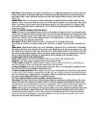
1. Key features for all studied biomes.
Tundra The main seasons are winter and summer . The tundra is the world's coldest and driest biomes. The average annual temperature is -28° C. Nights can last for weeks when the sun barely rises during some months in the winter, and the temperature can drop to -70° C. During the summer the sun shines almost 24 hours a day. Summer are usually warm . Average summer temperatures range from 3° to 16°C.
Taiga Taiga is the Russian word for forest and is the largest biome in the world. It stretches over Eurasia and North America. The taiga is located near the top of the world, just below the tundra biome. The winters in the taiga are very cold with only snowfall. The summers are warm, rainy, and humid. Some of the animals in the taiga hibernate in the winter, some fly south if they can, while some just cooperate with the environment.
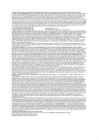
GrasslandsGrassland biomes can be found in the middle latitudes. They can have either moist continental climates or dry subtropical climates. There are two different types of grasslands; tall - grass , which are humid and very wet, and short-grass, which are dry, with hotter summers and colder winters than the tall-grass prairie . In the winter, grassland temperatures can be as low as -40° F, and in the summer it can be as high 70° F. There are two real seasons: a growing season and a dormant season.
Deciduos forest The average annual temperature in a deciduous forest is 50° F. The average rainfall is 30 to 60 inches a year . In deciduous forests there are five different zones . The deciduous forest has four distinct seasons, spring, summer, autumn , and winter. In the autumn the leaves change color . During the winter months the trees lose their leaves. The animals adapt to the climate by hibernating in the winter and living off the land in the other three seasons.
Desert Deserts cover about one fifth of the Earth's land surface. Deserts temperature ranges from 20 to 25° C. The extreme maximum temperature ranges from 43.5 to 49°. Hot and Dry Deserts usually have very little rainfall and concentrated rainfall in short periods between long rainless periods. Most Hot and Dry Deserts don't have very many plants . The only animals they have that can survive have the ability to burrow under ground . They only come out in the night when it is a little cooler.
SavannaA savanna is a rolling grassland scattered with shrubs and isolated trees, which can be found between a tropical rainforest and desert biome. Savannas are also known as tropical grasslands. Savannas have warm temperature year round . There are two very different seasons in a savanna; a very long dry season(winter) and a very wet season. In the dry season only an average of about 4 inches of rain falls . In the summer there is lots of rain. The savanna has a large range of highly specialized plants and animals.
RainforestThe tropical rain forest is a forest of tall trees in a region of year-round warmth. Rain forests belong to the tropical wet climate group. The temperature in a rain forest rarely gets higher than 34 °C or drops below 20 °C. Rainfall is often more than 100 inches a year. There is usually a brief season of less rain. In monsoonal areas , there is a real dry season. Almost all rain forests lie near the equator. Rainforests now cover less than 6% of Earth's land surface.
Alpine Cold, snowy, windy. In the summer average temperatures range from 10 to 15° C . In the winter the temperatures are below freezing. The winter season can last from October to May. The summer season may last from June to September. The temperatures in the Alpine biome can also change from warm to freezing in one day. Alpine animals have to deal with two types of problems: the cold and too much high UV wavelengths.
4. How are plants adapted to life in the biome?
Tundra plants are small -- usually less than a foot high .The hairs on the stems of many tundra plants, such as the Arctic crocus, help to trap heat near the plant and act as protection from the wind. Plants adapted to the tundra have small waxy leaves to prevent the loss of precious water in this dry environment. Quick- Developing , Cup-Shaped Flowers Soil Not Needed for Growth
Polar Desert- Plants that grow in the Arctic regions must be very hardy and adapted to the extreme winter cold of these environments. Polar desert plants have a summertime growing season, but in the Arctic and Antarctic that season is short---often wildflowers and the other plants that manage to survive here are active only from June to July
Alphine biome- Because of the blustery weather , most plants are small groundcover plants, which grow and reproduce slowly. They protect themselves from the cold and wind by hugging close to the ground. When plants die the cold weather makes it hard for them to decompose quickly. This makes for poor soil conditions . Most alpine plants are adapted to grow in sandy and rocky soil. Plants have also adapted to the dry conditions of the alpine biome. Some
5. How are animals adaapted to life in the biome ?
Tundra: There aren't many different species of insects in the tundra, but black flies, deer flies, mosquitoes and "no-see-ums" can make the tundra a miserable place to be in the summer. Mosquitoes can keep themselves from freezing by replacing the water in their bodies with a chemical called glycerol. It works like an antifreeze and allows them to survive under the snow during the winter. The marshy tundra is a great place for migratory birds like the harlequin duck, sandpipers and plovers.
Polar desert: All the wildlife is connected with sea, because there is very little food on land.
Vast colonies of seabirds can be found nesting on the cliffs of this ecoregion. Not many animals spend all year there.
Alpine biome: Alpine animals adapt to the cold by hibernating, migrating to lower , warmer areas, or insulating their bodies with layers of fat. Animals will also tend to have shorter legs , tails, and ears , in order to reduce heat loss. Alpine animals also have larger lungs, more blood cells and hemoglobin because of the increase of pressure and lack of oxygen at higher altitudes. This is also true for people who have lived on mountains for a long time, like the Indians of the Andes Mountains in South America and the Sherpas of the Himalayas in Asia.
6. What animals live in Arctic and Antarctica .
Arctic- reindeer , polar bear , Arctic fox, narwhal, walrus, seal, ox, moose, orca, and snowy owl Antarctica- blue whale , emperor penguin , weddell seal, octopus, sea star
7. Why is tundra so wet? The warmer weather in summers causes a layer of permafrost, ice that never goes away in the ground, to melt, creating bogs and shallow lakes that don't drain.
8. What is snowline? A snow line is the point above which snow and ice cover the ground throughout the year. The actual snow line may seasonally be significantly lower.
9. What is treeline (timberline)? The treeline is the zone where conditions become too harsh to support growth as large as trees. When viewing a mountain from the side, this line is visible as the place where forests stop and snow, ice and rock begin . Sometimes there is a transition called the krumholtz line, where trees become stunted and warped before disappearing entirely as the altitude increases.
10. Name traditional human activities in tundra and polar desert areas.
Polar desert
: Few direct threats exist for this ecoregion, simply because humans are largely absent. But where humans have tread, this ecoregion has suffered. Plans for a northern shipping route through the Russian Arctic could open up oil, gas, and other natural resources for exploitation. This could increase the risk of oil spills and introduce species such as rats to the ecoregion, which could have drastic consequences for nesting seabirds.
Tundra: More people have recently been moving to the tundra to work in the mines and oil industry. New towns and roads are being built to support these people. These developments have interrupted many of the animals’ migrations and feeding patterns, as well as caused damage to the permafrost. It takes so long for the tundra to recover that tire tracks and footprints remain on the ground for decades after they were made. In areas of the tundra there are also many natural resources, like oil.
All studied biomes #1 All studied biomes #2
Punktid 50 punkti Autor soovib selle materjali allalaadimise eest saada 50 punkti.
Leheküljed ~ 2 lehte Lehekülgede arv dokumendis
Aeg2012-09-27 Kuupäev, millal dokument üles laeti
Allalaadimisi 3 laadimist Kokku alla laetud
Kommentaarid 0 arvamust Teiste kasutajate poolt lisatud kommentaarid
Autor nnetukas Õppematerjali autor
RainforestThe tropical rain forest is a forest of tall trees in a region of year-round warmth. Rain forests belong to the tropical wet climate group. The temperature in a rain forest rarely gets higher than 34 °C or drops below 20 °C. Rainfall is often more than 100 inches a year. There is usually a brief season of less rain. In monsoonal areas, there is a real dry season. Almost all rain forests lie near the equator. Rainforests now cover less than 6% of Earth\'s land surface.

Sarnased õppematerjalid

Geograafia KT-8 klass
2
doc

Geograafia KT-8.klass

2. Where is prairie, pampas, steppe, and veldt situated? Eurasia­Steppe, North America-Prairie, South America­Pampa, South Africa­Veldt 3. Using the climate diagram describe the climate of the region. Temperate deciduous forest -Well-defined seasons with a distinct winter characterize this forest biome. Moderate climate and a growing season of 140-200 days during 4-6 frost-free months distinguish temperate forests. Temperature varies from -15° C to 25° C. Precipitation (750-1500 mm) is distributed evenly throughout the year. Temperate grassland- Semiarid, continental climates of the middle latitudes typically have between 25 cm and 50 cm of precipitation a year. Much of this falls as snow, serving as reservoir of moisture for the beginning of the growing season

Inglisekeelne geograafia
Tundra
2
pdf

Tundra

Tundra Tundra is the world's youngest biome. It was formed 10 000 years ago. Located at latitudes 55° to 70° North. Almost all tundras are located in the Northern Hemisphere, encircling arctic desert and extending south to the coniferous forests of the taiga. The ecotone (ecological boundary region) between the tundra and the forest is known as the tree line or timberline. Tundra comes from the Finnish word tunturi, meaning treeless plain. It is noted for its frost-moulded landscapes, extremely low temperatures, little precipitation, poor nutrients, and short growing seasons. Dead organic material functions as a nutrient pool. The two major nutrients are nitrogen and phosphorus. Nitrogen is created by biological fixation, and phosphorus is created by precipitation. The most distinctive characteristic of tundra soil is its permafrost, a permanently frozen layer of ground. The average winter temperature is -28°C, but the average summer temperature is 3-16°C. During the brief summ

Inglisekeelne geograafia
Temperate deciduous forests-woodlands and shrub
4
sxw

Temperate deciduous forests, woodlands and shrub

Eastern region of Asia (in special, Chinese and Japan) and North America. Also are finded in tempered areas of South America. Climate: The average temperature in temperate forests is 50° F. Summers are mild, and average about 70° F, while winter temperatures are often well blow freezing. The average yearly precipitation is 30-60 inches. This precipitation falls throughout the year, but in the winter it falls as snow. There are four seasons in this biome, with warm summers and cold winters, often snowy. In autumn, the leaves change color and fall from the trees. The leaves decay on the forest floor, so the soil is very rich. Because of this, and because of the long growing season, many deciduous forests have been cut down for farming purposes. Plants: Trees of this biome include hardwoods such as maple, oak, hickory, and beech. There are often some evergreens, such as hemlock, spruce, and fir growing amongst them.

Inglise keel
Topic - Canada
6
doc

Topic - Canada

Other large and important rivers are the St. Lawrence River, the Yukon River, the Columbia River, the Nelson River, the Churchill River and the Fraser River. Nature. Canada's land ranges from fertile agricultural plains in the south to freezing tundra in the north. The southwest of Canada has a mild climate. Cold winters characterize most of the rest of Canada. The magnetic North Pole is within Nunavut. There are five biomes in Canada: the Arctic Biome, the Tundra, the Taiga Biome, the Prairies and the Deciduous Forests. The Arctic biome is cold, windy and the land is permafrost. There are long periods of darkness and light. The growing season is very short. Some typical animals are Arctic foxes, ermines, polar bears, Arctic terns, walruses and seals. The Tundra is located near the Arctic region. It is cold and windy as well. The land is permafrost and desert-like

Inglise keel
Topic - Canada 2
9
doc

Topic - Canada 2

low 20°C, while between the coasts the average summer high temperature range between 25°C to 30°C with occasional extreme heat in some interior locations exceeding 40°C. Canada's land ranges from fertile agricultural plains in the south to freezing tundras in the north. The southwest of Canada has a mild climate. Cold winters characterize most of the rest of Canada. The magnetic North Pole is within Nunavut. There are five biomes in Canada: the Arctic Biome, the Tundra, the Taiga Biome, the Prairies and the Deciduous Forests. The Arctic biome is cold, windy and the land is permafrost. There are long periods of darkness and light. The growing season is very short. The tundra is located near the Arctic region. It is cold and windy as well. The land is permafrost and desertlike. The growing season is 5060 days and that is why there grow plants such as mosses and lichens. 6. Animals

Inglise keel
Saudi-arabia deserts
14
doc

Saudi-arabia deserts

MIINA HÄRMA GYMNASIUM Deserts Saudi-Arabia Tartu 2007 Deserts In geography, a desert is a landscape form or region that receives very little precipitation. Generally, deserts are defined as areas that receive an average annual precipitation of less than 250 mm (10 inches). Deserts cover at least one-fourth of the Earth's land surface. Desert biomes can be classified according to several characteristics. There are four major types of deserts: · Hot and dry · Semiarid · Coastal · Cold Location The four major North American deserts of hot and dry deserts are the Chihuahuan, Sonoran, Mojave and Great Basin. Others outside the U.S. include the Southern Asian realm, Neotropical (South and Central America), Ethiopian (Africa) and Australian.

Inglise keel
Kordamine Geograagia kontrolltööks- 8 klass
1
doc

Kordamine Geograagia kontrolltööks- 8.klass

1. What is a biome? A biome is a large area of distinctive plants and animals, which are adapted to that environment. The climate and geography determines which type of biome can exist there. 2. Using the map describe the distribution of the biome (tropical rainforest/tropical deciduous forest). Tropical rainforest ­ South America, Africa (Madagaskar), Asia. Tropical deciduous forest ­ South America, Asia, Australia 3. Compare the climates (tropical rainforest/tropical deciduous forest). Tropical rainforest is wetter than tropical deciduous forest. Both of these biomes have a warm climate all year long. Tropical deciduous forest has a well defined dry and a wet season

Inglisekeelne geograafia
Kanada referaat
4
doc

Kanada referaat

second largest waterfall in the world) are one of the greatest attractions in the world. About twelve million tourists come to see the beauty of the falling waters every year. The Horseshoe Falls are much bigger and have more strength that the American Falls. People can enjoy the noise and the sight of the waters from the boats which take them right next to the falls. In the evenings, when the falls are illuminated by colorful spotlights, they are magnificent. There are five major biomes in Canada: Arctic Biomes, Tundras, Taigas, Prairies and Decidious Forests. The Arctic Biome is very cold and windy. There are long periods of darkness and the growing season is very short so there are almost no plants. Some of the typical animals are the Arctic fox, ermines, polar bears, Arctic terns, walruses and seals. The Tundra is located near the Arctic region. It's permafrost and desertlike. Some of the plants that can survive are lichens and mosses. Typical animals are musk

Inglise keel


Kommentaarid (0)

Kommentaarid sellele materjalile puuduvad. Ole esimene ja kommenteeri


Sellel veebilehel kasutatakse küpsiseid. Kasutamist jätkates nõustute küpsiste ja veebilehe üldtingimustega Nõustun