Leidsid 33 sarnast õppematerjali, mis on seotud failiga "Saudi-arabia deserts". Need materjalid aitavad sul teemat sügavamalt mõista.
desert, animals, arabia, average, plant, include, plants, temperatures, between, these, bush, precipitation, land, mean, ranges, winter, night, characteristic, biome, import, areas, coastal, cold, occur, summer, january, period, ground, insects, birds, heat, agriculture, little, there, four, major, north, such, extreme, maximum, usually, quite, leaves1. Key features for all studied biomes. Tundra The main seasons are winter and summer. The tundra is the world's coldest and driest biomes. The average annual temperature is -28° C. Nights can last for weeks when the sun barely rises during some months in the winter, and the temperature can drop to -70° C. During the summer the sun shines almost 24 hours a day. Summer are usually warm. Average summer temperatures range from 3° to 16°C. TaigaTaiga is the Russian word for forest and is the largest biome in the world. It stretches over Eurasia and North America. The taiga is located near the top of the world, just below the tundra biome. The winters in the taiga are very cold with only snowfall. The summers are warm, rainy, and humid. Some of the animals in the taiga hibernate in the winter, some fly south if they can, while some just cooperate with the environment.
Temperature varies from -15° C to 25° C. Precipitation (750-1500 mm) is distributed evenly throughout the year. Temperate grassland- Semiarid, continental climates of the middle latitudes typically have between 25 cm and 50 cm of precipitation a year. Much of this falls as snow, serving as reservoir of moisture for the beginning of the growing season. Warm to hot summers are experienced, depending on latitude. In the winter, grassland temperatures can be as low as -40° C, and in the summer it can be as high 20° C. There are two real seasons: a growing season and a dormant season. The growing season is when there is no frost and plants can grow (which lasts from 100 to 175 days). During the dormant (not growing) season nothing can grow because it's too cold. Taiga- Long, cold winters, and short, mild, wet summers are typical of this region. In the winter, chilly winds from the arctic cause bitterly cold weather in the taiga.
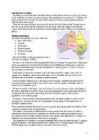
an island but rather small for a continent. Australia is 1,800 miles from the mainland of Asia and almost half way round the world from Europe. More than 6,000 miles of ocean separate in from the America. Australia is the only continent except for Antarctica that lies all south of the equator. The natural zones of Australia are very various. There are deserts, semi deserts, grasslands, savannas, bushlands and rainforests. The wet forests occupy the narrow region in the east. Most of the animals, birds and insects live in that region, because there is enough food. The savannas which are grasslands with some trees are mostly in the west. Farther west are the bushlands. The real deserts occupy the centre of the Western Plateau. In the very south west there are thin forests of evergreens trees. Australia is the driest inhabited continent, the flattest, and has the oldest and least fertile soils. Only the south-east and south-west corners of the continent have a temperate climate
..........................................................................................................3 Geographical Position.....................................................................................................3 Relief...............................................................................................................................4 Climate & Time Zones....................................................................................................5 Plants...............................................................................................................................5 Animals...........................................................................................................................6 Population.......................................................................................................................6 The Native Australians..............................................................................
Tundra Tundra is the world's youngest biome. It was formed 10 000 years ago. Located at latitudes 55° to 70° North. Almost all tundras are located in the Northern Hemisphere, encircling arctic desert and extending south to the coniferous forests of the taiga. The ecotone (ecological boundary region) between the tundra and the forest is known as the tree line or timberline. Tundra comes from the Finnish word tunturi, meaning treeless plain. It is noted for its frost-moulded landscapes, extremely low temperatures, little precipitation, poor nutrients, and short growing seasons. Dead organic material functions as a nutrient pool. The two major nutrients are nitrogen and phosphorus
The present coat of arms was granted by King George V in 1912. It consists of a shield containing the badges of six Australian states, enclosed by an ermine border. The shield is a symbol for the federation of the states, which took place in 1901. The crest, which is above the shield, is a seven-pointed gold star on a blue and gold wreath. The seven points of the star represent exactly the same thing that they do on the flag. The supporters of the shield are native Australian animals: the red kangaroo and the emu. Usually the coat of arms is depicted on the background of sprays of golden wattle with a scroll beneath it containing the word `Australia'. Australia's national anthem is `Advance Australia Fair', which replaced `God Save the Queen' in 1984. It was written by a Scottish-born composer, Peter Dodds McCormick. The unofficial anthem of Australia is `Waltzing Matilda'. It tells a story about a swagman, who has named his sleeping blanket Matilda
Temperate deciduous forests, woodlands and shrub Tartu 2008 Location: Temperate forests are typical of all European continent, the Eastern region of Asia (in special, Chinese and Japan) and North America. Also are finded in tempered areas of South America. Climate: The average temperature in temperate forests is 50° F. Summers are mild, and average about 70° F, while winter temperatures are often well blow freezing. The average yearly precipitation is 30-60 inches. This precipitation falls throughout the year, but in the winter it falls as snow. There are four seasons in this biome, with warm summers and cold winters, often snowy. In autumn, the leaves change color and fall from the trees. The leaves decay on the forest floor, so the soil is very rich. Because of this, and because of the long growing season, many deciduous forests have been cut down for farming purposes. Plants:
151,480 miles of coastline. Most of Canada's human population lives along its southern border. 3. Relief Canada's geography is very diverse. It has huge lakes, evergreen forests, prairies, meadows and beautiful mountains. There are thousands of miles of coastline with beaches, fjords and wild rivers flowing to the oceans. Canada is a country of wide open spaces and beautiful landscape where traveling visitors can unexpectedly bump into wild animals like bears or be struck by unusual sight like the scarecrows on the Cabot Trail. Canada is rich in natural wonders, one of them, the Niagara Falls between lakes Erie and Ontario, which is the second biggest waterfall in the world is one of the greatest attractions in the world. About twelve million tourists come to see the beauty of the falling waters on the border between the United States of America and Canada
Barrier Reef is the world's largest coral reef. It lies off the north-eastern coast and extends for over 2000 kilometres. The famous mountain range in the eastern part of Australia is the Great Diving Range and it's highest peak is Mount Kasciusco's 2230m. In the continental part, there are the Macdonnell ranges. Other smaller mountain ranges are the Musgrave Mountains, the Hammessley Mountains and the Darling Mountains. The continental part of Australia is mostly covered with deserts and these deserts are the Great Sandy Desert in the north-western part, the Great Victoria dessert in the southern part and Gibson desert and the Simpson desert. The Murray River is the largest river of the country and it is 2,375 kilometres long, it rises in the Australian Alps and flows to the south-west. The waters of Murray flow through several lakes, such as Lake Alexandrina and The Coorong. Other Lakes are L.Eyre
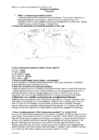
1. Where is temperate grassland situates? Temperate grasslands are located in the mid-latitudes. There are six large areas of temperate grassland: the Pampas in South America, the Veld in Africa, the Canterbury Plains in New Zealand, the Murray-Darling Basin in Australia, the Prairies in North America and the Steppes in Central Asia. 2. Colour the distribution of temperate grassland on the map. 3. How is temperate grassland called in these regions? Eurasia - steppe Hungary - puzda North America - prarie South America - pampa South Africa - veldt 4. What is forest steppe (forest steppe – metsastepp)? A forest steppe is a temperate-climate ecotone and habitat type composed of grassland interspersed with areas of woodland or forest. 5. Describe the climate of temperate grassland. Temperate grasslands have a temperate continental climate, which is cooler than savannas.
There also live aborigines. Aborigines are the ancestors of the people. Like the US and Canada, Australia was an English speaking colony of Great Britain. Today Australia is a modern developed country with a diversified economy. Australia is an island continent of 7.7 million square kilometres, which makes it a little smaller than the USA. Located in south of Asia, between The Pacific and Indian Oceans, Australia is the World's driest continent. Although large areas of the centre are desert, Australia has a wide range of climate from tropical in the north to temperate in the south east, where it frequently snows in winter. Geographical position The coasts of Australia are surrounded by the Pacific Ocean, the Indian Ocean and the Southern Ocean. Four seas are surrounding Australia, which are the Timor Sea and Arafura Sea in the north of Australia, the Coral Sea in the north-east of Australia and the Tasman Sea, near the island of Tasmania, in the south-east of Australia.
The Darling Mountains. Australia's longest river is the Darling, which flows into Southern Ocean and is 2,700 kilometers long. The other long river is The Murray River. Australia's only large permanent lakes have been artificially created. Most of the natural lakes are dry for months or years at a time. Lake Eyre is the largest lake in Australia and is the lowest point in Australia. It's about 15m below sea level. The biggest deserts are The Great Sandy Desert and The Victoria Desert. History Two hundred years ago there were no white people in Australia. The only inhabitants were dark-skinned people who were still living in Stone Age. Their only weapons were stone knives, simple spears and boomerangs. They raised no crops and had no herds of tame animals. For food they hunted and fished and gathered wild fruits and nuts. But their tribes had very wellworked-out customs. A few aborigines still live in
Table of contents 1. Introduction 2. Geographical position 3. Mountains, lowlands 4. Rivers, lakes 5. The territories and provinces 6. Towns, economy, agriculture 7. Climate 8. Animals, plantlife 9. Population 10. Sports 11. Culture 12. History 13. Political system, symbols 14. Conclusion 15. Materials 1. Introduction If you had to use two words to describe Canada, they might be large and diverse. Canada is the second largest country in the world, bordered by three oceans, and across the country, Canadians experience many different landscapes from rolling plains and mountains to the cold tundra of the north. Despite Canada's great size, it is
Australia's flag has a Brittish flag, five stars that represent the constellation Southern Cross and a large star for the country's states and territories. The coat of arms features a kangaroo and an emu, golden whattle blossoms, a shield with the coats of arms of the six states of Australia and a star for the states and territories. Landforms Only 5% of the land is above 600 meters. Most of the land is empty. Most of the people live in the south and in east. 2/3 of Australia is a desert with hills and big saltlakes. The biggest deserts are the Great Sandy Desert, the Gibson Desert, the Simpson Desert, The Great Victoria Desert. The biggest mountain ranges are the Great Divining Range, the Australian Alps, the Blue Mountains and the New England Range. The outback is flat and hot centre of Australia. The nearest neighbor may be a hundred kilometers away. The nearest city may be more than one thousand kilometers away. Many
The coat of arms features a kangaroo and an emu (the national animals of Australia), golden wattle (the national floral emblem), a shield with the coats of arms of the six states of Australia and a star for all states and territories. Australia's national anthem is "Advance Australia Fair", which replaced "God Save The Queen" in 1984. the unofficial anthem is "Waltzing Matilda". As said before Australias national animals are kangaroos and emus. Often coalas are mentioned too, its floral emblem is the golden wattle and its national colours are the colours of its flag red, white and blue. Head of state Head of state is Queen Elizabeth II, who is queen of United Kingdom and also queen is Australia. In practice, Governor General performs her functions in queen's absence. Since 1989 Bill Hayden has been the Governor General Government
Most of Canada's human population lives along its southern border. Geographical facts. Canada's geography is very diverse. It has huge lakes, evergreen forests, prairies, meadows and beautiful mountains. There are thousands of miles of coastline with beaches, fjords and wild rivers flowing to the oceans. Canada is a country of wide open spaces and beautiful landscape where traveling visitors can unexpectedly bump into wild animals like bears or be struck by unusual sight like the scarecrows on the Cabot Trail. Canada is rich in natural wonders, one of them, the Niagara Falls between lakes Erie and Ontario, which is the second biggest waterfall in the world is one of the greatest attractions in the world. About twelve million tourists come to see the beauty of the falling waters on the border between the United States of America and Canada.
It is 7.6 million square kilometres big. It is often called the island continent because it is rather small for a continent and very big for an island. There are only five countries bigger than Australia in the World. There are five states in the mainland. Tasmania is also considered as a state so there are six states. The Northern Territory and Canberra are also independent but they are not states. Canberra is the capital of Australia and it is situated between Sydney and Melbourne because both of these cities wanted to be the capital. The population is about 19 million people and growing. New South Wales is the most populated state and Victoria is the most densely populated state. The national language is English. It is English because British settlers came to live in Australia in the past and they brought convicts with them who were also British. Symbols. The Australian Flag came into being after the federation of the
Because it lies in the Northeast part of Australia, its climate is mainly tropical. South Australia is famous as it is the region of fruit farming, vineyards and olive groves. Only the southern coast is fertile, most of the state is arid. Its capital is Adelaide, which is known for the Adelaide circuit. Western Australia is the biggest state in Australia. It is rich in deserts, as the central part of the state is practically a desert in whole and nearly uninhabited. On the other hand, the desert is important for its resources and mining. Western Australian capital is Perth with a population of 1.5 million people. Tasmania is the second most densely populated state. Its capital is Hobart, which is a fine Georgian city. Tasmania became the most popular settling region for Europeans due to favorable climate to them. There is also the Northern Territory, but it has a special status being under the authority of the central government of the Commonwealth.
On 1 January 1901, the six colonies federated,forming a Commonwealth of Australia, since Federation, Australia has maintaned a stable liberal democratic political system. The population of 22,7 million is highly urbanised and heavily concentrated in eastern states due to geography and climate. A highly developed country, Australia is the world's 12th largest economy and has the world's fifthhighest per capita income. Enviroment. Although most of Australia is semiarid or desert, it includes a diverse range of habitats from alpine heaths to tropical rainforests. Australian forests are mostly made up of evergreen species, particularly eucalyptus trees in the less arid regions, wattles replace them in drier regions and deserts as the most dominant species. Among wellknown Australian fauna are the monotremes (the platypus and echidna); a host of marsupials, including the kangaroo, koala, and wombat, and birds such as the emu and the kookaburra.
terms for the westernmost coastal states of the United States. · It most often comprises California, Oregon and Washington. Arizona and Nevada, while not coastal states, are often included due to their proximity to the Pacific Coast and their economic and cultural ties to California · As of 2007, the estimated population of the West Coast ranged from approximately 5060 million, depending on which states are included in the estimate. · Major coastal cities on the West Coast include San Diego, Los Angeles, San Francisco, Seattle, Las Vegas. ·West Coast includes: ·Washington ·Oregon ·Arizona ·Nevada ·California Washington · Named after George Washington, the first President of the United States · Capital: Olympia · Largest city: Seattle · There are three national parks and two National Monuments List of Washington state symbols: · The State song is "Washington My Home" · http://www.youtube.com/watch
NEW ZEALAND Geography: New Zealand is situated midway between the Equator and the South pole in the southern Pacific Ocean. It consists of two large islands, North Island and South Island, plus several smaller ones of which Stewart Island is the largest. North and South Islands are separated by the 32km wide Cook Strait. The total land area is 270,535 sq Km, about the size of Italy, the United Kingdom or the US state of Colorado. North Island is volcanically active with three active volcanoes. South Island has the high snow covered
Forests Tropical and subtropical forests, also known as rainforests or tropical rainforests, are lavish and ample forests with broad leave tree. They are mostly found at lowlands near the equator - Asia, Africa, South & Central America and on many of the Pacific Islands. Almost 50% forests of the world are tropical and subtropical in nature. Rainforests are characterized by high rainfall. They are home to two-thirds of all the living animal and plant species on the planet. Tall, broad-leaved evergreen trees are the dominant plants, forming a leafy canopy over the forest floor. The undergrowth or understory in a rainforest generally consists of shade-tolerant shrubs, herbs, ferns, small trees and large woody vines. The temperature ranges from 5°C to 50°C. Human uses of tropical and subtropical forests:
higher and trees are more regularly spaced than in forest communities. The open canopy allows sufficient light to reach the ground to support an unbroken herbaceous layer consisting primarily of C4 grasses. Savannas are also characterised by seasonal water availability, with the majority of rainfall being confined to one season of the year. Savannas can be associated with several types of biomes. Savannas are frequently seen as a transitional zone, occurring between forest and desert or prairie. Although the term savanna is believed to have originally come from a Native American word describing "land which is without trees but with much grass either tall or short", by the late 1800s it was used to mean "land with both grass and trees". It now refers to land with grass and either scattered trees or an open canopy of trees. Changes in fire management Savannas are subject to regular fires and the
Mountain region; 7) the Pacific Northwest and Alaska; 8) California and Hawaii. New England is highly industrial, but it also has many fields, woods and small towns. New England is the part of the United States that is most like "old" England. It includes six states: Maine, New Hampshire, Vermont, Massachusetts, Rhode Island, and Connecticut. The Mid-Atlantic region plays an important role in the United States. Its cities include Washington D. C., the nation's capital, and New York City, the nation's financial centre. The Mid-Atlantic region is densely populated. It includes six states: New York, New Jersey, Pennsylvania, Delaware, Maryland and West Virginia. The South is economically, historically and culturally a distinct region. With its warm climate and rich soil, it developed an economy based on cotton export. Conflicts between the North and the South, especially over slavery, led to the Civil War in 1861
is growing for many forms of renewable energy. Climate change concerns coupled with high oil prices, peak oil and increasing government support are driving increasing renewable energy legislation, incentives and commercialization. New government spending, regulation, and policies should help the industry weather the 2009 economic crisis better than many other sectors. Costs Renewable energy systems encompass a broad, diverse array of technologies, and the current status of these can vary considerably. Some technologies are already mature and economically competitive (e.g. geothermal and hydropower), others need additional development to become competitive without subsidies. This can be helped by improvements to sub-components, such as electric generators. The table shows an overview of costs of various renewable energy technologies. For comparison with the prices in the table, electricity production from a conventional coal-fired plant costs about 4¢/kWh
......................................................................................27 SOLAR ENERGY..............................................................................................................27 8.1 Photovoltaic energy...................................................................................................... 28 8.2 Solar thermal heat.......................................................................................................29 8.3 Solar thermal power plants......................................................................................... 30 8.4 Solar energy and the environment..............................................................................30 WIND ENERGY.................................................................................................................31 9.1 The History of Wind ..................................................................................................31 9.2 How wind machines work...
The Rocky Mountains are the youngest and highest mountains in Canada. British Columbia is in the landform region called the Western Cordillera. ('Cordillera' means a system of mountain ranges). Between the mountain ranges are areas of high plateaus and deep trenches. Since the landscape is very rugged, most people live in the south and near the coast. Vancouver and Victoria are the largest cities in British Columbia. The region includes the Queen Charlotte Islands and Vancouver Island. All these islands are peaks of a mountain range that is partly covered by the Pacific Ocean. The St Elias Mountains in the Yukon include Canada's highest peak, Mount Logan. It towers 5,951 metres above sea level. Because the Coast Mountains are on the seashore, the coast of British Columbia has many long, narrow inlets called fiords. The fiords provide a water route to Canada's most valuable forests. These forests consist of red cedars, hemlocks, and other evergreen trees that grow on the
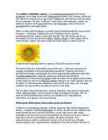
The sunflower (Helianthus annuus) is an annual(iga aastane) plant in the family Asteraceae, with a large flower head (inflorescence(õiekobar, õisik, õitseaeg, õidumine)). The stem(tüvi) of the flower can grow up to 3 metres tall, with the flower head reaching 30 cm in diameter. The term "sunflower" is also used to refer(nimetama, viitama, üle andma) to all plants of the genus(perekond, sugu) Helianthus, many of which are perennial(alaline, aastaringne) plants. What is usually called the flower is actually a head (formally(ametlikult) composite(liit-, komposiit- ; korvõieline, komposiit) flower) of numerous flowers (florets) crowded(täistuubitud, tunglev, rahvarohke) together. The outer flowers are the ray florets(pähik (õisiku osa) and can be yellow, maroon, orange, or other colors, and are sterile(steriilne, viljatu). The florets inside the circular head are called disc florets.
TARTU VEERIKU KOOL New Guinea animals and plants Koostaja: Tauri-Viljar Vahesaar Juhendaja: Priit Pensa Tartu 2009 Table of content Introduction................................................................................................................................................3 The forests of New Guinea ..................................................................................
ordinates is 83°N north, 42°N south, 53°W east, 141°W west. Canada borders with United States of America by land; Pacific Ocean, Arctic Ocean and Atlantic Ocean by coastline. Canada is one of the largest countries in the world, second only to Russia in territorial size. It has a total area of 9.9 million square kilometers. This includes 755,170 square kilometers of water. Toronto is the largest city in Canada with a population of 4.3 million. Other major cities include Montreal (3.3 million people), Vancouver (1.8 million people). Located in the southeast corner of the nation, Ottawa is the nation's capital. Relief Canada is a vast country comprised of a multitude of very different landscapes: Atlantic provinces, the Appalachians, St. Lawrence and Great Lakes lowlands, Canadian Shield, The Prairies, mountain ranges and high plateaus of the Canadian Cordillera, and northern Canada. Climate
Formaldehyde Formaldehyde is a colorless, flammable gas at room temperature. It has a pungent, distinct odor and may cause a burning sensation to the eyes, nose, and lungs at high concentrations. Formaldehyde is also known as methanal, methylene oxide, oxymethylene, methylaldehyde, and oxomethane. Formaldehyde can react with many other chemicals, and it will break down into methanol (wood alcohol) and carbon monoxide at very high temperatures. Formaldehyde is naturally produced in very small amounts in our bodies as a part of our normal, everyday metabolism and causes us no harm. It can also be found in the air that we breathe at home and at work, in the food we eat, and in some products that we put on our skin. A major source of formaldehyde that we breathe every day is found in smog in the lower atmosphere. Automobile exhaust from cars without catalytic converters or those using oxygenated gasoline also contain formaldehyde
This region was the first part of Canada to be founded by the Vikings in AD 985. The North The North region includes the Yukon Territory, the Northwest Territories and the Nunavut territory. The North is the biggest region in Canada. The North has the most coldest climate in Canada. Because of that only 85 000 people live in this region. The North is home to Canada's indigenous people who are called as the Inuits. Ground is permanently frozen in this region throughout the year. The most common animals in The North are caribou and polar bear. Climate Average temperatures in Canada ranges from -35*C (Nunavut Territories) to 25*C ( Quebec). The amplitude of temperature in generally high in Canada. Canadian winters are usually harsh and cold. Because of the differences in climate throughout Canada there are many different ecozones in Canada. There are four different ecozones in Canada. Northern Arctic is the coldest ecozone in Canada. Very few plants and animals
Australia Australia is surrounded by the Indian and Pacific oceans, it is separated from Asia by the Arafura and Timor seas. Australia presents an enormous range of climatic conditions, since it covers thirty degrees of latitude. It is mostly temperate, but one third of the continent is tropical, and there are large desert areas. The two largest cities are Sydney and Melbourne. The capital of Australia is Canberra. It is a small city and was built in the early 1900s. History. Two hundred years ago there were no white people in Australia. The only inhabitants were dark-skinned people who were still living in a Stone Age. Their only weapons were stone knives and boomerangs. But their tribes had very well-worked- out customs. A few aborigines still live in the emptier part of the continent. In 1770, the
 annaabi.ee