Vajad kellegagi rääkida?
Küsi julgelt abi LasteAbi
Logi sisse

New Guinea (inglise keeles) (0)

5 VÄGA HEA
Punktid
Inglise keel - Kõik luuletused, mis on inglise keeles
TARTU VEERIKU KOOL
New Guinea animals and plants
Koostaja: Tauri -Viljar Vahesaar
Juhendaja: Priit Pensa
Tartu 2009
Table of content
Introduction 3
The forests of New Guinea 5
The problem with trading wildlife 6
Animals of the lowlands 8
Reptiles 8
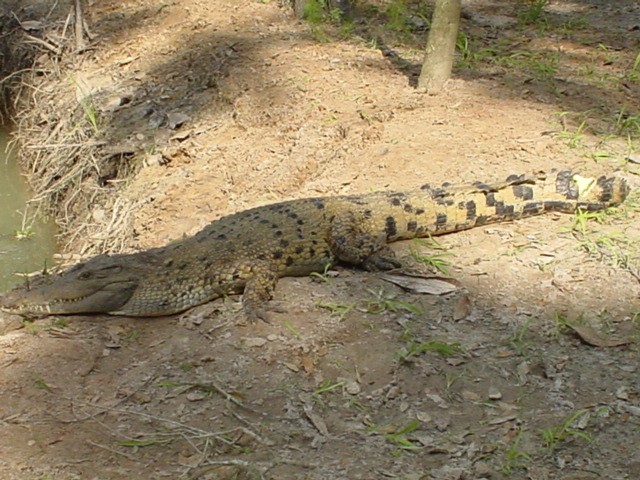
Crocodiles , leaving New Guinea as skins and back straps 9
Vital waterways for people and wildlife 10

Introduction


If you were asked to show on a world map the regions with the most biodiversity, your finger would probably end up pointing at the Amazon , the Congo Basin or the island of Borneo.
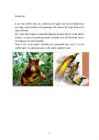
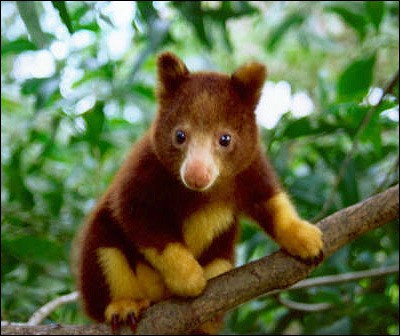
But I chose New Guinea, an island that represents no more than 1% of the world’s landmass, an array of extraordinary animals and plants have also flourished, such as tree kangaroos and birds of paradise.
Close to 10% of the world’s vertebrates are concentrated here , while 7% of the world’s higher (vascular) plants grow on the island’s productive soils.
Geography
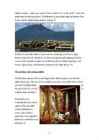
Papua New Guinea consists of over 600 islands and lies in the middle of the long chain of islands stretching from mainland South -East Asia . The mainland and larger islands are mountainous and rugged, divided by large fertile upland valleys. Fast -flowing rivers from the highlands descend to the coastal plains. A line of active volcanoes stretches along the north coast of the mainland and continues on the island of New Britain . To the north and south of this central mountain range on the main island lie vast stretches of mangrove swamps and coastal river deltas . /1/
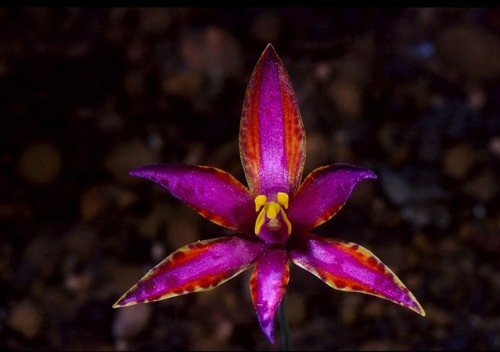
Volcanoes and thermal pools are also found in the southeast of other islands. Papua New Guinea offers the greatest variety of terrestrial ecosystems in the South Pacific, including five types of lowland rainforest , 13 types of montane rainforest, five varieties of palm and swamp forest and three different mangrove forests. Two-thirds of the world’s species of orchids come from New Guinea. /1/
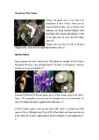
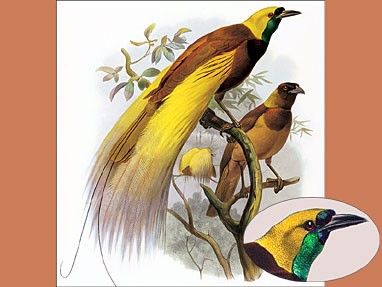
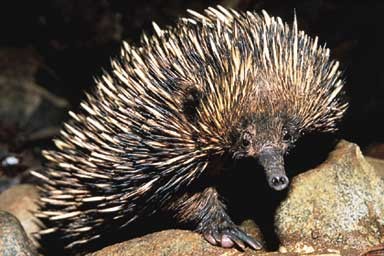
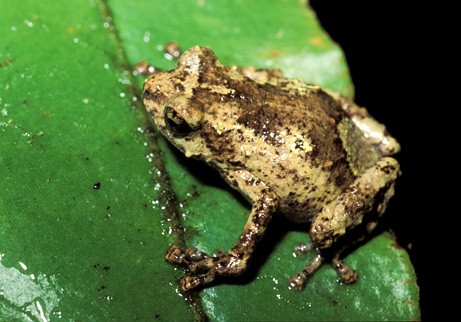
Birds include 38 species of the bird of paradise, and the megapode and cassowary. Marsupials and mammals include cuscus, tree kangaroos, wallabies, bandicoots, spiny anteaters and, in the coastal waters , the dugong . There are between 170 and 200 species of frog and 450 species of butterfly. /3/

The forests of New Guinea


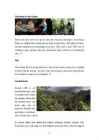
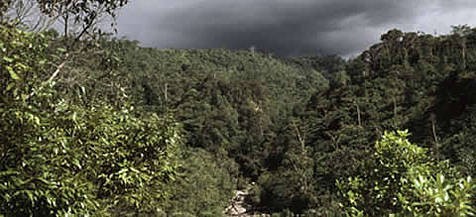
Richer and more diverse in species than their montane counterparts, the lowland forests of southern New Guinea are the home of more than 1,200 species of trees .
Lowland rainforests are demanding ecosystems. They need at least 2,500 mm of rainfall per year , and they only show the greatest species diversity on well-drained sites. /2/
Soil
When seeing the rich canopy and massive trees of the lowland canopy, one is tempted to believe that the soils are very rich. In fact , the soil layer is thin and is easily leached of its nutrients compared to the highlands. /2/
Lowland forest
Beyond 1,000 m, the lowland forest gives way to montane forests. Here, the canopy is lower than the lowland forests and fewer trees rely on buttresses. Branches also grow lower on the trunks and the shrub layer is denser.
As tectonic plates have shifted and climates undergone dramatic changes, New Guinea has seen a wide range of starkly different ecosystems form. A diverse range of endemic species - plants and animals found nowhere else in the world – have had ample time to evolve and thrive. The difference in the wildlife make-up between New Guinea and the neighbouring islands is striking. /2/
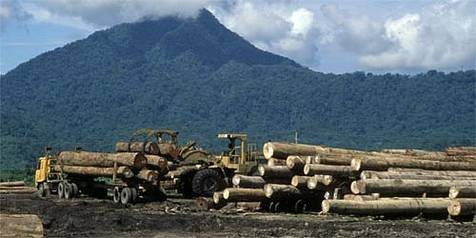
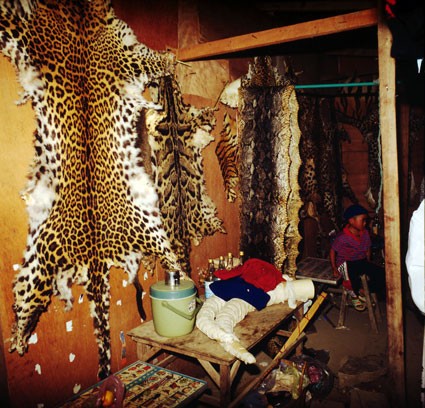
Wildlife use and trade in New Guinea concerns several species that are in high demand either for local subsistence. As forests are opened up by logging and forest conversion for plantations, there is a risk that the scale of wildlife exploitation will increase significantly, with dramatic consequences for target species. /4/

The problem with trading wildlife


Wildlife trade represents the second-biggest direct threat to species survival after habitat destruction. The most obvious problem associated with wildlife trade is that it can cause overexploitation to the point where the survival of a species hangs in balance.
Historically, such overexploitation has caused species to become either severely threatened or extinct , and as human populations have expanded, demand for wildlife has only increased. /2/
The plants of New Guinea
Clearly, the plants most at risk from over exploitation in New Guinea's forests are its tropical hardwood trees, such as merbau. Vast quantities are being exported illegally from both Papua New Guinea and Indonesia . Some of the plants here are more than 100 million years old.
Canopy trees can reach over 50 m and have straight trunks, which often are supported by buttress roots . /4/
Species of plants
Species groups have their comfort zones . Take plants for example. In New Guinea, the greatest diversity is seen in lowland forests. For birds, it’s the opposite - diversity increases as we go up in altitude. /2/
Between 15,000 and 20,000 plant species thrive in New Guinea, many in the island’s forests. This extraordinary diversity has been brought about by the favourable soil types, the climate and species migration from other areas . /2/
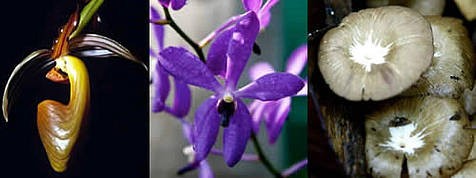
Of New Guinea's plants, there are more than 2,000 species of orchids and 2,000 species of ferns. Although almost 8 out of 10 of these plants are found nowhere else in the world, New Guinea’s plant numbers are low compared to other tropical areas. /1/

Animals of the lowlands


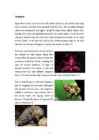
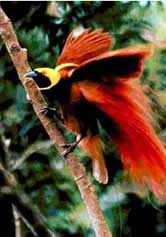
Some of the world’s most peculiar evolutionary adaptations can be found in the southern New Guinea lowland forests: the lesser tube-nosed bat (a small bat with tubular nostrils that whistle when it flies ), the spangled kookaburra (a bird with a brown head and brilliant blue feathers on its back and tail ), and the greater bird of paradise (sports a stunning array of green , yellow , and maroon feathers, and a dashing white-and-yellow plume).

Reptiles


Humans have always had a predilection for consuming reptiles, particularly in tropical and sub-tropical regions. Turtles and tortoises stand out as popular species, with turtles the most heavily exploited for human consumption. Another growing threat to reptiles is the Southeast Asian traditional medicinal trade, with turtles and snakes in particularly high demand. /2/
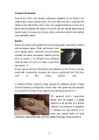
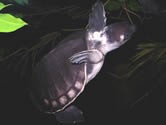
A turtle species which has suffered from over exploitation in New Guinea is the pig-nosed turtle (Carettochelys insculpta), also known as pitted-shell turtle, Fly River turtle or New Guinea plateless turtle.
In addition to being consumed in large quantities by indigenous people in Papua Province (Indonesia) and Papua New Guinea, trade in this species has intensified due to an increase in hatchlings being supplied to the international pet market ./2/
The pig-nosed turtle’s characteristic tubular nose has earned it a global reputation in the pet trade. As a popular collectors' item worldwide , its population is suffering from high demand. In its native area, juvenile turtles are being snatched for trade and the turtles' nests are robbed of their eggs , which are eaten./2/

Crocodiles, leaving New Guinea as skins and back straps


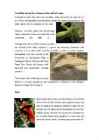
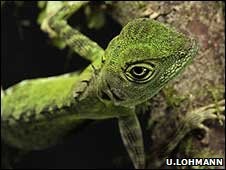
Compared to turtles, data shows that crocodiles, snakes, and lizards are exploited in a less intense and generally non-commercial manner for human consumption (a few lizard species are an exception to this rule ).
However, crocodiles, along with several large snakes and lizards, remain very vulnerable to the commercial skin trade. /1/
Although both species of New Guinea crocodiles are currently listed under Appendix II (species not necessarily threatened with extinction, but in which trade must be controlled in order to avoid utilization incompatible with their survival) of the Convention on International Trade in Endangered Species of Fauna and Flora , Papua New Guinea still exports wild-harvested and captive-bred crocodile products.5
These exports are contributing to a severe decline in crocodile populations and consequently a reduction in the biological diversity of Papua New Guinea./1/
Birds
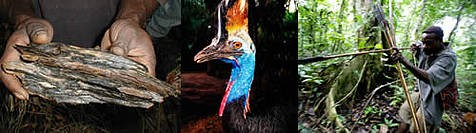
Much sought after as pets or for their feathers, several birds of the forests of New Guinea such as parrots, lorries and birds of paradise are illegally exported for trade. But just the local use of a species can be detrimental to its survival; wildlife capture and trade of cassowary for traditional use has severely reduced their populations in some areas and where they remain, there is increased pressure for trade. /5/
Birds of paradise have also been historically traded, especially for their feathers. While West Papuans' use of the birds' feathers in cultural celebrations is part of their tradition , Europe was once the main market for the plumes, to be used for women 's hats and accessories . Trade peaked in the late 19th century , when plumes from more than 50,000 birds were exported every year, generally to Paris for capes and hats. /1/
Birds of paradise continue to be smuggled out of Papua Province, Indonesia. The trade in the birds adds to the pressure they already get from continued hunting and the destruction of their habitat by logging, road construction and conversion for human use. Although banned by the Indonesian government since 1990, trading in the feathers of the birds of paradise is still ongoing./5/

Vital waterways for people and wildlife


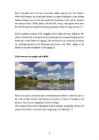
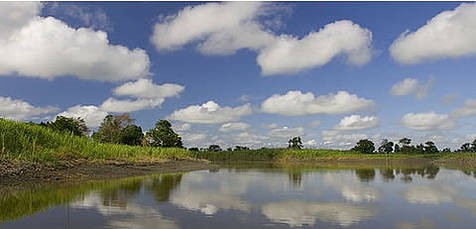
Home to crocodiles, freshwater sharks, barramundi and hundreds of other fish species, the rivers of New Guinea rival terrestrial ecosystems in terms of complexity and diversity. They are also integral parts of forest ecology.
River systems form extensive floodplains at lower altitudes, arising from networks of progressively smaller rivers and streams originating in the highlands. /2/
References
  • http://www.iexplore.com/dmap/Papua+New+Guinea/Overview
  • http://www.panda.org/what_we_do/where_we_work/new_guinea_forests/
  • http://news.nationalgeographic.com/news/2009/03/photogalleries/papua-new-guinea-missions/photo2.html
  • http://en.wikipedia.org/wiki/Papua_New_Guinea
  • http://www.lonelyplanet.com/papua-new-guinea
    11
  • Vasakule Paremale
    New Guinea-inglise keeles #1 New Guinea-inglise keeles #2 New Guinea-inglise keeles #3 New Guinea-inglise keeles #4 New Guinea-inglise keeles #5 New Guinea-inglise keeles #6 New Guinea-inglise keeles #7 New Guinea-inglise keeles #8 New Guinea-inglise keeles #9 New Guinea-inglise keeles #10 New Guinea-inglise keeles #11
    Punktid 50 punkti Autor soovib selle materjali allalaadimise eest saada 50 punkti.
    Leheküljed ~ 11 lehte Lehekülgede arv dokumendis
    Aeg2010-01-22 Kuupäev, millal dokument üles laeti
    Allalaadimisi 5 laadimist Kokku alla laetud
    Kommentaarid 0 arvamust Teiste kasutajate poolt lisatud kommentaarid
    Autor CriM3 Õppematerjali autor
    New Guinea loomad - inglise keeles

    Kasutatud allikad

    Sarnased õppematerjalid

    Australia topic
    13
    doc

    Australia topic

    Australia. The soft-feathered, brown, flightless birds reach up to 2 m in height. The Emu is common over most of mainland Australia, although it avoids heavily populated areas. Emus can travel great distances fast, if necessary, can sprint at 50 km/h for some distance at a time. They eat a variety of plants and insects. Emus are farmed for their meat, oil and leather. The Kangaroo is a common marsupial from the islands of Australia and New Guinea. There are 47 species of them. Kangaroos can hop up to 74 km per hour and go over 9 m in one hop. These shy animals live about 6 years in the wild and up to 20 in captivity. Most of them are active at night. Many kangaroos are in danger of extinction. Kangaroos eat grass, leaves, and roots. They swallow their food without chewing it and later regurgitate a cud and chew it. They need little water; they can go for months without drinking, and they dig their own water wells.

    Inglise keel
    Austraalia kohta inglise keelne referaat
    11
    doc

    Austraalia kohta inglise keelne referaat

    If you want to make clear that you are speaking about the country, you may call it the Commonwealth of Australia. It’s the official name of the country. Australia is the smallest continent, but one of the largest countries on Earth. It’s 6th largest country. Its area is about 7.6 million sq km. One third of it is occupied by deserts. It’s both the flattest and, except for Antarctica the driest. Neighbouring countries include Indonesia, East Timor and Papua New Guinea in the north, the Solomon Islands, Vanuatu in the northeast, and New Zealand in the southeast. Its capital is Canberra. Other big cities are Melbourne, Sydney, and Brisbane. National language in Australia is English. Monetary unit is Australian dollar. Their national holiday is on the 26th of January. In 1788 on the 26th of January the first fleet arrived at Botany Bay and established a penal colony near modern-day Sydney. Geographical Position Australia is located in the Southern Hemisphere

    Inglise keel
    Savanna
    5
    doc

    Savanna

    some areas of the US southeastern coast where fire-resistant Longleaf Pine was the dominant species. Aboriginal burning appears to have been responsible for the widespread occurrence of savanna in tropical Australia and New Guinea and savannas in India are a creation of human fire use. The maquis shrub savannas of the Mediterranean region were likewise created and maintained by anthropogenic fire. These fires are usually confined to the herbaceous layer and do little long term damage to mature trees. However, these fires do serve to either kill

    Inglise keel
    Austraalia referaat inglise keeles
    11
    doc

    Austraalia referaat inglise keeles

    Tallinna Inglise Kolledz Australia Topic Alice Tärk, 8b. Tallinn 2007 Table of contents: Factfile............................................................................................. ................................. Symbols.......................................................................................... ....................................Head of State................................................................................................ ................... Government....................................................................................... ............................... History............................................................................................. .................................. Relief................................................................................................ .................................. Geographical

    Inglise keel
    Topic – Australia
    10
    doc

    Topic – Australia

    Topic ­ Australia Tallinn English College 2006 Australia 1 . Introduction The name Australia is derived from the Latin Australis, meaning of the south. In land area, Australia is the sixth largest nation, its territory is 7,686,850 sq km and its population reaches today over 20,5 million people. It is the only nation to govern an entire continent and its outlying islands. Australia's capital is Canberra, the only city with its own territory. It was built in the early 1900s just to be the capital. The official language is English and the official name of Australia is the Commonwealth of Australia. Australia is located on the Southern Hemisphere (because of that Australia is also called "A land down under"). 2 . Geographical position Australia is an island continent and it is located between the Indian and South Pacifi

    Inglise keel
    Inglismaa
    9
    doc

    Inglismaa

    khTallinn English College The United Kingdom Topic Mari-Liis Pakats Tallinn 2008 2 Table of Contents Introduction..................................................................................................................4 Geographical Position .................................................................................................4 History .........................................................................................................................4 Government..................................................................................................................5 Queen Victoria.............................................................................................................5 Relief............................................................................................................................6 Climate .....................................

    Inglise keel
    All studied biomes
    2
    docx

    All studied biomes

    1. Key features for all studied biomes. Tundra The main seasons are winter and summer. The tundra is the world's coldest and driest biomes. The average annual temperature is -28° C. Nights can last for weeks when the sun barely rises during some months in the winter, and the temperature can drop to -70° C. During the summer the sun shines almost 24 hours a day. Summer are usually warm. Average summer temperatures range from 3° to 16°C. TaigaTaiga is the Russian word for forest and is the largest biome in the world. It stretches over Eurasia and North America. The taiga is located near the top of the world, just below the tundra biome. The winters in the taiga are very cold with only snowfall. The summers are warm, rainy, and humid. Some of the animals in the taiga hibernate in the winter, some fly south if they can, while some just cooperate with the environment. GrasslandsGrassland biomes can be found in the middle latitudes. They can have either moist continental climates or dry

    Inglisekeelne geograafia
    Topic - Great Britain
    5
    doc

    Topic - Great Britain

    Tallinn English College Topic Great Britain 2007 1. Introduction The official name of Great Britain is `the United Kingdom of Great Britain and Northern Ireland (or short United Kingdom)' The population is about 60.4 million. The capital is London. Other biggest cities include Birmingham, Bristol, Portsmouth, Glasgow and Swansea. English is the main language of Great Britain, but Welsh is officially recognized in Wales and Gaelic in Scotland. 2. Geographical position The British Isles is the geographical term for a group of about 5000 islands off the coast of mainland Europe. The largest island is Great Britain, which is also the largest island in Europe. It consists of England, Wales and Scotland. The next largest island is Ireland, which is made up of Northern Ireland and the Irish Republic. Britain and Northern Island together form the United Kingdom. When referring to Britain or Great Britain in everyday life, the names are u

    Inglise keel


    Meedia

    Kommentaarid (0)

    Kommentaarid sellele materjalile puuduvad. Ole esimene ja kommenteeri


    Sellel veebilehel kasutatakse küpsiseid. Kasutamist jätkates nõustute küpsiste ja veebilehe üldtingimustega Nõustun