Vajad kellegagi rääkida?
Küsi julgelt abi LasteAbi
Logi sisse

Savanna (2)

5 VÄGA HEA
Punktid

Savanna
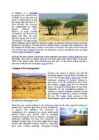
A savanna is a grassland ecosystem with scattered trees or shrubs. In savannas trees are small or widely spaced so that the canopy does not close . It is often believed that savannas are characterized by widely spaced, scattered trees, however in many savanna communities tree densities are higher and trees are more regularly spaced than in forest communities. The open canopy allows sufficient light to reach the ground to support an unbroken herbaceous layer consisting primarily of C4 grasses. Savannas are also characterised by seasonal water availability, with the majority of rainfall being confined to one season of the year . Savannas can be associated with several types of biomes. Savannas are frequently seen as a transitional zone, occurring between forest and desert or prairie.
Although the term savanna is believed to have originally come from a Native American word describing " land which is without trees but with much grass either tall or short", by the late 1800s it was used to mean "land with both grass and trees". It now refers to land with grass and either scattered trees or an open canopy of trees.

Changes in fire management


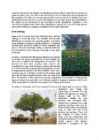
Savannas are subject to regular fires and the ecosystem appears to be the result of human use of fire. For example Native Americans created subtropical savannas by periodic burning in some areas of the US southeastern coast where fire-resistant Longleaf Pine was the dominant species . Aboriginal burning appears to have been responsible for the widespread occurrence of savanna in tropical Australia and New Guinea and savannas in India are a creation of human fire use. The maquis shrub savannas of the Mediterranean region were likewise created and maintained by anthropogenic fire.
These fires are usually confined to the herbaceous layer and do little long term damage to mature trees. However, these fires do serve to either kill or suppress tree seedlings, thus preventing the establishment of a continuous tree canopy which would prevent further grass growth . Prior to European settlement aboriginal land use practices , including fire, influenced vegetation and may have maintained and modified savanna flora . It has been suggested by many authors that aboriginal burning created a structurally more open savanna landscape . Aboriginal burning certainly created a habitat mosaic that probably increased biodiversity and changed the structure of woodlands and geographic range of numerous woodland species. It has been suggested by many authors that with the removal or alteration of traditional burning regimes many savannas are being replaced by forest and shrub thickets with little herbaceous layer.
The consumption of herbage by introduced grazers in savanna woodlands has led to a reduction in the amount of fuel available for burning and resulted in fewer and cooler fires. The introduction of exotic pasture legumes has also led to a reduction in the need to burn to produce a flush of green growth because legumes retain high nutrient levels throughout the year, and because fires can have a negative impact on legume populations which causes a reluctance to burn.

Grazing and browsing animals


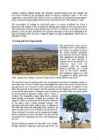
The closed forests types such as broadleaf forests and rainforests are usually not grazed owing to the closed structure precluding grass growth, and hence offering little opportunity for grazing. In contrast the open structure of savannas allows the growth of a herbaceous layer and are commonly used for grazing domestic livestock. As a result much of the world's savannas have undergone change as a result of grazing by sheep, goats and cattle , ranging from changes in pasture composition to woody weed encroachment.
The removal of grass by grazing affects the woody plant component of woodland systems in two major ways. Grasses compete with woody plants for water in the topsoil and removal by grazing reduces this competitive effect , potentially boosting tree growth. In addition to this effect the removal of fuel reduces both the intensity and the frequency of fires which may control woody plant species. Grazing animals can have a more direct effect on woody plants by the browsing of palatable woody species. There is evidence that unpalatable woody plants have increased under grazing in savannas. Grazing also promotes the spread of weeds in savannas by the removal or reduction of the plants which would normally compete with potential weeds and hinder establishment. In addition to this cattle and horses are implicated in the spread of the seeds of weed species such as Prickly Acacia and Stylo. These alterations in savanna species composition brought about by grazing can alter ecosystem function , and are exacerbated by overgrazing and poor land management practices.
Introduced grazing animals can also affect soil condition through physical compaction and break-up of the soil caused by the hooves of animals and through the erosion effects caused by the removal of protective plant cover. Such effects are most likely to occur on land subjected to repeated and heavy grazing. The effects of overstocking are often worst on soils of low fertility and in low rainfall areas below 500 mm, as most soil nutrients in these areas tend to be concentrated in the surface so any movement of soil can lead to severe degradation. Alteration in soil structure and nutrient levels affects the establishment, growth and survival of plant species and in turn can lead to a change in woodland structure and composition.

Tree clearing


Large areas of savanna have been cleared of trees, and this clearing is continuing today. For example until recently 480,000 ha of savanna were cleared annually in Australia alone primarily to improve pasture production. Substantial savanna areas have been cleared of woody vegetation and much of the area that remains today is vegetation that has been disturbed by either clearing or thinning at some point in the past.
Clearing is carried out by the grazing industry in an attempt to increase the quality and quantity of feed available for stock and to improve the management of livestock. The removal of trees from savanna land removes the competition for water from the grasses present, and can lead to a two to fourfold increase in pasture production, as well as improving the quality of the feed available. Since stock carrying capacity is strongly correlated with herbage yield there can be major financial benefits from the removal of trees. The removal of trees also assists grazing management. For example in sheep grazing regions of dense tree and shrub cover harbours predators, leading to increased stock losses while woody plant cover hinders mustering in both sheep and cattle areas.
A number of techniques have been employed to clear or kill woody plants in savanna. Early pastoralists used felling and ringbarking, the removal of a ring of bark and sapwood, as a means of clearing land). In the 1950’s arboricides suitable for stem injection were developed. War- surplus heavy machinery was made available, and these were used for either pushing timber , or for pulling using a chain and ball strung between two machines . These two new methods of timber control, along with the introduction and widespread adoption of several new pasture grasses and legumes promoted a resurgence in tree clearing. The 1980’s also saw the release of soil-applied arboricides, notably tebuthiuron, that could be utilised without cutting and injecting each individual tree.
In many ways ‘ artificial ’ clearing, particularly pulling, mimics the effects of fire and, in savannas adapted to regeneration after fire as most Queensland savannas are, there is a similar response to that after fire. Tree clearing in many savanna communities, although causing a dramatic reduction in basal area and canopy cover, often leaves a high percentage of woody plants alive either as seedlings too small to be affected or as plants capable of re-sprouting from lignotubers and broken stumps. A population of woody plants equal to half or more of the original number often remains following pulling of eucalypt communities, even if all the trees over 5 metres are uprooted completely.

Exotic plant species


A number of exotic plants species have been introduced to the savannas around the world. Amongst the woody plant species are serious environmental weeds such as Prickly Acacia (Acacia nilotica), Rubbervine (Cryptostegia grandiflora), Mesquite (Prosopis spp.), Lantana (Lantana camara and L. montevidensis) and Prickly Pear (Opuntia spp.) A range of herbaceous species have also been introduced to these woodlands, either deliberately or accidentally including Rhodes grass and other Chloris species, Buffel grass (Cenchrus ciliaris), Giant rats tail grass (Sporobolus pyramidalis ) parthenium (Parthenium hysterophorous) and stylos (Stylosanthes spp.) and other legumes. These introductions have the potential to significantly alter the structure and composition of savannas worldwide , and have already done so in many areas through a numbers of processes including altering the fire regime, increasing grazing pressure , competing with native vegetation and occupying previously vacant ecological niches.

Climate change


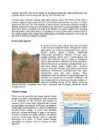
There exists the possibility that human induced climate change in the form of the greenhouse effect may result in an alteration of the structure and function of savannas. Some authors have suggested that savannas and grasslands may become even more susceptible to woody plant encroachment as a result of greenhouse induced climate change. A recent case described involved a savanna increasing its range at the expense of forest in response to climate variation , and potential exists for similar rapid, dramatic shifts in vegetation distribution as a result of global climate change, particularly at ecotones such as savannas so often represent.
Savanna #1 Savanna #2 Savanna #3 Savanna #4 Savanna #5
Punktid 50 punkti Autor soovib selle materjali allalaadimise eest saada 50 punkti.
Leheküljed ~ 5 lehte Lehekülgede arv dokumendis
Aeg2009-01-07 Kuupäev, millal dokument üles laeti
Allalaadimisi 9 laadimist Kokku alla laetud
Kommentaarid 2 arvamust Teiste kasutajate poolt lisatud kommentaarid
Autor Martsipan14 Õppematerjali autor

Sarnased õppematerjalid

All studied biomes
2
docx

All studied biomes

Deserts temperature ranges from 20 to 25° C. The extreme maximum temperature ranges from 43.5 to 49°. Hot and Dry Deserts usually have very little rainfall and concentrated rainfall in short periods between long rainless periods. Most Hot and Dry Deserts don't have very many plants. The only animals they have that can survive have the ability to burrow under ground. They only come out in the night when it is a little cooler. SavannaA savanna is a rolling grassland scattered with shrubs and isolated trees, which can be found between a tropical rainforest and desert biome. Savannas are also known as tropical grasslands. Savannas have warm temperature year round. There are two very different seasons in a savanna; a very long dry season(winter) and a very wet season. In the dry season only an average of about 4 inches of rain falls. In the summer there is lots of rain

Inglisekeelne geograafia
Temperate grassland worksheet
4
pdf

Temperate grassland worksheet

http://www.geo.ut.ee/kooligeo/loodus/rohtlad.htm Temperate Grassland Worksheet 1. Where is temperate grassland situates? Temperate grasslands are located in the mid-latitudes. There are six large areas of temperate grassland: the Pampas in South America, the Veld in Africa, the Canterbury Plains in New Zealand, the Murray-Darling Basin in Australia, the Prairies in North America and the Steppes in Central Asia. 2. Colour the distribution of temperate grassland on the map. 3. How is temperate grassland called in these regions? Eurasia - steppe Hungary - puzda North America - prarie South America - pampa South Africa - veldt 4. What is forest steppe (forest steppe – metsastepp)? A forest steppe is a temperate-climate ecotone and habitat type composed of grassland interspersed with areas of woodland or forest. 5. Describe the climate of temperate grassland. Temperate grasslan

Inglise keel
Different types of forests and their forms of usage
17
pptx

Different types of forests and their forms of usage.

Different types of forests and their forms of usage TARTU 2010 Forest A forest (also called a wood, woodland, wold, weald, holt, frith) is an area with a high density of trees. Forests cover approximately 30% of land and 9.4% of all the planet earth. They are also responsible for regulating our planet's climate and act as large purifiers of airs, by absorbing carbon dioxide, and giving out oxygen. Different types of forests Forests are divided into following main types: o Tropical forest o Subtropical forest o Plantations o Boreal forest o Temperate forest o Seasonal or monsoon forest Tropical and Subtropical Forests Tropical and subtropical forests, also known as rainforests or tropical rainforests, are lavish and ample forests with broad leave tree. They are mostly found at lowlands near the equator - Asia, Africa, South & Central America and on many of the Pacific Islands. Almost 5

Geograafia
Geograafia KT-8 klass
2
doc

Geograafia KT-8.klass

2. Where is prairie, pampas, steppe, and veldt situated? Eurasia­Steppe, North America-Prairie, South America­Pampa, South Africa­Veldt 3. Using the climate diagram describe the climate of the region. Temperate deciduous forest -Well-defined seasons with a distinct winter characterize this forest biome. Moderate climate and a growing season of 140-200 days during 4-6 frost-free months distinguish temperate forests. Temperature varies from -15° C to 25° C. Precipitation (750-1500 mm) is distributed evenly throughout the year. Temperate grassland- Semiarid, continental climates of the middle latitudes typically have between 25 cm and 50 cm of precipitation a year. Much of this falls as snow, serving as reservoir of moisture for the beginning of the growing season. Warm to hot summers are experienced, depending on latitude. In the winter, grassland temperatures can be as low as -40° C, and in the summer it can be as high 20° C. There are two real seasons: a growing season and a dor

Inglisekeelne geograafia
Australia topic
13
doc

Australia topic

Topic Australia Introduction Many people know Australia as the land down under because it is the only continent except for Antarctica that is all on the southern hemisphere. Its name means ,,Southland". The official name of the country is the Commonwealth of Australia. It's capital is Canberra. Australia is the sixth largest country in the world but the smallest continent. Australia has 6 states and 2 territories (New South Wales, Victoria, Tasmania, Queensland, Western Australia , South Australia, The Australian Capital Territory and the Northern Territory). The Australian people are culturally the same as the Anglo ­ Americans. There also live aborigines. Aborigines are the ancestors of the people. Like the US and Canada, Australia was an English speaking colony of Great Britain. Today Australia is a modern developed country with a diversified economy. Australia is an island continent of 7.7 million square kilometres, which makes it a little smaller than the USA. Located in

Inglise keel
Australia
6
doc

Australia.

Australia Fact file: Australia comprises a land area of 7 686 850 square kilometres. Its population is about 21,3 million people. Australia's capital is Canberra. The national language is English. The official name of it is the Commonwealth of Australia. It's divided into six states and two territories: New South Wales, Queensland, South Australia, Western Australia, Tasmania, Victoria, Australian Capital Territory (ACT) and Northern Territory. Symbols: Australia had the British flag as their official flag until 1901, when the Commonwealth of Australia was formed. Over 30 000 entries attracted the official competition. Five of them, which contained almost identical designs, were placed equally first. The Australian flag symbolises Australia's historical links with Britain, because it has British flag on it, and Australia's location in the southern hemisphere, because it has stars of the Southern Cross on it

Inglise keel
BLUE VIOLET
30
pptx

BLUE VIOLET

BLUE VIOLET Karina Kalinina, Aleksandr Zinets, Darja Boitšenko F1-2 Tallinn Health Care College 2016 SCIENTIFIC CLASSIFICATION Kingdom Division Class Order Family Genus Species Plantae Magnoliop Magnoliop Violales Violaceae Viola L. Viola hyta sida – violet sororia Willd. - Common blue violet BLUE VIOLET Stemless herbaceous perennial plant. Native to eastern North America.  Self-seeding freely.  In gardens can become a weed. FACTS  Give out cleistogamous flowers (insect pollinated flowers). Blue Violet mature plant may be 6 inches across and 4 inches high. Leaves are 3 inches long and 3 inches across and vary in color (from

Inglise keel
Austraalia referaat inglise keeles
11
doc

Austraalia referaat inglise keeles

Tallinna Inglise Kolledz Australia Topic Alice Tärk, 8b. Tallinn 2007 Table of contents: Factfile............................................................................................. ................................. Symbols.......................................................................................... ....................................Head of State................................................................................................ ................... Government....................................................................................... ............................... History............................................................................................. .................................. Relief................................................................................................ .................................. Geographical

Inglise keel


Meedia

Kommentaarid (2)

 profiilipilt
: keskmine

14:39 15-04-2009
 profiilipilt
: juba parem
14:39 15-04-2009


Sellel veebilehel kasutatakse küpsiseid. Kasutamist jätkates nõustute küpsiste ja veebilehe üldtingimustega Nõustun