Vajad kellegagi rääkida?
Küsi julgelt abi LasteAbi
Logi sisse

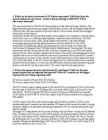
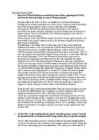
EU COOPERATION WITH RUSSIA AND EASTERN (0)

5 VÄGA HEA
Punktid

Esitatud küsimused

  • Military cooperation?

1. Which are the main cornerstones of EU- Russia cooperation ? Which have been the
main developments and successstories in this partnership in 2000-2012? Which
side is more interested?
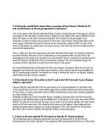
The main cornerstones of the EU and Russia relations are the trade and energy relations. One biggest breakthrough has been gas pipeline Nord Stream . Russia is the third biggest trade partner of the EU and is the main importer of gas and crude oil. The economic benefits are the biggest cornerstones of the relations.
Cooperation between Russia and the European Union progressively strengthens in foreign policy and security issues , in combating illegal migration , organised crime and terrorism . The main achievement of recent years , which can be hardly overestimated, is the understanding increasingly gaining ground that partnership between Russia and the EU is one of the cornerstones of maintaining stability and prosperity not only in Europe, but world- wide .
Joint Russian -EU program called “A Partnership for Modernization” was launched. The main achievement has been the fact that the talks on Russia’s membership in the WTO have finally ended in Russia’s favor . Another important achievement is the recently reached agreement which stipulates that no visas will be needed for short- term trips between Russia and the EU countries.
In my opinion at one point of view, the EU is more interested because we have made more trade-offs. On the other hand as the EU is by far the biggest investor in Russia and the most important market for Russian exports, it is very clear, that the benefits, that Russia gets by preserving good relations with the EU, are their main interest . This means that both are equal partners .
2. What is the amount of yearly trade between EU and Russia? Which are the main
groups of goods that are imported and exported? Which EU countries are the biggest
trade partners for Russia regarding trade?
EU services exports to Russia 2010: €22.6 billion
EU services imports from Russia 2010: €14.2 billion
The EU is Russia's largest trading partner by far with the EU accounting for 52.3% of all foreign Russian trade in 2008 and 75% of foreign direct investment (FDI) stocks in Russia also come from the EU. The EU exported €105 billion of goods to Russia in 2008 and Russia exported €173,2 billion to the EU. 68.2% of Russian exports to the EU are accounted for by energy and fuel supplies.
In 2010, imports from Russia are mainly energy and mineral fuels products (79.5%), some manufactured goods chemicals and raw materials. EU exports to Russia are diversified, covering nearly all categories of machinery and transport equipment (44.7%), manufactured goods, food and live animals .
The biggest EU trade partners for Russia are Germany , Italy and France . Among the EU Member States , Germany (€25.2 bn euro or 32% of EU exports) was by far the largest exporter to Russia in the first nine months of 2011, followed by Italy (€6.9 bn or 9%), France (€5.4 bn or 7%) and the Netherlands (€5.1 bn or 6%). Germany (€26.9 bn or 18% of EU imports) was also the largest importer, followed by the Netherlands (€19.7 bn or 13%), Poland (€13.1 bn or 9%), Italy (€12.8 bn or 9%) and France (€10.1 bn or 7%).
3. Which policy should Baltic States follow in question of Nord Stream? Should the EU
seek counterbalance in oil and gas dependence with Russia?
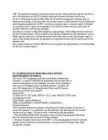
I am at the opinion that Estonia and other Baltic countries should take part of the projects and the knowledge of the side- effects would increase. Right now the studies have shown different results about the impact on the Baltic Sea and its habitats . We should actively participate in the researches in order to witness the accuracy of the results. One research showed that there are 30 mines lying in the Baltic Sea but the Finnish results showed the number of 900. In order to be aware of the threats we should show our interest not just nod when the results are represented by non- neutral organizations.
Also, as right now there are negotiations about the third and fourth pipe, we should consider the economic benefits that may occure. Furthermore , as our agreement does not play role in the development of the project we should focus on the benefits that we could receive and demand for more EU attention on the Baltic Sea environmental condition . We can simultaneously get the economic benefits and raise our safety by involvement in the project.
EU should definitely find an alternative for Russian energetic monopoly . Right now we are too dependent on Russia and it gives them more freedom in their actions that are not acceptable for the EU membership countries. We should start using or finding the ways to use Egypts, Algeria, Saudi Arabia and Eus own gas supplies.
4. Which should be the CEE politics in the EU and in the NATO towards Franco -Russian
military cooperation?
Latvian officials indicated that if Russia purchased such a ship and placed it in the Baltic Sea, Latvia would have to revise its state defence plan from a military threat and state security point of view. Also, it creates a precedent when a NATO membership country sells military equipment to a third world country.
Building a modern navy will intimidate Russia's neighbors and open doors for Russian power projection in the Mediterranean and the Middle East . Furthermore, at the same time when NATO and EU sees Russia as an ally, the Russians see us more as an economic partner with who it may easily cut off the connections. We should actively point out the threats it may bring and look through the policy about selling such military equipment. The CEE should raise the question about does the economic benefits outweigh the threats it may bring along .
5. Which are the most updated EU documents to describe EU-Russia relations?
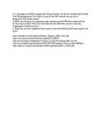
The Partnership and Co- operation Agreement has been the framework of the EU-Russia relationship for more than   a decade. It was signed in 1994 and entered into force on 1 December 1997. The agreement regulates the political and economic relations between the EU and Russia and is the legal basis for the EU's bilateral trade and investment relations with Russia.
At the St. Petersburg Summit in May 2003, the EU and Russia agreed to reinforce their co-operation by creating, in the long term, four common spaces in the framework of the Partnership and Cooperation Agreement of 1997: a common economic space ; a common space of freedom, security and justice; a space of co-operation in the field of external security; and a space of research, education, and cultural exchange .
The Moscow Summit in May 2005 adopted a single package of Road Maps for the creation of the four Common Spaces. These expand on the ongoing cooperation as described above , set out further specific objectives, and determine the actions necessary to make the common spaces a reality . They thereby determine the agenda for co-operation between the EU and Russia for the medium -term.
The London Summit in October 2005 focused on the practical implementation of the Road Maps for the four Common Spaces.
EU COOPERATION WITH RUSSIA AND EASTERN
PARTNERSHIP COUNTRIES
The course "EU Cooperation with Russia and Eastern Partnership
Countries" is a part of TRADERUN programme and will proovide an
overview and analysis of the challenges, activities , tools , experience
and visions of European Union's eastward initiatives . Content will
cover EU enlargement, EU Neighborhood Policy and EU Eastern
Dimension activities and initiatives.
Course codes
TÜ P2EC.00.172 (UT code ); RIE7014 (TLU code), HHL0013 (TTU code)
Coordinating lecturer
Viljar Veebel , [email protected]
FINAL EXAM PART 1/ GROUP WORK 1/ MATERIAL 1
General instruction:
There should be maximum 4 people in the group and in total you have 45 minutes to
answer the questions . It is allowed to use the materials. The total length of the answers
should be up to 3 pages. The group work is followed by the presentation.
1. Have the ENP and EaP been successful in terms of their original goals ? Which has
been the theoretical logic to cause it? Bring examples !
2. Evaluate the policy motivation of the ENP – is the conditionality for the EU’s benefit ,
partner country’s benefit, for mutual benefit, or business benefit? Bring at least three
(3) specific examples.
3. Is the purpose of ENP to prepare EU Eastern Partners for the EU membership? Should
it be? Bring arguments! For which (if any) of the EaP countries do you see as
perspective EU member states?
4. Which are the areas of cooperation and evaluation in the ENP that overlap with the
EU accession criteria ? Which are the fields that the ENP does not cover and only
Copenhagen Criteria assesses?
5. Which are the most updated EU documents to describe ENP and EaP policy goals and
tools?
https://moodle.ut.ee/file.php/1219/2dets_Traderun_ENP_2011.pdf
http://www.epl.ee/news/eesti/article.php?id=51163525
http://eeas.europa.eu/delegations/russia/eu_russia/chronology/index_en.ht m
http://en.wikipedia.org/wiki/Russia%E2%80%93European_Union_relations#Trade
http://trade.ec.europa.eu/doclib/docs/2006/september/tradoc_113440.pdf
EU COOPERATION WITH RUSSIA AND EASTERN #1 EU COOPERATION WITH RUSSIA AND EASTERN #2 EU COOPERATION WITH RUSSIA AND EASTERN #3 EU COOPERATION WITH RUSSIA AND EASTERN #4
Punktid 50 punkti Autor soovib selle materjali allalaadimise eest saada 50 punkti.
Leheküljed ~ 4 lehte Lehekülgede arv dokumendis
Aeg2012-11-26 Kuupäev, millal dokument üles laeti
Allalaadimisi 8 laadimist Kokku alla laetud
Kommentaarid 0 arvamust Teiste kasutajate poolt lisatud kommentaarid
Autor daki789 Õppematerjali autor

Kasutatud allikad

Sarnased õppematerjalid

TRADERUN ANSWERS
3
docx

TRADERUN ANSWERS

development). The ENP goes beyond existing relationships to offer political association and deeper economic integration, increased mobility and more people-to- people contacts. The level of ambition of the relationship depends on the extent to which these values are shared. Some examples which steps ENP has made in the field of human rights and which are represented in the report of implementation of the European Neighbourhood Policy about Eastern Partnership: The adherence to the shared values of democracy, rule of law, human rights and fundamental freedoms is the very foundation of the Eastern Partnership. Significant steps have been taken to strengthen bilateral dialogues on these matters. Since July 2009 three rounds of Human Rights Dialogue have taken place with Georgia. The first meeting of the EU Armenia Human Rights Dialogue took place in December 2009 and the second in December 2010

Rahvusvahelised suhted
European Union Exam
38
docx

European Union Exam

common foreign and security policy (CFSP). - Implementation of Common Foreign and Security Policy (CFSP) – Still intergovernmental and unanimous, but more power to the Council - New office of High Representative - EU (Community) competencies extended to health and consumer protection - Incorporation of Schengen agreement - More legislative powers to the EP + appointment of the Commission - Enhanced cooperation 1998 Establishment of the European Central Bank. 2001 February: Treaty of Nice signed, reforming the institutional structure of the European Union to allow for eastward expansion. - Increase of EP seats - Aim to reduce number of commissioners (only aim) - Sanctions against Member states - Proclamation of Charter of Rights 2002 January 1: euro coins and notes enter circulation in the 12 participating member states: Austria, Belgium, Finland, France, Germany, Greece,

Euroopa liidu põhikursus
Business peciliarities in Ukraine and Bealrus
106
pdf

Business peciliarities in Ukraine and Bealrus

TRADERUN MOODUL TRADERUN MODULE BUSINESS PECULIARITIES IN THE EU, RUSSIA AND EASTERN PARTNERSHIP COUNTRIES ÄRI ERIPÄRAD EUROOPA LIIDUS, VENEMAAL JA IDAPARTNERLUSRIIKIDES Lecturers: Ryhor Nizhnikau (responsible) Giorgi Gaganidze, Sergei Proskura, Andres Assor P2EC.00.202 (UT code), RIE 7044 (TLU code) Reading materials: Business peculiarities in Ukraine and Belarus Lugemismatejal: Äri eripärad Ukrainas ja Valgenenes Created by Andres Assor

Inglise keel
Economic Country Review
16
docx

Economic Country Review

First, a general overview on the countries will be given. After, economic indicators (real GDP growth rate, inflation, unemployment, household consumption, investment, current account, government budget and deficit) of the three countries will be compared to draw a conclusion. 2 Country Specs 2.1 Finland 2.1.1 Background Finland was a province and then a grand duchy under Sweden from the 12th to the 19th centuries, and an autonomous grand duchy of Russia after 1809. It won its complete independence in 1917. During World War II, it was able to successfully defend its freedom and resist invasions by the Soviet Union albeit with some loss of territory. In the subsequent half century, the Finns made a remarkable transformation from a farm/forest economy to a diversified modern industrial economy; per capita income is now among the highest in Western Europe. A member of the

Majandusanalüüs
Links between Estonia and English speaking countries
11
doc

Links between Estonia and English speaking countries

Danes often combined forces when attacking larger targets. This would mean that Estonians have made frequent and regular raids to the shores of England. Unfortunately there is no written evidence about these contacts. The only possible source of information is the comparison of coins and pottery found at different excavation sites. 20th century Regular documented contacts between Estonia and English speaking countries begun after Estonia gained its independence in 1918. At that time, England with her colonies was the biggest and the strongest sea power in the world. During the First World War England dominated the high seas and the Baltic Sea. So it is quite obvious that after the Bolsheviks gained power in St. Petersburg, The English navy came to aid the newly formed government of Estonia in their war efforts against the Bolshevik invaders. The Royal Navy detachment blocked Bolshevik attempts to land troops behind Estonian lines. British sailors were among those who gave their lives

Inglise keel
Business peculiarities in Russia
55
pdf

Business peculiarities in Russia

TRADERUN MOODUL TRADERUN MODULE BUSINESS PECULIARITIES IN THE EU, RUSSIA AND EASTERN PARTNERSHIP COUNTRIES ÄRI ERIPÄRAD EUROOPA LIIDUS, VENEMAAL JA IDAPARTNERLUSRIIKIDES Lecturers: Ryhor Nizhnikau (responsible) Giorgi Gaganidze, Sergei Proskura, Andres Assor P2EC.00.202 (UT code), RIE 7044 (TLU code) Reading materials: Business peculiarities in Russia Lugemismatejal: Äri eripärad Venemaal Created by Sergei Proskura Tartu 2013 TABLE OF CONTENTS INTRODUCTION ....................................................................................................................................... 3 1. LEGALIZATION OF A COMPANY WITH A FOREIGN OWNER IN RUSSIA ....................................... 4 1.1. Laws ................................

Inglise keel
EU Internal Market
24
docx

EU Internal Market

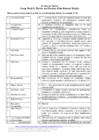
EU Internal Market Group Work I: History and Purpose of the Internal Market Please connect terms (numbers) with correct description (letter), for example 17 M 1 Common Market A ... is characterized by free movement of goods between the participating countries, but autonomous external trade policies in relation to non-participants.

Inglise keel
Maailma organisatsioonid
5
doc

Maailma organisatsioonid

near Paris in France. Later, SHAPE was relocated to Mons in Belgium. · 1952 ­ Greece and Turkey join NATO. · 1955 ­ Western Germany joins NATO. · 1982 ­ Spain joins NATO. · 1991 ­ Rome summit. Estonia is one of the founding members of the NACC. · January 1994 ­ Brussels summit. Estonia joins PFP on 3 February. · March 1995 ­ Estonia submits the first Individual Partnership for Peace (IPP) to NATO. It contains priority areas of cooperation with NATO and future cooperation events, altogether in 23 subject fields. · March 1997 ­ beginning of involvement of Estonia in peacekeeping mission in SFOR (Stabilisation Force) in Bosnia Herzegovina (ESTPLA). · March 1995 ­ Estonia submits the first Individual Partnership for Peace (IPP) to NATO. It contains priority areas of cooperation with NATO and future cooperation events, altogether in 23 subject fields.

Maiskonnalugu


Kommentaarid (0)

Kommentaarid sellele materjalile puuduvad. Ole esimene ja kommenteeri


Sellel veebilehel kasutatakse küpsiseid. Kasutamist jätkates nõustute küpsiste ja veebilehe üldtingimustega Nõustun