Leidsid 33 sarnast õppematerjali, mis on seotud failiga "EU COOPERATION WITH RUSSIA AND EASTERN ". Need materjalid aitavad sul teemat sügavamalt mõista.
russia, part, partner, ship, operation, partners, benefit, relations, cooperation, russian, space, economic, east, biggest, benefits, between, policy, term, member, balticood, security, europe, membership, interestoods, billion, follow, results, there, project, military, threat, four, eastern, code, work, foreign, achievement, fact, other, equipmentAlso the co-operation in the field of energy have had great results. One is definately oil and gas pipelines. I think that very important things have been done but still many goals have not been achieved. Good examples are also Moldova`s first joint EU visa application centre and free trade area in Ukraine. EU is offering much money for the partership countries and the benefits that they both get is leading to results. EU is expanding its power and partners can eliminate its shortages and make corrections in their infrastructure and political field. 2. of the ENP is the conditionality for the EU's benefit, partner country's benefit, for mutual benefit, or business benefit? Bring at least three (3) specific examples. The EU offers financial assistance to countries within the European Neighbourhood, so long as they meet the strict conditions of government reform, economic reform and
common foreign and security policy (CFSP). - Implementation of Common Foreign and Security Policy (CFSP) – Still intergovernmental and unanimous, but more power to the Council - New office of High Representative - EU (Community) competencies extended to health and consumer protection - Incorporation of Schengen agreement - More legislative powers to the EP + appointment of the Commission - Enhanced cooperation 1998 Establishment of the European Central Bank. 2001 February: Treaty of Nice signed, reforming the institutional structure of the European Union to allow for eastward expansion. - Increase of EP seats - Aim to reduce number of commissioners (only aim) - Sanctions against Member states - Proclamation of Charter of Rights 2002 January 1: euro coins and notes enter circulation in the 12 participating member states: Austria, Belgium, Finland, France, Germany, Greece,
TRADERUN MOODUL TRADERUN MODULE BUSINESS PECULIARITIES IN THE EU, RUSSIA AND EASTERN PARTNERSHIP COUNTRIES ÄRI ERIPÄRAD EUROOPA LIIDUS, VENEMAAL JA IDAPARTNERLUSRIIKIDES Lecturers: Ryhor Nizhnikau (responsible) Giorgi Gaganidze, Sergei Proskura, Andres Assor P2EC.00.202 (UT code), RIE 7044 (TLU code) Reading materials: Business peculiarities in Ukraine and Belarus Lugemismatejal: Äri eripärad Ukrainas ja Valgenenes Created by Andres Assor
First, a general overview on the countries will be given. After, economic indicators (real GDP growth rate, inflation, unemployment, household consumption, investment, current account, government budget and deficit) of the three countries will be compared to draw a conclusion. 2 Country Specs 2.1 Finland 2.1.1 Background Finland was a province and then a grand duchy under Sweden from the 12th to the 19th centuries, and an autonomous grand duchy of Russia after 1809. It won its complete independence in 1917. During World War II, it was able to successfully defend its freedom and resist invasions by the Soviet Union albeit with some loss of territory. In the subsequent half century, the Finns made a remarkable transformation from a farm/forest economy to a diversified modern industrial economy; per capita income is now among the highest in Western Europe. A member of the
British sailors were among those who gave their lives defending Estonia's freedom during the conflict. Some of these men are laid to rest in Tallinn. The aid came not only in the military presence of the war ships, but also in technical, financial and moral support. The technical expertise of the military advisers 5 from England contributed largely to the outcome of the war between Estonia and Soviet Union. After the war the military cooperation developed into cultural and economic relations. For instance during the time between the wars, approximately 30% of Estonia's exports went to the UK. The other big English speaking country, United States recognised the Republic of Estonia on 28 July 1922. The first Estonian diplomatic mission in the United States was opened in the same year. The Second World War and the occupation of Estonia resulted in loss of contacts.
TRADERUN MOODUL TRADERUN MODULE BUSINESS PECULIARITIES IN THE EU, RUSSIA AND EASTERN PARTNERSHIP COUNTRIES ÄRI ERIPÄRAD EUROOPA LIIDUS, VENEMAAL JA IDAPARTNERLUSRIIKIDES Lecturers: Ryhor Nizhnikau (responsible) Giorgi Gaganidze, Sergei Proskura, Andres Assor P2EC.00.202 (UT code), RIE 7044 (TLU code) Reading materials: Business peculiarities in Russia Lugemismatejal: Äri eripärad Venemaal Created by Sergei Proskura Tartu 2013 TABLE OF CONTENTS INTRODUCTION ....................................................................................................................................... 3 1. LEGALIZATION OF A COMPANY WITH A FOREIGN OWNER IN RUSSIA ....................................... 4 1.1. Laws ................................
There were two main points we'd like to propose: "Any pecuniary charge, however small and whatever designation and mode of application, which which is imposed unilaterally on domestic or foreign goods when they cross a frontier, and which is not a customs duty in the strict sense, constitutes a charge having equivalent effect within the meaning of articles 9, 12, 13 and 16 of the treaty, even if it is not imposed for the benefit of the state, is not discriminatory or protective in effect or if the product on which the charge is imposed is not in competition with any domestic product." "The prohibition of new customs duties or charges having equivalent effect, linked to the principle of the free movement of goods, constitutes a fundamental rule which, without prejudice to the other provisions of the treaty, does not permit of any exceptions."8 1 2 3
near Paris in France. Later, SHAPE was relocated to Mons in Belgium. · 1952 Greece and Turkey join NATO. · 1955 Western Germany joins NATO. · 1982 Spain joins NATO. · 1991 Rome summit. Estonia is one of the founding members of the NACC. · January 1994 Brussels summit. Estonia joins PFP on 3 February. · March 1995 Estonia submits the first Individual Partnership for Peace (IPP) to NATO. It contains priority areas of cooperation with NATO and future cooperation events, altogether in 23 subject fields. · March 1997 beginning of involvement of Estonia in peacekeeping mission in SFOR (Stabilisation Force) in Bosnia Herzegovina (ESTPLA). · March 1995 Estonia submits the first Individual Partnership for Peace (IPP) to NATO. It contains priority areas of cooperation with NATO and future cooperation events, altogether in 23 subject fields.
University of Tartu Faculty of Social Sciences and Education Institute of Government and Politics Marie Allikmaa The strategies of creating a dominant party the case of United Russia Tartu 2011 After the collapse of USSR in 1991, many observers expected Russia to develop into a competitive party system. Yet, the reality quickly challenged this view. The developments of party politics in post-Soviet Russia have accurately been described in terms of a pendulum effect, as in the 2000s, Russia's party system did finally begin to take for, but with a remarkable twist. Following the break of one-party rule, Russia's party system became strongly fragmented - during the 1995 parliamentary elections, 43 parties competed for popular votes (McFault 1996: 90)
Stress on Social Dimension - Necessity to overcome the imbalances among and within the member states - Equal employment opportunities, social rights, working conditions Schengen - 1985 – BE, FR, LU, NL, DE - Gradual abolition of borer checks, een non-EU states - 1990, supplemented by the Schengen Convention which proposed the abolition of internal border controls and a common visa policy - Freedom of movement sitt as part of single market The European Union Maastricht Treaty - 3 pillars - More powerts to EP - Creation of Comitte of Regions - New policy areas to the Union - European citizenship - Single currency - European Monetary Union Inter-governmental conference IGC - Formal procedure for negotiating amendments to the founding treatis of EU - Called into being by the EC, composed of representatives of ,MS, with the
those in the developed countries. The Estonian economy is diverse industry and transport, as well as commerce and different branches of services are all equally important. Due to the available natural resources Estonian economy largely relies on the branches related to the forest; Estonian energy sector is based on oil shale, a resource quite rare elsewhere in the world. Finland and Sweden are the most important trade partners. The Estonian economy profits significantly from the business generated by more than 2 million tourists a year, most of whom come from Finland. More than 67% of the Estonian GDP is derived from the service sectors, industrial sectors yield over 28% and primary branches (including agriculture) approximately 5.5% of the overall output. The important sectors of the Estonian economy are the processing industry (approximately
Political stability is stronger and in lower level of development countries will be healthy economy. Fifth Trading between member states will be brisker because there is no customs duty. If some goods manufacturing is legal in one country, it will be others too. But to these, who are not in EU, have to pay pretty high prize to trade in member states. Sixth to fight international crime and terrorism, there is assure cooperation with member country's police, border service, Migration Boar and courts. One state decree of the court must apply in other states too. There are lot's of limitation, requirement and new laws which accomplish seems a bit weird or trifle. Prizes must be stable, inflation low and balance of payments must be in order. If the regulations are not executed, there will be sizeable mulct. So, everything must strictly meet requirements. To me, as a student and average person, EU is land of opportunitis
Tariffs and Trade.It was established in 1948.Its main aim was to decrease or abolish different custom tariffs and to make trading better between membership countries.They changed the name in 1994 to WTO.Its main aims were to raise the living standard of the citizens of the membership countries and guarantee the full-employment.It has 153 membership countries.The founder members include North America,Finland, Norway,Sweden and Australia. APEC-Asia, Pacific Economic Cooperation.This is the biggeest economic organisation in the world. It includes about 2.2 billion people.ASEAN is the member of APEC.There are 21 member countries. Its spheers of activity are: 1. Co-operation in the field of energetics 2. Transport 3. Telecommunication OPEC-Organisation of Petroleum Exporting Countries.It was established in 1960.Its aim is to regulare the price of crude oil for the world market.There are 12 member countries including Iran,Iraq and Kuwait
the broader European political arena. As a large member state, Turkey will have a powerful voice in the European Parliament and the Council of Ministers where decisions are mostly made by qualified majority. This shift of power from the Western Christian capitals to the eastern Islamic frontier is already causing skepticism and reactions in some countries (Joseph, J.S., 2006). TURKEY AND CYPRUS Turkey has unresolved issues and unstable relations or no relations at all with some EU member states. Greece and Cyprus are cases in point. In recent years, Greek- Turkish relations have improved considerably and Greece's policy towards Turkish accession is a positive one, but this depends on the political barometer over the Aegean and Cyprus. The fact that Turkey does not recognize the Republic of Cyprus a full member of the EU since May 2004 has been a source of legal controversies and political complications. (Joseph, J.S
European Union economic 9th May 1951, six Western-Europe countries (Belgium, Italy, Luxembourg, Netherlands, France and Germany) signed a treaty to run their heavy industries coal and steel under a common management. From this economic cooperation agreement, European Union has grown up. For today, the aim of this union has made 180º turn but the reason why more and more countries are joining it is still same to rise the economy. So how does it work? European Union is functioning like an independent country. It collects taxes to reach its objectives. Taxes are collected mainly from member countries GDP (1,1% of countries budget) but as well the import duties on good bought into EU. Also, every
Estonia is a small country about the size of Switzerland, or New Hampshire and Massachussetts combined. Estonia is named after the people called "Ests" who lived in the region in the 1 st century AD. The Republic of Estonia is one of the three countries commonly known as the "Baltic States". The other Baltic States are Latvia and Lithuania. 2. Geographical position Estonia is situated in northeastern Europe. Estonia is bounded on the north by the Gulf of Finland, on the east by Russia, on the south by Latvia and on the west by the Baltic Sea. In the north it borders on Finland. The coastline of the Baltic Sea in Estonia is characterized by numerous gulfs and bays, the biggest of them being the Gulf of Finland, the Gulf of Riga and the Gulf of Pärnu. Bays include the Narva Bay, Matsalu Bay, Kolga Bay, Kunda Bay, Tallinn Bay etc. Estonia has over 1500 islands, the largest being Saaremaa and Hiiumaa, Muhu and Vormsi.
The purpose of the United Nations is to bring all nations of the world together to work for peace and development, based on the principles of justice, human dignity and the well-being of all people. It affords the opportunity for countries to balance global interdependence and national interests when addressing international problems. There are currently 192 Members of the United Nations. The Aims of the United Nations: -To keep peace throughout the world. -To develop friendly relations between nations. -To work together to help people live better lives, to eliminate poverty, disease and illiteracy in the world, to stop environmental destruction and to encourage respect for each other's rights and freedoms. -To be a centre for helping nations achieve these aims. The Principles of the United Nations: -All Member States have sovereign equality. -All Member States must obey the Charter. -Countries must try to settle their differences by peaceful means.
Sociological factors: Religions: Main religion is Roman Catholic 41,8%, then comes Protestants with 35,3% and on the third place are so called non-believers (people with no religion) 11,1%. (Other: muslin, orthodox, other Christian and so on). Birth rates: Switzerland has a birthrate of 9, 51 births to 1000 people, it's in the 199 place in the world's birth rate comparison. Leisure activities: Leisure activities range from taking part in grueling sports to relaxing with family and friends. Many people also devote part of their leisure time to the public service. Life expectancy at birth: total average is 81 years but if you look at genders separately it's: male 78 years and female 84 years. Environmental problems: air pollution from vehicle emissions and open-air burning; acid rain; water pollution from increased use of agricultural fertilizers.
..........................................................9 12. References....................................................................................................10 Introduction I chose finland because there are friendly people and beautiful nature. Finland is bigger than Estonia. There lives over 5 milj. people. Finland capital is Helsingi and there lives about 2 milj. people. Highest top is 1328m. Finland is bordersed with Sweden to the west, Russia to the east and Norway to the north. It is the eight largest city in Europe. Most Finns speak Finnish. The second language is Swedish. Finland is rated the sixth most peaceful country in the World. In Finland there are more than 60000 lakes. Capital: Helsinki Area: 338145km2 Population: 5200000 Language: Finnish, Swedish Currency: Euro (EUR)
Lisbon with defining "the general political directions and priorities" of the Union. It is thus the Union's strategic body, acting as the collective presidency of the EU. The meetings of the European Council, commonly referred to as EU summits, are chaired by its president and take place at least twice every six months. The headquarters of the Council of the European Union is in Brussels. The current president of the European Council is Herman Van Rompuy. Council of the European Union It is part of the essentially bicameral EU legislature, representing the executives of EU member states, the other legislative body being the European Parliament. The Council is composed of several configurations of twenty-eight (28) ministers. The exact membership of the configuration depends upon the topic; for example, when discussing agricultural policy the Council is formed by the twenty-eight national ministers whose portfolio include this policy area.
Public International Law is a system of law, different from domestic law. Why is this system unique? Usually law regulates relations between people, people and the state etc, PIL regulates relations between states. Thats why PIL is important for international relation students. PIL influences the life of everybody, it doesn't regulate people directly but indirectly (through the decisions of the states), because it's everywhere. It's like air. E.g. when you want to send a letter to Brazil, you put a stamp from your own country and send it from your post office and the letter gets delivered. Why is this so easy, because there are certain international conventions that
tends to perform favourably in measurements of civil liberties, education, and press freedom. Living in Estonia has many of its good sides, for instance it is a secure place from nature disasters and it has a beautiful nature. Although, when not to look only through rose-tinted glasses, there are still some minuses in country’s organization. So, what are the beneficial and negative sides of living in Estonia? To start with, a big advantage is a great location between Scandinavia and prosperous Russia which ensures the connections, networks and possible trading options. Close connections and pendulum migration have tightened the cooperation between the countries. For instance, Estonia and Finland have developed common economic space. Right now Estonia's most important trading partners are Finland, Sweden, Russia and Germany which Estonia is mainly influenced by. Maintaining good relations between neighboring countries and being a member
intra-EU trade2 Is there a measure in form of action or inaction? Measure in question is in form of action - the parliament adopted the prohibitive law. Articles 34-35 TFEU are often characterised as a defence right which can be invoked against 1 Case 7/68 Commission v Italy [1968] ECR 423 2 Case 8/74 Dassonville [1974] ECR 837, paragraph 5. national measures creating unjustified obstacles to cross-border trade. Accordingly, infringements of Article 34 TFEU seem to presuppose activity on the part of a state. In this sense, the measures falling within the scope of Articles 34-35 TFEU consist primarily of binding provisions of Member States’ legislation. Can this measure be attributed to a public authority? Yes. The law was adopted by the Parliament and has the binding power. Is the measure restrictive in the sense of Dassonville formula? Yes. In Dassonville judgment, the Court of Justice took the view that „all trading rules enacted by
Introduction Estonia, officially the Republic of Estonia (Estonian: Eesti or Eesti Vabariik) is a country in the Baltic region of Northern Europe. It is bordered to the north by Finland across the Gulf of Finland, to the west by Sweden across the Baltic Sea, to the south by Latvia (343 km), and to the east by the Russian Federation (338,6 km). The territory of Estonia covers 45,227 km² and is influenced by a temperate seasonal climate. The Estonians are a Finnic people closely related to the Finns, with the Estonian language sharing many similarities to Finnish. The modern name of Estonia is thought to originate from the Roman historian Tacitus, who in his book Germania (ca. AD 98) described a people called the Aestii. Similarly, ancient Scandinavian sagas
Economy of Estonia The economic growth during the recent years has been very fast. The Estonian economy is diverse industry and transport, as well as commerce and different branches of services are all equally important. Due to the available natural resources Estonian economy largely relies on the branches related to the forest; Estonian energy sector is based on oil shale. Finland and Sweden are the most important trade partners. The Estonian economy profits significantly from the business generated by more than 2 million tourists a year. The important sectors of the Estonian economy are the processing, transport, warehousing and communications, commerce and estate, rental and letting, as well as business services, agriculture, construction and government, education and health care. In order to be able to import all the products and services, something must be exported, that's
The oldest preserved book written in Estonian, a catechism, dates from 1535. Tartu University was established in 1632, on orders from Sweden's King Gustav II Adolf. Literacy spread. The Bible was translated into Estonian in 1739(pole vaja teada). A period of wars began in the 16th century, bringing parts of Estonia under the control of Russia, Denmark, Poland and Sweden. For most of the 17th century, Sweden ruled Estonia. In the 18th century Russian Tsar Peter the Great joined Estonia to his empire. The first true political parties emerged(Where established) at the turn of the century, demanding autonomy for Estonia. Following the Russian Revolution of 1917, Estonia declared independence from Russia on Feb. 24, 1918. Independent Estonia made large strides between wars. World War II ended Estonia's independence. The country was occupied by the Soviet Army in June 1940.Thousands of Estonians were killed or deported to Siberia
The European Union (EU) is an economic and political union where are 27 member states drom European continent. The EU operates through a system of independent institutions and decisions are made by the member countries. EUs population is of over 500 million inhabitants which is 7.3% of the world population, there are 23 different languages and for now 17 countries are using EUs common currency Euro. EU was founded after World War II, when Europe was struggeling in social and political devastations. In 1948 a congress in Hague was held to discuss ideas about the development of European political co-operation. There were many important political figures such as Konrad Adenauer and Winston Churchill. On 9th May in 1950 French Minister of Foreign Affairs proposed that France and the Federal Republic of Germany should combine their coal and steel resources and let other European countries join also. From that on, the 9th of May has been considered as the birth of European Union and is now c
· Start Up · Privatization · Labor Legislation February 2011 1st Edition 1 CYAN MAGENTA YELLOW BLACK 1 This brochure is a publication by the Georgian National Investment Agency (GNIA) and was prepared by Georgian law firm Mgaloblishvili, Kipiani, Dzidziguri (MKD). The Brochure is intended to be a general guidance on start up, privatization and labor relations. It is thus not expected to be a substitute for detailed research or exercise of professional judgment on above mentioned topics. Companies and individuals operating in Georgia or planning to operate, are strongly advised to obtain current and detailed information from experienced professionals. None of the organizations mentioned above, nor their members, employees or agents accept liability for the consequences of you and anyone else acting or refraining to act on the information contained
Britta Kase 143123HAKB Summary The booklet offers a brief, simple explanation how the European Union is relevant to us in our everyday life, how it affects our lives in many areas and how can we benefit from it. The booklet gives also a very readable overview of EU’s history and how its member states have come together. It’s a great starting point to know the roots, history and functioning of the European Union. I found this booklet interesting because it provides an insight into relevance of the EU. I have never thought that making phone calls and flying has become cheaper as a result of EU. EU has abolished national monopolies and has permitted competition. For me the
National Health Service. According to the National Institute of Economic and Social Research, if the UK opted not to leave, its economy would’ve grown annually by £70 billion in the long term, which is a lot more than what Mr. Prime Minister admitted to allocating for the NHS. Judging by these numbers, the loss will be big and it’s going to have a significant effect on them. As for the EU, it will lose a country that played a big part in Europe’s economy and annual GDP will fall by about 5%. EU nations’ exports will take a big hit, as some countries depend a lot on exports to the UK. For example, Ireland’s exports will be majorly affected, since about 14% are sent directly to Britain. They would have to come up with new deals that could diminish Ireland’s export profits. Also, a lot of people living and working in the UK are sending money home to other EU countries. As the numbers show, about €7
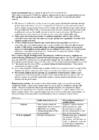
low 3. Access to markets cost of cost of utilities utilities European Union / EFTA Russia Turkey/Middle East 5. Government incentives 5. Government incentives Social Social security security benefits benefits 4. Educated & skilled workforce 4
directives listed in Annex A and come from holdings, centers or organizations which are subject to regular official veterinary checks. According to the TFEU free movement provision articles 26 and 37, basically mentioned PB&R company may claim for a compensation from the EU Member State because animals or any kind of goods may and should have no barriers within Union’s member states to move as a part of “free movement agreement”. According to the Treaty, all businesses, which are legal and are operating in Member State(s) should not be banned or there should not be any restrictions added to their businesses within the territory of all states that agreed on “free movement”. According to article 34 and 35 there could not be any restrictions on export or import of goods within the Member States. So based on this particular case there was a ban that influenced company’s
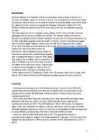
Facts and figures 3 Geography 3 Climate 3 Nature 4 History 5 Economy 6 Culture 6 Biggest towns 7 Language 8 3 Facts and figures The Republic of Estonia is a small country. Covering only 45, 228 sq km it is slightly bigger than Denmark, Belgium or Switzerland. Estonia's population is under 1.4 million. The official language is Estonian but since very many Russians live here Russian is also wide spread. The capital of Estonia is Tallinn. The currency used in Estonia is Eesti kroon. The Estonian national flag is blue-black-white. It was originally the flag of the Estonian Students' Society. The flag was first consecrated in Otepää Church in 1884. For a while, during the Soviet occupation, the flag was banned but it was again seen in public in Tartu in May 1988. The national flower is cornflower, the national bird is barn swallow and the national stone is limestone.
 annaabi.ee