Vajad kellegagi rääkida?
Küsi julgelt abi LasteAbi
Logi sisse

Ways of expressing the Future (0)

1 Hindamata
Punktid
Inglise keel - Kõik luuletused, mis on inglise keeles


Ways of expressing the Future 
 
 
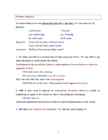
Table of Contents 


Future Simple  ...................................................................... 2 
Be going to ........................................................................... 3 
Present Continuous  .............................................................. 3 
Present Simple ..................................................................... 4 
Future Continuous ............................................................... 4 
Future Perfect ....................................................................... 6 
Other ways of referring to the future ..................................... 7 
Other future references......................................................... 8 
 
 
Future Simple 
   
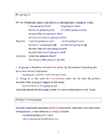
In Future Simple we use the modal verb  will + the verb . It is the same in all 
persons. 
 
 
will work   
 
 
I’ll work 
 
you will study  
 
 
you’ll study 
he will come  
 
 
he’ll come 
Negative  
I/you/he/we/they will not write   
 
 
I/you/he/we/they won’t write 
Question  Will you/he/she/we/they come
  
1. We often use will as a neutral way of expressing the future. We use will to say 
what we know or think about the future. 
It is known as the predictive future, and describes known facts, or what we 
suppose is true
  
I’ll be  late  home this evening
  
The 
company 
will make a profit next  year
This can also take the form of an assumption
  
That'll be Jim at the  door . (This means that I suppose it is Jim.) 
  
2.  Will  is also used to express an immediate decision, when we decide on 
something or agree to do it more or less at the moment of speaking. 
 
 I’ll take this one. 
Decisions expressed with  going to  refer to a more distant point in the future. 
 
3. Will does not  express an intention . For that we use be going to


2
Be going to 
 
  
We use the present tense of the verb be in the right form + going to + verb. 
    

am going to travel   
I’m going to travel 
    
he/she 
is going to play 
he’s/she’s going to play 
    
we/you/they 
are going to drive   
    
we’re/you’re/they’re going to drive 
Negative I 
am not going to work  I’m not going to work 
    
he/she 
is not going to fly he/she 
isn’t going to fly 
    
we/you/they 
are not going to walk   
    
we/you/they 
aren ’t going to walk 
Question  Is he/she going to leave
   
 
Are we/you/they going to finish?  
  
1. Be going to describes intentions or  plans . By the moment of speaking the 
plans have already been made. 
 I’going to  wait   here until Carol gets   back
 2.  Going to  is also used for a  prediction  when we see from the present 
situation what is going to happen in the future. 
 
  Look  at that tree! It’s going to  fall
Decisions expressed with going to refer to a more distant point in the future. 
  
Present Continuous  
  
Present Continuous describes  fixed arrangements , especially social and travel 
arrangements. A time reference is usually included. 
   
I’meeting   Mary  at 5 o’ clock
   John’s seeing his  dentist   tomorrow . 
 
3
Present Simple 
  
1. We use the Present Simple for future when we are talking about a timetable, 
usually a public one such as a train timetable. 
 
The train leaves at  five twenty -five tomorrow  morning .   
 The 
football  
match 
starts at  half  past five. 
 
I’ve got the  tour details here . We spend three days  in Rome. 
  
2. Present Simple is also used to describe fixed events which are not simply the 
wishes of the speaker. 
  
Tom retires in three  years
 It's 
all 
go 
next week I have my operation; then the week after that I  
 
go on holiday ... 
  
3. Similarlycalendar references use the Present Simple. 
Christmas  is on a Tuesday next year. 
Next  Friday  is the thirteenth. 
 
  
Future Continuous 
  
In Future Continuous we use will be + an ing-form. It is the same in all  
persons. 
    
I/you/he/she/we/they 
will be working    
I’/you’/he’/she’/we’/they’ ll/be working 
   
 
Negative  I/you/he/she/we/they 
will not be sleeping   
           
I/you/he/she/we won’t be sleeping 
   
 
Question   Will I/you/he/she/we/they  be travelling
 
4
1.The Future Continuous describes an event which will be happening at a 
future point.  
 
 
Come round in the morning. I’ll  be painting the kitchen
  
2. It can also describe events which are going to happen anyway, rather than  
events which we choose to make happen. 
  I won't bother to fix a time to see you, because I’ll be staying in the  
  office all day long anyway. You can come at any time.   
  
3. The Future Continuous is also used for  actions  that are going on now and 
which we think will progress into the future
  
 They’ll be working on this project   till  next spring. 
  
4. In some contexts Future Continuous also sounds 
more polite  than will
Using the Future Continuous is a polite way to ask other people about their 
intentions  without  trying to influence  them . 
      Will you be needing any more help with this, or can I go home now? 
      Will you be seeing Michael next week? If so, could you give him this? 
      Will you be going to the shops later ? If you go, could you buy me  
      some potatoes? 
  
5. It can also be used to refer to fixed arrangements and plans   
  
The 
band  
will be performing  live in Paris  this  summer


5
Future Perfect 
 
In the Future Perfect Simple we use will have + a Past Participle
  
  I/you/he/she/we/they 
will have completed 
 
  
  I’/you’/he’/she’/we’/they’ll have completed 
Negative I/you/he/she/we/they 
will not have finished    
 
  
I/you/he/she/we/they 
won’t have finished 
Question   
Will he have cooked
 
In the Future Perfect Continuous we use will have been + an ing-form 
 I/you/he/she/we/they 
will have been reading    
 
 I’/you’/he’/she’/we’/they’ll have been reading 
 I/you/he/she/we/they 
will not have been studying      
 I/you/he/she/we/they 
won’t have been studying 
 
Will he have been working
  
Both the Future Perfect Simple and Future Perfect Continuous  forms refer to 
the time which we look back at from a future point.  
1.We use the Future Perfect to say that something will be ended, completed, or 
achieved by a particular point in the future. 
  
By the time we  phone  he’ll already have started
 
Let’s hope  the volcanic eruption will have finished  before we  
arrive on the island .  
By the time you get home I will have cleaned  the house from top to  
bottom
 
  In two years’ time I'll have finished this book, so I hope I will be  
 
   able to join you on your trip around the world. 
 
   Please  don’t come too early  tomorrow. I will have been working on  
 
  my essay  till late  tonight , so I may want to  sleep longer in the  
  
morning. 
 
6
 
   
2. The Future Perfect Continuous is used to describe activities which  will 
have been happening until a certain time in the future. We can use it to 
emphasize how long something has been going on by a particular point in the 
future.  
  
On Saturday, we will have been living in this house for a year. 
 
Next year I will have been working in this company for 30 years. 
By the end of the month , I'll have been working for this firm for a year. 

By 2015 he will have been working on this project for  twelve years. 
3. The Future Perfect can also be used to express an assumption on the part of 
the speaker. 
  
You 
won't have heard the news, of  course .    
(This means that I assume you have not heard the news.) 
 
 
Other ways of referring to the future 
  
1. Is / are to be 
This is used to describe  formal arrangements
  
All 
students  are to assemble in the hall at 9.00. 
  
2. Be about to, be on the point of, be due to 
Be about to and be on the point of both refer to the next moment. 
  

think 
the 
play is about to start now. 
  
Mary 
is 
on the point of resigning. 
Be due to refers to scheduled times
  
The 
play is due to start in five minutes. 
  
Ann's 
flight  is due at 6.20. 
  
 
7
3. Present Simple and Present Perfect 
Present Simple is used to refer to future time in future time clauses
  
When 
we get  there , we'll have dinner
Present Perfect can also be used instead of Present Simple when the 
completion of the event is emphasised
  
When 
we've had a  rest , we'll go out. 
Other future references 
 
1. Hope 
This can be followed by either present or future tenses
 I 
hope 
it 
doesn't rain. 
 I 
hope 
it won't rain. 
  
2. Other verbs followed by will. 
Most verbs of thinking can be followed by will if there is a future reference. 
These includethink, believe, expectdoubt
 I 
expect 
the 
train 
will be late. 
 I 
doubt 
whether 
United 
will win
  
3. Just / just about to 
Just can be used to describe something on the point of happening
 Hurry 
up! 
The 
train is just leaving / just about to leave
  
4.  Shall  
The use of shall for first person in future reference is generally considered to be 
restricted in British English and possibly declining in use. For some speakers, 
shall is used in formal speech and in written language
 
8
Vasakule Paremale
Ways of expressing the Future #1 Ways of expressing the Future #2 Ways of expressing the Future #3 Ways of expressing the Future #4 Ways of expressing the Future #5 Ways of expressing the Future #6 Ways of expressing the Future #7 Ways of expressing the Future #8
Punktid 50 punkti Autor soovib selle materjali allalaadimise eest saada 50 punkti.
Leheküljed ~ 8 lehte Lehekülgede arv dokumendis
Aeg2014-12-14 Kuupäev, millal dokument üles laeti
Allalaadimisi 5 laadimist Kokku alla laetud
Kommentaarid 0 arvamust Teiste kasutajate poolt lisatud kommentaarid
Autor 213757 Õppematerjali autor
Reeglid Akadeemilises inglise keeles teemal Future

Sarnased õppematerjalid

Ajavormide teooria
18
doc

Ajavormide teooria

Simple Present · · New York is a small city. It is not important that this fact is untrue. [VERB] + s/es in third person USE 3 Scheduled Events in the Near Examples: Future · You speak English. · Do you speak English? · You do not speak English. USE 1 Repeated Actions Examples: · The train leaves tonight at 6 PM. · The bus does not arrive at 11 AM, it arrives at 11 PM.

Inglise keel
Inglise keele ajavormid
10
odt

Inglise keele ajavormid

1.A decision at the moment of 1.Future plans made before the speaking: moment of speaking: A: 'I'm cold'. A: 'We've run out of milk.' B: 'I'll close the window'. B: 'I know, I'm going to buy some.' 2.Prediction based on opinion: 2.Prediction based on present I think the Conservatives will win the evidence: next election. Look at those boys playing football! 3.A future fact: They're going to break the window. He will be ten next year. 4.Promises / requests / refusal / willingness: I'll help you with your homework. Will you give me a hand? 5.In the same way as the future continuous, but with state verbs: I'll be at the station when you arrive. 'Shall' is used mainly in the forms 'shall I ?' and 'shall we?' in British English. These forms are used when you want to get someone's opinion, especially for offers and suggestions:

Inglise keel
Inglise keele kordamine
4
doc

Inglise keele kordamine

· Timetables and programmes · Sporting commentaries, rewiews (Beckham wins the ball, crosses and Owen scores) · Feelings and emotions (I love Tallinn..) TIME EXPRESSIONS USED WITH PRESENT SIMPLE: usually, often, always, every day/week etc, in the morning/evening etc, at night/the weekend, on Fridays etc. Present Continuous · Actions taking place at or arount the moment of speaking (The kids are watching TV..) · Fixed arrangements in the near future (I'm going to the dentist tomorrow) · Currently changing ang developing situations (The number of burgularies is increasing) · With ,,Always" to express anger or irritation at a repeated action (You're always forgetting..) TIME EXPRESSIONS USED WITH PRESENT CONTINUOUS: now, at the moment, at present, these days, nowadays, still, today, tonight etc. Present Perfect · Action happened at an unstated time in the past. Emphasis on the action, time is unimportant or unknown

Inglise keel
Present Tenses
10
docx

Present Tenses.

The Present Simple is the most basic tense in the English language. It is an interesting tense because it can be used Present Simple to express the future. Generally, though, we use it to Basic form describe the present activities or to talk about routines or Subject + Verb + -s (present form)  John lives in New York.  We play football every day.  You are really kind.  The meeting starts at 3 PM. Use the Present Simple:  with state verbs.  to talk about situations in life that last a relatively long time.

Inglise keel
Future forms
2
doc

Future forms

FUTURE FORMS Future Simple (will +I) a) in predictions about the future usually with the verbs think, believe, expect, etc., the expressions be sure be afraid, etc., and the adverbs probably perhaps, certainly, etc I'm afraid we won't be on time for the meeting. b) for on-the-spot decisions. c) for promises (usually with the verbs promise, swear, guarantee, etc.), threats, warnings, requests, hopes (usually with the verb hope) and offers.

Inglise keel
Chpt 12 Verb Tenses
38
ppt

Chpt 12 Verb Tenses

Verbs! Verb forms Review of tenses Chapter 12, Pg 215 1 Timeline Draw a timeline of your life. List 810 events on the time line. Make sure you list your future graduation date! Moved to Cali 2005 Was Born Traveled to Europe Husband 1978 School graduates @ Oxford 1999 Started Got married

Inglise keel
Inglise keele jaotusmaterjal
37
doc

Inglise keele jaotusmaterjal

This is Jane Smith. I'm Jane Smith. My name's John Smith. Informal introduction Hi. John. Jane. Hello. Titles: Mr Mrs Miss Ms Ms is a modern form of address for women. It replaces the traditional forms of Mrs and Miss. Greetings Good morning/afternoon/evening! 'How are you?' Very often people expect you to say something positive. Here's a breakdown of how you can express how you really are without complaining too much. · Fine, thanks. / On top of the world, thanks. · OK, thanks · Not so bad, thanks. / Can't complain, thanks. · So ­ so, thanks. / So and so, thanks. · Not so good, actually 1 The English alphabet Spelling Work with your partner and spell out first your name and then some

Inglise keel
Modal verbs
16
pdf

Modal verbs

You might have drowned. 2 When to use the Modal Verbs • Each Modal Verb has at least two meanings: I must post this letter! (= obligation) You must be tired! (= deduction, probability) Could you help me? (= request) We could go to Spain for our holidays. (= possibility) May I go home now? (= permission) Where’s Anna? – I’m not sure. She may be at work. (= possibility) • Modal Verbs express our attitudes, opinions and judgements of events. Who’s that knocking on the door? - It’s James. (This is a fact.) - It could/may/might/should/can’t/’ll be James. (These all express our attitude or opinion.) Expressing permission Can, may and be allowed to are used to express permission. Can is more informal and usually spoken. You can borrow my bike, but you can’t have the car. I need it. May I smoke in here?

Akadeemiline inglise keel


Kommentaarid (0)

Kommentaarid sellele materjalile puuduvad. Ole esimene ja kommenteeri


Sellel veebilehel kasutatakse küpsiseid. Kasutamist jätkates nõustute küpsiste ja veebilehe üldtingimustega Nõustun