Vajad kellegagi rääkida?
Küsi julgelt abi LasteAbi
Logi sisse

Present Tenses. (0)

1 Hindamata
Punktid

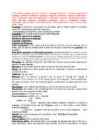
The Present Simple is the most basic tense in the English language . It is an interesting tense because it can be used to express the future. Generally, though, we use it to describe the present activities or to talk about routines or habits.
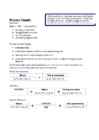
Present Simple
Basic form
Subject + Verb + -s (present form)

Use the Present Simple:
  • to talk about situations in life that last a relatively long time.
  • when an event is certain to happen in the future.
  • to talk about events that we can't change (for example, an official meeting or a train departure).
The Present Simple is also used in narrations (e.g. to tell a story or a joke), instructions (e.g. cooking) or commentaries (especially sport commentaries)

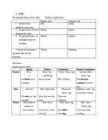
Declarative Sentences :


Subject
Verb (present form)
e.g. he, she, a dog, etc.
e.g. go, make, have, etc.

Questions :


DO/DOES
Subject
Verb (present form)
e.g. he, she, a dog, etc.
e.g. go, make, have, etc.

Negative Sentences:


Subject
DO/DOES
Verb (present form)
e.g. he, she, a dog, etc.
NOT
e.g. go, make, have, etc


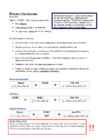
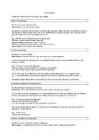
Present Continuous The Present Continuous is mainly used to express the idea that something is happening at the moment of speaking. The Present Continuous also describes activities generally in progress (not at the moment). Another use of the tense is to talk about temporary actions or future plans .
Basic form
Subject + IS/ARE + Verb +ing (continuous verb)
  • He is sleeping.
  • I am visiting grandpa in the afternoon.
  • You are always coming late for the meetings!

Use the Present Continuous:
  • Present Actions: to talk about actions happening at the moment of speaking. (most often)

  • Temporary Actions: for activities continuing only for a limited period of time.

  • Longer Actions in Progress: when we are in the middle of doing something time-consuming (i.e. something that takes time to complete

  • Future (Personal) Arrangements and Plans: to show that something is planned and will be done in the near future.

  • Tendencies and Trends: for expressing tendencies or trends.

  • Irritation or Anger : to express irritation or anger over somebody or something in the present with adverbs such as: always, continually or contantly.


Declarative Sentences:


Subject
IS/ARE
Verb+ING
e.g. he, she, a dog, etc.
e.g. walking , going , taking , etc.


Questions:


IS/ARE
Subject
Verb+ING
e.g. he, she, a dog, etc.
e.g. walking, going, taking, etc.


Negative Sentences:


Subject
IS/ARE
Verb+ING
e.g. he, she, a dog, etc.
NOT
e.g. walking, going, taking, etc.
Stative (State) Verbs !!!
There is a certain group of verbs that usually does not appear in the Continuous form. They are calledStative (State) Verbs, and if used in the Continuous form, they have a different meaning.
***I think you look pretty today . Meaning: Opinion.
***I'm thinking of moving to San Francisco . Meaning: Act of thinking.
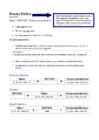
Present Perfect The Present Perfect is used to express actions that happened at anindefinite time or that began in the past and continue in the present. This tense is also used when an activity has an effect on the present moment.
Basic form
Subject + HAS/HAVE + Verb (past participle form)
  • I have read this book.
  • The man has gone away.
  • John has worked as a teacher for over 25 years .

Use the Present Perfect:
  • Indefinite time before now: to talk about actions that happened at some point in the past. It does not matter when exactly they happened.


Remember: !!
You should not use this tense with time expressions like yesterday , a week ago, last year , etc.

  • Effect on the present moment: when an activity has an effect on the present moment.

  • Continuation in the present: when we want to emphasize that an event continues in the present.


Declarative Sentences:


Subject
HAVE/HAS
Verb (past participle form)
e.g. he, she, a dog, etc.
e.g. gone, taken, done , etc.


Questions:


HAVE/HAS
Subject
Verb (past participle form)
e.g. he, she, a dog, etc.
e.g. gone, taken, done, etc.


Negative Sentences:


Subject
HAVE/HAS
Verb (past participle form)
e.g. he, she, a dog, etc.
NOT
e.g. gone, taken, done, etc.


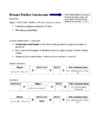
Present Perfect Continuous The Present Perfect Continuous (Progressive) has a long and scary name. But don't worry ! Read on to learn how to use it.

Basic form
Subject + HAS/HAVE + BEEN + Verb+ING (continuous form)
  • I have been working as a teacher for 30 years.
  • What have you been doing?

Use the Present Perfect Continuous:
  • Continuation in the Present: to show that something started in the past and continues in the present.
  • Past actions recently stopped: to talk about actions that began in the past and have recently stopped.
  • Temporary Actions and Situations: when an action or situation is temporary.

Positive Sentences:


Subject
HAVE/HAS
BEEN
Verb (continuous form)
e.g. he, she, a dog, etc.
e.g. walking, going, taking, etc


Questions:


HAVE/HAS
Subject
BEEN
Verb (continuous form)
e.g. he, she, a dog, etc.
e.g. walking, going, taking, etc


Subject
HAVE/HAS
BEEN
Verb (continuous form)
e.g. he, she, a dog, etc.
NOT
e.g. walking, going, taking, etc
Vasakule Paremale
Present Tenses #1 Present Tenses #2 Present Tenses #3 Present Tenses #4 Present Tenses #5
Punktid 10 punkti Autor soovib selle materjali allalaadimise eest saada 10 punkti.
Leheküljed ~ 5 lehte Lehekülgede arv dokumendis
Aeg2015-10-08 Kuupäev, millal dokument üles laeti
Allalaadimisi 7 laadimist Kokku alla laetud
Kommentaarid 0 arvamust Teiste kasutajate poolt lisatud kommentaarid
Autor rrrebaned Õppematerjali autor
Present Simple, Present Continuous, Present Perfect ja Present Perfect Continuous.

Sarnased õppematerjalid

Chpt 12 Verb Tenses
38
ppt

Chpt 12 Verb Tenses

Moved to Cali 2005 Was Born Traveled to Europe Husband 1978 School graduates @ Oxford 1999 Started Got married School 1983 2008 2 The Six English Verb Tenses Three Simple Tenses Simple continuous Present ­ You walk. You are walking I run. I am running. Past ­ You Walked You were walking. I ran. I was running. Future ­ You will walk. You will be walking. I will run. I will be running. Three Perfect Tenses Perfect continuous Present perfect ­ you have walked

Inglise keel
Inglise keele struktuur
29
docx

Inglise keele struktuur

It. il libro `the book' la casa `the house' Swahili (Niger-Congo): m-tu m-zuri `a nice man' n-yumba n-zuri `a nice house' ki-tu ki-zuri `a nice thing' - definiteness: a house ­ the house Sw. ett hus huset det röda huset II. Relational categories for nouns: case English vs Estonian Grammatical categories for verbs I. Inherent categories for verbs: - tense: He walks a mile every day. He walked a mile every day Grammaticalized expression of location in time. The Wishram-Wasco dialect of Chinook: 4 inflectional past tenses ga-ciux `He did it some time ago' ni-cíux `He did it long ago.' na-ciúxw-a `He did it recently.' i-cíux `He just did it.' - aspect: He was writing a letter to Tom. He has written a letter to Tom. - mood: He goes to Tallinn tomorrow.

Inglise keel
Contitional sentences
4
doc

Contitional sentences

Conditionals Sentences with if are used to express possibilities. 0 Zero conditional If-clause present (past) simple Main clause present (past) simple Sometimes sentences with if express certainty rather than possibility. The zero conditional is used to talk about sth. that is always true (such as a scientific fact), or that was always true in the past. In this type of conditional we can use when instead of if. E.g., If/When you mix blue and red, you get purple. If/When you don't water flowers, they die. (present simple in both parts of the sentence) If/When I asked her to come with us, she always said no.

inglise teaduskeel
Big grammar theory 2
5
doc

Big grammar theory 2

7. Verb: The principal forms of the verbs: Verbil on 4 põhivormi: Regular verb Irregular verb 1. the base form Talk Speak üldoleviku tüvivorm 2. the past form/ -ed form Talked Spoke üldmineviku vorm 3. the past participle (-ed Talked Spoken participle) mineviku kesksõna 4. the present participle (- Talking Speaking ing participle) oleviku kesksõna The tenses: Expressing the future: Simple Perfect Continuous Perfect Continuous Present Base Have / has + to be + base+ ing has/ have been +s + pariticiple base+ -ing

Inglise keel
Present simple and continious
7
pdf

Present simple and continious

Present Simple and Continuous Table of Contents Present Simple ..................................................................... 2 The spelling of endings in the Present Simple ....................... 2 When to use the Present Simple ........................................... 3 The verb 'be' ......................................................................... 4 Present Continuous.............................................................. 5 The spelling of endings in the Present Continuous................ 5 When to use the Present Continuous.................................... 6 State verbs and event (action or dynamic) verbs ................... 7 Present Simple

Inglise keel
Inglise keele kordamine
4
doc

Inglise keele kordamine

TIME CLAUSES Present Simple · Permanent states, facts (Tom works..) · Repeated and habitual actions, routines (She usually goes..) · Laws of nature and general truths (The sun sets in the west) · Timetables and programmes · Sporting commentaries, rewiews (Beckham wins the ball, crosses and Owen scores) · Feelings and emotions (I love Tallinn..) TIME EXPRESSIONS USED WITH PRESENT SIMPLE: usually, often, always, every day/week etc, in the morning/evening etc, at night/the weekend, on Fridays etc. Present Continuous · Actions taking place at or arount the moment of speaking (The kids are watching TV..) · Fixed arrangements in the near future (I'm going to the dentist tomorrow) · Currently changing ang developing situations (The number of burgularies is increasing)

Inglise keel
Present Continuous
12
pptx

Present Continuous

PRESENT CONTINUOUS Klaarika Kaljula 9a Use 1.Present actions 2.Temporary actions 3.Longer actions in progress 4.Future (personal) arrangements and plans 5.Trends 6.Irritation 1.Present Actions Happening at the moment of speaking Most often, we use the Present Continuous tense to talk about actions happening at the moment of speaking. Ex. He is eating a dinner. Mary is talking with her friends. They are swimming in the pool. Stative Verbs There is a certain group of verbs that usually does not appear in the Continuous form. They are called Stative Verbs, and if used in the Continuous form, they have a different meaning. Ex. I think you look pretty today. Meaning: Opinion I'm thinking of moving to San Francisco. Meaning: Act

Inglise keel
Inglise keele põhitõed algajale
42
pptx

Inglise keele põhitõed algajale

  on Christmas Day (but at Christmas) We use at in these expressions:     at night - at Christmas - at the moment / at present - at the     same time - at weekends - at the age of...       IN   DURING

Inglise keel


Kommentaarid (0)

Kommentaarid sellele materjalile puuduvad. Ole esimene ja kommenteeri


Sellel veebilehel kasutatakse küpsiseid. Kasutamist jätkates nõustute küpsiste ja veebilehe üldtingimustega Nõustun