Vajad kellegagi rääkida?
Küsi julgelt abi LasteAbi
Logi sisse

The Life of Dante, the Inferno of Dante (0)

1 Hindamata
Punktid
The Life of Dante , the Inferno of Dante
Dante Alighieri, one of the greatest poets of the Middle Ages,
was born in Florence , Italy on June 5, 1265. He was born to a
middle- class Florentine family. At an early age he began to write poetry
and became fascinated with lyrics. During his adolescence, Dante fell in
love with a beautiful girl named Beatrice Portinari. He saw her only
twice but she provided much inspiration for his literary masterpieces.
Her death at a young age left him grief-stricken. His first book, La
Vita Nuova, was written about her. Sometime before 1294, Dante married
Gemma Donati. They had four children .
Dante was active in the political and military life of Florence.
He entered the army as a youth and held several important positions in
the Florence government during the 1290 's. During his life, Florence was
divided politically between Guelphs and Ghibellines. The Guelphs
supported the church and liked to keep things as they were, unlike the
Ghibellines. The Ghibellines were mostly supporters of the German
emperor and at the time Dante was born, were relieved of their power .
When this change took place , the Guelphs for whom Dante's family was
associated took power. Although born into a Guelph family, Dante became
more neutral later in life realizing that the church was corrupt,
believing it should only be involved in spiritual affairs.
At the turn of the century , Dante rose from city councilman to
ambassador of Florence. His career ended in 1301 when the Black Guelph
and their French allies seized control of the city. They took Dante's
possessions and sentenced him to be permanently banished from Florence,
threatening the death penalty upon him if he returned.
Dante spent most of his time in exile writing new pieces of
literature . It is believed that around 1307 he interrupts his unfinished
work , Convivio, a reflection of his love poetry philosophy of the Roman
tradition , to begin The Comedy (later known as The Divine Comedy). He
writes a book called De Vulgari Eloquentia explaining his idea to combine
a number of Italian dialects to create a new national language . In 1310
he writes De Monarchia presenting Dante's case for a one-ruler world
order .
Among his works , his reputation rests on his last work, The
Divine Comedy. He began writing it somewhere between 1307- 1314 and
finished it only a short while before his death in 1321, while in exile.
In this work, Dante introduces his invention of the terza rima, or
three-line stanza as well as himself as a character.
The Inferno is the first of three parts of Dante's epic poem, The
Divine Comedy, which depicts an imaginary journey through Hell ,
Purgatory, and Paradise. Dante is the hero , who loses his way in the
" dark woods" and journeys to nine regions arranged around the wall of a
huge funnel in nine concentric circles representing Hell. He is led by
the ghost of Virgil, the Roman poet , who has come to rescue Dante from
the dark forest and lead him through the realms of the afterlife. The
first circle they enter is Limbo , which consists of heathen and the
unbaptized, who led decent lives. The second through the fifth circles
are for the lustful, gluttonous, prodigal, and wrathful. The sixth
circle is where heretics are punished . The seventh circle is devoted to
the punishment of violence. The eighth is devoted to those guilty of
fraud and the ninth for those who betrayed others . In the last section,
Satan remains imprisoned in a frozen lake.
The journey is difficult and full of revelations, disappointment
and questions , but they persevere. The end of their journey leads Dante
and Virgil to the bottom of Hell. Lucifer is seen in all his ugliness
and they are drawn towards Heaven . They emerge to the surface, rising
above the ugliness of sin and journey towards their goal as they catch
sight of the stars shining in the heavens. Their journey begins on Good
Friday and they emerge from Hell on the day of Resurrection, Easter
Sunday on the underside of the world, in the hemisphere of water at the
foot of Mount Purgatory.
Dante's vision expresses his personal experience , through images
to convey his interpretation of the nature of human existence. He writes
in the first person so the reader can identify and deeply understand the
truths he wished to share about the meaning of life and man's
relationship with the Creator.
Dante is remembered as a great thinker and one of the most
learned writers of all time. Many scholars consider his epic poem The
Divine Comedy consisting of Inferno, Paradiso, and Purgatorio, among the
finest works of all literature. Critics have praised it not only as
magnificent poetry, but also for its wisdom and scholarly learning.
Dante was a man who lived, who saw political and artistic
success, and who was in love. He was also a man who was defeated, who
felt danger and the humiliation of exile, and who was no stranger to the
cruelty and treachery possible in people. Dante felt he was a victim of
a grave injustice. He also suffered serious self-doubts, natural for a
man in exile. His works reflect his experiences and attempts to answer
some of life's difficult questions.
In 1968, Allen Tate , a conservative thinker and a convert to Catholicism,
wrote "The Unilateral Imagination; or, I too Dislike it", in his Essays
of Four Decades. This critique was established from a lecture given by
Tate in 1955 based on his works.
An example of Dante's ability to tell so much in one single word
was expressed by Tate when he cited the word "ombre" which translates
"shades," to remind us of the continuity of the Christian Hell and
Virgil's pagan Hades. "Shades" are referred to as three-dimensional
bodies, able to feel pain as if they were alive in solid ice and
immobile, yet to have the intensity of fire . If Dante had tried to touch
one of them , his hand would have met no physical resistance since the
shades would melt into the air.
Tate stands in awe of Dante's abilities to express such a large
concept or picture in so few words . He says , "I believe we all wish we
had been able not only to write better poems , but poems that say much
more than we have been able to say, while at the same time seeming to say
less."(452)
In 1953, Jacques Maritain , a French philosopher, theologian, educator,
and essayist, wrote "The Three Epiphanies of Creative Intuition", in his
book, Creative Intuition in Art and Poetry. He wrote about how Dante's
Divine Comedy is at the same time poetry of the song , poetry of the
theater , and poetry of the tale . They are the three epiphanies of poetic
intuition. Maritain believes that the essence of the song appears
everywhere in the Divine Comedy, but more so in Paradiso, while drama
appears everywhere, especially in Purgatorio, and novel is found
everywhere, but especially in the Inferno. (386-387)
Maritain observes that Dante combines feelings, distinct images,
and a continuous and complex narrative of a world of an adventure and
destiny in the Inferno. He feels that the entire poem clearly shows,
that through love, Dante knew his characters , understood their suffering,
and knew his characters desires. These traits and Dante's ability to
express his dream caused Maritain to believe that Dante had the eye of a
genuine novelist.
Ezra Pound, an American poet and critic , believes that one hears far too
much about Dante's Hell, and far too little about the Purgatorio, and
Paradiso. Pound wrote an essay called "Dante" in his book, The Spirit of
Romance written in 1952. He explains how Hell is the state of man who
has lost the good of his intelligence, a state of man dominated by his
passions. (129)
Pound believes that Dante's Inferno should be approached with a
" sense of irony." His use of simile is carried throughout the Inferno
and enhances the effect and meaning of his experience in Hell. While it
is natural for man to think of Hell as a place, Pound understands it as a
condition of man's mental state in life, continued after death. The
tendency to see objects and qualities only in one dimension limiting and
drawing the reader away from the true meaning of Dante's journey. Pound
sees the Inferno as a satire on man's aimless turmoil and restlessness
that continues to the root of Hell where it finds its end at the gate of
Purgatory. Dante is represented as truth , intelligence, and love, and
Pound generates a positive portrayal of Dante's work.
Tate, Maritain, and Pound give insightful and pertinent
observations of the Inferno, however , one major aspect, which was
overlooked in their critiques, was the theological truths Dante uncovered
on his imaginary journey through Hell. The reality of God, the Creator's
love and man's choice is evidenced throughout the Inferno. On this
spiritual pilgrimage, Dante has lost his way and tries to get back on the
right path to gain salvation, but many temptations are faced along the
way. Dante uses allegory in his story to depict these temptations or
sin. In the dark wood he encounters a leopard , lion , and a she- wolf .
The leopard stands for lust, the lion for pride , and the she-wolf for
greed. He takes the reader through the murky, disgusting depths of Hell
using very graphic , grotesque language and imagery .
The poet communicates his vision well and his truth comes alive
as the reader follows his spiritual search of personal salvation.
Because he is the main character, Dante speaks in the first person and
interprets his experience as he views sin in all its ugliness. He knows
that life is a pilgrimage of the soul on its way to God, but has lost his
way. The way is frighteningly real as he enters Hell and on his way he
encounters many who have chosen greed or lust and turned from God. Dante
realizes he must face evil (Satan) and rise toward the stars to the
promise that is found in Heaven. The stars stand as a symbol of divine
order and hope .
Dante's relationship with God is evident in his writing, which
portrays the experience of a deeply committed Christian. During the time
he wrote, in the Middle Ages, this religious commitment was widely
accepted and encouraged. It is this spiritual truth: that those who
insist on denying God's will and die unrepentant are eternally damned
unless they repent and walk in the ways of the Lord , which makes Dante's
Inferno a religious and morally challenging experience.
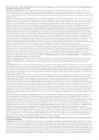
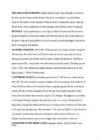
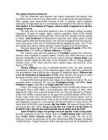
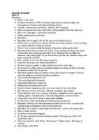
The Life of Dante-the Inferno of Dante #1 The Life of Dante-the Inferno of Dante #2 The Life of Dante-the Inferno of Dante #3 The Life of Dante-the Inferno of Dante #4
Punktid 100 punkti Autor soovib selle materjali allalaadimise eest saada 100 punkti.
Leheküljed ~ 4 lehte Lehekülgede arv dokumendis
Aeg2008-04-19 Kuupäev, millal dokument üles laeti
Allalaadimisi 10 laadimist Kokku alla laetud
Kommentaarid 0 arvamust Teiste kasutajate poolt lisatud kommentaarid
Autor carola99 Õppematerjali autor
essay, 1877 words

Sarnased õppematerjalid

English literature from the Baroque to the Romanticism
21
docx

English literature from the Baroque to the Romanticism

represent the idea of kingship as it resided in the Platonic realm, and not its reality. Jonson’s aim was also to be educative. Inigo Jones, Jonson’s collaborator, was the one to revolutionize in the field of visual perception, also adding moving machinery and a manipulation of artificial light to the scenery. Jones also viewed the masque as something to be used in educating people. This idea of art as an educative vehicle soon affected all the different areas of courtly life. Jones’s masque sets, for example, educated the audiences about classical antiquity and classical architecture. Jonson and Jones were the ones who gave the Stuart court an entertainment which linked poetry and moral philosophy to art. This was achieved by tying together the art of music, dance, poetry, and visually representing them in lavish illusionistic scenic display. In this way, kingship was

Inglise kirjanduse ajalugu
English literature
4
doc

English literature

For example, as a young man of little experience determines to give the unarmed Grendel a sporting chance by himself using no weapons (which proved to be a fortunate decision, since Grendel is protected by magic against all weapons). Things go Beowulf's way. Conversely, as an old man fighting with the dragon, he is wrong expecting that he can survive as he always did. They both are doomed to death. `Fate goes ever as it must' says the poet. The course of life cannot be predicted with any certainty. One can hope only to foresee what is able and meet the unforeseen with dignity and resolution. That's the poem's deepest wisdom. A similar view of life is to be found in many other OE poems. 2. Chrst. Elem. In OE lit. The dream of the road. This poem stands supreme with its peculiar boldness and brilliancy. It describes not the biblical event itself but a vision or dream in which that event, the

Inglise keel
American Literature
10
docx

American Literature

and that they are "endowed by their Creator with certain inalienable Rights" including "Life, Liberty and the pursuit of Happiness." (Mark Twain's The Adventures of Huckleberry Finn) De Crevecoeur, Hector St. John (17351813): FrancoAmerican Writer. With the publication of his Letters from an American Farmer (1782), Hector St. John de Crevecoeur became one of the eighteenthcentury's most influential commentators on American life and manners. While not born in America, Crevecoeur traded his French citizenship for an American one in 1765, taking up residence in New York. He had traveled throughout New England and its coastal region before claiming his new identity, however, and before seriously embarking upon his life as a farmer in Orange County, New York, in 1778, Crevecoeur traveled extensively inland through the Ohio Valley and on to the banks of the Mississippi. Drawing upon his

Inglise keel
English literatutre - Authors-history
3
docx

English literatutre - Authors, history

The historical period of the poem's events can be dated in the 6th to 8th century. Much of the material of the poem is legendary and paralleled in other Germanic historical-mythological literature in Norse, Old English, and German. GEOFFREY CHAUCER (1340-1400) ­ Politician and writer, fought in France during the 100 years war. He visited Genoa and Florence where he became acquainted with Italian literature and in particular with the works of Dante, Petrarch and Boccaccio. The French period (up to 1370). ­ early works were based mostly on French models. The Italian period (up to c. 1387). Was influenced by Italian literature, especially Dante and Bocaccio. The English period. ­ Wrote Canterbury tales. CANTERBURY TALES This unfinished poem of about 17,000 lines was written mostly after 1387. The poem introduces a group of pilgrims who are journeying from London to the shrine of Thomas à Becket at Canterbury

British literature
The Origins of American Literature
7
doc

The Origins of American Literature

The origins of American literature The first Americans were explorers and settlers, adventurers and idealists who crossed the ocean in search of new opportunities or to escape the poverty and intolerance. Their writings were matter-of-fact accounts of life in America, which explained colonisation to Englishmen back in the homeland. An example of this form of writing is John Smith's A True Relation of Virginia, which is widely recognized to be the first example of Am lit. The early years of colonisation produced a mass of utilitarian writings including biographies, accounts of voyages, diaries, sermons, pamphlets. Much of the material addressed the problems of Church and State. There were few examples of fiction, poetry or drama

Inglise kirjandus
Ameerika kirjandus alates I maailmasõjast kuni tänapäevani
29
docx

Ameerika kirjandus alates I maailmasõjast kuni tänapäevani.

any natural unbiased (completely natural) · Point of view: amoral-outside the category of morality, neither good or bad · Naturalist find it absurd to blame the wicked. These criminals are doing what nature, environment, their unconscious tells them to do. Naturalists do not judge their characters, they simply report. Try to describe facts like they are. Naturalists depict the lower, coarser forms of life. · Drab, squallid set of scene. Revolting, disgusting · Characters are people with strong animal desires · Neurotic characters unable to understand the forces that control them · By the end of the 18th century the naturalism depicts in europe, but stars to become the literature method no 1 in america · Naturalism appealed American authors because they found it very right to describe what was going on in the turn of century in America

Ameerika kirjandus
Philip Larkin’s Poetry-Themes-Form-Style-Imagery and Symbolism
30
odt

Philip Larkin’s Poetry: Themes, Form, Style, Imagery and Symbolism

to make a revision on the vision of Larkin through the studies that had been made on him, and on the basis of it we can say, that the voice of Larkin still clearly contemporary today. He is, in addition, acid, disagreeable, unpleasant, and we can catalogue these characteristics like the most appreciated by its followers. Larkin gives us through his poetry, a vision of middle-aged conservative, that in a politically incorrect way in our days, does not stand children, detests the life in family, he does not believe in anything and he does not wait anything of the life. He scorns the “literary life” and also the things that normally soften everybody: the romantic love, the memories of the childhood, the nature, etc. Keywords: Larkin, poetry, cruelty, suffering, nature Index Introduction 4 1. Chapter I 5 1.1

Kategoriseerimata
Rudyard Kipling
7
docx

Rudyard Kipling

Mother- Alice MacDonald Kipling. Alice Kipling (one of four remarkable Victorian sisters) was a vivacious woman about whom a future Viceroy of India would say, "Dullness and Mrs. Kipling cannot exist in the same room."[3] Father - John Lockwood Kipling. Lockwood Kipling, a sculptor, an illustrator, museum curator and pottery designer, was the principal and professor of architectural sculpture at the newly- founded Sir Jamsetjee Jeejeebhoy School of Art and Industry in Bombay. Later in life Kipling illustrated many of Rudyard Kipling's books, and other works. Kipling also remained editor of the Journal of Indian Art and Industry, which carried drawing works from the students of the Mayo School. COUPLE ­ named their son after the place they had first met ­ Rudyard Lake. Alice Kipling Fleming - Sister of British author Rudyard Kipling who became a well-known psychic, producing automatic writing under the name "Mrs. Holland." Born June 11, 1868, Alice Kipling was privately educated

Inglise kirjandus


Kommentaarid (0)

Kommentaarid sellele materjalile puuduvad. Ole esimene ja kommenteeri


Sellel veebilehel kasutatakse küpsiseid. Kasutamist jätkates nõustute küpsiste ja veebilehe üldtingimustega Nõustun