 50 punkti
Autor soovib selle materjali allalaadimise eest saada 50 punkti.
50 punkti
Autor soovib selle materjali allalaadimise eest saada 50 punkti.
 ~ 7 lehte
Lehekülgede arv dokumendis
~ 7 lehte
Lehekülgede arv dokumendis
 2019-05-18
Kuupäev, millal dokument üles laeti
2019-05-18
Kuupäev, millal dokument üles laeti
 1 laadimist
Kokku alla laetud
1 laadimist
Kokku alla laetud
 0 arvamust
Teiste kasutajate poolt lisatud kommentaarid
0 arvamust
Teiste kasutajate poolt lisatud kommentaarid
 AnnaAbi
Õppematerjali autor
AnnaAbi
Õppematerjali autor
..........................................24 Activity 2.1...........................................................................................................28 2.2 Make arrangements for training and development for identified needs to support the employee relations plan ................................................................29 2.3 Undertake associated employee relations activities to reach agreement on changes required by the organisational policies or implementation plan .31 Activity 2.2...........................................................................................................33 2.4 Ensure procedures for addressing grievances and conflict to stakeholders are properly documented ..................................................................................34 2.5 Communicate key issues about procedures for addressing grievances and conflict to stakeholders ..
1) Structural processing: we encode only the physical qualities of something. 2) Phonemic processing: we encode the sound of something. 3) Semantic processing: we encode the meaning of something and relate it to some other words that have the same (or a personal) meaning. Craik and Tulving investigated how the levels of processing influence memory. Participants were presented with a series of 60 words about which they had to answer one of three questions. Some questions required the participants to process the word in a deep way and others in a shallow way. Then they were given a list of 180 words, with the previous 60 included and were asked to pick out the original words. Results showed that the participants recalled more words that were semantically processed compared to phonemically and visually processed words. The theory is an improvement on Atkinson & Shiffrin's account of transfer from STM to LTM
Descriptive laws simply describe how people usually behave. For example law of gravity- if a person throws an apple up in the air, then it’s very likely that it falls down again. Other laws are prescriptive- they prescribe how people should or should not behave. For example, the law says that the minor can’t drink alcohol, but in spite of that rule, they still do. Relations between people are regulated by prescriptive laws. Some of them are customs – informal rules of social and moral behaviour. Customs are not made by governments and they are not written down. Sometimes we can break these rules without any penalty, but if we keep breaking the rules or break an important one, other society members may criticize us or act violently toward us. And some prescriptive laws are made by governments. When governments make laws they use a system of courts backed by the power of the police to enforce these laws. 2. Sources of law (general)
tage of to realize your dreams. The only real limits on what you can be, do, or have are the limits you place on yourself by your own thinking.Your future is virtually unlimited. ■ GET REAL! How did you react to the preceding three paragraphs? You probably had two responses. First, you liked what they said, and your fondest wish was for them to be true for you. But your second response was probably one of skepticism and disbelief. Even though you deeply xiii ccc_tracy_fm_i-xviii.qxd 7/7/03 3:23 PM Page xiv xiv ➤ INTRODUCTION desire to live a wonderfully healthy, happy, prosperous life, when you read those words, your doubts and fears arose immediately to
1 - Recognizing arguments What is an argument? An argument is a group of statements, so that one or more of them (called the premises) is said to provide support for one of the others (called the conclusion). When the course starts, you should listen But the course has started Therefore, you should listen. What is a Statement? Statements are declared sentence. A statement (or a Proposition) is a sentence that is either true or false. Truth and falsity are called Truth values. - Tallinn is the capital of Estonia - Statement (true/false) - Sydney is the capital of Australia Example of sentences that are not statements: Let us go to have lunch (invitation) What time is it? (question) Go away! (command) What is an Inference? An argument has one or more premises and one conclusion. The premises provide evidence, support or reasons to believe the conclusion.
communications, then it can be classified as the study of Business English communication skills in the workplace. Both are important and used usually together. Culture. Barriers to Intercultural communication Synergy (from Greek for "working together") means that the combined effect is more than the effect of the sum of the individual parts. Culture: Could refer to literature, music, art. Here: refers to the system of shared attitudes, beliefs, values and behavior. The iceberg model: Behaviour, clothing, food above the surface of the water. Meanings, beliefs, attitudes and values below the surface. The onion model: layers of culture (behaviour, clothing, food) can be peeled away to reveal underlying basic assumptions (meanings, beliefs, attitudes and values). The tree model: contrasts visible and hidden culture: the roots- the historical origin of C; the stem- meanings, beliefs, attitudes, values; the branches and leaves- food, clothing, behaviour
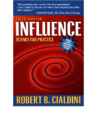
10 9 8 7 6 54 32 1 RRD-VA 12 11 10 09 08 Credits appear on page 260, which constitutes an extension of the copyright page. Contents Preface ix Introduction xi CHAPTER 1 Weapons of Influence 1 Click, Whirr 2 Betting the Shortcut Odds 6 The Profiteers 10 Jujitsu 12 Summary 16 Study Questions 16 CHAPTER 2 Reciprocation: The Old Give and Take ... and Take 18 How the Rule Works 22 The Rule Is Overpowering 23 Politics 26 The Not-So-Free Sample 28 The Rule Enforces Uninvited Debts 31 The Rule Can Trigger Unequal Exchanges 33 Reciprocal Concessions 35 Rejection-Then-Retreat 37
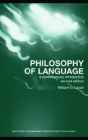
and Speech Acts, introduces the basic concepts of linguistic pragmatics, includes a detailed discussion of the problem of indirect force and surveys approaches to metaphor. Part IV, new to this edition, examines the four theories of metaphor. Features of Philosophy of Language include: · new chapters on Frege and puzzles, inferentialism, illocutionary theories of meaning, and relevance theory · chapter overviews and summaries · clear supportive examples · study questions · annotated further reading · glossary Praise for the First Edition: "This exceptional text fulfils two essential criteria of a good introduc- tory textbook in the philosophy of language: it covers a broad range of topics well, all of which are the basis of current active research, and does so in an accurate manner accessible to undergraduate students." Mike Harnish, University of Arizona ". .
 annaabi.ee







Kõik kommentaarid