Leidsid 33 sarnast õppematerjali, mis on seotud failiga "Organisational behaviour: True or False questions". Need materjalid aitavad sul teemat sügavamalt mõista.
false, person, work, individual, behavior, reward, power, other, communication, manager, team, refer, organizational, others, process, groups, needs, learning, between, performance, members, decision, effective, formal, part, personality, control, refers, experience, than, negative, occurs, same, cultural, decisions, involve, reinforcement, receivedPSYCHOLOGY PART 1: CORE Biological level of analysis Outline principles that define the biological level of analysis. 1) Behavior can be innate, because it is genetically based. Evolution may play a key role in behavior. 2) Animals may be studied as a means of understanding human behavior. 3) There are biological correlates of behavior. Cognitions, emotions and behaviors are products of the anatomy and physiology of our nervous and endocrine system. Explain how principles of the biological level of analysis may be demonstrated in research. 1) Correlational studies: Study by Buss, who hypothesized that across cultures, men will prefer to marry younger women because of greater reproductive capacity and women will place greater value on a potential mate's earning
g. law of gravity Prescriptive law – prescribe how people ought to behave e.g. speed limits In all societies relations between people are regulated by prescriptive law; customs (informal rules of social and moral behaviour); rules we accept if we belong to a particular institution (religion, organization); laws imposed on people by a government Penalties for breaking the rules are different. For not following the customs there may not be a punishment, or a person may be criticized by the society; rules of a social institution tend to carry precise penalties but they are not enforceable by any political authority; however governments use a system of courts backed by the power of the police to enforce the laws they have made. The relations between people are regulated by a combination of all these rules. One of the ways to classify laws is to separate them into prescriprive and descriptive law. Descriptive laws simply describe how people usually behave
for a particular purpose. No warranty may be created or extended by sales representatives or written sales materials. The advice and strategies contained herein may not be suitable for your situation. The publisher is not engaged in rendering professional sevices, and you should consult with a professional where appropriate. Neither the publisher nor author shall be liable for any loss of profit or any other commercial damages, including but not limited to special, incidental, consequential, or other damages. For general information on our other products and services, please contact our Customer Care Department within the United States at (800) 762-2974, outside the United States at (317) 572-3993 or fax (317) 572-4002. Wiley also publishes its books in a variety of electronic formats. Some content that
What is the real meaning of life? Why prefer one thing to another? Can we trust observation? It’s raining outside - how do you know it is? I can see it’s raining. How to convince yourself its raining? A good reason to doubt - 49 other peaople have the same opinion. Falsifiable → possible; not falsified World disappeared in 2012 and got recreated 3 secs later → unfalsifiable - cannot prove it’s true/wrong, cannot provide any tests to prove it. Or - one or another but not both → exclusive - one or another (both) → inclusive (Invited those who are managers or specialists - both) Arguments valid or not - logic is a science where to decide it
It is a specialized area of the Engl lg learning and teaching largely attributed to non-native English speakers Aim to enhance their chances of doing business with companies from English speaking countries. BE can refer to the study of business Engl voc used in the fields of trade, business, finance, or international relations. If the study focuses on techniques on business presentations, negotiations, correspondence, writing and other skills needed for business communications, then it can be classified as the study of Business English communication skills in the workplace. Both are important and used usually together. Culture. Barriers to Intercultural communication Synergy (from Greek for "working together") means that the combined effect is more than the effect of the sum of the individual parts. Culture: Could refer to literature, music, art. Here: refers to the system of shared attitudes, beliefs, values and behavior.
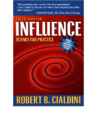
"We've known for years that people buy based on emotions and justify their buying decision based on logic. Dr. Cialdini was able, in a lucid and cogent manner, to tell us why this happens." --MARK BLACKBURN, Sr. Vice President, Director of Insurance Operations, State Auto Insurance Companies "Dr. Cialdini's ability to relate his material directly to the specifics of what we do with our customers and how we do it, enabled us to make significant changes. His work has enabled us to gain significant competitive differentiation and advantage" -LAURENCE HOF, Vice President, Relationship Consulting, Advanta Corporation "This will help executives make better decisions and use their influence wisely ... Robert Cialdini has had a greater impact on my thinking on this topic than any other scientist." -CHARLES T. MUNGER, Vice Chairman, Berkshire Hathaway, Inc.
University of North Carolina. He is the author of over 150 articles as well as seven books. Routledge Contemporary Introductions to Philosophy Series Editor: Paul K. Moser Loyola University of Chicago This innovative, well-structured series is for students who have already done an introductory course in philosophy. Each book introduces a core general subject in contemporary philosophy and offers students an accessible but substantial transition from introductory to higher-level college work in that subject. The series is accessible to non-specialists and each book clearly motivates and expounds the problems and positions introduced. An orientating chapter briefly introduces its topic and reminds readers of any crucial material they need to have retained from a typical introductory course. Considerable attention is given to explaining the central philosophical problems of a subject and the main competing solutions and arguments for those solutions. The primary aim is to
The Example 4 Solution and Problems 5 The Main Economical Problem 6-8 Free riding Problem on Public Transport 9 References 10 2 The Political Problem A common example of a free rider problem is defense spending: no one person can be excluded from being defended by a state's military forces, and thoes free riders may refuse or avoid paying for being defended, even though they are still as well guarded as those who contribute to the state's efforts. Therefore, it is usual for governments to avoid relying on volunteer donations, using taxes and, in some countries, conscription instead. In the case of defense spending, alternative perspectives of the free rider problem also exist
a discontinuity in its development, a leap to an entirely different level of Being and, most important, a lessening of materiality. What could be heavier and more impenetrable than a rock, the densest of all forms? And yet some rocks undergo a change in their molecular structure, turn into crystals, and so become transparent to the light. Some carbons, under inconceivable heat and pressure, turn into diamonds, and some heavy minerals into other precious stones. Most crawling reptilians, the most earthbound of all creatures, have remained unchanged for millions of years. Some, however, grew feathers and wings and turned into birds, thus defying the force of gravity that had held them for so long. They didn’t become better at crawling or walking, but transcended crawling and walking entirely. Since time immemorial, flowers, crystals, precious stones, and birds have held special significance for the human spirit
Education Education is so multifaceted that it is difficult for me to know where to begin discussing it, or how to prioritize the many factors. Relaying my own experience is easy: I had a standard classroom approach, supplemented by inordinate reading. In only the briefest and least memorable instances did I receive any individual tutoring. Education is commonly thought of as the job of schools. Adults cry "educate our children!" Everyone has opinions about the best way to do the job. It is of urgent importance, and all the numerous factors are much studied, debated, and new (or old) ideas continually tested or retested. Some people say "it's as simple as . . . " and then name their pet peeve or passion. My view is not of an education specialist, but of one who loves sharing what I learn, and owes much to educators
Individual Differences (Differential Psychology) Psychology 1 It is generally assumed that: Differential Psychology · People vary on a range of psychological attributes Ian Deary · It is possible to measure and study these individual differences
descriptive law (kirjeldav õigus) - laws which simply describe how people or even natural phenomenas usually behave nation (riik) - country with its own goverment citizen (kodanik) - person native of a country; realationship between country and a person stranger (välismaalne) - person who is unfamiliar, from another country penalty (karistus) - punishment fixed by law, as for a crime or from any soical groups goverment (valitsus) - organization which controlls a stre or community System of Courts (kohtusüsteem) - organization applying law in the name of states to commit a crime (kuritegu läbi viima) - breaking a law, usually given out by the goverment fine (trahv) - certain sum of money person pays for breaking a law
- plants grow leaves to provide shade for fruit - has roots downwards for nourishment - spiders have a web to catch flies Bacon - argues against Aristotle and his theory of syllogism (deduction) - Deduction: All men are mortal - Socrates is a man - Therefore, Socrates is mortal - deduction from self-evident axioms had led to little or no new scientific knowledge - it only leads to what we already knew or confuses us to make false assumptions - to understand nature properly an empirical method (based on observation) is needed - There are 4 idols (obstacles) to true knowledge 1. Idols of he Tribe: - false illusions caused by the human nature - argues against Protagoras ("man is the measure of all things") - all perceptions of senses and mind are according to the measure of the individual and not the universe
Introduction Body conclusion Lõikude vahele 1 rida, taandrida ei jäeta! Argumendid millegi poolt, argumendid millegi vastu. Väldime I-vormi, vaid kasutame passive-vormi. Lõhikesi vorme ei kasutata! (don't) 150 sõna Teema "should mery-killing be punished?" HOMEWORK Terms to explain: Nation - a country, especially when thought of as a large group of people living in one area with their own government, language, traditions, etc: Stranger someone whom you do not know Citizen - a person who is a member of a particular country and who has rights and obligations because of being born there or because of being given them Penalty - a punishment for doing something that is against a law Government - the group of people who officially control a country System of courts - a set of connected positions which operate together to ensure ... ? To commit a crime to do sth that is forbidden by law Corruption - illegal, immoral or dishonest behaviour, especially by people in positions of
hypothetical situations can hardly relate to real situations. The ticking bomb argument looks at the hypothetical case where a leader of a state is asked to give their permission to torture a captured rebel leader because he (probably) knows the locations of a few explosives that are spread around the city in different apartment buildings. In case they are not found within 24 hours, they will explode and many will be left dead (Walzer, 1973). Is it justified to torture this person to find out where the bomb is? This essay will look in to how it has according to the thinkers in the strand of consequentialism / utilitarianism been labelled justifiable to use torture techniques in combating terrorism and will present the reasons for why this controversial behaviour that democratic governments have been proven to conduct and still are being accused of until the current day is irrational and dangerous. Theoretical justification of torture
1. OBJECT-ORIENTED PARADIGM The Model •The model defines an abstract view to the problem. This implies that the model focuses only on problem related stuff and that you try to define properties of the problem. These properties include: 1 •the data which are affected and 2 •the operations which are identified by the problem. Object-oriented Paradigm •Everything is an object •A program is a bunch of objects telling each other what to do by sending messages •Each object has its own memory made up of other objects •Every object has a type •All objects of a particular type can receive the same messages Domain Model •A domain model does not represent the entire domain as it is in the real world. It includes only the concepts that are needed to support the application. Object •Is a partitioned area of memory where object code is stored •The area of memory is protected
the medium is the message. This is merely to say that the personal and social consequences of any medium-that is, of any extension of ourselves-result from the new scale that is introduced into our affairs by each extension of ourselves, or by any new technology. Thus, with automation, for example, the new patterns of human association tend to eliminate jobs, it is true. That is the negative result. Positively, automation creates roles for people, which is to say depth of involvement in their work and human association that our preceding mechanical technology had destroyed. Many people would be disposed to say that it was not the machine, but what one did with the machine, that was its meaning or message. In terms of the ways in which the machine altered our relations to one another and to ourselves, it mattered not in the least whether it turned out cornflakes or Cadillacs. The restructuring of human work and
English literature is one of the oldest literatures in Europe; dates back to the 6th century AD. Oral literature, i.e. not written down, spread from person to person. In 449 AD Anglo-‐Saxon tribes invaded England – beginning of the Anglo-‐Saxon period in English literature. The first form of literature was folklore, carried by scops and gleemen, who sang in alliterative verse (a kind of simple poetry). Prose developed much later.
international business. documents and may A notary's main research legal issues. functions are to administer oaths and affirmations, take affidavits and statutory declarations, witness and authenticate the execution of certain classes of documents, take acknowledgments of deeds and other conveyances, protest notes and bills of exchange, provide notice of foreign drafts, prepare marine or ship's protests in cases of damage, provide exemplifications and notarial copies, and perform certain other official acts depending on the jurisdiction
Work as a calling and organisational commitment Organisational commitment Definition Multiple definitions of organisational commitment are found in the literature. There is some of them. In organisational behavior and industrial and organisational psychology, organisational commitment is the individual's psychological attachment to the organisation. Organisational commitment predicts work variables such as turnover, organisational citizenship behavior, and job performance. In Business Dictionary is written that organisational commitment is a strength of the feeling of responsibility that an employee has towards the mission of the organisation. Porter et al further describes organisational commitment as an attachment to the organisation, characterised by an intention to remain in it; an identification with the values and goals of the organisation; and a willingness to exert extra effort on its behalf.
It is true that we should re-think the fundamental principles in which we educate our children. Our task is to educate the children so that they can face this future. II 10 effective classroom management techniques. 1. Set and agree the house rules and class regulations with the class. 2. Choose class activities that encourage any good relationships. 3. Be dedicated and care for your students. 4. Accept and even celebrate individual differences. 5. Realise that people learn in different ways 6. Create more student-centred activities. 7. Provide a diverse lesson with a variety of activities 8. Be always prepared for the lesson. 9. Let learners know about your teaching style, the course content and your reasons for doing some activities.... 10. Offer feedback after oral or written assignments or pair-, group work.
1. Society- people who interact in such a way as to share a common culture. The cultural bond may be ethnic or racial or geographical, based on gender, or due to shared beliefs, values, and activities. 2. Culture- beliefs, behaviors, objects, and other characteristics common to the members of a particular group or society. 3. A unitary state- a state governed as one single power in which the central government is ultimately supreme and any administrative divisions (subnational units) exercise only powers that their central government chooses to delegate. The majority of states in the world have a unitary system of government. 4. A federal state-- a political entity characterized by a union of partially self- governing states or regions under a central (federal) government. 5. A multinational state- A multinational state is a sovereign state which is viewed as
feel more secure publicly, as it enables them to somewhat predict their lives. Social order is also necessary for stability and serves as the basis for collective advancements. There are several theories and explanations for why social order persists and emerges. Hechter and Horne in the reader Theories of Social Order present several widely-acknowledged explanations for social order. In this essay, the explanations regarding a shared meaning, norms and values and power and authority are explained. Furthermore, the extents to which these explanations can be convincing are assessed. Meaning Hechter and Horne argue, that "shared concepts and beliefs are a perquisite for successful communication" (Hechter and Horne, 2003:44), thus bringing together the ideas of many sociologists in explaining the importance of meaning when explaining social order. Meaning, which can be defined as a sum of common concepts and beliefs that enable cooperation, has
.................118 1. Sotsaalpsühholoogia • SP – osa psühholoogiateadusest. SP maastik: eneseteadvus ja identiteet, sotsiaalne taju ja hoiakud, inimestevahelised suhted ja sotsiaalne mõju, suhtlemine, grupid ja grupiprotsessid ... • Gordon Allport (1954): “Social psychology is an attempt to understand and explain how the thoughts, feelings, and behaviors of individuals are influenced by the actual, imagined or implied presence of other human beings”. • Tänapäeval: “SP is the study of the causes and concequences of interpersonal behaviour” (Schachter, Gilbert, Wegner, 2012) • SR = inimestevaheliste suhete ruum - seaduspärasused, seletused, mõõtmine, sekkumine … • Populaarne SP: sõprade leidmine ja suhete hoidmine, mõjutamine, juhtimine ja eestvedamine, suhtlemisõpetused, üksindus ja üksildus … • Teaduslik ja tarbepsühholoogia.
linkages, both upstream and downstream, in different processes and activities that produces and delivers the value in form of products and services in the hands of ultimate consumer." Thus a shirt manufacturer is a part of supply chain that extends up stream through the weaves of fabrics to the spinners and the manufacturers of fibers, and down stream through distributions and retailers to the final consumer. Though each of these organizations are dependent on each other yet traditionally do not closely cooperate with each other. An integrated supply chain management streamlines processes and increases profitability by delivering the right product to the right place, at the right time, and at the lowest possible cost. According to Ganeshan & Harrison (2001) Supply Chain Management is a "systems approach to managing the entire flow of information, materials, and services from raw materials suppliers
21. If you're not an animal, then you must be a vegetable. 22. If you want to get along you have to get along with those who don't want to get along. 23. If you whine whenever anybody messes with your crutches you can't claim not to be crippled. 24. I hate an unfair fight, so I need to be ganged up on. 25. Inattention is not O.K. 26. Injustice in your vicinity is your business--particularly your own. 27. It is not enough to refrain from bearing false witness against your neighbor. When he is falsely accused it is your duty to bear witness to the truth, no matter what your opinion of him generally may be. 28. It isn't stupidity that bothers me; it's the reign of stupidity. 29. I want to separate the sheep from the goats; I have no use for sheep. 30. I want what I want. Don't offer me any substitutes. When there's a problem I want a solution. Don't offer me any half measures. 31. Literal-mindedness is good. 32
Body language Body language means communication with the movement or position of the human body. It can be conscious or unconscious. It is something that is noticed by everybody but is not always given enough attention. We sometimes ignore it and try to hide behind words, but we should never forget that we cannot fool everyone! Children react to body language because they experience the world through intuition. The same can be true for adults when feelings are involved.
Tim Chiu April 4th , 2009 Topics y Lao Zi The Person y Tao Te Ching The Book and the Name y Ch. 1 & 14 Describing the indescribable Tao y Ch. 2 & 11 On duality and Formlessness y Ch. 8 & 78 The Virtues of Water Lao Zi The Person y Real name was Lee Er, who was a highly regarded philosopher of his time y Keen observer of the virtues of Nature and the relationship between man and his environment y Realized the existence of a formless and indescribable origin: Tao y Can not thoroughly analyzed by our thoughts and logic y Its existence gave rise to everything and pervades all that we know y The manifestation of Tao in humans is called our True Nature y Purity and innocence of a child
The making of a new nation. The Enlightenment in America. The emergence of the notion of the American Dream. The great Enlighteners: Crèvecoeur, Jefferson, Paine, Franklin. The American Enlightenment is the intellectual thriving period in the United States in the midtolate 18th century (17151789), especially as it relates to American Revolution on the one hand and the European Enlightenment on the other. Influenced by the scientific revolution of the 17th century and the humanist period during the Renaissance, the Enlightenment took scientific reasoning and applied it to human nature, society, and religion. American Enlightenment a gradual but powerful awakening that established the ideals of democracy, liberty, and religious tolerance in the people of America.
ManOS Overview Everything below is rooted in my core value of creating selfesteem. My actions today focus on work, girls, travel & having fun. My career is the ultimate leverage point as this creates the money, selfesteem and confidence. The money allows me to travel and the selfesteem & confidence allow me to live the lifestyle that is congruent with drawing in girls. Long term (5+ years), I want my life to offer value to the world by having a beneficial impact on those around me. I am obviously not clear how I will do this, so for now, I am focused on taking the greatest strides possible over the next few years, to better put me in a position to achieve my long term goal. 1. Career Vision I want to earn the rank of manager in my firm within the next 3 years. I want to earn the respect and trust of fellow employees. I�
more significant than rationalism and science for understanding reality. Opposition to materialism and positivism. Opposition to abstract, untested theories &ideologies. Friedrich Nietzsche ,,God is dead"-through explaining and putting forward theories had killed Christian god. The essence of Freudian theory: the process in the human psyche Superego-society, conscience, morals, traditions, religion, a moral censor Ego-rational behavior, motivation, self-identification, conscious decisions Id-instincts, natural responses, the pleasure principle, aggressive instincts, the death wish Influence: In art and literature, Freud's theories influenced surrealism . Like psychoanalysis, surrealistic painting and writing explores the inner depths of the unconscious mind. Freudian ideas have provided subject matter for authors and artists. Critics often analyze art and literature in Freudian terms. 2
in the public sector Through history civil service has meant and cited many different forms of serving a country. Raadschelders and Rutgers (1996) have brought out five phases in their article “Evolution of Civil Service systems” that describes how civil service has evolved and become one of the most important part of governing. In different times civil service has supported monarchs, kings, presidents and governments in their work reigning, ruling and leading people. Role of civil service has increased by every age- becoming more and more wider in tasks, obligations and responsibilities, so have the cost that it all brings. Considering this, governments nowadays have a task to evaluate the work of their civil service, to make it more productive and cost-effective. For this, different methods have been discussed, being influenced by different contexts, religion and other factors.
"I am become death, the destroyer of worlds." So said the physicist Robert Oppenheimer, who helped to invent the atomic bomb. The two bombs dropped on Hiroshima and Nagasaki in 1945 killed around 200,000 Japanese people. No other species has ever wielded such power, and no species could. The technology behind the atomic bomb only exists because of a cooperative hive mind: hundreds of scientists and engineers working together. The same unique intelligence and cooperation also underlies more positive advances, such as modern medicine. But is that all that defines us? In recent years, many traits once believed to be uniquely human, from morality to culture, have been found in the animal kingdom (see part one in this two-part series)
 annaabi.ee