Vajad kellegagi rääkida?
Küsi julgelt abi LasteAbi
Logi sisse

Monopoly paper / DeBeers monopol (0)

1 Hindamata
Punktid

Running head: DE BEERS MONOPOLY
De Beers Monopoly
Microeconomics
Diamonds – an extremely hard, highly refractive crystalline form of carbon that is usually colourless and well know as “girl’s best friends ”, but the story of how diamonds got so famous and how they have remained so rare is down to a company named DeBeers. This paper is about DeBeers, the most powerful diamond company in the world. Monopoly main characteristics were that firm is single seller of the product without any close substitutes . Nowadays DeBeers have many substitutes and that is the reason why they are not a pure monopoly, but they are definitely nearly one. This is because the firm still has the bulk of world sales and controls 45% of world diamonds market . This paper examines these monopoly characterises, also how and why DeBeers diamonds monopoly still exists and what benefits they give the world. Also how the firm handled the problems which resulted from new government regulations to make the diamond industry more competitive.
De Beers Diamonds is a Swizz- based company which was founded in 1888 by Cecil Rhodes, a British Business man. The company was financially supported by an Alfred Beit, who was a British South African magnate and Rotchilds multinational investment banking company. The company got its name from brothers : Diederik Arnolds and Johannes Nicholas de Beers, who were not, involved in the company, but whose farm becomes the site of the most lucrative mine. Shortly after founding the company, De Beers already controlled almost all the world’s diamond production , either they bought out new producers or entered into agreements with local governments. They had diamonds mines in Australia , India, Russia and some of the African countries. In 1927 the chairmanship of the company was taken over by the Jewish businessman Ernest Oppenheimer, whose successors have been operating as chairmen of the group till 2011, when they sold their 40% stake to Anglo America. De Beers view during the Oppenheimer times was all or nothing like example:
The discovery of diamonds in Siberia in the 1950s was a threat to the control De Beers kept over the diamond supply . Rather than compete with Russian diamonds, De Beers offered to buy almost everything that came out of Siberia — funneling all the worlds’ diamonds through a “single channel .” (Goldschein 2011)
Until middle of the 21st century De Beers was one of the best known and strongest monopolies in the world. De Beers, who is and was diamonds main supplier in the world, is the reason why diamonds are so rare and valued. The company owned 15 mines located across the world; also they still fixed prices and limited the quantity of diamonds supplied to the market.
Nowadays De Beers don’t have any more pure monopoly, but they still have near -monopoly. “With its high market share and ability to control its own production levels, DeBeers will still wield considerable influence over the price of rough -cut diamonds” (McConnell 440) Also De Beers strength is that they change their business strategies very quick as needed. They found out that only mining diamonds don’t keep their position , they expanded them business. Nowadays, they control every process step by step from mining to production sale and also they selling to individual consumers, like example once they are extracted from the mines, they also polishing, cutting, marketing and branding . Also,
De Beers shifted its strategy from managing supply to driving demand. Under its “Supplier of Choiceprogram , De Beers had the goals of stimulating diamond demand by 5% per year ; improving the efficiency and margins of all De Beers operations, from mining to sales; and leveraging the De Beers brand by offering De Beers-branded jewelry directly to consumers (O’Connell 2009)
Also DeBeers entered joint ventures with famous luxury brands like Louis Vuitton. They also opened retail shops in the big cities like: Paris New York , London, Hong Kong, and Singapore, and developed online sales for their products. These moves helped them in many different ways :
It employed the “Supplier of Choice” strategy; It was a key player in putting together the Kimberley Process; It remained focused on mining joint ventures; It worked to leverage the De Beers brand, in partly by selling De Beers jewelry; It helped create and then meet emerging demand in emerging markets. (O’Connell 2009)
Second reason why they still have a near monopoly is strong advertisement. They play on the fact that they are oldest and most famous diamond company, they don’t just sell diamonds they sell De Beers diamonds. They call de beers diamonds as the symbol of the love and when other things disappear on this world then diamonds are forever . That is the reason why millions of loved people every year celebrate their love and one important thing there is the diamonds. Also over the ages the DeBeers diamonds are advertised by the famous people like example Marilyn Monroe and Elisabeth Taylor.
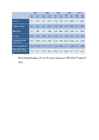
From 2009 DeBeers output is not been as high as their biggest competitor Arlosa, is this again strategy? On Table 3 we will see that DeBeers output is not as big, but their income is larger than any other diamond company. This is probably due to good advertisement and clever marketing.
For most of DeBeers existence they have had a unregulated monopoly situation where they controlled market and they had pure monopoly. For this they used several methods like example: new incomers did not make good profit or did not exist long, because they often found “the market flooded”. These shorts move De Beers brought out from their stockpiles the particular kind of diamonds, which causes the price declines and loss of profits. This short price-fixing was not allowed in America and 1994 begin court case , DeBeers owners were afraid to go even America, because fear of arrest. In 2004 the court decided that DeBeers where guilty,
On July 13th in an Ohio court De Beers, the world’s largest producer of rough stones , finally pleaded guilty to charges of price-fixing of industrial diamonds and agreed to pay a $10m fine, thereby ending a 60-year-long impasse. De Beers executives are at last free to visit and work directly in the largest diamond market, America. (Johannesburg. Windhoek 2004)
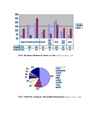
DeBeers agreed to pay fine, but they was not certify that they are guilty. For conclusion of this case they were still winners , because the fine was not fateful to them and they were legally back again in American market, which is world’s largest diamond market as we see on Table 2.
Also the EU went to court with DeBeers to decrease their monopolistic position in Europe . In February 2006 European Commission decided that:
World No. 1 diamond producer De Beers settled a monopoly abuse case with the European Commission by agreeing not to buy rough diamonds from Russian diamond miner Alrosa from 2009. The Commission said this would make more diamonds available in the market. (Miningmx 2009)
With this sort moves they will decrease DeBeers monopoly and hope to get diamonds prices not so high.
In 2011 as Oppenheimer decided to back out from business and sell his shares . This gave an opportunity already existing shareholders Anglo America and Botswana Republic to increase their shareholding . Botswana did not buy because of
a large cost for a country whose government budget is still in deficit, and [which] is trying to bring the budget to balance within a year and a half . The purchase of the 10% DeBeers stake would have cost the Botswana government $1.275 billion , equivalent to about 10% of the country’s gross domestic product, the ministry said. Anglo America who was ready to buy and increased their holding to 85% shares. (Macdonald. Maylie 2012)
As Botswana own 15% of the DeBeers it bring both of them success . DeBeers has a power in Botswana who is world largest diamond producers and also most valued, like we will see in the Table1.
With its near monopoly as a trader of rough stones, De Beers has been able to maintain and increase the prices of diamonds by regulating their supply. It has never done much to create jobs or generate skills (beyond standard mining employment ) in diamond-producing countries, but it delivered big and stable revenues for their governments. Botswana, Namibia, Tanzania and South Africa are four of Africa’s richest and most stable countries, in part because of De Beers. (Johannesburg. Windhoek 2004)
Other hand DeBeers brings success for Botswana, they are after Botswana Government biggest employees:
De Beers is a long way from being out of the picture of diamond industry, still very much part of the diamond monopoly. De Beers has 17,000 employees in Africa; over 7,000 employees alone in Botswana; 7,100 in South Africa; 3,800 in Namibia; 700 in Canada ; and 800 in Group Exploration. (“Diamond Monopol” 2012)
Also Botswana Government gets income from DeBeers because they have 15% of diamonds shares. For this case government are very interested that DeBeers will make nice profit, because it is profit also for them and their people
If diamonds are forever, as DeBeers advertise? Or is DeBeers forever – we don’t know, but what we do know that DeBeers definitely was and still is one successful company and made diamonds what they are today . Their advertisements are hilarious and definitely help a lot their success and gives to them advantage to be stronger in the market, even if their output is smaller than competitors one. Many organizations tried to stop DeBeers success and bring them down, but history shows that they are definitely not out of the game . Their business strategies is always very smart and advised, so only what we can do wait and look with interest what is their next move.
References
Diamond Monopoly: The Need For Change (2010) New Diamond Guide. Retrieved
13.11.2012 From: http://newdiamondguide.com/education/diamond-monopoly-the-need-for-change/
Goldschein, E. (2011). The Incredible Story Of How De Beers Created And Lost The Most Powerful
Monopoly Ever. Business Insider The Life. Retrieved 11November 2012. From:
http://www.businessinsider.com/history-of-de-beers-2011-12?op=1
Johannesburg. Windhoek (2004). The cartel isn't for ever. The Economist. Retrieved 12 November2012
From: http://www.economist.com/node/2921462
Macdonald, A. Maylie, D. (2012). Botswana Opts Not to Buy De Beers Stake, Clears Way
For Anglo. The Wall Street Journal . Retrieved 10 November 2012 From: http://online.wsj.com/article/SB10000872396390444405804577561090197365720.html
McAdams, D. Reavis C. (2008). DeBeers Diamond Dilemma . Mit Sloan Management.
Retrieved 13.11.2012 from: https://mitsloan.mit.edu/MSTIR/managing-innovation/DeBeersDilemma/Documents/07-045-DeBeers-Diamond-Dilemma.pdf
MConnel, B. (2008). Economics . (17th ed.) GcGraw- Hill Iriwin . New York
Miningmx. (2009). EU court adviser wants De Beers Ruling Upheld. Miningm- higher grade.
Retrieved 11November 2012. From
http://www.miningmx.com/page/news/diamonds/267323-EU-court-adviser-wants-De-Beers-ruling-upheld
O’Connell, P. (2009). The Issue : De Beers' Multifaceted Strategy Shift . BloomberBusinessweek
Companies & Industries. Retrieved 10November2012. From
http://www.businessweek.com/stories/2009-01-06/the-issue-de-beers-multifaceted-strategy-shiftbusinessweek-business-news-stock-market-and-financial-advice
Prospects for global diamond business in 2012 (2012) Rough & Polished. Retrieved
12November 2012. From http://www.roughpolished.com/upload/main/danilov_060212_tb1_english.jpghttp://www.rough-polished.com/en/expertise/59657.html
Tables and Diagrams :
Table1 Top Diamond Producers by Volume and Value ( McAdams, D. Reavis C. 2008)
Table 2 World Sales of Diamonds, 2005 (polished wholesale price)( McAdams, D. Reavis C. 2008)
Table 3 Diamond output of the world's largest companies in 2007-2011(“Prospected” 2012)
Vasakule Paremale
Monopoly paper- DeBeers monopol #1 Monopoly paper- DeBeers monopol #2 Monopoly paper- DeBeers monopol #3 Monopoly paper- DeBeers monopol #4 Monopoly paper- DeBeers monopol #5 Monopoly paper- DeBeers monopol #6 Monopoly paper- DeBeers monopol #7 Monopoly paper- DeBeers monopol #8 Monopoly paper- DeBeers monopol #9
Punktid 50 punkti Autor soovib selle materjali allalaadimise eest saada 50 punkti.
Leheküljed ~ 9 lehte Lehekülgede arv dokumendis
Aeg2014-10-01 Kuupäev, millal dokument üles laeti
Allalaadimisi 3 laadimist Kokku alla laetud
Kommentaarid 0 arvamust Teiste kasutajate poolt lisatud kommentaarid
Autor katsl Õppematerjali autor

Kasutatud allikad

Sarnased õppematerjalid

Pure Competition
7
docx

Pure Competition

· Existing firms are strong rivals and affects each other's price and output. Control over price limited by mutual interdependence; considerable with collusion (the decision of rivals). A great deal of nonprice competition, especially with differentiated products - ex. steel, automobiles, household appliances Harder for a firm to enter or exit. · Imperfect competition Pure Monopoly · Only one firm is involved. · Products are unique with no substitutes. · Nonprice competition: mostly public relations · Entry of additional firms is not possible--one firm constitutes the entire industry. · Entry to the industry is often blocked by government. It requires patent or licenses. There is total control over price "Price Makers" · ex. local electric utility · Oil, · diamonds

Micro_macro ökonoomika
Canada - history and provinces
2
doc

Canada - history and provinces.

reached America's shore in 1492, although he thought it was Asia. The next explorer was John Cabot in 1497. He sailed to Newfoundland. The first European who explored further inland was Jacques Cartier in 1534. The King of France wanted to settle nowadays eastern Canada and call it New France. To avoid the high costs building the settlements, King of France made an agreement with a fur trading company ­ if the company brought settlers to New France, they'd have monopoly to trade for furs and they would receive all the profits. First attempts of colonization failed. In 1604, French nobleman and a mapmaker named Samuel de Champlain established first permanent French settlement in the New World on an island. This area was called Acadia. When they moved to more sheltered harbour, the settlement was called Port Royal. By 1607, France wanted to establish a new French settlement along the St. Lawrence River. French went there and came back and in 1610, some

Inglise keel
Austraalia referaat inglise keeles
11
doc

Austraalia referaat inglise keeles

Tallinna Inglise Kolledz Australia Topic Alice Tärk, 8b. Tallinn 2007 Table of contents: Factfile............................................................................................. ................................. Symbols.......................................................................................... ....................................Head of State................................................................................................ ................... Government....................................................................................... ............................... History............................................................................................. .................................. Relief................................................................................................ .................................. Geographical

Inglise keel
Coca-Cola roll rahvusvahelises majanduspoliitikas
7
docx

Coca-Cola roll rahvusvahelises majanduspoliitikas

Tallinn University School of Governance, Law and Society Coca-Cola Company's role in IPE Final paper Tallinn 2018 Brief overview The Coca-Cola Company is an American corporation founded in 1892 and today engaged primarily in the manufacture and sale of syrup and concentrate for Coca-Cola, a sweetened carbonated beverage that is a cultural institution in the United States and a global symbol of American tastes, headquartered in Atlanta, Georgia (Encyclopædia Britannica).

Rahvusvahelised organisatsioonid (International...
Estonian cuisine
4
docx

Estonian cuisine

Estonian cuisine The traditional cuisine of Estonia has substantially been based on meat and potatoes, and on fish in coastal and lakeside areas, but is influenced by many other cuisines by now. In the present day it includes a variety of international foods and dishes, with a number of contributions from the traditions of nearby countries. German, Scandinavian, Russian and other influences have played their part. The most typical foods in Estonia have been rye bread, pork, potatoes and dairy products. Estonian eating habits have historically been closely linked to the seasons. In terms of staples, Estonia belongs firmly to the beer, vodka, rye bread and pork "belt" of Europe. The Cold Table Flounder The first course in traditional Estonian cuisine is based on cold dishes - a selection of meats and sausages served with potato salad or Rosolje, an Estonian signature dishes based on beetroot, meat and herring . Small pastries called pirukad ("pirukas" in the

Inglise keel
THE CAPITALIST NIGER
104
pdf

THE CAPITALIST NIGER

THE CAPITALIST NIGER Chika Onyeani ………………………Every African must internalise this book - period….DAA INTRODUCTION In October 1960, Nigeria received its independence from Britain. By then, Ghana the former Gold Coast had been independent for three years under the great Osagyefo Kwame Nkumah. It was a time for celebrating Africa’s coming of age, as more and more African countries received their independence either from Britain or France. It was especially a poignant time for Africa, as then British Prime Minister Harold McMillan articulated his now famous “winds of change” sweeping Africa. We had high hopes for Africa, for the Black race, that the insidious imposition of foreign rule on us, the looting of Africa’s natural resources by our colonial masters accorded us would be things of history. That is more than forty years ago. Unfortunately, the promise of independence has not been fulfilled. Today, Africa has become more desolate; there is more starvation

Inglise keel
Monopoly
5
docx

Monopoly

resources Pure competition results in an optimal allocation or resources given the objective of an economic system to allocate resources to their highest valued uses or to allocate relative scarce resource to maximize the satisfaction of (unlimited) wants in a cultural context. Pure competition is the ideal that is be benchmark to evaluate the performance markets. The economic theory of · monopolistic competitive markets, · oligopoly and · monopoly is used to suggest the nature of problems that may exist when firms or agents have market power and are able to distort prices away from the purely competitive optimum. The existence of market power is tied to the demand conditions the firm faces. If their product is (or can be differentiated), consumers may have a preference for one firm's output relative to others. A negatively sloped demand function (less than perfectly elastic) allows the firm to raise its price

Micro_macro ökonoomika
Marketing
8
docx

Marketing

Indroduction This assignment will examine Britain's car market and shows how the external and internal environment factors influences it, mostly on Mini Ltd. External marketing environment is divided into 4 different groups; socio-cultural, economic, technological and political factors. Internal marketing evironment is divided into 6 different groups; which are customers, competitors, suppliers, distributors, employees and stakeholders. Also this assignment is provided with the SWOT analysis, where strengths, weaknesses, opportunities and threats are examined. Mini Mini was at first manufactured by the Austin Motor Company Ltd. In 1957 Alec Issigonis was commissioned to develop a new type of small car. At the same year were the first sketches of Mini made and after that the Mini model is been created from wood and also the most important mechanical parts for Mini has been developed. Four years later the Mini hits the streets. In 1965 the first Mini with an automatic transmission ent

Business english


Kommentaarid (0)

Kommentaarid sellele materjalile puuduvad. Ole esimene ja kommenteeri


Sellel veebilehel kasutatakse küpsiseid. Kasutamist jätkates nõustute küpsiste ja veebilehe üldtingimustega Nõustun