Vajad kellegagi rääkida?
Küsi julgelt abi LasteAbi
Logi sisse

Essay about NewZealand and Australia (0)

5 VÄGA HEA
Punktid
Inglise keel - Kõik luuletused, mis on inglise keeles
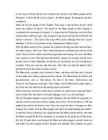
In my essay I will describe the most characteristic features of the Maori people and the aborigines. I will divide the essay in 3 parts – the Maori people, the aborigines and their comparison .
Maori are the host people of New Zealand . Their name is derived from Ma-Uri which means the children of heaven. The arrival of the Maori people to New Zealand is considered to be somewhat of a mystery. It is known that first Polynesians arrived to New Zealand about 1000 years ago, when navigator Kupe discovered the land in 950 AD. He named it Aotearoa – The Land of the Long White Cloud . Although these facts can be debatable, I will focus my attention on this interpretation of Maori history.
After the Maori arrived to New Zealand, they started to develop into tribes and sub tribes, this tribal system is still in use. Their culture had almost no influence from the rest of the world. They evolved a culture endorsed by agriculture and hunting . Of course the Maori were warriors as well. They had inter -tribal battles , mostly over territory and the losers became slaves or food. Regardless of that they are historically not to be considered as cannibals. There was only one tribe that were, other tribes just kept the heads of their defeated to secure their mana or enemy’s power .
The Maori had a complex social structure of tribes, sub-tribes and clans and a concrete society made up of nobility, priestly and slave classes. The Maori believed in deities and personifications, such as Tane-mahuta, the lord of the forest , Tawhirimatea and Tangaroa, the Polynesian ocean god. Their villages were fortified with an open space in the centre were the whare hui or the meeting house was located .
Maori history has never been written down, instead it was preserved in songs and chants, some of which like war chant or haka and challenge or wero, are still used today .
The first European explorers arrived to New Zealand in the mid 1600s but in general it is said that Aotearoa was discovered by Captain James Cook. He arrived there in 1769 and grabbed the land for the British crown . From this came the flow of foreigners to New Zealand, first contacts with the Maori people were full of misunderstanding and conflicts. In 1840 the Treaty of Waitangi was signed between the Maori and the British, with what the Maori accepted the British colonization in exchange for the protection of their lands. But still, 20 years later a war between the Maori and white people or pekaha broke out and finally the native people of New Zealand were defeated. New Zealand was given dominion status in the British Empire in 1907 and granted autonomy by Britain in 1931 , independence was formally proclaimed 1947.
Today the Maori population is increasing faster than the pekaha, and Maori culture has had a major impact on New Zealand’s society.
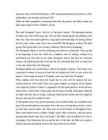
The word “aboriginal” means “the first” or “the earliest known”. The Aborigines reached Australia more than 40 000 years ago. They are dark -skinned people who probably came from Asia. They were hunter -gatherers, using spears and boomerangs for hunting. Before the first white settlers came, there were around 300 000 aborigines in about 250 tribal groups. Each group had its own territory, traditions, beliefs and even language .
The Aboriginal religion is based on dreaming, they believe in Dreamtime. They say that at the beginning of time the world was a shapeless mass of nothing , waiting to be transformed into that what we see today. Aborigines believe that they are constantly living in the Dreaming and that every time they do something they leave an impression on the other reality that is the Dreaming.
Aboriginal people were social beings as they lived together in groups. Their camps were comprised of number of gunyas or bark huts but people also lived in caves and in the open air. Some camps consisted of 10 people, some even more than 400 people.
When children were born they were taught how to cope with the material and non-material elements of the world. There was a great emphasis on religion; all the children were taught the rhythms of dances in preparation for later participation in sacred and non-sacred rituals. Shortly after a child could walk he began to handle small spears, followed his father and other men to fishing . Little girls followed their mother and were taught all that was necessary for a mother to know.
In Aboriginal society every person ( particular every initiated male) was considered to be equal. No one had authority over anyone else in the sense of ruling them , but this is not to say that there weren't leaders. But there were no elected leaders in Aboriginal society. There were leaders known as Elders. People, whom others listened to, asked for advice and generally obeyed when they issued orders. The Elders were considered to be wise in knowledge of the Dreamtime the law and the lore 's of the tribe. An Elder was usually a male but gray hair and old age were not the only criteria to be an Elder.
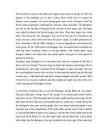
The first British to arrive to Australia were Captain James Cook, in the year of 1788. The purpose of this expedition was to start a colony which would serve as a prison for Britain’s worst criminals . Of course nothing good came out of it because at first the British made an attempt to understand the unknown culture and failed. The Aborigines also did not like the idea of bringing British criminals to their native land. Thousands were killed by diseases the British brought with them. When they fought back whole tribes were massacred. The Aborigines who survived were put into reservations and church missions (which often have been like prison camps). So-called pacification by force culminated in the late 1880s, leading to a massive depopulation and extinction for some groups. By the 1940s almost all aborigines were missionized and assimilated into rural and urban Australian society as low- paid laborers with limited rights ; many aborigine children were taken from their natural parents and given to foster parents to promote assimilation .
Nowadays many Aborigines live in the desert area, there are estimated of 200 000 of them in all over Australia. They have begun to forget their traditions and heritage . Recent Australian laws have made it possible for the Aborigines to regain their land. This also has caused problems because they went back to their land and started living like they did centuries ago – collecting berries and seeds, hunting kangaroos and other animals . Most of them live in very poor conditions and their children are taught more about their own culture than general knowledge in schools .
In conclusion I would say that in a way the Aborigines and the Maori are very similar . They both had quite a savage way of life (savage to our minds) and invaders tried to bring them out of it. Both the people had their land invaded and they had to cope with the difficulties followed. They also used to gather food in a similar way. I would still say that the Aborigines were more spiritual people, their own religion and land played a more important role in their interpretation of the world. Maori people were of course spiritual as well and had different gods but my opinion is still that they tried to adapt more to the way of life of the British. On the other hand I think that the Maori have a much better status today than the Aborigines, they are considered to be more a part of the community than the latter . Also the Maoris have adjusted to the way of life of the world today but the Aborigines hang more on to their recent way of life.
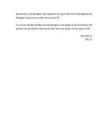
So it can be said that the Maori and the Aborigines were people of the same fate but still had their own peculiarities which do not make them to be similar in every aspect of life.
Kärt Peterson
ÕBL 31
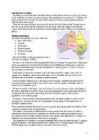
Essay about NewZealand and Australia #1 Essay about NewZealand and Australia #2 Essay about NewZealand and Australia #3 Essay about NewZealand and Australia #4
Punktid 50 punkti Autor soovib selle materjali allalaadimise eest saada 50 punkti.
Leheküljed ~ 4 lehte Lehekülgede arv dokumendis
Aeg2013-05-09 Kuupäev, millal dokument üles laeti
Allalaadimisi 5 laadimist Kokku alla laetud
Kommentaarid 0 arvamust Teiste kasutajate poolt lisatud kommentaarid
Autor kartpeterson Õppematerjali autor
Kokkuvõte maooridest inglise keeles

Sarnased õppematerjalid

Aborigeenid-Inglise keeles
13
doc

Aborigeenid (Inglise keeles)

 Introduction – page 3  History – page 3-4  Religion – page 4-7  Society - page 7-9  The British – page 9-10  Conclusion – page 10-11  Resources – page 11  Appendix – page 11-14 2 Introduction I selected this theme because it was the most interesting one for me. Aborigines have interested me for a long time now so doing this essay is really fun for me. Australian Aboriginal culture is one of the world's longest surviving cultures. Australian Aborigines, also known as Indigenous Australians , are the native people of Australia . Many of them suffered when white people from Britain arrived in Australia, because of disease, the loss of their hunting lands, and unfair laws. Australian Aborigines are those people regarded as indigenous to the Australian continent.

Geograafia inglise keeles
Inglise keelt kõnelevate maade ühiskond ja kultuur
6
docx

Inglise keelt kõnelevate maade ühiskond ja kultuur

SOCIETY AND CULTURE OF ENGLISH-SPEAKING COUNTRIES Introduction 1. Nowadays, English is so widely spoken that it can hardly be considered "a one nation's" language. The main countries where English is spoken are: the U.K, the U.S, Canada, Australia, the Republic of Ireland, New Zealand, West Indies 2. There are approx. 300-400 million speakers of English in the world. English occupies the 3rd place by its number of speakers; it is right behind Mandarin and Spanish. 3. ESL (English as a Second Language) ­ used in your own country (e.g. India) EFL (English as a Foreign Language) ­ used in a foreign country ESP (English for Specific Purposes) ­ used in business, airlines, hotels etc. 4

Inglise keel
Australia
8
doc

Australia

Australia Australia is a country and also a continent. If someone wants to make clear, that he is speaking of the country, he may call it by its full name of Commonwealth of Australia. Australia's name means "southland."It is south of the equator. Sometimes it is also called the island continent because it is an island. There are about twenty million people in Australia.It is 1,800 miles from the mainland of Asia and almost half way round the world from Europe. More than 600 miles of ocean separate it from Americas. Since Australia is south of the equator, its seasons are just the opposite of ours. It has summer while we have winter, and the other way round. States and Territories. Australia consists of six states, two territories and eight external territories. The six states are: Western Australia (capital Perth), South Australia (capital Adelaide),

Inglise keel
Topic of Australia
7
doc

Topic of Australia

Introduction, Location Australia is a country between the Indian Ocean and the Pacific Ocean. It is the only country in the world that occupies an entire continent. The mainland covers an area of 7.7 million km² and it is about 3700 km from the most northern point to its most southern point and about 4000 km from east to west. There are also many different seas around Australia, like the Coral and the Tasman Seas in the west or the Timor and the Arafura Seas in the north, where the Indian and the Pacific Oceans meet. Because all seas and oceans near Australia are warm, surfing is a very popular hobby. Political subdivision Australia is divided into six states, which are: · New South Wales · Victoria · Queensland · South Australia · Western Australia · Tasmania New South Wales is the most populous state in Australia. Its capital is Sydney.

Inglisekeelne geograafia
Australian traditions
10
pptx

Australian traditions

Traditions Australia doesn't have many traditions. Attempts to get Halloween off the ground have stalled due to one too many homeowners telling little kids to get off their property or they will see a scary sight. Australia celebrates many of the same holidays as do people of the Western world, such as Easter and Christmas. However, Australians also celebrate some holidays unique to their country and culture. Australia Day Australia Day, 26 January, is the anniversary of the arrival of the First Fleet of 11 convict ships from Great Britain, and the raising of the Union Jack at Sydney Cove by its commander Captain Arthur Phillip, in 1788. On Australia Day, over half of the nation's population of 21 million attend either an organised community event, or get together with family and friends with the intention of celebrating our national day. It is celebrated with parties, picnics, and fireworks

Inglisekeelne geograafia
Society and culture of english-speaking countries
24
rtf

Society and culture of english-speaking countries

3. What is the difference between English as a Second Language, English as a Foreign Language and English for Specific Purposes? Give examples of situations where they are used. English as a Second Language (ESL or TESL) is a traditional term for the use or study of the English language by non-native speakers in an English-speaking environment. That environment may be a country in which English is the mother tongue (e.g., Australia, the U.S.) or one in which English has an established role (e.g., India, Nigeria) English as a foreign language A traditional term for the use or study of the English language by non-native speakers in countries where English is generally not a local medium of communication. English for specific purposes - a sphere of teaching English language including Business English, Technical English, Scientific English, English for medical professionals, English for waiters,

Inglise keel
Austraalia referaat inglise keeles
11
doc

Austraalia referaat inglise keeles

...................................................... ................................. Aborigines and first settlers.......................................................................................... Sports............................................................................................. .................................... Culture............................................................................................. .................................. Factfile Australia is the only country in the worlf that fills the whole continent. The continent is also called Australia, if you want to make clear that you are speaking about the country you may call it by its official name: Commonwealth of Australia. Australia is the smallest continent, but one of the largest countries in the world. Its area is about 7,6 million sq kilometers. Its population is about 20,0 million and most of the people live in bigger cities: Sydney (4.2 million), Melbourne (3

Inglise keel
Australia
6
doc

Australia.

Australia Fact file: Australia comprises a land area of 7 686 850 square kilometres. Its population is about 21,3 million people. Australia's capital is Canberra. The national language is English. The official name of it is the Commonwealth of Australia. It's divided into six states and two territories: New South Wales, Queensland, South Australia, Western Australia, Tasmania, Victoria, Australian Capital Territory (ACT) and Northern Territory. Symbols: Australia had the British flag as their official flag until 1901, when the Commonwealth of Australia was formed. Over 30 000 entries attracted the official competition. Five of them, which contained almost identical designs, were placed equally first. The Australian flag symbolises Australia's historical links with Britain, because it has

Inglise keel


Kommentaarid (0)

Kommentaarid sellele materjalile puuduvad. Ole esimene ja kommenteeri


Sellel veebilehel kasutatakse küpsiseid. Kasutamist jätkates nõustute küpsiste ja veebilehe üldtingimustega Nõustun