 50 punkti
Autor soovib selle materjali allalaadimise eest saada 50 punkti.
50 punkti
Autor soovib selle materjali allalaadimise eest saada 50 punkti.
 ~ 2 lehte
Lehekülgede arv dokumendis
~ 2 lehte
Lehekülgede arv dokumendis
 2013-05-01
Kuupäev, millal dokument üles laeti
2013-05-01
Kuupäev, millal dokument üles laeti
 5 laadimist
Kokku alla laetud
5 laadimist
Kokku alla laetud
 0 arvamust
Teiste kasutajate poolt lisatud kommentaarid
0 arvamust
Teiste kasutajate poolt lisatud kommentaarid
 triinu12
Õppematerjali autor
triinu12
Õppematerjali autor
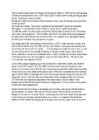
Mass Media Mass media is a term used to describe those means of communication which can reach large or mass audiences. The most important are probably Television, Radio, the Press and the Internet. Britain and America invented a lot of the technology used by the various modern communications media. In 1829, the typewriter was invented in America. In 1837, the telegraph was invented in Britain. In 18 76, Alexander Graham Bell invented the telephone in America. This made it possible to talk to people thousands of miles away. The telephone is a telecommunications device, which is used to transmit and receive sound. It's one of the most common household appliances in the world today. The English-speaking peoples have always allowed more freedom of speech and of the
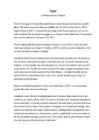
Topic Entertainment & Media The first newspapers were probably handwritten newssheets that government posted in public places. The earliest known newssheet was probably the Acta Diurna (Daily Events). Which began in Rome in 59 B.C. It reported the proceedings of the Roman Senate and such news as births and deaths.The first printed newspaper was a Chinese circular called Dibao. It was printed from carved wooden blocks during the A.D. 700's.
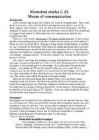
Maturitní otázka c. 23. Means of communication Introduction A few centuries ago people knew only a few kinds of communication. They could speak to each other, they could send their message from one place to another by smoke signals, they used mail. Later on, they also had some newspapers. The first expansion of media was when the radio and television were invented. The second and the biggest boom started in 1960s when the first communication satellite was launched into orbit. There are 4 main media: Newspapers, TV, Radio and the Internet. Today's people take this as an ordinary thing and we don't realise that we nearly can't live without it. Media are very important for us. They give us big amount of information, so big that we can't remember all that things
Advantages and disadvantages of television Television is one of the greatest achievements of the 20-th century. It is the most popular part of mass media. Today every family has a TV-set. TV has changed much since the time of its invention and so has its role. There have been numerous debates concerning advantages and disadvantages of television. When TV first appeared its main purpose was to give official information to people. It was supported by the government. Now television plays a big role in every civilised society. Today television gives people a possibility to be well informed and enjoy "civilised pleasures
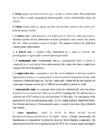
enter the country and can live and work there without restriction. Generally, in order to have the right of abode in a certain country, a person must be a citizen of that country. Those with permanent residency of the country generally have a de facto right of residence but it can be revoked in certain circumstances, for example for being convicted of crimes. 16. Print media- (newspapers and magazines). Print media is one of the oldest and basic forms of mass communication. It includes newspapers (national, regional and local), magazines and other forms of printed journals. All of them have established online presences. However, the digital reach of the various titles differs greatly: whereas over half of The Guardian and The Telegraph readers are based online now, 91% of The Times readers still read its print version. 17. Fleet Street- the home of the British press until the 1980s; a metonym for the British national press. 18
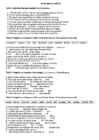
Entertainment and Art Task 1. Underline the most suitable word or phrase. a) I like this book, and I've read six capitals/chapters/prefaces already. b) It's not a proper drawing, only a rough/plan/sketch. c) The play is very long but there are three breaks/intervals/rests. d) At the cinema I don't like sitting too near the film/screen/stage. e) We heard a piece by Mozart performed by a German band/group/orchestra. f) Her second book was very popular and became a best buy/seller/volume. g) I like the painting but I can't stand its ugly border/frame/square. h) Robert's new book will be broadcast/published/typed in August. i) I liked the acting, and the costumes/dressing/outfits were good too. j) The best act/place/scene in the film is when Jack meets Kate. Task 2. Complete each sentence with a word from the box. Use each word once only. Announcer composre critic editor playwright author conductor director novelist sculptor a)
tracking shots,(camera on cars, rails etc), composition of shots in depth (action in the foreground, middle-ground and background) American cinema becomes ,,Hollywood" 1911 whole film production was in new york. By 1914 the most influental studios have moved to Los Angeles.( Didnt want to pay the copyright fees for cameras to thomas edison, big city Los Angeles, quiclky run to mexico, copyright infrigement) Features of the studio system: Industrial mass producton of films, mega-productions, establishment of a star sustem, press agents, fan cult, rich producers. European film industryin ruins due to the war after world war 1: 80% to0& market shares in many countries The struggle for feature length People believed that cinema is a short film. If you have a long film then have a longer time with the stars. Griffith believed in long films. 24 minute film, 48 minute film, 3 hours. People went to see it. The manipulation of history through film
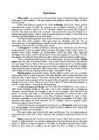
Mass Media What is Mass Media? Statistics show that there are few things which impact the human mind more than mass media. The advice of teachers, parents and relatives may fall on deaf ears, but the mass media influence holds us all spellbound! At this point, it becomes necessary to define mass media. Mass media may be defined as any form of communication which is meted out to the people at large, through the various forms of communication. What modes of communication are we talking about? Well there can be no static definition for the channels of mass communication as they are increasing all the time. But any form of communication which is seen and understood by a large mass of people can be taken to mean mass communication or mass media channels. Why is mass media so attractive to people
 annaabi.ee







Kõik kommentaarid