Vajad kellegagi rääkida?
Küsi julgelt abi LasteAbi
Logi sisse

Feminism and youth cultures in England (0)

1 Hindamata
Punktid
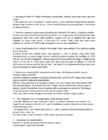
1. Feminism­  movement , ideology to defend  women ’s  rights  
Suffrage – right to vote 
2. 
Feminism 
isn’t a unitary movement  because it represents  different  women a
  nd 
different experiences for 
them  in different parts of the world. Different 
ideologies 
3. Three waves of feminism 
• 1st  wave  –  early  19th  century  – early  20th  century ( Political  rights, suffrage­right to vote) 
• 2nd wave – 1960s­1980s ( Social  inequalities, gender norms, Women's Liberation Movement) 
• 3rd wave – 1990s­2000s ( ideas  are the  same , but they  wanted  to get rid of things the second 
wave had failed to do); feminisms, expansion, multiplicity, postcolonialism. 
 
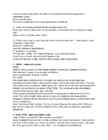
4. Anne Bradstreet­ the  first   feminist   17th  century; the most prominent of e
  arly  English  p
  oets 
of  North  America and first  female   writer  in the  British  North American  colonies  to be published 
Mary   Wollstonecraft­  education;  an  eighteenth­century  English  writer,  philosopher,  and 
advocate  of  women's  rights.  Wol stonecraft  is  best    known  for  A  Vindication  of the Rights of 
Woman  (1792), in which she argues that women are not natural y i nferior t o men, b
  ut appear 
to be only because they lack education. 
Caroline   Norton­  English  feminist,  social  reformer,  and   author   of  the  early  and 
mid­nineteenth  century. She  divorced  her  husband ,  because the  marrige  was very unhappy 
and Caroline w
  as a
  v
  ictim of r
  egular beatings. His h
  usband c
  laimed that Caroline w
  as g
  uilty o
  f 
adultery with the home  secretary   Lord  Melbourne and sued Melbourne for seducing his w
  ife. 
Norton  lost  the  case  but Caroline's reputation was ruined. Norton refused Caroline  access  t o 
her three  children  and her subsequent protests were instrumental in the p
  assing of t he I nfant 
Custody  Bil  of 1839. 
Elizabeth   Garrett ­ was a  doctor (not many f emale d
  octors at t hat t ime), she w
  as in t he s
  chool 
board , mayor and  active  member of the suffragettes. 
Millicent Garrett  Fawcett ­ Elizabeth’s  sister , was a writer and also an active member of t he 
suffragettes. 
Pankhurst   family­  Women’s  Social  and  Political  Union  in  1903.  How  they  advertised  – 
demonstrations, smashing  windows /arson/fist fights. 
Virginia  Woolf­ A  Room  of One's Own (1929), with its  famous  dictum, "A w
  oman m
  ust h
  ave 
money  and a room of her own if she is to write  fiction
Simone  de Beauvoir­ most wel ­known feminist. 
bell hooks­ multiplicity of experience, sex( male /female) vs gender(social/ construct
Judith Butler­ performativity – gender is performed. 
Bloomsbury Group­ modernists (max 10 ppl) 
 
5. Feminism and women’s roles   during   the Victorian  Era. How were  women disadvantages 
during this  period ? Some laws that helped changed the  status  of women. 
Women’s rights were extremely limited in this era, l osing o
  wnership of t heir wages, a
  l o
  f their 
physical  property, excluding  land  property, and al   other   cash  they generated  once   married
1857: violence recognized as grounds for divorce 
1870: women  could   keep  money they earned 
1878: entitlement to spousal and  child   support  recognized 
 
6. The opinion of the 19th century feminists on prostitution. Authors, who wrote about women’s 
issues
People wanted to “cure” prostitutes by torturing them. Some feminists  thought  that prostitution 
showed male dominance over women, others thought that as long as prostitution is not forced 
on women it’s okay. 
 
7.  Women’s access to  employment  during the  late  19th/early 20thcentury. Education system. 
Women h
  ad b
  asic e
  ducation b
  ut w
  anted a
  ccess t o it o
  n a l arger s
  cale. Women’s s
  chools w
  ere 
established   were  they  could  learn  teaching,  nursing,  law.  But  in   practice   that  was  only 
available   for   upper    class   women.  In  the  early  20th  century  white  col ar  jobs  were  made 
available for women, in 1848 the first col eges for women were established. 
 
8.  What did suffragettes do to achieve their goals? When was suffrage  final  y  granted  ( details  
about this event). 
Women’s  Social  and  Political  Union  was   founded   in  1903  in   Britain .  They   held   many 
demonstrations by   having   hunger   strikes, smashing windows,  getting  into fist fights. In 1914 
with the 1st WW the suffragettes’ violence stopped a
  nd t hey  started  w
  orking i n industries t hat 
worked  for  the war.  In 1918  women   aged  30+  were  given   the  right  of  suffrage.  In  1924  al  
adult  men and women  got  the right to vote. The  Labour   Party  supported this and was more 
popular because they  gave  equal rights. 
 
9.  Women’s role during WWI;  between  the world wars – the flappers and the roaring 
twenties. 1930s and WWII. 
Important   changes  in society and politics during the first  half  of the 20th century that helped 
improve women’s rights and opportunities. 
After the war people had a lot of grand emotions, they were  happy , had many parties. With 
that came the flapper movement in the 20s. Flapper women smoked and wore excessive 
makeup, drank, bobbed their  hair  and ignored other social and sexual norms. The flapper 
movement came to an end with the stock  market  crash in 1929. 
In the early 20th century changes were made in childcare and the  welfare  system. 
 
10.  The 1960s and 70s – important gains for the feminist cause? 
In the late 1960s a new type of feminism began ­ the Women’s liberation movement. The 
Equal Pay Act  became  law in the U.S., and it established equality of pay for men and women 
performing equal  work
Civil  Rights Act of 1964 became law in the U.S., and it barred employment discrimination on 
account  of sex, race, etc 
The first "modern" women's shelter in the world, opened in  California
 
11.   Subculture  vs. counterculture. 
Subculture­ smal er grouping inside mainstream culture 
Counterculture­ against mainstream 
Subculture and counterculture are  both  movements that are somehow apposed to 
mainstream culture. 
Music and  philosophy
The persons social backround,  visual  appearance and just ask. 
 
12.  Youth  movements during the first few decades of the 20th 
Groupings – shared  values , lack of  communication , mass media wasn’t developed enough, 
local
Gangs­ criminal activities,  black  market 
 
13. 1950s – jazz music; modern,  trad  and skiffle. Rock and rol  music – Teddy  Boys  i.e. New 
Edwardians; Teddy  Girls  
Meetings in  coffee   bars
Trad kids­ listened to traditional jazz 
2nd grouping – modern jazz 
3rd movement – skiffle – mix of jazz, folk& blues , improvised instruments 
Teddy Boys­ rocknrol , inspired by the Edwardian era. 
Teddy Girs­wore girly things, rocknrol ,  working  class, fought class society. 
 
14. 1960s – mods and rockers. 
MODS­ 
Origin on name­ modern or modernists(to  describe  modern jazz musicians and fans). 
Their interests­ Focused on music(jazz) and  fashion  
other  characteristics ­ drug use, scooters 
ROCKERS­ 
The rockers were centred on rock’n’rol  music and motorcycling, so they also wore 
appropriate protective clothes,  such  as black leather jackets and motorcycle boots. They also 
wore t­shirts and Levi’s jeans or leather pants. The rockers would wear their hair sleeked  back  
( similar  to the rock and rol  movement of the 1950s). The rockers were also cal ed leather 
boys sometimes and greasers  later  in the 60s. 
Society began portraying the rockers as rebels, creating a bad reputation for them in the 
media. The public thought of them as naïve loners and outsiders, who dressed badly. 
Because of this they weren’t welcome at a lot of clubs and  dance  venues, so the rockers often 
met at roadside bars. 
Gene Vincent and Eddie Cochran. The rockers would influence the music of the 1960s but 
also  hard  rock and  punk  rock that developed in the 1970s; also rockabil y and psychobil y 
subcultures. 
 
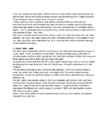
15. Early 1970s – glam rock (glitter rock) 
Origin of name­ because they were wearing  lots  of glitter? 
Music­  Musical  y the style is very diverse –  anything  from pop to rock and rol . It also borrows 
from a lot of other styles, such as pin­up, cabaret, Victorian styles,  science  fiction, mythology, 
etc. Thus, glam rock is mainly a visual style – very androgynous and theatrical. 
The singers and musicians would wear outrageous and very theatrical clothes – men wore 
frocks (dresses) and  platform   shoes , bel  bottom  pants, colourful shirts, etc.; makeup and 
hairstyles were also fairly outrageous – lots of glitter. The clothes were also very androgynous 
Glam rock was a great influence for many later rock musicians who used androgynous and 
theatrical elements in their music and style, e.g. hair  metal  in the US, as wel  as Alice Cooper, 
Kiss , Twisted Sister, etc. 
 
16. Late 1960/early 70s – hippie movement 
the movement has its roots in America. The movement can be associated with the beatnik 
movement in 1940s America. 
The word hippie originates from the 1920s and  comes  from the word hip –  someone , who is 
into the coolest and newest things; hip, hipster and hippie were used  almost  synonymously 
Although  the hippie movement is strongly associated with music, it is not directly related to a 
particular  music genre. The music hippies listened to ranges from rock music, folk and blues 
to psychedelic rock and new age. 
The hippies are often viewed together with the sexual  revolution , which refers to a period, 
when sex began to be regarded more casual y and what’s more important –  talked  about – 
and the idea of free love meant that sexual relations were more loose is only half of the story; 
the sexual revolution also meant that STDs and contraception were being talked about and 
people were becoming more ware of  these  issues. The hippies also did various recreational 
drugs. They were also very eco­ friendly  and  preferred  Eastern philosophies. 
Hippies have been a very influential subculture, as many of their values have actual y become 
part  of mainstream culture now. The movement has also  influenced  pop music, TV,  film
literature and the arts. For instance, the hippies introduced Eastern philosophies and New 
Age religions into wider society. 
Also various  eating   habits  – health food, vegetarianism, veganism – were introduced by 
hippies; the sexual beliefs we  live  by nowadays also began with the hippies. 
 
17. Mid 1970s – punk (punk rock) 
The punk subculture is centred on punk rock music and includes a wide range of ideologies 
and political agendas – it is more political  than  the previously mentioned subcultures. The 
central idea of the punk movement is an anti­establishment and anti­authoritarian ideal – 
anarchyHowever , anarchy does not  refer  to a lack of  order  i.e. a state of chaos – it is more 
along  the lines of a utopian society of  individual  freedoms. However, some punks may also 
share views with nationalist politics, or be apolitical altogether (not interested in politics at al ). 
Gender equality, neutrality. Punk 
rockers also support non­conformity, not sel ing out and a DIY mentality (do it yourself – being 
crafty), as wel  as gender equality, individualism, anti­ racism , anti­homophobia, 
environmentalism,  animal  rights, etc. 
Classical  punk rock is a loud and aggressive music genre, which is usual y played very raw 
and by smal  bands with few  members  and may draw on elements of heavy metal, folk rock, 
etc. The music contains a lot of shouted slogans. One of the best­known British punk rock 
bands is Sex Pistols; Ramones was also popular. 
Punk rock concerts are associated with the hard­ core  dance styles: pogo dancing (bouncing 
against other people) and moshing (whacking one’s hair and head  around ). Stage diving and 
crowd surfing are also an  integral  part of any punk  concert
Visual y punks are often dressed in black clothes contrasted with very colourful and 
eye­catching elements and hairstyles; they also have tattoos, jewel ery and  body  piercings 
(which they also prefer to make themselves). Early punk combined the DIY mentality with its 
fashion – punks would attach pins and patches (e.g. of their favourite  band ) on their clothes or 
write slogans on them. They wore 
their hair in mohawks and mixed various colours in their hair. When hair dyes were not easily 
available, they would use water  based  craft paint (veebaasil käsitöövärvid, nt guaššid) to dye 
hair. Also, when they were putting their hair up in mohawks, they would sometimes use egg 
whites instead of hairspray. 
 
18. Early 1980s – goth 
The  gothic  style is associated with the colours black, red, white and various shades of grey. It 
is very visual. A dark, sometimes morbid fashion and style of  dress   typical  gothic fashion 
includes a pale complexion with coloredblack hair, black lips and black clothes. Both male and 
female goths wear dark eyeliner and dark fingernail polish. 
It borrows a lot of elements from the 19th century gothic literature and also horror  films . Initial y 
the style also borrowed stylistical y from the Victorian era. The gothic combines horror with 
romance. 
The subculture is strongly music oriented as wel , although it has mixed various styles of 
music, e.g. gothic rock, metal, post­punk, neoclassical, etc. The music styles have also 
developed to  include  dark electronic styles, e.g. EBM, dark electro, also darkwave, futurepop, 
synthpop, etc. 
The term ‘gothic’ was actual y coined in 1967 by a musician John Stickney, who had had a 
meeting  in Jim Morrison’s ( singer  of the American rock band The Doors) cel ar and  felt  that 
‘gothic rock’ was the best way to describe that meeting. The goth subculture in  England  
originates in the Batcave bar, which opened in London in 1982, and which quickly became 
THE  place  for goths to gather. 
As time  went  on the gothic movement started to have more and more strands, for instance 
cybergoth, baby goth, etc. 
 
Vasakule Paremale
Feminism and youth cultures in England #1 Feminism and youth cultures in England #2 Feminism and youth cultures in England #3 Feminism and youth cultures in England #4 Feminism and youth cultures in England #5
Punktid 100 punkti Autor soovib selle materjali allalaadimise eest saada 100 punkti.
Leheküljed ~ 5 lehte Lehekülgede arv dokumendis
Aeg2014-12-13 Kuupäev, millal dokument üles laeti
Allalaadimisi 1 laadimist Kokku alla laetud
Kommentaarid 0 arvamust Teiste kasutajate poolt lisatud kommentaarid
Autor Liiiiiiisaa Õppematerjali autor
Waves of feminism, goths, hippies, rockers, mods, glam rock, punks etc.

Sarnased õppematerjalid

English literature summary
38
pdf

English literature summary

period.   Importance   of   religion;   the   stories   of   King   Arthur   (also   Tristan   and   Isolde,   based   on  Celtic  legends).       Importance  of  the  church  during  the  Middle  Ages  (5th  c  to  15th  c).  Three  languages  used   in   England:   French,   English   and   Latin.   Main   literary   genres:   (1)   chivalric   romance,   (2)   the  fabliau  (a  comic,  often  anonymous  tale  that  is  characterised  by  an  excess  of  sexual   and   other   types   of   obscenity)   and   (3)   literature   on   religious   topics   –   either   moralistic  

Inglise keel
Briti kirjandus 20 -21-sajand kordamisküsimused vastustega
37
doc

Briti kirjandus 20.-21. sajand kordamisküsimused vastustega

probably been to add legitimacy to the already-existing trends towards greater psychological introspection and towards more prominent and franker discussions of sexuality. Main characteristic features of Modernism: Characteristics of Modernism Formal characteristics(11) · Open Form · Free verse · Discontinuous narrative · Juxtaposition (kõrvutamine) · Intertextuality · Classical allusions(vihje) · Borrowings from other cultures and languages · Unconventional(ebaharilik) use of metaphor · Metanarrative · Fragmentation · Multiple narrative points of view (parallax) Thematic characteristics(8) · Breakdown of social norms and cultural sureties(veendumus) · Dislocation(nihestus) of meaning and sense from its normal context · Valorization of the despairing individual in the face of an unmanageable future · Disillusionment (silmade avamine, illusioone purustama)

Briti kirjandus 20.-21 sajand
Victorian life - Briti ajalugu
6
docx

Victorian life - Briti ajalugu

15. Victorian times Life and conditions of Victorian people Children were expected to help towards the family budget. They often worked long hours in dangerous jobs and in difficult situations for a very little wage. For example, there were the climbing boys employed by the chimney sweeps; boys and girls working down the coal mines, crawling through tunnels too narrow and low to take an adult. Some children worked as errand boys, crossing sweepers, shoe blacks, and they sold matches, flowers and other cheap goods. During the Victorian era, the population grew immensely. At the end of 19th century the population had grown three times bigger in Great Britain! That made wages much lower, because more people were looking for jobs. Many people couldn't afford places to live and had to live on the streets. Slums started appearing in bigger towns. Crime rate was also rising because of this: many homeless children lived by stealing and respectable Victorians s

British history (suurbritannia ajalugu)
Victorian age
4
doc

Victorian age

· Other themes and genres of Victorian literature and their representatives(children's literature, psychological novel, fantasy). Children's literature before there was no literature for children, the Victorians "invented childhood"(children started to read), stopping child labour + introduction of compulsory education, literature for young peoplegrowth industry, dedicated children's authors, novelist producing works for children Dickens A Child's History of England. Writers_ Lewis Carroll, R.M. Ballantyne, Anna Sewell. Supernatural and fantastic literature a new form of supernatural, mystery and fantastic literature psychological dimension, centered on larger-than-life charactersSherlock Holmes,famous detective(A.C. Doyle); Frankenstein(M.Shelley), Dracula(B.Stoker), Edward Hyde(R.L.Stevenson), many other fictional characters. Psychological literature the thoughts and feelings of the characters, the duality of human soulgood and

Inglise kirjandus
The Role of the Hippie Movement in 21st Century Britain
4
docx

The Role of the Hippie Movement in 21st Century Britain

persecuted for living together. Frankness regarding sexual matters was common. Religious and cultural diversity gained greater acceptance. Even fashion was impacted as the popularity of the necktie and other business apparel declined and was replaced by more casual dress standards. Some changes were not as positive though. Some argue that the movement ushered in more liberal press and movies which has led to a degradation of our cultural values and ethics. Youth fashions became more and more bizarre , and sexual, in an attempt to rebel against the mainstream values. Some argue that the embrace of spontaneity and worship of the “primitive” have turned us towards mindlessness and violence. Hippies in 1960’s used different drugs etc to expand their counsciousness; today’s (not only) hipsters use also drugs and alcohol to relax and get away from reality. What is

Inglise keel
Briti muusika
2
doc

Briti muusika

the form of such groups as Run DMC and Grandmaster Flash and the Furious Five. It also saw the rise and fall of the 'New Romantics', typified by groups like Adam and the Ants, who dressed as pirates and highway men and wore huge amounts of makeup. 1990s - Britpop This was the general name given in the 1990s to a new wave of successful British bands who made a big impact in the United States and Europe, as well as in England. The most successful have been Radiohead, Oasis, Blur, Pulp, Massive Attack and The Spice Girls. A few of our Composers John Dunstable (1390 - 1453) Henry Vlll Henry Purcell (1659 - 1695) Handel (1685 -1759) Elgar (1857 - 1934) Ralph Vaughan Williams (1872 - 1958) Gustav Holst (1874 - 1934) Benjamin Britten (1913 - 1976) Musical Song Writers Noel Coward (1899 - 1973) Lionel Bart (1930 - 1999) Andrew Lloyd-Webber (b

Inglise keel
Ameerika kirjandus alates I maailmasõjast kuni tänapäevani
29
docx

Ameerika kirjandus alates I maailmasõjast kuni tänapäevani.

Ward Moorehouse. He is the protagonist, he is very modest origin, son of the railway worker, seems to be typical example of american drea, selfmade man. Marries Annabel, but quicly divorces, tries to manipulate people, joins the right clubs, where he can meet other rich persons. Marries again for fortune. Gradually he goes higher and higher, inherits the staples money. The arch enemy of the characters who were middle class. Mac is one of the protagonist here, a simple worker, his youth is filled with misery, poverty, becomes a radical, he and Moorehouse are on the xtreme sides of political spectrum. Janie Willaims,Elena Stoddard wants to rise above the sotred environment of the youth, joind Evelyn Hutchins in the decorating business. Dos passos introduces new professions, the interior decorator business and PR-public relations specialsts. Moorehouse is the famous PR man, and Elena and Evelyn become interior decorators. They are connected to big money. They fit in with

Ameerika kirjandus
Hard rock
18
pptx

Hard rock

Hard rock Karl-Richard Sänna Form 9B Hard rock (or heavy rock) A loosely defined subgenre of rock music which has its earliest roots in mid-1960s garage rock, blues rock and psychedelic rock Typified by a heavy use of distorted electric guitars, bass guitar, drums, and often accompanied with pianos and keyboards Developed into a major form of popular music in the 1970s and reached a commercial peak in the mid to late 1980s Led Zeppelin, The Who, Deep Purple, Aerosmith, AC/DC, Van Halen, Bon Jovi, Def Leppard, Guns N' Roses Definitions A form of loud, aggressive rock music Has sometimes been labelled cock rock for its emphasis on overt masculinity and sexuality and because it has historically been predominately performed and consumed by men: in the case of its audience, particularly white, working-class adolescents In the late 1960s the term heavy metal was used interchangeably with hard rock, but gradually began to be used to de

Muusika


Kommentaarid (0)

Kommentaarid sellele materjalile puuduvad. Ole esimene ja kommenteeri


Sellel veebilehel kasutatakse küpsiseid. Kasutamist jätkates nõustute küpsiste ja veebilehe üldtingimustega Nõustun