Vajad kellegagi rääkida?
Küsi julgelt abi LasteAbi
Logi sisse

Consumer behavior (0)

1 Hindamata
Punktid
Consumer Behavior Assignment Assignment 6(6)
Girli Vasiljev
HAAGA-HELIA University of Applied Sciences
RB1X
12.12.2011
Consumer behavior
Introduction Each and every one of us is a consumer. We buy products and services every day. But why do we prefer one product or service to another ? What leads us to make the right decision before every purchase ? There are many aspects influencing our decision making process and thereby our consumer behavior. Attitudes, perceptions, image , roles, motivations, determinants etc. encourage us to buy or not to buy a product or service. ( Cooper & Gilbert , 2008, p. 43)
There are many different definitions about consumer behavior. Emphasizing the most important ones and referring to the decision making models I will try to find the background of my own decision to visit Lapland in 2010 Christmas .
Defining consumer behavior
Consumer behavior refers to the process of acquiring and organizing information in the direction of a purchase decision and of using and evaluating products and services (Moutinho, Ballantyne & Rate , 2011, p. 83)
The nature of consumer behavior is focusing on when, why, how and where people do or do not buy products. It blends elements from psychology, sociology, social anthropology, and economics . It attempts to understand the buyer decision making process, both individually and in groups. It also tries to assess influences on the consumer from groups such as family, friends , reference groups and society in general (Sandhusen, 2000, p. 218, 219)
The study of individuals, groups, or organizations and the processes they use to select , secure, use and dispose of products, services, experiences , or ideas to satisfy needs and the impact that these processes have on the consumer society (online, consumerpsychologist.com)
Consumer behavior is a hotbed of psychological research, as it ties together issues of communication ( advertising and marketing ), identity (you are what you buy), social status ( among peers and potential mates), decision making, and mental and physical health (online, psychologytoday.com)
Consumer behavior is the way the consumers recognize specific needs for travel , search for and evaluate information, make purchases and then evaluate what has been consumed as part of the experience (Cooper & Gilbert, 2008, p. 65).
Consumer behavior models
Most of the consumer behavior models are based on decision making process and rationality. Some examples of those models:
  • The Wahab, Crampon and Rothfield model of consumer behavior
  • The Schmoll model
  • Mayo and Jarvis model
  • Mathieson and Wall Travel-Buying behavior
  • Woodside and Lysonski (2 types of inputs)
  • Moscardo et al. An Activities -Based Model of Destination Choice

(Cooper & Gilbert, 2008, p. 56-61)
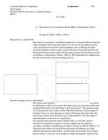
Moscardo et al. model 1996
Moscardo et al. provides a bit different approach to consumer behavior than the other researchers. He argues that motives can be seen as providing travellers with expectations for activities and destinations seen as offering activities…Existing destination choice models can be both more destination-specific and bring travel motives more clearly into the choice process by including activities as attributes of destinations (Pearce, 2005, p. 106). Basically he is emphasizing the role of activities in decision making process.
B Traveller/ Socio-psychological variable
Motives Experience Life cycle
Income
Available time
A Marketing variables/external inputs
Information about destinations
C Images of destinations
Activities as attributes

D Destination choice
Based on a match between perceived activities offered and preferred activities
E Destinations
( offer and promote activities)
Decision making process to Rovaniemi
My partner and I decided to go away for Christmas in 2010. So I consider the need to get away from the routine and traditional Christmas with the family as the “ push factor ”. The decision made was influenced by many aspects. Most important influence was the image of the place . Since we were planning to travel in Christmas time then what else can be more perfect than the home city of Santa himself ? Also the image of that destination can be seen as a “pull factor”.
Our personal characteristics fitted with this place as well. We could be classified as allocentric travellers or in more simple way the explorers according to Cohen ´s classification of tourists (Cooper & Gilbert, 2008, p. 51). Therefore after doing our research about the place and finding out all the different adventurous options there, we had made up our mind. And I believe that our choice to travel by car is another example of being the explorer (The trip is organized independently, however the accommodation needs to be comfortable, hence the nice hotel we picked out for our 3 day stay there).
Moscardo et al. suggests that the decision making starts with the information seeking either it comes from marketing or just from the travellers own initiative to look for information. In our example we had some sort of positive picture from the place first and consequently we started to look for extra information. No marketing was done in that specific moment but the overall image of the destination is the output of some sort of marketing in the past.
The motives that Moscardo sets as the second step of making the decision were as said before, getting out of the routine, looking for adventures (experience), and the time of Christmas- spending it in a way that we would remember for the rest of our lives . We had raised money for the trip and decided to use the time meant for Christmas holiday the most pleasant way we could. Also our relationships situation was favorable to spend time in the winter wonderland (first Christmas together). These were the aspects that motivated us to go to that specific destination in that specific time.
We were considering another option at the time as well. We were thinking about some other ski resort and a stay in the cottage . But eventually the image of the possible activities on the destination was crucial . Lapland had so many more attractions and activities to offer. We were excited about all the different activities Lapland safaris were providing. For example they have snowmobile safari to wilderness, Santa-Claus safari, Legend of four winds, husky-safari, Ride of your life and many more. We decided to go on a ride of our lives, meaning reindeer safari. These organized safaris are the attributes of the image of Lapland. That is usually the main reason why tourists go there. So in that case Moscardo et al.´s model is very accurate by focusing on the activities as the main factors in decision making process.
Basically the choice of the destination was very easy to make. As it says in the model that the destination choice is based on a match between perceived activities offered and preferred activities. For us the match was perfect and Lapland offered just the right activities for our taste .
When we were already in Rovaniemi, we got to know even more options via hosts. They suggested us to go to the Santa´s Park which we did and were glad that we did. So the promotion on sight was good and relevant .
Overall experience was extremely satisfying and I would suggest everybody to go there especially in Christmas time. Our decision making process was successful and the post purchase evaluation is thoroughly positive. In the future this kind of good feedback of the destination will awake the arousal to travel there again , whether it is me or the people I´ve been promoting this place.
Conclusion In my opinion consumer behavior is a study that tries to guess why people are buying certain things in certain time and place and for the certain cost . But after looking into the findings of the researchers and the models created, I still feel that further research is needed. Every consumer is an individual and I believe that personality is the most important influence in buying something . And personality is a difficult phenomenon to measure .
Mascardo et al. focused on the activities, but not always people decide to go somewhere only based on the activities the destination has to offer. In my case it was adequate, that is why I chose his model and described my decision making process according to it.
References Cooper, C. & Gilbert, D. 2008. Tourism Principles and Practice : Chapter 2: Tourism Consumer behavior. Fourth edition
Moutinho, L. & Ballantyne, R. & Rate, S. 2011. Strategic Management in Tourism: Chapter 5: Consumer Behavior in Tourism.
Sandhusen, R. L. 2000. Marketing: Chapter 9:Consumer Behavior
www.consumerpsychologist.com
www.psychologytoday.com/basics/consumer-behavior
Pearce, P. L. 2005. Aspects of Tourism: Tourist Behavior: Themes and Conceptual Schemes
Consumer behavior #1 Consumer behavior #2 Consumer behavior #3 Consumer behavior #4
Punktid 50 punkti Autor soovib selle materjali allalaadimise eest saada 50 punkti.
Leheküljed ~ 4 lehte Lehekülgede arv dokumendis
Aeg2014-09-08 Kuupäev, millal dokument üles laeti
Allalaadimisi 1 laadimist Kokku alla laetud
Kommentaarid 0 arvamust Teiste kasutajate poolt lisatud kommentaarid
Autor girli88 Õppematerjali autor
Consumer behavior definition, consumer behavior models

Kasutatud allikad

Sarnased õppematerjalid

Cialdini raamat
548
pdf

Cialdini raamat

_. _ INTRODUCTION My purpose was to observe, from the inside, the techniques and strategies most commonly and effectively used by a broad range of compliance practitioners. That program of observation sometimes took the form of interviews with the prac- titioners themselves and sometimes with the natural enemies (for example, police bunco-squad officers, consumer agencies) of certain of the practitioners. At other times, it involved an intensive examination of the written materials by which com- pliance techniques are passed down from one generation to another-sales man- uals and the like. Most frequently, though, it took the form of participant observation. Partici- pant observation is a research approach in which the researcher becomes a spy of sorts

Psühholoogia
Psühholoogia bioloogiline--kognitiivne- ja sotsiaalne vaade
26
doc

Psühholoogia bioloogiline-, kognitiivne- ja sotsiaalne vaade

PSYCHOLOGY PART 1: CORE Biological level of analysis Outline principles that define the biological level of analysis. 1) Behavior can be innate, because it is genetically based. Evolution may play a key role in behavior. 2) Animals may be studied as a means of understanding human behavior. 3) There are biological correlates of behavior. Cognitions, emotions and behaviors are products of the anatomy and physiology of our nervous and endocrine system. Explain how principles of the biological level of analysis may be demonstrated in research. 1) Correlational studies: Study by Buss, who hypothesized that across cultures, men will prefer to marry younger women because of greater reproductive capacity and women will place greater value on a potential mate's earning

Psühholoogia
Introduction of SCM
40
doc

Introduction of SCM

In essence, Supply Chain Management integrates supply and demand management within and across companies. 3 According to Cohen & Lee (1988) Supply Chain Management is "The network of organizations that are having linkages, both upstream and downstream, in different processes and activities that produces and delivers the value in form of products and services in the hands of ultimate consumer." Thus a shirt manufacturer is a part of supply chain that extends up stream through the weaves of fabrics to the spinners and the manufacturers of fibers, and down stream through distributions and retailers to the final consumer. Though each of these organizations are dependent on each other yet traditionally do not closely cooperate with each other. An integrated supply chain management streamlines processes and

Kategoriseerimata
Service marketing
2
docx

Service marketing

Service management Assignment 1(2) Girli Vasiljev HAAGAHELIA University of Applied Sciences RB1X 21.02.2012 Marketing Plans for Service Business Introduction I read a book named Marketing Plans for Service Businesses. Authors were Malcolm McDonald and Adrian Payne. Before writing about the content I would recommend this book for everybody, because the difficult subject was written very clearly and understandably there. Chapter 1 It provides a broad view of marketing as it relates to services. It describes the marketing concept and some misunderstandings about marketing. It particularly emphasizes the development of the service value proposition as it is at the heart of the strategic marketing

Inglise keel
Monopolistic competition
5
docx

Monopolistic competition

basic change from the purely competitive market model. Thedifferentiation of output results in the demand faced by each seller being less than perfectly elastic. · Since there are "many sellers," many substitutes for each seller's output is implied. This suggests that the demand faced by a firm in a monopolistically competitive market is likely more elastic than in a monopoly. The elasticity obviously depends on the preferences and behavior of the buyers. The negative slope of a firm's demand function in imperfect competition results in a different result than in pure competition The conditions of entry and exit to and from a monopolistically competitive market are similar to the purely competitive market; there are no major BTE. · Entry and exit are relatively easy. The relative ease of entry/exit makes the long run results of an imperfectly competitive market different from a monopoly.

Micro_macro ökonoomika
Thesis Kivimaa August 2022
140
pdf

Thesis Kivimaa August 2022

Thesis “How is it possible to calculate IT security effectiveness?” Kristjan Kivimaa August 2022 1 Abstract In IT Security world, there is lack of available, reliable systems for measuring security levels/posture. They lack the range of quantitative measurements and easy and fast deployment, and potentially affects companies of all sizes. Readily available security standards provide qualitative security levels, but not quantitative results – that would be easily comparable. This deficiency makes it hard for companies to evaluate their security posture accurately. Absence of security metrics makes it complicated for customers to select the appropriate measures for particular security level needed. The research question for this research project is – “How is it possible to calculate IT security effectiveness?”. The aim of this research is to use this reference m

Infotehnoloogia
Integration of Lean Con-and Building Information Modelling
109
pdf

Integration of Lean Con. and Building Information Modelling

Ergo Pikas Integration of Lean Construction and Building Information Modelling DISSERTATION Tallinn 2010 2 UNIVERSITY OF APPLIED SCIENCES Author: Ergo Pikas- Civil Engineering student, Faculty of Construction, Tallinn University of Applied Sciences Supervisor: Rafael Sacks- Associate Professor, Faculty of Civil and Env. Engineering, Technion ­ Israel Institute of Technology Consultant: Roode Liias- Professor and Dean, Faculty of Civil Engineering, Tallinn University of Technology Title: Integration of Lean Construction and Building Information Modelling Archived: University of Applied Sciences, Faculty of Construction ABSTRACT This research can be divided into two. The first part investigates the current state of the construction industry, while the second part looks at new emerging busin

Ehitusjuhtimine
Education
14
doc

Education

Education Education is so multifaceted that it is difficult for me to know where to begin discussing it, or how to prioritize the many factors. Relaying my own experience is easy: I had a standard classroom approach, supplemented by inordinate reading. In only the briefest and least memorable instances did I receive any individual tutoring. Education is commonly thought of as the job of schools. Adults cry "educate our children!" Everyone has opinions about the best way to do the job. It is of urgent importance, and all the numerous factors are much studied, debated, and new (or old) ideas continually tested or retested. Some people say "it's as simple as . . . " and then name their pet peeve or passion. My view is not of an education specialist, but of one who loves sharing what I learn, and owes much to educators. Since I don't have an educational theory neatly worked-out, nor an outline of my perceptions, my intent is to address each educational ingredient that comes to my m

Inglise keel


Kommentaarid (0)

Kommentaarid sellele materjalile puuduvad. Ole esimene ja kommenteeri


Sellel veebilehel kasutatakse küpsiseid. Kasutamist jätkates nõustute küpsiste ja veebilehe üldtingimustega Nõustun