Vajad kellegagi rääkida?
Küsi julgelt abi LasteAbi
Logi sisse

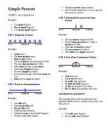
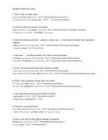
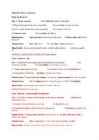
Inglise keele eksamiks (4)

3 HALB
Punktid
Inglise keel - Kõik luuletused, mis on inglise keeles

Esitatud küsimused

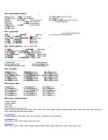
  • Millal from where?
Unit 1/ Present Simple be /lihtolevik
+ - ?
I am your teacher I’m not am I German ? Yes- I am, you are, she/she/it is, we are,
You are in room 13 you aren ’t am you German? you are, they are.
He is jane he/she/it isn’t Is he/she/it German? No – I’m not, you aren’t, he/she/it isn’t, we aren’t,
She is marta we aren’t are we German? you aren’t, they aren’t.
It is a school. you aren’t are you German?
We are students they aren’t are they German?
You are in class 12
They are teachers
Unit 2 / present simple
+ - ? yes- I do, you do, he/she/it does.
I work I don’t work Do I work no – I don’t, you don’t, he/she/it doesn’t
You work you don’t work do you work?
He/she it works he/she/it doesn’t works does he/she/it work
We work we don’t work do we work
You work you don’t work do you work?
They work they don’t work do they work?
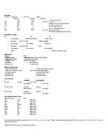
Unit 6 / Present Continuous be- verb -ing / kestev olevik
+ - ?
I am crying I’m not crying am I crying?
You are having a party you aren’t crying are you crying?
He/she/it is crying he/she/it isn’t crying is he/she/it crying?
We are having a party. We aren’t crying are we crying?
You are crying you aren’t crying are you crying?
They are crying they aren’t crying are they crying?
Present simple or Present continuous
Present Simple Present Continuous
My sister works in a bank today she’s working at home.
What do you usually wear to work? What are you wearing now?
Unit 5 / Past Simpel
+ - ?
I worked yesterday I didn’t work yesterday did I work yesterday`?
You worked yesterday you didn’t work yesterday did you work yesterday?
He/she/it worked yesterday he/she/it didn’t work yesterday did he/she/it work yesterday?
We worked yesterday we didn’t work yesterday did we work yesterday?
You worked yesterday you didn’t work yesterday did you work yesterday?
They worked yesterday they didn’t work yesterday did they work yesterday?
Unit 7 be going to (plans)
+ - ?
I’m going to eat I’m not going to eat am I going to eat?
You are going to eat. You aren’t going to eat are you going to eat?
He/she/it is going to eat He/she/it isn’t going to eat is he/she/it going to eat?
We are going to eat we aren’t going to eat are we going to eat?
You are going to eat you aren’t going to eat are you going to eat?
They are going to eat they aren’t going to eat are they going to eat?
Plural of nouns – nimisõnade mitmus
  • s
a windowwindows
a student – students
a key – keys,
a roof – roofs
-es sõna lõpulisetele – ch, sh, s, ss, x, o
A watch- watches, a bush - bushes, a bus – buses , a class – classes , a fox – foxes, a potato – potatoes, a tomato - tomatoes, a book – books , a key – keys, a box – boxes, miss – misses, wash -washes, mix-mixes, go- goes , do-does.
-ies consonant +-y
a country – countries, a diary- diaries, a boy – boys , a dictionary – dictionaries, try –tries, play-plaies.
-ves lõpulistele –f, -fe
a leaf – leaves , a wolf – wolves, a knife – knives, a life – lives
Irregular nouns
a man – men, a womanwomen , a childchildren , a person – people, a sheep – sheep, a tooth – feet, a mousemice , a goose – geese
Pronouns
Personal : Possessive possessive Object
adjective: pronouns: pronouns:
I my mine I – me – wait for me
You your yours you-you – I love you
He his his me-him – she isn’t in love with him
She her hers she – her – he kisses her
it its it – it – I don’t like it
we our ours we – us – can you help us?
they their theirs you – you –see you tomorrow
they – them – phone them this evening
Prepositions of time
IN ON AT

There is/are
Singular Plural
+ There’s a piano + there are some glasses in the cupboard
- There isn’t a fridge - there aren’t any pictures
? Is there a TV? ?are there any glasses?
Yes, there is yes, there are.
No, there isn’t no, there aren’t
There was/there were
+ there was an old TV + there were only three guests
- there wasn’t a remote control -there weren’t any more people
? was there a ghost? ?were there any lights ?
Yes, there was yes, there were
No, there wasn’t no, there weren’t
a/an, some/any
+ countable uncountable
we need an apple some butter
some apples some milk
We don’t need a tomato any rice
Any tomatoes any sugar
Do we need a tomato? any rice?
any tomatoes? any sugar?
Past Simple irregular verbs
Infinitive past+ past-
Go went didn’t go
Have had didn’t have
Get got didn’t get
Buy bought didn’t buy
Leave left didn’t leave
Drive drove didn’t drive
Meet met didn’t meet
See saw didn’t see
Wear wore didn’t wear
Do did didn’t do
Kestvat olevikku kasutatakse tegevusverbides (I am dancing, you are eating etc.). Mõned verbid on mitte-tegevusverbid, näiteks ei saa öelda I am liking või you are knowing, vaid I like ja you know .
Järgmiseid verbe ei kasutata tavaliselt kestvas olevikus .
like    love    hate    want    need    prefer    know    realise    suppose    mean    understand    believe    remember    belong    contain    consist    depend    seem
Top of Form
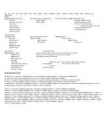
Where?
Me elame We live in Estonia.  Nad kohtuvad/they meet at school Pilt on/the pictures is under the table/laua all
             in Tartu.  At the cinema above the table/laua kohal
             at Kunda.(väike linn)  on the beach behind the table/laua taga
             in the city.  In front of the table/laua ees
             in this streetBetween the tables/laud.vahel
             at 5 Kooli street.  At the window/akna juures
             near the cinema.  On the wall /seinsal
             on the first floor.
To where?kuhu?
I will go to Latvia.  I put i/ma panin on the table.  She sat/ta istus. 
            to school.  into my pocket.              in an armchair
            to the cinema.   into the water. Under the sky
            into the bus.  on the table on the sofa. 
            to the bus. 
            towards the gate
            up to the gate.
when?millal? from where? Kust?
We arrived at 7 o`clock.  I come back from Latvia, from school, from the cinema, from work.
                 before dinner .  She took it out of the bag, from her bag, from the table.
                 after dinner.  We jumped of horse , off the chair .
                 at the same time. 
                 at Easter. 
                 on Friday.  I stayed for a year she was there from Monday to Friday
                 on the second of January .  For two weeks from 2 o’clock to/ till 5 o’clock
                 on Monday evening.  For lunch
                 in the afternoon.  Until /till 5 o’clock
                 in 2006. in spring.
Kindla eesõnaga sõnad
be absent from – puuduma , (kuskilt)be afraid of – kartma (kedagi, midagi),be angry at – vihane olema (millegi peale)
be angry with - vihane olema (kellegi peale), be fond of – kiindunud olema (kellessegi, millessegi)
be full of – täis olema (kedagi, midagi), be good at – hea olema ( milleski ),be interested in – huvitatuma (kellestki, millestki )
be keen on – huvituma (kellestki, millestki), be kind to – lahke olema (kellegi vastu),be late for – hilinema (millekski)
be pleased with – rahul olema (millegagi),be proud of – uhke olema (kellegi, millegi üle), be satisfied with – rahul olema (kellegagi, millegagi), be short of – puuduses olema (milleski), be surprised at – imestama (millegi, kellegi üle)
agree to – nõus olema (millegagi),agree with - nõus olema (kellegagi),believe in – uskuma (millessegi, kellessegi)
belong to – kuuluma (millelegi, kellelegi)call on – külastama (midagi, kedagi), consist of – koosnema (millestki, kellestki)
depend on – sõltuma (millestki, kellestki), fall in love with – armuma (millessegi, kellessegi), happen to – juhtuma (millegagi, kellegagi)insist on – nõudma (midagi), listen to – kuulama (midagi, kedagi), look after – (kellegi) järgi vaatama, look at – vaatama (kedagi, midagi), look for – otsima (kedagi, midagi), look forward to – ootama (midagi), pay attention to – tähelepanu pöörama (kellelegi, millelegi), prevent from – takistama (midagi) tegemast, say to – ütlema (kellelegi), seem to – näima (kellelegi), smile at – naeratama (kellelegi, millegi peale), speak of – rääkima (kellestki, millestki), speak on – rääkima (mingil teemal), speak to – rääkima (kellegagi), spend on - kulutama (millelegi), take part in – osa võtma (millestki), talk to – rääkima (kellegagi), thank for – tänama (millegi eest), think about – mõtlema (kellestki, millestki),think of – arvama (kellestki, millestki),
wait for – ootama (kedagi, midagi)
Inglise keele eksamiks #1 Inglise keele eksamiks #2 Inglise keele eksamiks #3
Punktid 50 punkti Autor soovib selle materjali allalaadimise eest saada 50 punkti.
Leheküljed ~ 3 lehte Lehekülgede arv dokumendis
Aeg2011-03-24 Kuupäev, millal dokument üles laeti
Allalaadimisi 132 laadimist Kokku alla laetud
Kommentaarid 4 arvamust Teiste kasutajate poolt lisatud kommentaarid
Autor pisikene26 Õppematerjali autor
inglise keele vormid, eksamiks nõuded

Sarnased õppematerjalid

English Grammar Book 1
159
pdf

English Grammar Book 1

Book 1 BASIC ENGLISH BASIC ENGLISH GRAMMAR GRAMMAR BASIC ENGLISH GRAMMAR Book 1 Book 1 Younger students at beginning to intermediate levels will greatly benefit from this step-by-step approach to English grammar basics. This is the ideal supplement to your language arts program whether your students are native English speakers or beginning English language learners. Skill-specific lessons make it easy to locate and prescribe instant reinforcement or intervention. · Illustrated lessons a

Inglise keel
Grammatika inglise keel
30
doc

Grammatika inglise keel

I/we will ask I/we will not ask Will I ask? He/she/it will go He/she/it will not go Will he/she/it go? You/they will make You/they will not make Will we/you/they make? Pane tähele! Üldtuleviku moodustamiseks kasutatakse abiverbe will/shall. Traditsiooniliselt esineb shall ainsuse ja mitmuse 1. pöördes ( I, we ). Kaasaegses inglise keeles kasutatakse will kõigis pööretes ning shall, et küsida kellegi arvamust, kuid tendents on kasutada abiverbi will kõigis pööretes. Will/shalltuleviku asemel saab kasutada mitmetel juhtudel going totulevikku. Üldtulevik väljendab: · Ühekordset, korduvat või harjumuspärast tegevust tulevikus. I will meet John in the station. My birthday will come again. · Tegevust või situatsiooni, mis kestab tulevikus.

Inglise keel
Inglise keele põhitõed algajale
42
pptx

Inglise keele põhitõed algajale

INGLISE KEELE PÕHITÕED C.K 2017 A – AN – SOME Singular: a or an Use some for things you can't count ◦ *a banana *a car *a monkey *a football ◦ *some milk *some water *some coffee ◦ *an egg*an accident *an umbrella *an *some sugar eagle ◦ *some tea *some juice*some money *some butter Plural: some Exercises: 1. http://www.english-4u.de/a_an_some_ex1.htm ◦ *some bananas *some cats *some monkeys *some 2. http://www.english-4u.de/a_an_some_ex3.htm balls ◦ *some eggs*some oranges *some umbrellas *some 3. http://www.english-4u.de/a_an_some_ex6.htm eagles We us the

Inglise keel
Inglise keele jaotusmaterjal
37
doc

Inglise keele jaotusmaterjal

50 9.15 10.45 19.05 6.15 7.45 20.15 19.40 14.30 16.29 23.25 5.49 8.02 13.55 17.09 18.22 Addresses Aadressidest rääkides kasutatakse eessõna at, kui öeldakse ka korteri või maja number, ning eessõna in, kui öeldakse ainult tänava nimi. They live at 5 Oxford Street. She got a job in Weston Road. Ameerika inglise keeles kasutatakse tänavatest rääkides eessõna on. He lives on Penn Street. What's the address? Do you know the address? Practise asking and saying addresses: Süda 1, 10118 Tallinn Akadeemia tee 311 Kentmanni 25-91 Saue, Harjumaa, 76402 Jõgisoo MODULE 5 Word order A Verb + object I like children very much. Did you see your friends yesterday? Ann often plays tennis.

Inglise keel
Ajavormide teooria
18
doc

Ajavormide teooria

Windows are not made of wood. Simple Present · · New York is a small city. It is not important that this fact is untrue. [VERB] + s/es in third person USE 3 Scheduled Events in the Near Examples: Future · You speak English. · Do you speak English? · You do not speak English. USE 1 Repeated Actions Examples: · The train leaves tonight at 6 PM. · The bus does not arrive at 11 AM, it arrives at 11 PM. ·

Inglise keel
Golden Grammar rules
10
doc

Golden Grammar rules

Golden Grammar rules 1. Don't use an with own. Sue needs her own room. (NOT Sue needs an own room.) I'd like a phone line of my own. (NOT ... an own phone line.) 2. Use or rather to correct yourself. She's German ­ or rather, Austrian. (NOT She's German ­ or better, Austrian.) I'll see you on Friday ­ or rather, Saturday. 3. Use the simple present ­ play(s), rain(s) etc ­ to talk about habits and repeated actions. I play tennis every Saturday. (NOT I am playing tennis every Saturday.) It usually rains a lot in November. 4. Use will ..., not the present, for offers and promises. I'll cook you supper this evening. (NOT I cook you supper this evening.) I promise I'll phone you tomorrow. (NOT I promise I phone you tomorrow.) 5. Don't drop prepositions with passive verbs. I don't like to be shouted at. (NOT I don't like to be shouted.) This needs to be thought about some more. (NOT This needs to be thought some more.) 6. Don't use a present tense after It's time. It's t

Inglise keel
English Tenses - theory
17
pdf

English Tenses - theory

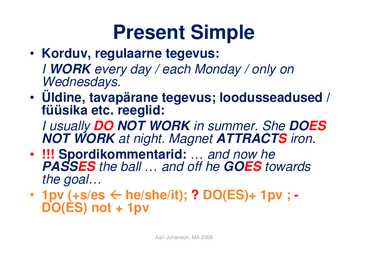
Present Simple · Korduv, regulaarne tegevus: I WORK every day / each Monday / only on Wednesdays. · Üldine, tavapärane tegevus; loodusseadused / füüsika etc. reeglid: I usually DO NOT WORK in summer. She DOES NOT WORK at night. Magnet ATTRACTS iron. · !!! Spordikommentarid: ... and now he PASSES the ball ... and off he GOES towards the goal... · 1pv (+s/es Å he/she/it); ? DO(ES)+ 1pv ; - DO(ES) not + 1pv Aari Juhanson, MA 2008 Present Progressive · Hetkel toimuv, pooleliolev tegevus: S/he IS TALKing on the phone now. I AM READing an interesting book. · Ajutine, regulaarsele ja tavapärasele vastanduv tegevus (tulevikku viitav): This summer they ARE not GROWing cucumbers as usual. They'RE GROWing tomatoes instead. · !!! Halvakspanu väljendus harjumuspärase tegevuse kohta: He IS always COMPLAINing! · BE (am/is/are) + 1pv-ing Aari Juhanson, MA 2008 Present Perfect ON -NUD ·

Inglise keel
Past and Present tenses
4
doc

Past and Present tenses

PRESENT SIMPLE (lihtolevik) Form: 1st form (+s) Use: 1. Things in general. Nurses look after patients in hospitals. 2. Things that happen all the time or repeatedly. She usually goes away at weekends. 3. Laws of nature (things that are true in general). The sun rises in the east. 4. Timetable events. The train leaves at 6.50 p.m. Negative form: I don't (do not) normally eat my lunch here. He doesn't (does not) like this film at all. Question form: Do you live here? How often does it rain around here? Signal words: always, every day/month, never, normally, often, seldom, sometimes, usually etc. PRESENT CONTINUOUS/PROGRESSIVE (kestev olevik) Form: am/is/are + ing Use: 1. Unfinished actions happening at or around the time of speaking. Listen! Somebody is crying. They are building a new bridge in our town. 2. Changes happening around now.

Inglise keel


Kommentaarid (4)

summerbeauty profiilipilt
summerbeauty: oli kasu :)

14:47 01-05-2011
Coolfun profiilipilt
Coolfun: liiga väike
16:18 30-01-2013
veronja20 profiilipilt
veronja20: hea materjal
10:54 17-05-2011


Sellel veebilehel kasutatakse küpsiseid. Kasutamist jätkates nõustute küpsiste ja veebilehe üldtingimustega Nõustun