Vajad kellegagi rääkida?
Küsi julgelt abi LasteAbi
Logi sisse

Aniliini riskianalüüs (eng) (0)

1 Hindamata
Punktid
Tallinna tehnikaülikool
Riski- ja ohutusõpetus keemiatööstuses
Referaat:
Kemikaali riskianalüüs
Aniliin
Õppejõud: Karin Reinhold
Üliõpilane: ХХХ
Kood: 000000ХХХ
Tallinn 2012
  • Introduction
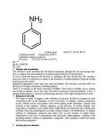
    Aniline (also known as phenylamine or aminobenzene) is an organic compound with the formula C6H5NH2. Consisting of a phenyl group attached to an amino group, aniline is the prototypical aromatic amine .
    The largest application of aniline is for the preparation of methylene diphenyl diisocyanate. The majority of aniline serves this market . Other uses include rubber processing chemicals (9%), herbicides (2%), and dyes and pigments (2%). Illustrative of the drugs prepared from aniline is paracetamol. The principal use of aniline in the dye industry is as a precursor to indigo , the blue of blue jeans .
    Like most volatile amines, it possesses the unpleasant smell of rotten fish .
  • Physico-chemical properties
    Name: Alinine
    CAS number: 62-53-3
    IUPAC name: Phenylamine
    Molecular formula: C6H5NH2
    Physical properties:
    Molar mass: 93.13 g/mol
    Appearance: colorless liquid
    Density: 1.0217 g/mL,
    Melting point: -6.3 °C
    Boiling point: 184.13 °C, 457 K, 363 °F
    Solubility in water: 3.6 g/100 mL at 20°C
    Solubility in ethanol : perfectly
    Viscosity: 3.71 cP (3.71 mPa·s at 25 °C)
    pH: >7
    log Pow: 0.90/0.98
    Koc: 25,5
  • Kinetics and metabolism
    The substance can be absorbed into the body by inhalation, through the skin and by ingestion, also as a vapour. The mean lethal dose of aniline may be between 15 and 30 grams.
    In case of short- term exposure the substance is irritating to the eyes and the skin. The substance may cause effects on the blood , resulting in the formation of methaemoglobin. Exposure at high levels may result in death .
    Repeated or prolonged contact may cause skin sensitization. The substance may have effects on the blood, resulting in formation of methaemoglobin.
    Tends to accumulate in the body, especially in bladder. Often leads to bladder cancer . Aniline was tested on animals , but in mice was observed no increase in tumour incidence, in rats, it produced fibrosarcomas, sarcomas and haemangiosarcomas of the spleen and peritoneal cavity.
  • Behavior in the wild
    Not found in nature . If appears , starts oxidation. In reactions localized at nitrogen or more commonly results in the formation of new C-N bonds. In alkaline solution , azobenzene results, whereas arsenic acid produces the violet -coloring matter violaniline. Chromic acid converts it into quinone, whereas chlorates, in the presence of certain metallic salts (especially of vanadium), give aniline black . Hydrochloric acid and potassium chlorate give chloranil. Potassium permanganate in neutral solution oxidizes it to nitrobenzene, in alkaline solution to azobenzene, ammonia and oxalic acid, in acid solution to aniline black. Hypochlorous acid gives 4-aminophenol and para-amino diphenylamine. Oxidation with persulfate affords a variety of polyanilines compounds. These polymers exhibit rich redox and acid-base properties.
  • Toxicity data on chemical
  • General toxicity
    • Acute toxicity after single administration

    The average lethal inhalation dose for humans is reported to be 25 mg/l air or 0.35-1.43 g/kg bodyweight. With respect to methaemoglobin formation the no- effect dose of aniline in adult human is about 0.2 mg/kg bodyweight. In animal experiments the acute toxicity of aniline shows significant species differences , with cats being much more sensitive than conventional laboratory animals.
    • General toxicity after repeated administration

    The main endpoint of aniline after repeated dosing is toxicity to the haematopoietic system with erythrotoxicity, methaemoglobinaemia, haemolytic anaemia and formation of Heinz bodies, with corresponding changes of the spleen, the bone marrow, the kidneys and the liver . The damaged red blood cells are scavenged predominantly in the red pulp of the spleen, followed by increased haemosiderin accumulation . Experience from humans after repeated oral intake gives indications of haematotoxicity at dosages from 0.4 mg/kg bw/day.
  • Reproduction toxity

    The critical exposure level for potential developmental toxicity has been determined to be 150 mg/ person /day or 15 mg/m3.
    • Reproduction toxicity

    No effects in any of the organs of the reproductive system of either males or females (for mice). No information is available on the reproductive effects of aniline in humans.
    • Teratogenicity

    Toxic starting from 21 mg aniline/kg bw/day.
  • Carcinogenicity
    Aniline is currently classified as carcinogenic, category 3 and labelled with R40 “limitedevidence of a carcinogenic effect”. Animal studies have shown an increase in tumors of the spleen in rats exposed to aniline hydrochloride. EPA calculated an oral cancer slope factor of 5.7 x 10⁻³ (mg/kg/d) -1 and an oral unit risk estimate of 1.6 × 10⁻⁷ (µg/L)-1.
  • Genotoxicity and mutagenicity
    Aniline did not induce unscheduled DNA repair in primary human or rat hepatocytes. In mice, aniline induced micronuclei in several studies, but only at very high dose levels in the toxic range. Negative results have been found in the analysis of sperm head anomalies and equivocal results in the dominant lethal test.
  • Other toxic effects, e.g. immunotoxicity and local toxicity - No information available.
  • Ecotoxicity
    Toxic to aquatic organisms. Accumulates in their bodies.
  • Contact
    The primary method of obtaining aniline - restoration of nitrobenzene. Not found in nature.
    To my regret there is no information about aniline contact with humans on the internet , so I will just make a guess and inference from all I have raed on this theme.
    Aniline can be dangerous to workers during transport (damage equipment , etc.)
    Dyes are made from aniline, chemists who are engaged, are at risk of poisoning. Aniline can be absorbed through the skin or by inhalation. Thus, the danger increases . If the worker does not use all the means of protection , it is subjected to greater risk. A large number of workers in chemical. industry (aniline factories) is in danger of aniline poisoning: textile (dyeing and printing ), pharmaceutical ( manufacturing of neo-salvarsan) and rubber (using aniline as a solvent). At the comfortable aniline factories whole process of getting aniline from start to finish is mechanized, and workers do not have any contact with raw products , semi- finished and finished products, or inhale the fumes. Yet even here we have such cases (break pipes, damage equipment, etc.), under which can turn acute poisoning of workers. At the same time uncomfortable factories there are favorable conditions for both acute and chronic toxicity for workers.
    Aniline is very dangerous for marine animals, as accumulated in the bodies and leads to death.
    Also should be noted that alcohol consumption increases the toxicity aniline.
  • Toxicity, hazard and risk analysis
    Nowadays norms on aniline in Estonia are: 4 mg/m3 and for short-time contact 8 mg/m3.
    In the case of continuous operation with aniline, there is a constant inhalation of its vapor and skin contact. As a result, cancer develops. We know a lot of such cases.
    On the factories where is produced aniline people work not in isolated areas . Because of this, aniline steam are being inhaled by a lot of those workers who even do not work with aniline.
    Danger: leak of aniline to the ponds
    Source of risk: the human factor, broken pipes
    Results: death of aquatic organisms, intoxication, may be some unknown results
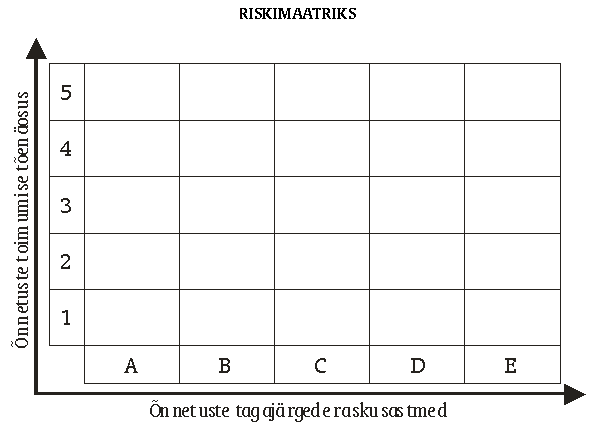
    Damages due to accident : 3C
    Life and health – B – limited. Some toxins can enter the human body through the eaten fish.
    Environment – D – heavy . Serious damage to ecosystems .
    Property – depends on leak rate .
    Danger: inhaled vapor 3C
    Source of risk: work without protection, human factor
    Results: acute and chronic toxicity for workers
    Damages due to accident:
    Life and health – E – very heavy. Death danger, can be injured people, who do not work with aniline
    Environment – B – limited. Too much aniline vapor can also influence the environment
    Property – A - no danger.
    Danger: adsorbed through skin aniline 3B
    Source of risk: work without protection, human factor
    Results: acute and chronic toxicity for workers
    Damages due to accident:
    Life and health – D – heavy. Death danger.
    Environment – A – no danger
    Property – A - no danger.
    To reduce the risk of intoxication with aniline:
    If you spilled a significant amount of aniline all work must be cancelled immediately, all people should leave the room , the window should be opened. The elimination of accidents must be thrown in gas masks, rubber boots and rubber gloves.
    All work with aniline should be carried out in a fume hood or in areas with a good supply and exhaust ventilation.
    We need to monitor carefully the quality of containers and the pipeline to not let happened leakage of the substance.
  • Comments
    Very few information on this substance.
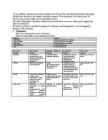
    Here are some tables of classification of risks.
    Tõenäosus
    Sagedus
    1 Mittetõeline
    Vähem kui kord 25 aasta jooksul
    2 Vähe tõenäoline
    Vähemalt kord 25 aasta jooksul
    3 Tõenäoline
    Vähemalt kord 5 aasta jooksul
    4 Väga tõenäoline
    Vähemalt kord aastas
    5 Sage
    Vähemalt kord kuus
    Klass/aste
    Elu ja tervis
    Elutähtis valdkond
    Keskkond
    Vara (eur)
    A Puudub
    Ei ohusta
    Ei ohusta
    Ei ohusta
    Ei ohusta
    B Piiratud
    Tervisehäired ja vigastused, mis ei vaja haiglaravi ning millega ei kaasne jäädavaid kahjustusi
    Lühiajalised häired valdkonna toimimises
    Kahjud, mis kaovad ise ilma muid tagajärgi põhjustamata või on likvideeritavad päästetööde käigus
    Kahju suurus vähem kui 50 tuh.
    C Tõsine
    Haiglaravi või jäädavad tervisekahjustused
    Vajalik tagavarasüsteemide või alternatiivmeetmete rakendamine
    Täielikult taastuv või taastatav kahju, mis mõjutab ümbritsecvat elukeskkonda või millest tulenevalt tulebkehtsetada ajutisi piiranguid
    Kahju suurus 50 – 100 tuh.
    D Raske
    Õnnetused, mis lõppevad surmaga või kus kannatanute arv ületab piirkonda teenindava tervishoiuasutuse võimalused
    Valdkonna ajutine mittetoimimine vähendab oluliselt elukeskkonna ohutust
    Elukeskkonna pikaajaline või tõsine kahjustus, mis in suuremas osas taastatav või taastuv
    Kahju suurus 100 – 500 tuh.
    E Väga raske
    Hukkunute arv üle 20; kannatanute arv ületab riikliku tervishoiusüsteemi poolt tagatud efektiivse teenindamise võimalused. Vajalik asustatud piirkonna evakueerimine
    Valdkond on täielikult lakatud toimimast
    Taastumatu ja taastamatu või lokaalselt elukeskkonna hävingut põhjustav kahju
    Kahju suurus 500 tuh. – 2 mlj.
    9. Literature
  • Vasakule Paremale
    Aniliini riskianalüüs-eng #1 Aniliini riskianalüüs-eng #2 Aniliini riskianalüüs-eng #3 Aniliini riskianalüüs-eng #4 Aniliini riskianalüüs-eng #5 Aniliini riskianalüüs-eng #6 Aniliini riskianalüüs-eng #7
    Punktid 10 punkti Autor soovib selle materjali allalaadimise eest saada 10 punkti.
    Leheküljed ~ 7 lehte Lehekülgede arv dokumendis
    Aeg2012-05-14 Kuupäev, millal dokument üles laeti
    Allalaadimisi 38 laadimist Kokku alla laetud
    Kommentaarid 0 arvamust Teiste kasutajate poolt lisatud kommentaarid
    Autor Talve Rauta Õppematerjali autor
    Anillini iseloomustus, füüsiko-keemilised omadused, kineetika ja metabolism, selle toksilisuse omadused ja riskid.

    Kasutatud allikad

    Sarnased õppematerjalid

    Formaldehyde
    11
    doc

    Formaldehyde

    Formaldehyde Formaldehyde is a colorless, flammable gas at room temperature. It has a pungent, distinct odor and may cause a burning sensation to the eyes, nose, and lungs at high concentrations. Formaldehyde is also known as methanal, methylene oxide, oxymethylene, methylaldehyde, and oxomethane. Formaldehyde can react with many other chemicals, and it will break down into methanol (wood alcohol) and carbon monoxide at very high temperatures. Formaldehyde is naturally produced in very small amounts in our bodies as a part of our normal, everyday metabolism and causes us no harm. It can also be found in the air that we breathe at home and at work, in the food we eat, and in some products that we put on our skin. A major source of formaldehyde that we breathe every day is found in smog in the lower atmosphere. Automobile exhaust from cars without catalytic converters or those using oxygenated gasoline also contain formaldehyde. At home, forma

    Inglise keel
    Dioxins and furans in the atmosphere
    13
    pptx

    Dioxins and furans in the atmosphere

    D i ox i n s a n d f u r a n s i n t h e atmosphere. Their impact on humans and nature. Emission sources What are dioxines and furans? The term Dioxin is commonly used to refer to a family of toxic chemicals that all share a similar chemical structure and a common mechanism of toxic action. Most dioxins and furans are not manmade or produced intentionally, but are created when other chemicals or products are made. This family includes: seven of the polychlorinated dibenzo dioxins (PCDDs), ten of the polychlorinated dibenzo furans (PCDFs) and twelve of the polychlorinated biphenyls (PCBs). · PCDD · 2,3,7,8TCDD · PCDF · PCB · PCDDs and PCDFs are not commercial chemical products but are trace level unintentional byproducts of most forms of combustion and several industrial chemical processes. Of all of the dioxins and furans, one, 2,3,7,8tetrachloropdibenzo dioxin (2,3,7,8 TCD

    Inglise keel
    Harjutus 2
    16
    doc

    Harjutus 2

    TMT 0050 Harjutustöö nr 2 Töökeskkond ja ergonoomika Üliõpilase eesnimi ja prk nimi Aprahimov Rühma nr. XXXX11 Õppejõud Virve Siirak Ülesanne: Leida Euroopa Liidu töötajate kaitset (protection of workers) käsitlevates direktiivides iga direktiivi kohta tööandja (employer) kohustused: Ülesanne: lahendamiseks kasutada linki:http://europe.osha.eu.int/legislation/ Vaadata üle direktiivid A. 1 ­ 1.2.15. Mitte tõlkida. Kuna infot on palju, siis kirjutada kõige olulisem. · Töö vormistada ja saata mulle elektrooniliselt [email protected] · Töö lõppu lisada oma isiklik arvamus tööandja osast töötajate kaitsel Euroopa Liidu direktiivides Direktiivi number Tööandja kohustused ja nimetus Council Directive 1. Employers shall be obliged to perform an analysis of workstations in 90/270/EEC order to evaluate the safety and health conditions to which they give rise for their workers, particularly as

    Ergonoomika
    Addiction and drugs
    9
    doc

    Addiction and drugs

    school Addiction and drugs summary name form year Table of contents Smoking...............................................................................................page 3 Narcotics............................................................................................................................page 4 1. Marijuana..............................................................................page 4 2. Ecstasy.................................................................................page 5 3. Heroin.................................................................................p

    Inglise keel
    Caffeine
    3
    docx

    Caffeine

    1 Caffeine 2 3 Caffeine (C8H10N4O2) is the common name for trimethylxanthine (systematic name is 1,3,7- 4 trimethylxanthine or 3,7-dihydro-1,3,7-trimethyl-1H-purine-2,6-dione). The chemical is also 5 known as coffeine, theine, mateine, guaranine, or methyltheobromine. Caffeine is naturally 6 produced by several plants, including coffee beans, guarana, yerba maté, cacao beans, and tea. 7 For the plants, caffeine acts as a natural pesticide. It paralyzes and kills insects that attempt to 8 feed on the plants. The molecule was first isolated by the German chemist Friedrich Ferdinand 9 Runge in 1819. 10 When purified, caffeine is an intensely bitter white powder. It is added to colas and other soft 11 drinks to impart a pleasing bitter note. However, caffeine is also an addictive stimulant. In 12 humans, it stimulates the central nervous system, heart rate, and respiration, has psychotropic 13 (mood altering) p

    Inglise keel
    Alcohol
    5
    doc

    Alcohol

    ALCOHOL Alcohol is a widely used substance for both science and in technology. Its name comes from an Arabic word al-kuhl meaning " a powder for painting the eyes". The term was later applied to all compounds that contain alcoholic spirits. To most people alcohol is considerd a downer that reduces activity in the nervous system. Some of the things alcohol effects you is, the alcohol intoxicated person exhibits lose muscle tone, loss of fine moter coordination,and often has a staggering "drunken" gait. The eyes may appear somewhat "glossy" and pupils may be slow to respond to stimulus. At high doses pupils may become constricted. At intoxing doses, alcohol can decrease heart rate, lower blood pressure and respiration rate, and result in decreased reflex and slower reaction times. Skin may be cool to touch but to the user may feel warm or normal, profuse sweating may accompany alcohol use. Loose muscle tone, lose of fine motor coordination,odor of alcohol on the breath,a

    Inglise keel
    Liha töötlemine
    1168
    pdf

    Liha töötlemine

    Handbook of Meat Processing Handbook of Meat Processing Fidel Toldrá EDITOR A John Wiley & Sons, Inc., Publication Edition first published 2010 © 2010 Blackwell Publishing Blackwell Publishing was acquired by John Wiley & Sons in February 2007. Blackwell’s publishing program has been merged with Wiley’s global Scientific, Technical, and Medical business to form Wiley-Blackwell. Editorial Office 2121 State Avenue, Ames, Iowa 50014-8300, USA For details of our global editorial offices, for customer services, and for information about how to apply for permission to reuse the copyright material in this book, please see our website at www.wiley.com/ wiley-blackwell. Authorization to photocopy items for internal or personal use, or the internal or personal use of specific clients, is granted by Blackwell Publishing, provided that the base fee is paid directly to the Copyright Clearance Center, 222 Rosewood Drive, Danvers, MA 01923. F

    Inglise keel
    ENVIRONMENTAL PROBLEMS
    12
    pdf

    ENVIRONMENTAL PROBLEMS

    ENVIRONMENTAL PROBLEMS Our environment is constantly changing. However, as our environment changes, so does the need to become increasingly aware of the problems that surround it. With a massive influx of natural disasters people need to be aware of what types of environmental problems our planet is facing. Current environmental problems make us vulnerable to disasters and tragedies, now and in the future. Unless we address the various issues seriously we are surely doomed for disaster. Current environmental problems require urgent attention. 1. Pollution: Pollution of air, water and soil require millions of years to recoup. Industry and motor vehicle exhaust are the number one pollutants. Heavy metals, nitrates and plastic are toxins responsible for pollution. While water pollution is caused by oil spill, acid rain, urban runoff; air pollution is caused by various gases and toxins released by industries and factories and burning of fossil

    Akadeemiline inglise keel


    Meedia

    Kommentaarid (0)

    Kommentaarid sellele materjalile puuduvad. Ole esimene ja kommenteeri


    Sellel veebilehel kasutatakse küpsiseid. Kasutamist jätkates nõustute küpsiste ja veebilehe üldtingimustega Nõustun