Vajad kellegagi rääkida?
Küsi julgelt abi LasteAbi
Logi sisse

Topic - Libraries (0)

5 VÄGA HEA
Punktid

Topic – Libraries
Tallinn English College
8b form
2007
1. Introduction
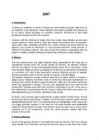
A library is a collection of books . Libraries are maintained by a public body such as an institution or an individual . These collections are used by people who choose not to (or cannot afford) purchase an extensive collection themselves or who need professional assistance with their research.
However , with the collection of media other than books, many libraries are now also access points for maps, prints or other documents and artworks such as microfilm, audio tapes, CDs, cassettes and DVDs. So, modern libraries are being redifined as places to get access to information in many formats and from many sources . In addition to providing materials, they also provide the services of specialists who are experts in matters related to finding and organizing information, called librarians.
2. History
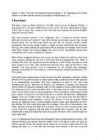
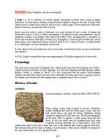
The first libraries were only partly libraries, being composed for the most part of unpublished records which are usually viewed as archives, not libraries. Findings from the city- states of Sumer have revealsed temple rooms full of clay tablets . Those archives were made up almost completely of the records of commercial transactions or inventories with only a few documents touching historical records or legends . Things were pretty same in temple records on papyrus in Ancient Egypt.
The earliest discovered private archives were kept at Ugarit (which is located in today ’s Syria). Besides inventories, texts of myths may have been standardized for teaching new scribes. Private or personal libraries made up of non- fiction and fiction books first appeared in Greece . The first ones appeared some time near the 5th Century BC. Libraries were filled with parchment and papyrus scrolls. There were a few institutional or royal libraries like the Library of Alexandria which were open to an educated public but on the whole , collections were private.
In Persia , many libraries were established bu royalty and the Persian Kings . Among the first ones was a royal library in Isfahan. One of the most important public libraries established around 667 AD in Iran was the Library of Gundishapur which was a part of a bigger scientific complex. In the west , the first public libraries were established under the Roman Empire as each new emperor strove to open one or many which outshone that of his predecessor . Unlike the Greek libraries, readers had direct access to the scrolls.
3. Famous libraries
Some of the greatest libraries in the world are research libraries. The most famous ones include The Humanities and Social Sciences Library of the New York Public Library in New York City, the Russian National Library in St. Petersburg , the British Library in London and the Library of Congress in Washington, D.C.
4. Book Report
The book I read is entitled „ Death on the Nile” and is written by Agatha Christie . It was published in the year 1936 and is a crime novel. The story takes place in Egypt in the ’30s or early ’40s, mostly on the river Nile and features the famous Belgian detective Hercule Poirot .
The story revolves around Linnet Ridgeway, who is England ’s richest woman although she has just turned 21 and who marries an unknown yound man named Simon Doyle . He, on the other hand has just left his fiancée, Linnet’s friend , Jacqueline. The young couple travels to Egypt for their honeymoon but wherever they go, they keep running into Jacqueline who is planning on revenge. Even on the boat which shows them around Egypt, the man’s former sweetheart follows them everywhere until Linnet is suddenly murdered.
When Simon suggests taking a river cruise , he lays a false trail and they think they have escaped Jacqueline, but she is still there and are trapped with her. When a boulder falls down and apparently aimed directly at Linnet’s head. Jacqueline is the main suspect but it was later proved that she had been away at the time of the incident. That later proved to be a misdirection for the boulder was dislodged, possibly by accident but more likely by Linnet’s American lawyer /representative, Mr. Pennington.
During the same evening after Linnet has gone to bed, Jacqueline, drunken, shoots Simon in the leg and the pistol is kicked away under a soda and which later appears to be disappeared completely. Still mad, Jacqueline is taken to her room and watched over by Dr. Bessner, an Austrian. Dr. Bessner is awoken and tends to Simon where his wound is dressed. Both of them appear to have perfect alibis when it is discovered that Linnet has been shot in the head and the letter ‚J’ has been drawn on the wall in order to frame Jacqueline. The investigation concentrates on the pistol, which is found from the Nile wrapped in a bloody handkerchief. Misleadings appear, such as a bottle thrown into the water at the same time and the theft of Linnet’s priceless pearl necklace in which Tim Allerton is the key suspect. While visiting Dr. Bessner’s room, Louise Bourget, Linnet’s maid, says something to Poirot that implies that she could have seen the murderer. Soon she is discovered in her cabin, stabbed through the heart with a scalpel. There is a torn thousand -franc note in her hand that suggests she has tried to blackmail the murderer. Just as Mrs. Otterbourne is about to reveal the name of Louise’s murderer, she is shot through an open cabin door .
Soon it is discovered that Simon and Jacqueline have worked together all along . The original shooting was staged, leaving a bullet stuck in the leg of a table. As soon as Simon was left alone, he picked up the pistol, ran to Linnet’s cabin and shot her adding the letter ‚J’ on the wall. He returned, shot himself in the leg using the handkerchief to muffle the second shot and incapable of moving , threw the pistol out the window in order to get rid of it and just in time to be discovered by Dr. Bessner with a real injury. Jacqueline was forced to commit the second and third murders in an attempt to cover up their tracks. When Simon informed Jacqueline that Louise is blackmailing him, she killed her with one of Dr. Bessner’s surgical knives, thus, framing the doctor . Then it is revealed that Simon had married Linnet in order to inherit her money . Jacqueline planned the murder , as she knew if Simon did it himself, he would get caught, so they had to work together. The jewel thief is indeed Tim Allerton, but Poirot lets him replace the necklace and thus avoid prosecution so that he can marry Rosalie. This provided one of the few happy endings in Christie’s books.
5. Libraries in Estonia
The National Library of Estonia:
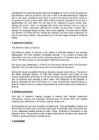
The National Library of Estonia is the centre of Estonian literature and national bibliography, the most valuable information provider. It is a centre of library and information sciences, a site for the continuing education of librarians and a cultural centre. The library plays an important part in Estonian cultural life.
The library was established in 1918 by the Provisional Government of the Estonian Republic . The first users of the library were the members of Parliament .
During the Soviet occupation the library became a regular public library. The work of the library changed radically: all links with foreign libraries were called off and Russian publications dominated. In the ’50s the library was renamed after Kreutzwald and its collection had reached a million items . The restoration of the Republic of Estonia changed the role of the library, for it was renamed the National Library of Estonia. Today its aim is to collect and permanently preserve documents published in Estonia.
6. Children and books
One key to children’s reading success is making their reading experience entertaining, relaxing and enjoyable. Allowing them to choose their own reading materials give awareness of what their reading interests are.
Some bookworms are even members of book-clubs. They get together monthly and talk through the most recent book they have read. A generation ago, there were few, if any, organized reading groups for kids . Today, hundreds of thousands of kids belong to them. The growing number of book clubs and its members only shows the childrens ’ growing interest in reading books.
7. Conclusion
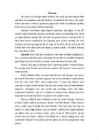
Libraries and books have and always will be an important part of our lives and valuable sources of information. Literature and reading builds creativity and vocabulary and broadens our mind.
Topic - Libraries #1 Topic - Libraries #2 Topic - Libraries #3 Topic - Libraries #4 Topic - Libraries #5
Punktid 50 punkti Autor soovib selle materjali allalaadimise eest saada 50 punkti.
Leheküljed ~ 5 lehte Lehekülgede arv dokumendis
Aeg2009-01-12 Kuupäev, millal dokument üles laeti
Allalaadimisi 9 laadimist Kokku alla laetud
Kommentaarid 0 arvamust Teiste kasutajate poolt lisatud kommentaarid
Autor pisike Õppematerjali autor
TIKis 9. klassis vajaminev topic.

Sarnased õppematerjalid

Libraries
6
doc

Libraries

In the 15 th century Johann Gutenberg invented a mechanical process of duplicating texts, which we today call book printing. The first book was printed between 1444 and 1446, so these years can be considered as the beginning years of book printing. His most important preserved printings are the 40 copies of the Bible. By the end of the 15 th century there were about 1000 print-shops in Europe already. The oldest Estonian book dates back to 1535. Libraries form a vital part of education. They make available-through books, films, recordings and other media- knowledge that has been accumulated through the ages. People in all walks of life use libraries to get information for their work. Libraries also play an important role in preserving people's cultural heritage. For example, some libraries have rare books, authors' and composers' manuscripts or works by artists.

Inglise keel
Raamatu ajalugu - kokkuvõte
15
doc

Raamatu ajalugu - kokkuvõte

magazines, journals or newspaper. The body of all written works including books is literature. In novels and sometimes other types of books (e.g. biographies), a book may be divided into several large sections, also called books (Book 1, Book 2, Book 3, etc.). A lover of books is usually referred to as a bibliophile, or, more informally, a bookworm. A store where books are bought and sold is a bookstore or bookshop. Books can also be borrowed from libraries. In 2010, Google estimated that there were approximately 130 million unique books in the world. Etymology The word book comes from Old English "bc" which itself comes from the Germanic root "*bk-", cognate to beech. Similarly, in Slavic languages (e.g. Russian, Bulgarian and Macedonian) "" (bukva--"letter") is cognate to "beech". It is thus conjectured that the earliest Indo-European writings may have been carved on beech wood. Similarly, the Latin word codex, meaning a book in

Inglise keel_baaskursus
Dimitriu - When we are the other
16
pdf

Dimitriu - When we are the other

This article was downloaded by: [KU Leuven University Library] On: 02 June 2015, At: 06:11 Publisher: Routledge Informa Ltd Registered in England and Wales Registered Number: 1072954 Registered office: Mortimer House, 37-41 Mortimer Street, London W1T 3JH, UK Perspectives: Studies in Translatology Publication details, including instructions for authors and subscription information: http://www.tandfonline.com/loi/rmps20 When `we' are `the other'. Travel books on Romania as exercises in intercultural communication a Rodica Dimitriu a Department of English , Alexandru Ioan Cuza University of Iaþi ,

Inglise keel
Inglise keele ajalugu-essee-My languages
6
odt

Inglise keele ajalugu, essee "My languages"

My languages I love different languages. I mean, I really, really love different languages. I also believe and have been told that I pick them up rather easily. That might be true, although I did not pick any Greek up in Greece but that might have been because they spoke so damn fast that I could not tell if it was a word or an entire sentence. The first foreign language I learned was Russian. Considering I was ten when Estonia became a Republic, it makes sense. We began studying Russian in first grade, though it was simplified – "koška" instead of "kot", "medvešonok" instead of "medved", "saichik" etc. Did not make much sense and we mostly played some games in Russian (Tare-tareke etc). Learned as much playing outside, since we had Estonian-Russian kids around as well. Not that we played with them. It's sad to say but it was not a nice time to be a Russian kid. We were mean to them, and we did not even know why. I think that's the onl

Inglise keele ajalugu
TheCodeBreakers
946
pdf

TheCodeBreakers

Some of the things you will learn in THE CODEBREAKERS • How secret Japanese messages were decoded in Washington hours before Pearl Harbor. • How German codebreakers helped usher in the Russian Revolution. • How John F. Kennedy escaped capture in the Pacific because the Japanese failed to solve a simple cipher. • How codebreaking determined a presidential election, convicted an underworld syndicate head, won the battle of Midway, led to cruel Allied defeats in North Africa, and broke up a vast Nazi spy ring. • How one American became the world's most famous codebreaker, and another became the world's greatest. • How codes and codebreakers operate today within the secret agencies of the U.S. and Russia. • And incredibly much more. "For many evenings of gripping reading, no better choice can be made than this book." —Christian Science Monitor THE Codebreakers

krüptograafia
ENGLISH TOPICS - palju teemasid inglise keele riigieksami kordamiseks
17
pdf

ENGLISH TOPICS - palju teemasid inglise keele riigieksami kordamiseks

Almost everyone collects something at some period in his life: stamps, coins, matchboxes, books, records, postcards, toys, watches. Some collections have no real value. Others become so large and so valuable that they are housed in museums and galleries. Many world-famous collections started in a small way with one or two items. People with a good deal of money often collect paintings, rare books, and other art objects. Such private collections are sometimes given to museums, libraries and public galleries so that others might take pleasure in seeing them. No matter what kind of hobby a person has, he always has the opportunity of learning much from it. Learning new things can be the most exciting hobby. Choosing an Occupation (2) I originally became interested in the law during my 9th form when I realized that my skills as a writer, speaker, and leader -- as well as my powers of logic -- would probably serve me well in a legal career.

Inglise keel
American Literature
10
docx

American Literature

Typical of a gothic story ­ gloomy, dark, murky. The feeling of intolerable loneliness. One such story is "The Man of the Crowd" ­ the secret of a man who seems to be strangely alienated from human fellowship, the narrator chases the man, still the man remains a mystery. The narrator's feverish in the man's identity symbolises human desire for selfdiscovery. Poe adored the idea of the Doppelganger, uses this motif to stress the complexity of human nature. Another Poe's favourite topic is the impossibility for the artist to escape from the practical world ­ "William Wilson", something haunts the narrator to chase him from country to country, he's been haunted by himself. The theme of Death fascinated Poe. He's interested in death with all its horrors. "Berenice" ­ a man digs out the body of his dead pride, pulls out her teeth. Metempsychosis ­ the belief in the transmigration of the soul. "Ligea" ­ a revenant (she has returned from earlier ages, centuries). ­ Arabesque

Inglise keel
Games Programming with Java and Java 3D
23
pdf

Games Programming with Java and Java 3D

group), and be advertised in specialized newsgroups and mailing lists, leading to a substantial reduction in costs. Low profile games may have less `polish', use less state-of the-art graphics, and place more emphasis on game design and characterization. 2. Java for Games In this section, we identify reasons for using Java for games programming, and look at some of the popular arguments against it. We focus on the Java language and its standard libraries (i.e. those found in J2SE 1.4); Java 3D will be considered in later sections. 2.1. Why use Java for Games? 2 Games Programming with Java and Java 3D The advantages of programming with Java are well known: object orientation, cross- platform support, code reuse, ease of development, the availability of tools, reliability and stability, good documentation, continuing support from Sun Microsystems, low

Java programmeerimine


Kommentaarid (0)

Kommentaarid sellele materjalile puuduvad. Ole esimene ja kommenteeri


Sellel veebilehel kasutatakse küpsiseid. Kasutamist jätkates nõustute küpsiste ja veebilehe üldtingimustega Nõustun