Vajad kellegagi rääkida?
Küsi julgelt abi LasteAbi
Logi sisse

Iirimaa (1)

5 VÄGA HEA
Punktid
Ireland
Ireland ( Irish : Éire, Irish pronunciation:) is a country in north - western Europe . The modern sovereign state occupies about five -sixths of the island of Ireland, which was first partitioned on 3 May 1921. It is bordered by Northern Ireland— part of the United Kingdom—to the north, by the Atlantic Ocean to the west , the Irish Sea to the east and the Celtic Sea and St George's Channel to the South and South-East. The legal name of the state is simply "Ireland", but its legal description the Republic of Ireland is sometimes used to differentiate the state from the island.
On 29 December 1937 Ireland became the successor-state to the Irish Free State, itself established on 6 December 1922. Ireland was one of the poorest countries in Western Europe and had high emigration. The protectionist economy was opened in the late 1950s and Ireland joined the European Communities (now the European Union) in 1973. An economic crisis led Ireland to start large-scale economic reforms in the late 1980s. Ireland reduced taxation and regulation dramatically compared to other EU countries.
Despite a forecast for reduced economic growth in 2008, Ireland today has the fifth highest gross domestic product per capita and the seventh gross domestic product per capita considering purchasing power parity , and has the fifth highest Human Development Index rank in the world. The country also boasts the highest quality of life in the world, ranking first in the Economist Intelligence Unit ’s Quality-of-life index. Ireland was ranked sixth on the Global Peace Index. Ireland also has high rankings for its education system, political freedom and civil rights, press freedom and economic freedom; it was also ranked fourth from the bottom on the Failed States Index, being one of the few " sustainable " states in the world. Ireland has emerged as an attractive destination for foreign immigrants who now make up approximately 10% of the population. Ireland's population is the fastest growing in Europe with an annual growth rate of 2.5%.
Ireland is a member of the EU, the OECD , and the UN. Ireland's policy of neutrality means it is not a member of NATO , although it does contribute to peacekeeping missions sanctioned by the UN.
History
Ireland is the successor-state to the Dominion called the Irish Free State. That Dominion came into being when all of the island of Ireland seceded from the United Kingdom of Great Britain and Ireland on 6 December 1922. However, the following day the Parliament of Northern Ireland exercised its right under the Anglo-Irish Treaty to opt back into the United Kingdom. This action , known as the Partition of Ireland, followed four attempts to introduce devolved autonomous government over the whole island of Ireland (in 1886 , 1893, 1914 and 1920). The Irish Free State was abolished when Ireland was formally established on 29 December 1937, the day the Constitution of Ireland came into force .
Irish independence in 1922 was preceded by the Easter Rising of 1916, when Irish volunteers and the Irish Citizen Army took over sites in Dublin and Galway under terms expressed in the Proclamation of the Irish Republic. The seven signatories of this proclamation, Patrick Pearse, Thomas MacDonagh, Thomas Clarke, Sean MacDiarmada, Joseph Plunkett, Eamonn Ceannt and James Connolly, were executed, along with nine others , and thousands were interned precipitating the Irish War of Independence.

Theatre

Following in the tradition of Shaw, Wilde and Samuel Beckett , playwrights such as Seán O' Casey , Brian Friel, Sebastian Barry , Conor McPherson and Billy Roche have gained popular success.

Music


Ireland is known for its traditional music and song , in origin going back hundreds of years but still played throughout the country. Among the best -known modern performers are groups such as The Chieftains, singers such as Christy Moore , ensembles such as Anúna and Celtic Woman and cross -over artists such as singers Enya and Sinéad O' Connor . Built upon this tradition is the dance company Riverdance .
Ireland has produced internationally influential artists in other musical genres such as rock, pop, jazz and blues including The Pogues, U2, Westlife, Chris de Burgh, Thin Lizzy, The Corrs, The Cranberries, Blues guitarist Rory Gallagher, jazz guitarist Louis Stewart and Academy Award winner Glen Hansard of The Frames .
In 2002 The Republic of Ireland introduced the single European currency , the euro. With 14 other EU member states it forms the Eurozone.
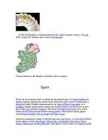
County numbers in the Republic of Ireland (shown in green)
Sport
By far the most popular sports in Ireland are the national sports of Gaelic football and hurling. Hurling, arguably the world's fastest field team sport in terms of game play is, along with Gaelic Football, administered by the Gaelic Athletic Association ; as is Handball. Notable former Gaelic Athletic Association players include the now retired pair of DJ Carey and Peter Canavan. The former Taoiseach Jack Lynch was a noted hurler and All-Ireland winner before entering politics . Well-known current players include Henry Shefflin, Sean Cavanagh and Colm Cooper .
Ireland has produced a number of talented sportsmen and women . In association football, former players include Roy Keane, Johnny Giles , Liam Brady, Denis Irwin, Packie Bonner, Niall Quinn and Paul McGrath, while players whose careers are ongoing include Lee Carsley, Steve Finnan, Shay Given , Damien Duff, John O' Shea and Robbie Keane. In rugby, Ireland has produced Brian O'Driscoll, Ronan O'Gara, Paul O'Connell, David Wallace and Keith Wood.
In athletics, Sonia O' Sullivan , Eamonn Coghlan, Catherina McKiernan, Ronnie Delaney, John Treacy, David Gillick, Gillian O'Sullivan and Derval O'Rourke have won medals at international events .
Transport
The Republic of Ireland has three main international airports (Dublin, Shannon, and Cork ) that serve a wide variety of European and intercontinental routes with scheduled and chartered flights. The national airline is Aer Lingus , although low cost airline Ryanair is the largest airline. The route between London and Dublin is the busiest international air route in Europe, with 4.5 million people flying between the two cities in 2006.[76][77]
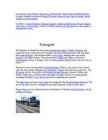
Railways services are provided by Iarnród Éireann. Dublin is the centre of the network , with two main stations (Heuston and Connolly) linking to the main towns and cities. The Enterprise service , run jointly with Northern Ireland Railways, connects Dublin with Belfast . Dublin has a steadily improving public transport network of varying quality including the DART , Luas, Bus service and an expanding rail network.
The motorways and major trunk roads are managed by the National Roads Authority . The rest of the road network is managed by the local authorities in each of their areas .
Regular ferry services operate between the Republic of Ireland and Great Britain, the Isle of Man and France .

Economy


The economy of Ireland has transformed in recent years from an agricultural focus to a modern knowledge economy, focusing on services and high-tech industries and dependent on trade, industry and investment. Economic growth in Ireland averaged a (relatively high) 10% from 1995–2000, and 7% from 2001–2004. Industry, which accounts for 46% of GDP, about 80% of exports, and 29% of the labour force, now takes the place of agriculture as the country's leading sector .
Exports play a fundamental role in Ireland's growth, but the economy also benefits from the accompanying rise in consumer spending, construction , and business investment. On paper , the country is the largest exporter of software-related goods and services in the world. In fact , a lot of foreign software, and sometimes music, is filtered through the country to avail of Ireland's non-taxing of royalties from copyrighted goods.
A key part of economic policy, since 1987, has been Social Partnership which is a neo-corporatist set of voluntary 'pay pacts' between the Government, employers and trades unions. These usually set agreed pay rises for three- year periods.
Ireland joined in launching the Euro currency system in January 1999 (leaving behind the Irish pound) along with eleven other EU nations. The 1995 to 2000 period of high economic growth led many to call the country the Celtic Tiger. The economy felt the impact of the global economic slowdown in 2001, particularly in the high-tech export sector — the growth rate in that area was cut by nearly half. GDP growth continued to be relatively robust, with a rate of about 6% in 2001 and 2002. Growth for 2004 was over 4%, and for 2005 was 4.7%.
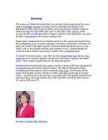
President of Ireland, Mary McAleese.
Iirimaa #1 Iirimaa #2 Iirimaa #3 Iirimaa #4 Iirimaa #5
Punktid 50 punkti Autor soovib selle materjali allalaadimise eest saada 50 punkti.
Leheküljed ~ 5 lehte Lehekülgede arv dokumendis
Aeg2009-03-03 Kuupäev, millal dokument üles laeti
Allalaadimisi 27 laadimist Kokku alla laetud
Kommentaarid 1 arvamus Teiste kasutajate poolt lisatud kommentaarid
Autor grissu Õppematerjali autor
uurimustöö iirimaast

Sarnased õppematerjalid

Ireland report
3
doc

Ireland report

Ireland is the third largest island in Europe. It lies in between the Atlantic Ocean and the Irish Sea. Politically it is divided into a sovereign state, the Republic of Ireland, that covers about five-sixths of the island (south, east, west and north-west), and Northern Ireland, which is part of the United Kingdom, covering the northeastern sixth of the island.[1] The name 'Ireland' derives from the name Ériu (in modern Irish, Éire) with the addition of the Germanic word 'land'. The population of the island is just under 6 million (2006); just over 4.2 million in the Republic of Ireland[2] (1.6 million in Greater Dublin[3]) and just over 1.7 million in Northern Ireland[4] (0.6 million in Greater Belfast[5])). Politics Politically, Ireland is divided into: · The Republic of Ireland, with its capital Dublin. · Northern Ireland, which is part of the United Kingdom, Geography A ring of coastal mountains surrounds low central plains. The highest peak is Carrauntuohill , which is 1,

Inglise keel
Dublin
4
doc

Dublin

UBLIN Dublin is the largest city and capital of Ireland. It is officially known in Irish as Baile Átha Cliath. English name comes from the Irish Dubh Linn meaning "black pool". It is located near the midpoint of Ireland's east coast, at the mouth of the River Liffey and at the centre of the Dublin Region. Originally founded as a Viking settlement(koloonia), it evolved(arenes) into the Kingdom of Dublin and became the island's primary city following the Norman invasion(sissetung). Today, it is ranked 23rd (down from 10th in 2008) in the Global Financial Centres Index, has one of the fastest growing populations of any European capital city, and is listed by the GaWC as a global city, with a ranking of Alpha - which places Dublin amongst the top 25 cities in the world. Dublin is a historical and contemporary(kaasaegne) cultural centre for the island of Ireland as well as a modern centre of education, the arts, administrative function, economy and industry.

Inglise keel
Referaat- Iirimaa
2
doc

Referaat : Iirimaa

shine for a bit more again. Energy The vast majority ( enamus ) of Irish energy needs are met by fossil fuels. About 98% of Ireland's final energy demand is produced by burning coal, petroleum, peat, or natural gas. This over reliance on fossil fuels ( see liigne toetumine sisseostetavatele kütustele )-particularly oil - (eriti õli) has left Ireland vulnerable to international price fluctuations as it imports all of its oil needs. (on jätnud iirimaa haavatavaks tänu rahvusvahelistele hindande muutumisele ) There have been recent efforts in Ireland to use renewable energy such as wind energy with large wind farms being constructed in coastal counties such as Donegal, Mayo and Antrim. Flora Because of Irelands mild climate , many tropic species such as palm trees grow in Ireland. Much of the land is now covered with pasture(karjamaa) and there are many species of wild-flowers

Inglise keel
Facts about Ireland
4
doc

Facts about Ireland

Fact from the last Irish census, Sean was the most popular boys name and Emma was the most popular girls name. Ireland has won the Nobel prize for literature on four occasions with George Bernard Shaw, William Butler Yeats, Samuel Beckett and Seamus Heaney. Irish aviation fact = Shannon became the worlds first duty free airport in 1947 There is no death penalty in Ireland. Ireland is a neutral state and is not a member of N.A.T.O. The famous Titanic ship was built in Belfast. Henry Ford of Ford Motor Company was the son of an Irish emigrant. John Kennedy, the thirtyfifth President of the U.S.A.was born in Massachusetts in 1917. The Kennedy family were descendants of Irish emigrants to the U.S.A. in the nineteenth century. Kilkenny born architect James Hoban designed the White House and also the official residence of the Irish president, Aras an Uachtarain. Bushmills, Couny Antrim is the Worlds Oldest Whiskey Distillery based on the undisputed fact that a seven year licenc

Inglise keel
Society and culture of english-speaking countries
24
rtf

Society and culture of english-speaking countries

Society and culture of english-sspeaking countries Introduction 1. The countries of the world where the English language is spoken. 2. Approximate number of mother tongue speakers of English approximately 350-400 million native speakers. Which place does English occupy in the world by its number of speakers?After which language? English occupies second place by its number of speakers after Mandarin Chinese. 3. What is the difference between English as a Second Language, English as a Foreign Language and English for Specific Purposes? Give examples of situations where they are used. English as a Second Language (ESL or TESL) is a traditional term for the use or study of the English language by non-native speakers in an English-speaking environment. That environment may be a country in which English is the mother tongue (e.g., Australia, the U.S.) or one in which English has an established role (e.g., India, Nigeria) English as a foreign language A traditional term for the use o

Inglise keel
Inglise keelt kõnelevate maade ühiskond ja kultuur
6
docx

Inglise keelt kõnelevate maade ühiskond ja kultuur

SOCIETY AND CULTURE OF ENGLISH-SPEAKING COUNTRIES Introduction 1. Nowadays, English is so widely spoken that it can hardly be considered "a one nation's" language. The main countries where English is spoken are: the U.K, the U.S, Canada, Australia, the Republic of Ireland, New Zealand, West Indies 2. There are approx. 300-400 million speakers of English in the world. English occupies the 3rd place by its number of speakers; it is right behind Mandarin and Spanish. 3. ESL (English as a Second Language) ­ used in your own country (e.g. India) EFL (English as a Foreign Language) ­ used in a foreign country ESP (English for Specific Purposes) ­ used in business, airlines, hotels etc. 4. Settlement colonies ­ people migrated into them from Britain and started their own communities, they are the present English-speaking countries (USA, Australia, Canada, New Zealand) Trading Empire (dependencies

Inglise keel
The Commonwealth of nations and the Brittish Empire
5
doc

The Commonwealth of nations and the Brittish Empire

Country study test # 3 1. Why was it often said that ,,the sun never sets on the British Empire"? ... is used to describe an empire of such a large extent that, at any one time, at least part of its territory is in daylight. This was a saying refering to the fact that Britian had colonies all around the world. 2. What is the Commonwealth? The Commonwealth is an association of sovereign nations that support each other and work together towards international goals. 3. When was it founded? 1931 4. Who were the founder members? Great Britain, the Irish Free State (now the Republic of Ireland), Canada, Newfoundland (since 1949 part of Canada), Australia, New Zealand, and South Africa. 5. Are they still members? Why? Irish Free State left in 1949 with the republic of ireland acts, Newfoundland (since 1949 part of Canada), 6. What was the difference between the British Empire and the British Commonwealth of Nations? the b

Inglisekeelne geograafia
Ireland
2
doc

Ireland

Ireland Ireland is the third-largest island in Europe and the twentieth-largest island in the world. It lies to the north-west of continental Europe and is surrounded by hundreds of islands and islets. To the east of Ireland is the island of Great Britain. The Republic of Ireland covers five- sixths of the island. It is a parliamentary democracy and a republic. It is bordered to the northeast by Northern Ireland, which is a part of the United Kingdom, and is otherwise surrounded by the Atlantic Ocean: particularly, the Irish Sea to the east, St George's Channel to the southeast, and the Celtic Sea to the south. The population of Ireland is estimated to be 6.2 million. Thick woodlands covered the island until the 1600s. Today, it is the most deforested area in Europe. Twenty-six mammal species are native to Ireland, with some, such as the red fox, hedgehog and badger, being very common. Others, like the Irish hare, red deer and pine marten are les

Inglise keel


Meedia

Kommentaarid (1)

KKK1K1 profiilipilt
KKK1K1: väga hea
16:03 04-12-2011


Sellel veebilehel kasutatakse küpsiseid. Kasutamist jätkates nõustute küpsiste ja veebilehe üldtingimustega Nõustun