Vajad kellegagi rääkida?
Küsi julgelt abi LasteAbi
Logi sisse

Hamelti tegelased (Ingilse keeles) (0)

1 Hindamata
Punktid
Hamlet
 William Shakespeare
 
Character List
 
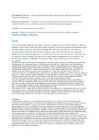
Hamlet -  The Prince of Denmark , the title character, and the protagonist. About thirty years old at the start of the play, Hamlet is the son of Queen Gertrude and the late King Hamlet, and the nephew of the present king, Claudius . Hamlet is melancholy, bitter, and cynical, full of hatred for his uncle ’s scheming and disgust for his mother ’s sexuality. A reflective and thoughtful young man who has studied at the University of Wittenberg, Hamlet is often indecisive and hesitant, but at other times prone to rash and impulsive acts.
Hamlet (In-Depth Analysis )
 
 
Claudius -  The King of Denmark, Hamlet’s uncle, and the play’s antagonist. The villain of the play, Claudius is a calculating, ambitious politician, driven by his sexual appetites and his lust for power , but he occasionally shows signs of guilt and human feeling—his love for Gertrude, for instance , seems sincere .
Claudius (In-Depth Analysis)
 
 
Gertrude -  The Queen of Denmark, Hamlet’s mother, recently married to Claudius. Gertrude loves Hamlet deeply, but she is a shallow , weak woman who seeks affection and status more urgently than moral rectitude or truth .
Gertrude (In-Depth Analysis)
 
 
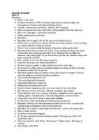
Polonius  -  The Lord Chamberlain of Claudius’s court, a pompous, conniving old man. Polonius is the father of Laertes and Ophelia .
 
Horatio  -  Hamlet’s close friend , who studied with the prince at the university in Wittenberg. Horatio is loyal and helpful to Hamlet throughout the play. After Hamlet’s death , Horatio remains alive to tell Hamlet’s story.
 
Ophelia -  Polonius’s daughter , a beautiful young woman with whom Hamlet has been in love. Ophelia is a sweet and innocent young girl, who obeys her father and her brother , Laertes. Dependent on men to tell her how to behave, she gives in to Polonius’s schemes to spy on Hamlet. Even in her lapse into madness and death, she remains maidenly, singing songs about flowers and finally drowning in the river amid the flower garlands she had gathered.
Laertes -  Polonius’s son and Ophelia’s brother, a young man who spends much of the play in France. Passionate and quick to action, Laertes is clearly a foil for the reflective Hamlet.
 
Fortinbras -  The young Prince of Norway , whose father the king (also named Fortinbras) was killed by Hamlet’s father (also named Hamlet). Now Fortinbras wishes to attack Denmark to avenge his father’s honor, making him another foil for Prince Hamlet.
 
The Ghost  -  The specter of Hamlet’s recently deceased father. The ghost, who claims to have been murdered by Claudius, calls upon Hamlet to avenge him. However , it is not entirely certain whether the ghost is what it appears to be, or whether it is something else . Hamlet speculates that the ghost might be a devil sent to deceive him and tempt him into murder , and the question of what the ghost is or where it comes from is never definitively resolved.
 
Rosencrantz and Guildenstern -  Two slightly bumbling courtiers, former friends of Hamlet from Wittenberg, who are summoned by Claudius and Gertrude to discover the cause of Hamlet’s strange behavior.
 
Osric -  The foolish courtier who summons Hamlet to his duel with Laertes.
 
Voltimand and Cornelius  -  Courtiers whom Claudius sends to Norway to persuade the king to prevent Fortinbras from attacking.
 
Marcellus and Bernardo -  The officers who first see the ghost walking the ramparts of Elsinore and who summon Horatio to witness it. Marcellus is present when Hamlet first encounters the ghost.
 
Francisco -  A soldier and guardsman at Elsinore.
 
Reynaldo -  Polonius’s servant, who is sent to France by Polonius to check up on and spy on Laertes.

Analysis of Major Characters


Hamlet

 
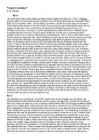
Hamlet has fascinated audiences and readers for centuries , and the first thing to point out about him is that he is enigmatic. There is always more to him than the other characters in the play can figure out; even the most careful and clever readers come away with the sense that they don’t know everything there is to know about this character. Hamlet actually tells other characters that there is more to him than meets the eye—notably, his mother, and Rosencrantz and Guildenstern—but his fascination involves much more than this. When he speaks, he sounds as if there’s something important he’s not saying, maybe something even he is not aware of. The ability to write soliloquies and dialogues that create this effect is one of Shakespeare’s most impressive achievements.
 A university student whose studies are interrupted by his father’s death, Hamlet is extremely philosophical and contemplative. He is particularly drawn to difficult questions or questions that cannot be answered with any certainty. Faced with evidence that his uncle murdered his father, evidence that any other character in a play would believe, Hamlet becomes obsessed with proving his uncle’s guilt before trying to act. The standard of “beyond a reasonable doubt” is simply unacceptable to him. He is equally plagued with questions about the afterlife, about the wisdom of suicide, about what happens to bodies after they die—the list is extensive.
 But even though he is thoughtful to the point of obsession, Hamlet also behaves rashly and impulsively. When he does act, it is with surprising swiftness and little or no premeditation, as when he stabs Polonius through a curtain without even checking to see who he is. He seems to step very easily into the role of a madman, behaving erratically and upsetting the other characters with his wild speech and pointed innuendos.
 It is also important to note that Hamlet is extremely melancholy and discontented with the state of affairs in Denmark and in his own family—indeed, in the world at large. He is extremely disappointed with his mother for marrying his uncle so quickly, and he repudiates Ophelia, a woman he once claimed to love, in the harshest terms. His words often indicate his disgust with and distrust of women in general. At a number of points in the play, he contemplates his own death and even the option of suicide.
 But, despite all of the things with which Hamlet professes dissatisfaction, it is remarkable that the prince and heir apparent of Denmark should think about these problems only in personal and philosophical terms. He spends relatively little time thinking about the threats to Denmark’s national security from without or the threats to its stability from within (some of which he helps to create through his own carelessness).
  

Claudius

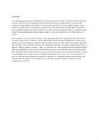
 Hamlet’s major antagonist is a shrewd, lustful, conniving king who contrasts sharply with the other male characters in the play. Whereas most of the other important men in Hamlet are preoccupied with ideas of justice, revenge , and moral balance, Claudius is bent upon maintaining his own power. The old King Hamlet was apparently a stern warrior, but Claudius is a corrupt politician whose main weapon is his ability to manipulate others through his skillful use of language . Claudius’s speech is compared to poison being poured in the ear—the method he used to murder Hamlet’s father. Claudius’s love for Gertrude may be sincere, but it also seems likely that he married her as a strategic move , to help him win the throne away from Hamlet after the death of the king. As the play progresses, Claudius’s mounting fear of Hamlet’s insanity leads him to ever greater self-preoccupation; when Gertrude tells him that Hamlet has killed Polonius, Claudius does not remark that Gertrude might have been in danger , but only that he would have been in danger had he been in the room . He tells Laertes the same thing as he attempts to soothe the young man’s anger after his father’s death. Claudius is ultimately too crafty for his own good . In Act V, scene ii, rather than allowing Laertes only two methods of killing Hamlet, the sharpened sword and the poison on the blade , Claudius insists on a third, the poisoned goblet. When Gertrude inadvertently drinks the poison and dies , Hamlet is at last able to bring himself to kill Claudius, and the king is felled by his own cowardly machination.


Gertrude

 
Few Shakespearean characters have caused as much uncertainty as Gertrude, the beautiful Queen of Denmark. The play seems to raise more questions about Gertrude than it answers, including : Was she involved with Claudius before the death of her husband ? Did she love her husband? Did she know about Claudius’s plan to commit the murder? Did she love Claudius, or did she marry him simply to keep her high station in Denmark? Does she believe Hamlet when he insists that he is not mad, or does she pretend to believe him simply to protect herself ? Does she intentionally betray Hamlet to Claudius, or does she believe that she is protecting her son’s secret ?
 
These questions can be answered in numerous ways , depending upon one’s reading of the play. The Gertrude who does emerge clearly in Hamlet is a woman defined by her desire for station and affection, as well as by her tendency to use men to fulfill her instinct for self-preservation—which, of course, makes her extremely dependent upon the men in her life. Hamlet’s most famous comment about Gertrude is his furious condemnation of women in general: “Frailty, thy name is woman!” (I.ii.146). This comment is as much indicative of Hamlet’s agonized state of mind as of anything else, but to a great extent Gertrude does seem morally frail. She never exhibits the ability to think critically about her situation, but seems merely to move instinctively toward seemingly safe choices, as when she immediately runs to Claudius after her confrontation with Hamlet. She is at her best in social situations (I.ii and V.ii), when her natural grace and charm seem to indicate a rich , rounded personality. At times it seems that her grace and charm are her only characteristics, and her reliance on men appears to be her sole way of capitalizing on her abilities.
Hamelti tegelased-Ingilse keeles #1 Hamelti tegelased-Ingilse keeles #2 Hamelti tegelased-Ingilse keeles #3
Punktid 10 punkti Autor soovib selle materjali allalaadimise eest saada 10 punkti.
Leheküljed ~ 3 lehte Lehekülgede arv dokumendis
Aeg2009-03-30 Kuupäev, millal dokument üles laeti
Allalaadimisi 13 laadimist Kokku alla laetud
Kommentaarid 0 arvamust Teiste kasutajate poolt lisatud kommentaarid
Autor Adolf Hitler Õppematerjali autor
:)

Sarnased õppematerjalid

William Shakespeare - Hamlet
406
pdf

William Shakespeare - Hamlet

Hamlet Shakespeare, William Published: 1599 Categorie(s): Fiction, Drama Source: Feedbooks 1 About Shakespeare: William Shakespeare (baptised 26 April 1564 – died 23 April 1616) was an English poet and playwright, widely regarded as the greatest writer in the English language and the world's pre-eminent dramatist. He is often called England's national poet and the "Bard of Avon" (or simply "The Bard"). His surviv- ing works consist of 38 plays, 154 sonnets, two long narrative poems, and several other poems. His plays have been trans- lated into every major living language, and are performed more often than those of any other playwright. Shakespeare was born and raised in Stratford-upon-Avon. At the age of 18 he married Anne Hathaway, who bore him three children: Susanna, and twins Hamnet and Judith. Between 1585 and 1592 he began a successful career in London as an actor, writer, and part ow

Inglise keel
Hamlet
1
docx

Hamlet

Claudius has killed Hamlet's father, the King of Denmark. Hamlet's mother married Claudius two months later because she didn't know. The guards of the castle see the ghost of Hamlet's father. And the ghost tells Hamlet that his uncle, Claudius killed him, so Hamlet went crazy. The King and Queen think that he is acting strange because he is in love with Ophelia. So they put him in a room with Ophelia to find out for sure. But Hamlet was mean to her, so his uncle thinks Hamlet knows he killed his father and that's why he's mad. Ophelia goes crazy because Hamlet says he doesn't love her and she drowns herself. Her brother blames Hamlet and challenges him to a duel. At the duel, Claudius puts poison in a glass of wine and on the swords because he wants to kill Hamlet. The Queen drinks the wine by mistake and dies. Hamlet and Ophelia's brother stab one another with the poison swords and they both die, but Hamlet kills the king just before he dies.

Inglise keel
Ameerika kirjandus alates I maailmasõjast kuni tänapäevani
29
docx

Ameerika kirjandus alates I maailmasõjast kuni tänapäevani.

Ameerika Kirjandus 30.01.13 Naturalism · France, Emile Zola · Put down his theory in 1879: Le Roman Experimental, attempt to explain the development of human society throuch biological laws · Outlook is deterministic, pessimistic, fatalistic (fate or biology) · Man as an animal-clever than other beasts, still explainable within the framework · Man is not a free agent, is govern by something · Unable to determine his own faith · Hereditary · Naturalists tried to apply in fiction the processes of natural sciences · Writers task is to record facts, systems of behaviour, living conditions, never revealing any natural unbiased (completely natural) · Point of view: amoral-outside the category of morality, neither good or bad · Naturalist find it absurd to blame the wicked. These criminals are doing what nature, environment, their unconscious tells them to do. Naturalists do not judge their characters, they sim

Ameerika kirjandus
Anna Karenina-kokkuvõte
17
odt

"Anna Karenina" kokkuvõte

"Anna Karenina" Lev Tolstoi Part 1 The novel opens with a scene introducing Prince Stepan Arkadyevitch Oblonsky, "Stiva", a Moscow aristocrat and civil servant who has been unfaithful to his wife Darya Alexandrovna, nicknamed "Dolly". Dolly has discovered his affair - with the family's governess - and the house and family are in turmoil. Stiva's affair and his reaction to his wife's distress shows an amorous personality that he cannot seem to suppress. In the midst of the turmoil, Stiva reminds the household that his married sister, Anna Arkadyevna Karenina is coming to visit from Saint Petersburg. Meanwhile, Stiva's childhood friend Konstantin Dmitrievich Levin ("Kostya") arrives in Moscow with the aim of proposing to Dolly's youngest sister Princess Ekaterina Alexandrovna Shcherbatskaya, "Kitty". Levin is a passionate, restless but shy aristocratic landowner who, unlike his Moscow friends, chooses to live in the country on his large estate. He discovers that Kitty is also be

Kirjandus
Blandings Castle kokkuvõte
4
doc

Blandings Castle kokkuvõte

Blandings Castle by P.G. Wodehouse Wodehouse was an acknowledged master of English prose admired both by contemporaries and by modern writers. He has been called "English literature's performing flea", a derogatory description that Wodehouse cherished and adopted as the title of his autobiography. Best known today for the Jeeves and Blandings Castle novels and short stories, Wodehouse was also a talented playwright and lyricist who was part author and writer of fifteen plays and of 250 lyrics for some thirty musical comedies. Wodehouse took a modest attitude to his own works. In Over Seventy (1957) he wrote: "I go in for what is known in the trade as 'light writing' and those who do that ­ humorists they are sometimes called ­ are looked down upon by the intelligentsia and sneered at." Wodehouse's characters are often eccentric, with peculiar attachments, such as to newts (Gussie Fink-Nottle) or socks (Archibald Mulliner). His "mentally negligible" good-natured characters invaria

Inglise kirjandus
KING LEAR
6
docx

KING LEAR

KING LEAR William Shakespeare Plot Overview Lear, the aging king of Britain, decides to step down from the throne and divide his kingdom evenly among his three daughters. First, however, he puts his daughters through a test, asking each to tell him how much she loves him. Goneril and Regan, Lear’s older daughters, give their father flattering answers. But Cordelia, Lear’s youngest and favorite daughter, remains silent, saying that she has no words to describe how much she loves her father. Lear flies into a rage and disowns Cordelia. The king of France, who has courted Cordelia, says that he still wants to marry her even without her land, and she accompanies him to France without her father’s blessing. Lear quickly learns that he made a bad decision. Goneril and Regan swiftly begin to undermine the little authority that Lear still holds. Unable to believe that his beloved daughters are betraying him, Lear slowly goes insane. He flees his

Inglise keel
Hamlet’s View on Life and Death
1
doc

Hamlet’s View on Life and Death

Hamlet's View on Life and Death Hamlet has a everlasting dilemma " to be or not to be" he is dissatisfied with life and lists many things that trouble him but he is not sure what death will bring him. He is thinking that the experience of death itself maybe worse than life itself Hamlet is a melancholic, always thinking about the dark things in life (he always dresses in black, he's fascinated when he finds the old clown's skull, etc.) I think that Hamlet does not really value his life so much because he is so consumed with his desire to kill Claudius that he doesn't have time for real life. Hamlet's view of death influences his morality: if all people die, no matter what they do, then one's actual life becomes less significant than its purpose. In Hamlet's case, this means that his death is not of great concern, but his revenge is. Hamlet saw death as a reliable end to mortal suffering, something that can bring comfort

Inglise kirjandus
Jane Austen
234
pdf

Jane Austen

The Project Gutenberg EBook of Pride and Prejudice, by Jane Austen This eBook is for the use of anyone anywhere at no cost and with almost no restrictions whatsoever. You may copy it, give it away or re-use it under the terms of the Project Gutenberg License included with this eBook or online at www.gutenberg.org Title: Pride and Prejudice Author: Jane Austen Release Date: August 26, 2008 [EBook #1342] [Last updated: August 11, 2011] Language: English Character set encoding: ASCII *** START OF THIS PROJECT GUTENBERG EBOOK PRIDE AND PREJUDICE *** Produced by Anonymous Volunteers, and David Widger PRIDE AND PREJUDICE By Jane Austen Contents Chapter 1 Chapter 22 Chapter 2 Chapter 23 Chapter 43 Chapter 3 Chapter 24 Chapter 44 Chapter 4 Chapter 25 Chapter 45

Kirjandus


Kommentaarid (0)

Kommentaarid sellele materjalile puuduvad. Ole esimene ja kommenteeri


Sellel veebilehel kasutatakse küpsiseid. Kasutamist jätkates nõustute küpsiste ja veebilehe üldtingimustega Nõustun