 50 punkti
Autor soovib selle materjali allalaadimise eest saada 50 punkti.
50 punkti
Autor soovib selle materjali allalaadimise eest saada 50 punkti.
 ~ 1 leht
Lehekülgede arv dokumendis
~ 1 leht
Lehekülgede arv dokumendis
 2013-12-01
Kuupäev, millal dokument üles laeti
2013-12-01
Kuupäev, millal dokument üles laeti
 2 laadimist
Kokku alla laetud
2 laadimist
Kokku alla laetud
 0 arvamust
Teiste kasutajate poolt lisatud kommentaarid
0 arvamust
Teiste kasutajate poolt lisatud kommentaarid
 dokument
Õppematerjali autor
dokument
Õppematerjali autor
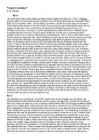
Hamlet WILLIAM SHAKESPEARE Character List Hamlet - The Prince of Denmark, the title character, and the protagonist. About thirty years old at the start of the play, Hamlet is the son of Queen Gertrude and the late King Hamlet, and the nephew of the present king, Claudius. Hamlet is melancholy, bitter, and cynical, full of hatred for his uncle's scheming and disgust for his mother's sexuality. A reflective and thoughtful young man who has studied at the University of Wittenberg, Hamlet is often indecisive and hesitant, but at other times prone to rash and impulsive acts. Hamlet (In-Depth Analysis) Claudius - The King of Denmark, Hamlet's uncle, and the play's antagonist. The villain of the play, Claudius is a calculating, ambitious politician, driven by his sexual appetites and his lust for power, but he occasionally shows signs of guilt and human feeling--his love for Gertrude, for instance, seems sincere. Claudius (In-Depth Analysis)
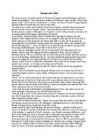
Few records of Shakespeare's private life survive, and there has been considerable speculation about such matters as his sexuality, religious beliefs, and whether the works attributed to him were written by others. Shakespeare produced most of his known work between 1590 and 1613. His early plays were mainly comedies and histories, genres he raised to the peak of sophistication and artistry by the end of the sixteenth century. Next he wrote mainly tragedies until about 1608, including Hamlet, King Lear, and Macbeth, con- sidered some of the finest examples in the English language. In his last phase, he wrote tragicomedies, also known as ro- mances, and collaborated with other playwrights. Many of his plays were published in editions of varying quality and accur- acy during his lifetime, and in 1623 two of his former theatrical colleagues published the First Folio, a collected edition of his dramatic works that included all but two of the plays now re- cognised as Shakespeare's
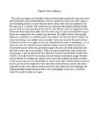
Hamlet's first soliloquy The soliloquy begins with Hamlet wishing that his body would melt, turn into water and become like dew (hommikukaste). He also would like if the God hadn't made a law forbidding suicide. He says that life seems weary, stale, flat and useless to him. He moans as it is terrible. The world was like and unweeded garden that had finally gone to seed but only ugly things thrived. He can't believe what had happened as his father was dead only two months. Not even that long. He says how excellent king his
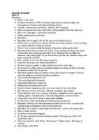
Romeo and Juliet The story concerns two noble families of Verona, the Capulets and the Montagues, that have feuded for generations. The prologue also explains that the lovers' tragic suicides "[bury] their parents' strife." R & J are star-crossed lovers it means, that they can never be happy together and they rather die before they live without each other. The action starts with a street-battle between the two families, started by their servants and put down by the Prince of Verona, Escalus. The Prince declares that the heads of the two families (known simply as "Montague" and "Capulet") will be held personally accountable for any further breach of the peace, and disperses the crowd. Count Paris, a young nobleman, talks to Capulet about marrying his thirteen-year-old daughter, Juliet. Capulet demurs, because his is in daughter tender age, but he invites him to attract attention of Juliet during the ball. Meanwhile Juliet's mother tries to pers
Hamlet's View on Life and Death Hamlet has a everlasting dilemma " to be or not to be" he is dissatisfied with life and lists many things that trouble him but he is not sure what death will bring him. He is thinking that the experience of death itself maybe worse than life itself Hamlet is a melancholic, always thinking about the dark things in life (he always dresses in black, he's fascinated when he finds the old clown's skull, etc.) I think that Hamlet does not really value his life so much because he is so consumed with his desire to kill Claudius that he doesn't have time for real life. Hamlet's view of death influences his morality: if all people die, no matter what they do, then one's actual life becomes less significant than its purpose. In Hamlet's case, this means that his death is not of great concern, but his revenge is. Hamlet saw death as a reliable end to mortal suffering, something that can bring comfort
"Anna Karenina" Lev Tolstoi Part 1 The novel opens with a scene introducing Prince Stepan Arkadyevitch Oblonsky, "Stiva", a Moscow aristocrat and civil servant who has been unfaithful to his wife Darya Alexandrovna, nicknamed "Dolly". Dolly has discovered his affair - with the family's governess - and the house and family are in turmoil. Stiva's affair and his reaction to his wife's distress shows an amorous personality that he cannot seem to suppress. In the midst of the turmoil, Stiva reminds the household that his married sister, Anna Arkadyevna Karenina is coming to visit from Saint Petersburg. Meanwhile, Stiva's childhood friend Konstantin Dmitrievich Levin ("Kostya") arrives in Moscow with the aim of proposing to Dolly's youngest sister Princess Ekaterina Alexandrovna Shcherbatskaya, "Kitty". Levin is a passionate, restless but shy aristocratic landowner who, unlike his Moscow friends, chooses to live in the country on his large estate. He discovers that Kitty is also be
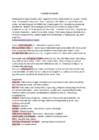
Ameerika Kirjandus 30.01.13 Naturalism · France, Emile Zola · Put down his theory in 1879: Le Roman Experimental, attempt to explain the development of human society throuch biological laws · Outlook is deterministic, pessimistic, fatalistic (fate or biology) · Man as an animal-clever than other beasts, still explainable within the framework · Man is not a free agent, is govern by something · Unable to determine his own faith · Hereditary · Naturalists tried to apply in fiction the processes of natural sciences · Writers task is to record facts, systems of behaviour, living conditions, never revealing any natural unbiased (completely natural) · Point of view: amoral-outside the category of morality, neither good or bad · Naturalist find it absurd to blame the wicked. These criminals are doing what nature, environment, their unconscious tells them to do. Naturalists do not judge their characters, they sim
Hamleti konspekt Shakespeare'i lugu Hamlet tuletati legendist Amleth, mida säilitas 13. sajandi kroonik Saxo Grammaticus tema oma Gesta Danorum, mille hiljem 16. sajandi õpetlane ümber jutustas François de Belleforest. Shakespeare võis kasutada ka varasemat Elizabethan näidend, mida tänapäeval tuntakse kui Ur-Hamlet, kuigi mõned teadlased usuvad, et Shakespeare kirjutas selle Ur-Hamlet, hiljem seda redigeerides versiooni loomiseks Hamlet mis on täna olemas. Ta kirjutas peaaegu kindlasti oma versiooni nimiosast oma kaasnäitlejale, Richard Burbage, Shakespeare'i aja juhtiv tragöödia. https://upwikiet.top/wiki/Hamlet Teose põhiprobleemiks on kättemaks hingerahu nimel. Kõrvalprobleemideks on maybe kas ainsaks kättemaksumeetodiks võib tõesti ainult mõrv olla ja kas tuleks kuulata oma südant või siis kedagi teist. Samuti võiks kõrvalprobleemiks pidada seda, kui kaugele on inimene valmis võimu nimel minema.
 annaabi.ee








Kõik kommentaarid