QUEEN VICTORIA&HER TIMEProject
Mari Murakas
Class 11A
Plan
Early life of Queen Victoria 3
Early
Reign 4
Marriage 4
Widowhood 5
Victorian Era 6
Later years 6
Death of Queen Victoria 6
Wordlist 8
Copies 9
Used sources 12
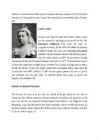
Early life of Queen Victoria
Victoria was born in London on 24 May 1819, the only
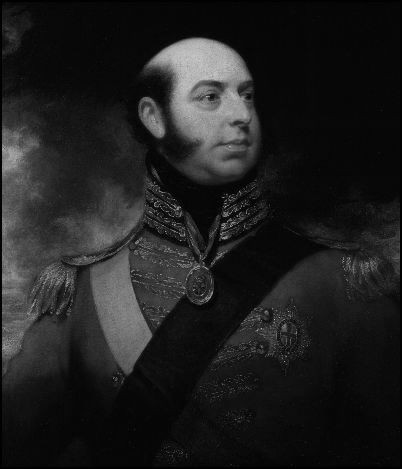
child of Edward,
Duke of
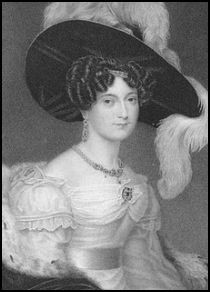
Kent , and Victoria Maria
Louisa of Saxe-Coburg. [1] The Duke
of Kent was the
fourth son of George III and Victoria Maria Louisa
was the
sister of
King Leopold of Belgium. The Duke and Duchess of
Kent selected the name Victoria but her
uncle , George IV, insisted
that she be
named Alexandrina after her
godfather , Tsar
Alexander II
of Russia. [2] Victoria's
father died when she was
eight months old.
The Duchess of Kent
developed a close
relationship with Sir John
Conroy, an ambitious Irish officer. Conroy acted as if Victoria was
his
daughter and had a
major influence over her as a child. [2]
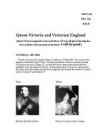
Edward,
Duke of Kent Victoria
Maria Louisa of Saxe-CoburgWhen Princess Victoria of Kent was
eleven years old, her uncle, King
George IV, died childless, leaving the throne to his
brother , the
Duke of Clarence and St Andrews, who
became King William IV. As the
new king was childless, the young Princess Victoria became
heiress-presumptive to the throne. Since the law at that time
made no special
provision for a child
monarch , Victoria would have
been
eligible to govern the
realm as would an
adult . In
order to
prevent such a
scenario ,
Parliament passed the Regency Act
1831 , under which it was
provided that Victoria's
mother , the Duchess
of Kent and Strathearn, would act as
Regent during the queen's
minority. Ignoring precedent, Parliament did not create a council to
limit the powers of the Regent. [3]
Princess Victoria met her future
husband ,
Prince Albert of
Saxe-Coburg-Gotha, when she was sixteen years old. Prince Albert was
Victoria's first cousin; his father was the brother of her mother.
Princess Victoria's uncle, King William IV, disapproved of the
match ,
but his objections failed to
dissuade the couple. Many
scholars have suggested that Prince Albert was not in love with young
Victoria, and that he entered into a relationship with her in order
to
gain social status (he was a
minor German prince) and out of a
sense of duty (his family desired the match). Whatever Albert's
original
reasons for marrying Victoria may have been, theirs proved
to be an extremely happy marriage. [3]
Early Reign
In
1837 Queen Victoria
took the throne after the death of her uncle
William IV. Due to her secluded childhood, she displayed a
personality marked by strong prejudices and a
willful
stubbornness. Barely eighteen, she refused any
further influence
from her domineering mother and ruled in her own
stead . Popular
respect for the
Crown was at a low point at her
coronation ,
but the
modest and straightforward young Queen won the hearts of her
subjects . She wished to be informed of
political matters,
although she had no
direct input in
policy decisions. The
Reform Act of
1832 had set the standard of legislative
authority residing in the House
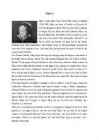
of Lords, with executive Viscount Melbourneauthority resting within a
cabinet formed of
members of the House of Commons; the monarch was
essentially removed from the
loop . She respected and worked well with
Lord Melbourne (Prime Minister in the early years of her reign) and
England grew
both socially and economically. [5]
Marriage
The Queen married Prince Albert on 10
February 1840 at the
Chapel Royal in St. James's Palace;
four days
before , Victoria
granted her
husband the style His Royal Highness. Prince Albert was
commonly known as the "Prince Consort", though he did not formally
obtain the title
until 1857. Prince Albert was
never granted a
peerage dignity . [4] Prince Albert replaced Melbourne as the
dominant male influence in Victoria's life. She was thoroughly
devoted to him, and
completely submitted to his will. [5] Victoria
did
nothing without her husband's
approval. His interests in art,
science and industry
spurred
him to organize the
Crystal Palace
Exhibition in 1851, a
highly profitable
industrial convention. [6]
Her marriage to Prince Albert brought
nine children between 1840 and
1857. Most of her children married into other Royal families of
Europe . [7]
On December
14th 1861 Albert died from
typhoid fever at
Windsor
Castle . Victoria remained in
self- imposed seclusion
for ten years. This
genuine, but
obsessive mourning
kept her
occupied for the
rest of her life and played an
important role in the
evolution of what would become the Victorian mentality. [6] She had
lost a devoted husband and her principal trusted adviser in affairs
of state. For the rest of her reign she wore black.
Widowhood
Until the
late 1860s she rarely appeared in public; although she
never neglected her
official Correspondence, and continued to give
audiences to her ministers and official visitors, she was
reluctant
to resume a
full public life. [7]
Victoria's isolation from the public greatly diminished the
popularity of the monarchy, and
even encouraged the
growth of the
republican movement. Although she did
perform her official duties,
she did not actively participate in the
government , remaining
secluded in her royal residences, Balmoral in Scotland or her
residence at Osborne in the
Isle of Wight.
Meanwhile , one of the most
important pieces of
legislation of the nineteenth century —
the
Reform Act 1867 — was passed by Parliament. Lord Palmerston was
vigorously opposed to
electoral reform, but his
ministry ended
upon his death in 1865. He was followed by Lord
Russell (the
former Lord John Russell), and afterwards by Lord Derby,
during
whose ministry the Reform Act was passed. [3]
Victorian Era
The Victorian Era took place from 1837 to 1900 in England. The
Victorian Era was at the
height of the Industrial Revolution, a
period of significant social, economic, and
technological change in
the United Kingdom. Named for Queen Victoria, the time period for its
unique fashions,
arts and
literature . Many pieces of literature that were
produced in the Victorian Era
continue to be recognized as classics
today . The Victorian Era was named for Queen Victoria. [10]
Later years
Victoria never fully recovered from Albert's death in 1861 and she
remained in mourning for the rest of her life. Her
subsequent
withdrawal from public life made her
unpopular , but during the
late 1870s and 1880s she gradually returned to public view and, with
increasingly pro-
imperial sentiment, she was restored to favour with
the
British public. After the
Indian Mutiny in 1857, the government
of India was transferred from the
East India Company to the Crown. In
1877, Victoria became empress of India. Her
empire also
included Canada,
Australia , New
Zealand , and large parts of
Africa . During
this period,
Britain was largely uninvolved in European affairs,
apart from the Crimean War from 1853 -
1856 .[1] In 1887 Victoria's
golden jubilee (fifty years in
power ) was celebrated, and ten years
later, her diamond jubilee (sixty years in power) was magnificently
celebrated. [8]
Death of Queen Victoria
The Victorian Era
came to an end when the
symbol of the age, Queen
Victoria, died on January 22, 1901. Britain's monarch, who had
ascended to the throne at the age of 18, was 81 years old. [9] She
was
buried at Windsor beside Prince Albert, in the Frogmore Royal
Mausoleum, which she had
built for their final resting place.
Above the Mausoleum door are
inscribed Victoria's
words : 'farewell
best beloved,
here at last I
shall rest with thee, with thee in
Christ I
shall
rise again '. [7]
Wordlist
- subsequent(adj)- happening or coming after something else
- a withdrawal( noun ) - the act of moving or taking something away or back
- the Electoral Reform- a group formed in 1884 to work for a change in the way British elections are decided, and to persuade Parliament that a system of proportional representation should be used. Through its company, Electoral Reform Services, it helps organizations with elections and ballots.
- vigorous(adj)- very active, determined or full of energy
- legislation(noun)- a law or a set of laws passed by a parliament
- reluctant(adj)- hesitating before doing something because you do not want to do it or because you are not sure that it is the right thing to do
- genuine(adj)- real ; exactly what it appears to be; not artificial
- self-imposed(adj)- is one that you force yourself to do rather than one that somebody else forces you to do
- typhoid fever(noun)- a serious disease that you get from eating food or drinking water containing a type of harmful bacteria
- to spur( verb )- to encourage somebody to do something or to encourage them to try harder to achieve something
- peerage(noun) - the position of being a peer in the UK
- dignity(noun)- the fact of being given honour and respect by people
- coronation(noun)- a ceremony at which a crown is formally placed on the head of a new king or queen
- willful (adj) - determined to do what you want; not caring about what other people want
- dissuade(verb)- to persuade somebody not to do something
- realm(noun)- a country ruled by a king or queen
- eligible(adj)- a person who is eligible for something or to do something, is able to have or do it because they have the right qualifications, are the right age, etc
- heiress-presumptive(noun)- an heir who may lose his or her legal right to receive somebody's property, money or title if somebody with a stronger claim is born
Copies
[1]
Victoria was born in London on 24 May 1819, the only child of Edward,
Duke of Kent, and Victoria Maria Louisa of Saxe-Coburg.
Victoria
never fully recovered from Albert's death in 1861 and she remained in
mourning for the rest of her life. Her subsequent withdrawal from
public life made her unpopular, but during the late 1870s and 1880s
she gradually returned to public view and, with increasingly
pro-imperial sentiment, she was restored to favour with the British
public. After the Indian Mutiny in 1857, the government of India was
transferred from the East India Company to the Crown. In 1877,
Victoria became empress of India. Her empire also included Canada,
Australia, New Zealand, and large parts of Africa. During this
period, Britain was largely uninvolved in European affairs, apart
from the Crimean War from 1853 - 1856.
[2]
The Duke of Kent was the
fourth son of George III and Victoria Maria
Louisa was the sister of King Leopold of Belgium. The Duke and
Duchess of Kent selected the name Victoria but her uncle, George IV,
insisted that she be named Alexandrina after her godfather, Tsar
Alexander II of Russia.
Victoria's
father died when she was eight months old. The Duchess of Kent
developed a close relationship with Sir John Conroy, an ambitious
Irish officer. Conroy acted as if Victoria was his daughter and had a
major influence over her as a child.
[3]
When Princess Victoria of Kent was eleven years old, her uncle, King
George IV, died childless, leaving the throne to his brother, the
Duke of Clarence and St Andrews, who became King William IV. As the
new king was childless, the young Princess Victoria became
heiress-presumptive to the throne. Since the law at that time made no
special provision for a child monarch, Victoria would have been
eligible to govern the realm as would an adult. In order to prevent
such a scenario, Parliament passed the Regency Act 1831, under which
it was provided that Victoria's mother, the Duchess of Kent and
Strathearn, would act as Regent during the queen's minority. Ignoring
precedent, Parliament did not create a council to limit the powers of
the Regent.
Princess
Victoria met her future husband, Prince Albert of Saxe-Coburg-Gotha,
when she was sixteen years old. Prince Albert was Victoria's first
cousin; his father was the brother of her mother. Princess Victoria's
uncle, King William IV, disapproved of the match, but his objections
failed to dissuade the couple. Many scholars have suggested that
Prince Albert was not in love with young Victoria, and that he
entered into a relationship with her in order to gain social status
(he was a minor German prince) and out of a sense of duty (his family
desired the match). Whatever Albert's original reasons for marrying
Victoria may have been, theirs proved to be an extremely happy
marriage.
Victoria's
isolation from the public greatly diminished the popularity of the
monarchy, and even encouraged the growth of the republican movement.
Although she did perform her official duties, she did not actively
participate in the government, remaining secluded in her royal
residences, Balmoral in Scotland or her residence at Osborne in the
Isle of Wight. Meanwhile, one of the most important pieces of
legislation of the nineteenth century — the Reform Act 1867 — was
passed by Parliament. Lord Palmerston was vigorously opposed to
electoral reform, but his ministry ended upon his death in 1865. He
was followed by Lord Russell (the former Lord John Russell), and
afterwards by Lord Derby, during whose ministry the Reform Act was
passed.
[4]
The Queen married Prince Albert on 10 February 1840 at the Chapel
Royal in St. James's Palace; four days before, Victoria granted her
husband the style His Royal Highness. Prince Albert was commonly
known as the "Prince Consort", though he did not formally
obtain the title until 1857. Prince Albert was never granted a
peerage dignity.
[5]
In 1837 Queen Victoria took the throne after the death of her uncle
William IV. Due to her secluded childhood, she displayed a
personality marked by strong prejudices and a willful stubbornness.
Prince
Albert replaced Melbourne as the dominant male influence in
Victoria's life. She was thoroughly devoted to him, and completely
submitted to his will.
Victoria
did nothing without her husband's approval. His interests in art,
science and industry spurred him to organize the Crystal Palace
Exhibition in 1851, a highly profitable industrial convention.
[6]
On Dec. 14th 1861 Albert died from typhoid fever at Windsor Castle.
Victoria remained in self-imposed seclusion for ten years. This
genuine, but obsessive mourning kept her occupied for the rest of her
life and played an important role in the evolution of what would
become the Victorian mentality.
[7] She had lost a devoted husband and her principal trusted adviser in
affairs of state. For the rest of her reign she wore black.
Until
the late 1860s she rarely appeared in public; although she never
neglected her official Correspondence, and continued to give
audiences to her ministers and official visitors, she was reluctant
to resume a full public life.
She
was buried at Windsor beside Prince Albert, in the Frogmore Royal
Mausoleum, which she had built for their final resting place. Above
the Mausoleum door are inscribed Victoria's words: 'farewell best
beloved, here at last I shall rest with thee, with thee in Christ I
shall rise again'.
[8] In 1887 Victoria's golden jubilee (fifty years in power) was
celebrated, and ten years later, her diamond jubilee (sixty years in
power) was magnificently celebrated.
[9]
The Victorian Era came to an end when the symbol of the age, Queen
Victoria, died on January 22, 1901. Britain's monarch, who had
ascended to the throne at the age of 18, was 81 years old.
[10] The Victorian Era took place from 1837 to 1900 in England. The
Victorian Era was at the height of the Industrial Revolution, a
period of significant social, economic, and technological change in
the United Kingdom. Named for Queen Victoria, the time period for its
unique fashions, arts and literature. Many pieces of literature that
were produced in the Victorian Era continue to be recognized as
classics today.
Used sources
[1]
http://www.bbc.co.uk/history/historic_figures/victoria_queen.shtml [2]
http://www.spartacus.schoolnet.co.uk/PRvictoria.ht m
[3]
http://www.famouspeople.co.uk/q/queenvictoria.html [4]
http://www.absolutefacts.com/history/victorian-era/queen-victoria.ht m
[5]
http://www.victorianstation.com/queen.html [6]
http://www.britannia.com/history/monarchs/mon58.html [7]
http://www.royal.gov.uk/HistoryoftheMonarchy/KingsandQueensoftheUnitedKingdom/TheHanoverians/Victoria.aspx [8]
http://www.notablebiographies.com/Tu-We/Victoria.html [9]
http://history1800s.about.com/b/2010/01/22/death-of-queen-victoria.ht m
[10]
http://www.absolutefacts.com/history/victorian-era/queen-victoria.ht m
2011
 50 punkti
Autor soovib selle materjali allalaadimise eest saada 50 punkti.
50 punkti
Autor soovib selle materjali allalaadimise eest saada 50 punkti.
 ~ 11 lehte
Lehekülgede arv dokumendis
~ 11 lehte
Lehekülgede arv dokumendis
 2012-03-09
Kuupäev, millal dokument üles laeti
2012-03-09
Kuupäev, millal dokument üles laeti
 5 laadimist
Kokku alla laetud
5 laadimist
Kokku alla laetud
 0 arvamust
Teiste kasutajate poolt lisatud kommentaarid
0 arvamust
Teiste kasutajate poolt lisatud kommentaarid
 Liis Eilinng
Õppematerjali autor
Liis Eilinng
Õppematerjali autor
 annaabi.ee








Kõik kommentaarid