Vajad kellegagi rääkida?
Küsi julgelt abi LasteAbi
Logi sisse

Sandrigham house (0)

1 Hindamata
Punktid
Margus Maasik G1a
SANDRINGHAM HOUSE
The Queen and other members of the Royal Family regularly spend Christmas at Sandringham and make it their official base until February each year . When The Queen or members of the Royal Family are not in residence , the house is open to the public.
The Estate is run commercially by the Land Agent, on The Queen's behalf. Over half of the Estate is let to farm tenants, the remainder being farmed in hand or used for forestry (the Estate has its own sawmill). There are also two studs, a fruit farm and a country park. These , together with the house's gardens, employ over 100 full -time staff .
Sandringham Country Park, open free all year since 1968, is an area of 250 hectares (over 600 acres) of carefully managed woodland and heath . It has two nature trails and camping and caravan club sites . A Visitors' Centre with gift shop and restaurants is open daily in summer and at weekends in winter .
HISTORY OF SANDRINGHAM’S HOUSE
Although a Royal residence for only 150 years , Sandringham abounds in history. It has seen the deaths of two monarchs; suffered its share of wartime tragedy; and been the venue for the first ever Christmas Broadcast .
The story began in 1862 . Prince Albert , husband of Queen Victoria, was looking for a country home for his eldest son, Albert Edward, Prince of Wales, before his twentieth birthday. The idea was to find a healthy retreat for his young son, away from the distractions of the city.
Before a decision had been reached, the Prince Consort died suddenly of typhoid in December 1861. It was left up to his eldest son to conclude the house-hunt. After paying a visit to Sandringham on 3 February 1862, the Prince of Wales was impressed enough to have decided by the end of the day that he wanted to buy the house. For the house and furnishings, the Prince paid £220,000.
Sandringham's first role was as a home for newly-weds. Prince Albert Edward married Princess Alexandra of Denmark on 10 March 1863, and they travelled to Norfolk 18 days later . The young couple made many extensions and improvements to the house and estate, including the construction of new roads, the rebuilding of cottages and landscaping. A new garden wall was built to accommodate the magnificent gift of the famous Norwich Gates - spectacular ironwork gates designed by Thomas Jekyll and presented as a wedding gift by the people of Norwich and Norfolk.
It became obvious that the existing house was not suitable for large social gatherings and a growing family, so the Prince of Wales rebuilt it completely.
As home to the heir to the throne and his wife , Sandringham was venue to many glittering occasions. Social life ranged from visits by Heads of State (1881, 1899 and 1902 by Kaiser Wilhelm) to informal retreats by the Royal Family. Three times a year there was a ball - for the gentry, for the farmer and for the servants. One of the main activities at Sandringham was shooting. The Prince of Wales liked to be outdoors as much as possible and he devised the idea of ST - Sandringham Time. The idea was to make the most of the winter daylight hours for his passion for shooting and so the clocks all over the Sandringham Estate were advanced by half an hour . King George V maintained this custom during his lifetime , but King Edward VIII abolished it on his accession in 1936. Sandringham was the setting for some dramatic events . Queen Victoria did not pay her first visit to Sandringham until 1871, when the Prince of Wales suffered an attack of typhoid fever (the illness of which his father had died) while staying there.
To the relief of Queen Victoria and the nation , the Prince survived and made a slow recovery . The eldest son of the Prince and Princess of Wales was not so lucky 21 years later. Prince Albert Victor, Duke of Clarence , in the direct line of succession, fell ill at Sandringham shortly after celebrating his 28th birthday there. He died on 14 January 1892 after a violent bout of influenza. Sandringham became the home to a second Royal couple when Prince George, the second son of the Prince and Princess of Wales and by then heir to the throne, married Princess May of Teck, the fiancée of the late Duke of Clarence. They moved into a house on the estate which came to be known as York Cottage . One of Prince George's innovations at Sandringham was the founding of the first Royal pigeon loft in 1886 . Almost annually several were entered in international contests; pigeons from the Royal lofts also saw active service with the Royal Air Force in the Second World War. Despite being able to spend less time at Sandringham after his accession in 1901, King Edward VII's interest in the estate never waned, and he continued to make improvements all his life. Following his death in 1910, Sandringham was left to Queen Alexandra, who continued to live in the 'Big House' in her widowhood until her death in 1925. The new King George V and Queen Mary continued to live in the much smaller York Cottage whenever they visited the estate.
The First World War sowed death and destruction even in sleepy Sandringham. On 19 January 1915 Zeppelin L45 crossed the North Sea on the first raid of the war, and several bombs landed on and around the Royal estate. One of the craters filled with water; King George VI later had it enlarged and turned into a duck pond.
Like many villages, towns and communities across Britain , the community of the estate suffered its own wartime tragedy. The Sandringham Company was wiped out in the Battle of Gallipoli in August 1915. Trapped in a field which suddenly burst into flames, possibly due to a stray shell, the entire company was killed . In 1920 King George V, Queen Alexandra and Queen Mary unveiled a cross and tablet on the greensward outside Sandringham Church, bearing the names of the fallen. King George V's reign also saw the birth of a new Christmas tradition at Sandringham. The first Christmas broadcast to the Empire was made live on Christmas Day, 1932, from Sandringham's 'business- room '. History was made again in 1957 when The Queen made her first televised broadcast live on Christmas Day from Sandringham's library.
King George V died at Sandringham on 20 January 1936, and Sandringham passed to his eldest son. In his brief reign King Edward VIII spent less than one day at Sandringham. After his abdication, he retained rights to Sandringham and Balmoral, since both estates are held privately and not as Sovereign. Under a financial settlement the two estates were transferred to his brother , the new King George VI. King George VI loved Sandringham as much as his father had done , spending many happy months on the estate. He spent his first Christmas as king there in 1936. Having been born there in York Cottage, he also died at Sandringham House, passing away in his sleep on the night of 6 February 1952. His coffin lay in the small church of St. Mary Magdalene, Sandringham, watched over in a round-the- clock vigil by Sandringham gamekeepers before being taken to London and then to Windsor for interment.The first visit by Princess Elizabeth to Sandringham was Christmas 1926, aged just eight months, when she visited her grandparents King George V and Queen Mary. From that time the Princess made regular visits to Sandringham. During the Second World War she and her sister were often resident on the Sandringham estate, living at Appleton House. In 1943 Princess Elizabeth was featured in newspapers helping with the harvest. Throughout her reign, The Queen's attachment to Sandringham has remained as strong as that of her father, grandfather and great-grandfather.
http://www.royal.gov.uk
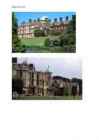
Sandrigham house #1 Sandrigham house #2 Sandrigham house #3
Punktid 50 punkti Autor soovib selle materjali allalaadimise eest saada 50 punkti.
Leheküljed ~ 3 lehte Lehekülgede arv dokumendis
Aeg2008-09-28 Kuupäev, millal dokument üles laeti
Allalaadimisi 7 laadimist Kokku alla laetud
Kommentaarid 0 arvamust Teiste kasutajate poolt lisatud kommentaarid
Autor mrmargus Õppematerjali autor
referaat

Sarnased õppematerjalid

Diana-Walesi printsess-The Princess of Wales
4
doc

Diana, Walesi printsess (The Princess of Wales)

the 31st of August in 1997. She was a popular member of the British royal family and an international personality of the late 20th century. She was the first wife of Charles, Prince of Wales, whom she married on the 29th of July in 1981. The wedding, which was held at St. Paul's Cathedral, was televised and watched by a global audience of over 750 million people. Diana and Charles had two sons, Princes William and Harry. EARLY LIFE She was born at Park House, Sandringham in Norfolk, England. Her parents were John Spencer and Frances Burke Roche. She had two older sisters Sarah and Jane and a younger brother Charles. When Diana's parents divorced in 1969, her mother took her and her younger brother live in an apartment in London's Knightsbridge, where Diana attended a local day school. Every Christmas, the children returned to Norfolk with their mother to visit their father, but he subsequently refused to allow them to return to London

Inglise keel
Referaat Printsess Dianast
12
docx

Referaat Printsess Dianast

and she was a part of the family, too. She is dead and if somebody reads it, he or she can learn about her and will know what she was like. The purpose of the work is to introduce Diana and get to know her better. Diana Facts about Diana Main Facts Her full name is Diana Frances Spencer and she was the Princess of Wales. Diana was called people's Princess. She was born on 1. July 1961 in Park house, Sandringham, Norfolk. She was born at the same place as her mother. She was married to Charles, Prince of Wales in 1981 and divorced in 1996. She died in car a accident on 31. August 1997 when she was only 36 years old. She is buried at Althorp, Northamptonshire. Family Her mother's full name is Frances Ruth Shand Kydd (1936 - 2004) and father's full name is Edward John Spencer (1924 ­ 1992). She has two sons with Prince Charles: Prince William, aged 27 and Prince Harry, aged 25

Inglise keel
House of Winsdor
2
docx

House of Winsdor

House of Winsdor. Their influence on modern society, key personalities. People all over the world are obsessed with the British royal family. Most fans know all the royal names and faces, the line of succession to the throne, and even the family's rarely- used last name. But let's start from the beginning. The House of Windsor is the reigning royal house of the United Kingdom and the other Commonwealth realms. The dynasty is of German paternal descent and was originally a branch of the House of Saxe-Coburg and Gotha, itself derived from the House of Wettin, which succeeded the House of Hanover to the British monarchy following the death of Queen Victoria, wife of Albert, Prince Consort. The name was changed from Saxe-Coburg and Gotha to the English Windsor (from "Windsor Castle"[1]) in 1917 because of anti-German sentiment in the British Empire during World War I.[2] There have been four British monarchs of the house of Windsor

Inglise keel
Queen Victoria and her time
11
docx

Queen Victoria and her time

and ruled in her own stead. Popular respect for the Crown was at a low point at her coronation, but the modest and straightforward young Queen won the hearts of her subjects. She wished to be informed of political matters, although she had no direct input in policy decisions. The Reform Act of 1832 had set the standard of legislative authority residing in the House of Lords, with executive Viscount Melbourneauthority resting within a cabinet formed of members of the House of Commons; the monarch was essentially removed from the loop. She respected and worked well with Lord Melbourne (Prime Minister in the early years of her reign) and England grew both socially and economically. [5] Marriage The Queen married Prince Albert on 10 February 1840 at the Chapel Royal in St. James's Palace; four days before, Victoria granted her husband the style His Royal Highness. Prince Albert was commonly known as the "Prince Consort", though he did not formally obtain the

British history (suurbritannia ajalugu)
Suurbritannia ühiskond ja kultuur konspekt
14
doc

Suurbritannia ühiskond ja kultuur konspekt

developing legal system of England. The proper name for the Magna Carta is the Magna Carta Libertatum, the Great Charter of Freedoms. By establishing Magna Carta the King was not above the law. 14. 100 year war - a series of separate wars lasting from 1337 to 1453 between two royal houses for the French throne, which was vacant with the extinction of the senior Capetian line of French kings. The two primary contenders were the House of Valois and the House of Plantagenet, also known as the House of Anjou. The House of Valois claimed the title of King of France, while the Plantagenets from England claimed to be Kings of France and England. Plantagenet Kings were the 12th century rulers of the Kingdom of England, and had their roots in the French regions of Anjou and Normandy. The Hundred Years' War was, in many respects, a "civil war" as French soldiers fought on both sides, with Burgundy and Aquitaine providing notable support for the Plantagenet side.

Suurbritannia ühiskond ja kultuur
Printsess Diana
11
odp

Printsess Diana

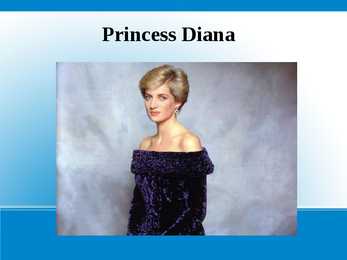
Princess Diana Diana Frances Spencer was born on July 1, 1961 at Park House, Sandringham, Norfolk, England, UK. She was a member of the British royal family and the first wife of Charles, Prince of Wales. Diana was first educated at Silfield School, then at Riddlesworth Hall in Norfolk, and at West Heath Girls' School . Diana reportedly excelled in swimming and diving, and wanted to be a professional ballerina.

Inglise keel
Inglise keelt kõnelevate maade ajaloo eksamiküsimused
28
doc

Inglise keelt kõnelevate maade ajaloo eksamiküsimused

were made dependent on their land and on their lord. The manorial system was the most convenient device for organizing the estates of the aristocracy and the clergy in the European Middle Ages. Feudalism is a hierarchical system in which a lord or king gives a gift or land to a vassal in exchange for protection. The decline of feudalism can be marked by the crusades. *Edward the Confessor ­ was an Anglo-Saxon King of England and the last of the House of Wessex. His reign marked the continuing disintegration of royal power in England and the enlargement of the great territorial counts. Edward was canonized and is regarded as the patron saint of kings, difficult marriages, and separated spouses and the Royal Family. Edward's reign was marked by peace and prosperity. He married Edith, daughter of Earl Godwin of Wessex, but they were childless. It was during the reign of Edward that some

Inglise keel kõnelevate maade ajalugu
The Queens of England
4
doc

The Queens of England

Mary I Mary I, called Mary Tudor (1516-1558), Queen of England (1553-1558). Mary was born in London on February 18, 1516, the daughter of Henry VIII by his first wife, Catherine of Aragón. Because Henry divorced Catherine, Mary was declared illegitimate. Nonetheless, Henry included her in his will, and on the death of her half-brother, Edward VI, on July 6, 1553, she became the legal heir to the throne. Although Lord High Chamberlain John Dudley, Duke of Northumberland, favoured the succession of his daughter-in-law, Lady Jane Grey, and proclaimed her queen on July 10, the country supported Mary. As a Roman Catholic, Mary began her reign by sweeping away the religious innovations of her father and her

Inglise keel


Meedia

Kommentaarid (0)

Kommentaarid sellele materjalile puuduvad. Ole esimene ja kommenteeri


Sellel veebilehel kasutatakse küpsiseid. Kasutamist jätkates nõustute küpsiste ja veebilehe üldtingimustega Nõustun