QUEEN VICTORIA & HER TIME Project Mari Murakas Class 11A 2011 Early life of Queen Victoria Victoria was born in London on 24 May 1819, the only child of Edward, Duke of Kent, and Victoria Maria Louisa of Saxe-Coburg. [1] The Duke of Kent was the fourth son of George III and Victoria Maria Louisa was the sister of King Leopold of Belgium. The Duke and Duchess of Kent selected the name Victoria but her uncle, George IV, insisted that she be named Alexandrina after her godfather, Tsar Alexander II of Russia. [2] Victoria's father died when she was eight months old. The Duchess of Kent developed a close relationship with Sir John Conroy, an ambitious I...
KING LEAR William Shakespeare Plot Overview Lear, the aging king of Britain, decides to step down from the throne and divide his kingdom evenly among his three daughters. First, however, he puts his daughters through a test, asking each to tell him how much she loves him. Goneril and Regan, Lear’s older daughters, give their father flattering answers. But Cordelia, Lear’s youngest and favorite daughter, remains silent, saying that she has no words to describe how much she loves her father. Lear flies into a rage and disowns Cordelia. The king of France, who has courted Cordelia, says that he still wants to marry her even without her land, and she accompanies him to France without her father’s blessing. Lear quickly learns that he made a bad decision. Goneril and Regan swiftly begin to undermine the little authority that Lear still holds. Unable to believe that his beloved daughters are betrayin...
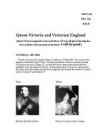
Kadri Laur PRG 11B. 26.05.07 Queen Victoria and Victorian England (Queen Victoria is supposed to have said this as a 10-year-old girl on learning that she was likely to become queen in the future: I will be good.) VICTORIA (r. 1837-1901) Victoria was born at Kensington Palace, London, on 24 May 1819. She was the only daughter of Edward, Duke of Kent. The Duke and Duchess of Kent selected the name Victoria but her uncle, George IV, insisted that she be named Alexandrina after her godfather, Tsar Alexander II of Russia. Edward died when Victoria was eight months old, upon which her mother enacted a strict regimen that shunned the courts of Victoria's uncles, George IV and William IV. Father ...
The British Royal Family Worksheet 8C Go to the official website of the British Royal Family (www.royal.gov.uk ) and find the information: 1. Find the full names of: Elizabeth II(Elizabeth Alexandra Mary), Prince Charles(Charles Philip Arthur George), Prince William(William Arthur Philip Louis) and Prince Harry(Henry Charles Albert David). 2. What are Prince William`s interests and hobbies? -He is a keen sportsman, preferring rugby, football (American soccer), swimming, water polo and tennis. 3. Name at least 5 Royal residendes. -Buckingham Palace -Windsor Castle -Balmoral Castle -Clarence House -Palace of Holyroodhouse 4. Find information about Queen Victoria: her father`s name, 1. sentence of her diary, where did she die?, where is she buried? -Duke Of Kent (Edward Augustus) -''I was awoke at 6 o'clock by Mamma, w...
British history Roman Britain Roman Britain was those parts of the island of Great Britain controlled by the Roman Empire between 43 and about 410. The Romans referred to their province as Britannia. Prior to the Roman invasion, Iron Age Britain already had cultural and economic links with Continental Europe, but the invaders introduced new developments in agriculture, urbanization, industry and architecture, leaving a legacy that is still apparent today. Historical records beyond the initial invasion are sparse, although many Roman historians mention the province in passing. Most of the knowledge of the period stems from archaeological investigations and especially epigraphic evidence. The invasion force in AD 43 was led by Aulus Plautius.It is not known how many Roman legions were sent; only one legion, the II Augusta, commanded by the future emperor Vespasian, ...
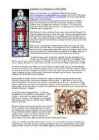
The Medieval period The Middle Ages began in 1066, when the Normans defeated Anglo-saxons at the Battle of Hastings. Now England had a Norman king William the Conquer. Norman kings ruled in England less than 100 years, during that time Normans brought England closer to the mainstream of European society. William introduced the feudalism. Under it, land was divided among noble overlords, or barons. Knights pledged their wealth and services to the overlords. In return overlords let them use their land. At the lowest end of the social scale were the serfs, peasants bound to the land. In 1154 the Norman time was at the end. In 1154 Henry II started to reign. Henry II was the king who increased royal power at the expense of nobles. His desire to control the Roman Catholic Church in England led to the murder of T. Becket. Richard I has become a model of a true knight. John(Richards brother) gained a weak, even villainous ruler. 1215 he signe...
The Saxons & Vikings Fragmentary knowledge of England in the 5th & 6th centuries comes from the British writer Gildas, the Anglo-Saxon Chronicle, saints' lives, poetry, archaelogical findings and place- name studies. British landlords ruled small, unstable kingdoms and continued some Roman traditions of governance. In the mid-5th cent, Vertigern, a British leader, hired Germanic mercenaries to help defend against peoples of the north (Picts & Scots). In the end they revolted & the process of invasion and settlement began. The first Saxon ,,kings" were Hengist & Horsa in Kent, Aelle in Sussex, Cerdic / Cynric in Wessex. So the first ,,English" became mainly from Northern Germany & Denmark. The resistance of the Celts was long. They were free at the time, not like other Roman provinces on the Continent. Around 500, the Britons seem to have won several victories. One of their leaders was Ambrosius Aurelianus and one of...
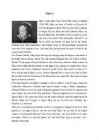
Mary I Mary I, called Mary Tudor (1516-1558), Queen of England (1553-1558). Mary was born in London on February 18, 1516, the daughter of Henry VIII by his first wife, Catherine of Aragón. Because Henry divorced Catherine, Mary was declared illegitimate. Nonetheless, Henry included her in his will, and on the death of her half-brother, Edward VI, on July 6, 1553, she became the legal heir to the throne. Although Lord High Chamberlain John Dudley, Duke of Northumberland, favoured the succession of his daughter-in-law, Lady Jane Grey, and proclaimed her queen on July 10, the country supported Mary. As a Roman Catholic, Mary began her reign by sweeping awa...
England Sightseeings Stonehenge Is a prehistoric monument located in the English county of Wiltshire, about 3.2 kilometres (2.0 mi) west of Amesbury and 13 kilometres (8.1 mi) north of Salisbury. The dating of cremated remains found that burials took place as early as 3000 B.C, when the first ditches were being built around the monument. One of the most famous prehistoric sites in the world. The site and its surroundings were added to the UNESCO's list of World Heritage Sites in 1986 in a co-listing with Avebury henge monument, and it is also a legally protected Scheduled Ancient Monument. Biggest stone is press 26 ton. Cambridge'is College was founded in the 13.century. this is world oldest ang the best collage. Oxford college Is founded in 1379. The College's motto, created by William of Wykeham, is "Manners Makyth Man" Lake District Also known as The Lakes or Lakeland, is a rural area in Nor...
HISTORY TEST 5 invasions to Britain until 1066 1) The Celts o Gaels in 600BC; Cymry(Britons) in 300BC o From present-day Austria, Switzerland o The Celtic language survives in the names of many places in England- Dover, Kent, Thames o The Celts are best known for their art- many bronze objects with elaborate designs; brooches; pins; mirrors; Celtic stone crosses o The Celts had 3 social orders: warriors, druids(priests) ordinary people 2) The Romans o (55 BC-Caesar) 43 AD- 410 AD- Claudius o From present-day Italy o Southern Britain became Britannia and was ruled by a roman governor o The Romans built over 20 towns: Colchester, Londinium, Winchester etc. They were good engineers and built roads and villas that had central heating, glass windows and mosaic floors ...
Revision questions for the test on Old English and Medieval Literature. 1.) How is literature analysed and studied? What is the difference between the diachronic and synchronic view? Literature is studied and analysed by reading the piece of work profoundly and work on all the aspects of the piece. Diachronic is development in history Synchronic is particular state at any given moment 2.) Give a general overview of Celtic Britain, Roman invasion in 55-54 BC, Anglo-Saxon invasion and the second Roman "invasion" of Great Britain, who were the leaders, what influence did they leave on the culture of Great Britain? Celtic Britain was during the Bronze Age, there were many small tribal kingdoms fighting one another. Many megalithic monuments were built around that time, e.g. Stonehenge, the Avebury ring. The Roman Invasion 55-54 BC, Julius Caesar ruled Rome, Rome built the Hadrian's wall (73 miles long, built in 121 127 AD) agains...
The foundation stones The Island Britain has a mild climate due to the Gulf Stream which brings warm waters from the Gulf of Mexico. The northern part of the island in average 5'C cooler and it's mountainous or hilly and that's why the south has been more populated.. Britain became an island only 5000 years BC after the Ice Age ended. Britain's prehistory The first evidence of human life on the island are dated back to 250 000 BC. 50 000 BC in a milder Ice Age period Britain became habitable again. People from that time were the ancestors of the modern British. 10 000 BC ige age ended and Britain became inhabited by small groups of hunters who probably followed herds of deer. 5000BC Britain became an island and deer died out. 3000BC the Neolithic people came (probably from Spanish peninsula or even North African ...
Contents Introduction...................................................3 London's early history.....................................45 The people of London......................................6 Buildings and bridges......................................7 Intruduction London is the capital of the united kingdom (UK), which is made up of Great Britain(England, Scotland, Wales) and Northern Ireland. The city lies in the southeast of England and covers an area of about 1,578 square kilometres on either side of the River Thames. With population of seven million, London is by far the largest city in the UK. Birmingham, the second largest, has just over one million inhabitants. Cultural life London is the worldclass centre. It has more than40 theatres, where audiences enjoy everything from musicals to William Shakespeare's plays. The city also ...
History of English literature Periods: 1. Anglo-saxon or early literature (499 - 1066) 2. Second or Norman or late Medieval period (1066 - 13/14 century) 3. Renaissance or Modern period (13-14 century present) Anglo-Saxon period · All of the literature had its roots in folklore · Texts were orally transmitted, the anglosaxons had no written language · Two types of singers: 1) scop (attached to the royal court, wrote poetry and songs, performed them); 2) gleeman (travelled, mostly sang other peoples' songs, not their own songs; performers of scop songs) · The oldest known song Widsith (The Far Traveller/Wonderer); tells of a gleeman who travels in Europe, of his love of noble deeds, speaks of the shortness of life http://en.wikipedia.org/wiki/Widsith · The other known song Deor's Lament. Can be called the first English lyrics, about 40 lines. Talks about a scop who is not happy w...
Stonehenge One of the best known ancient wonders of the world, 5000 years old Megalith monument, built by western mediterraneans during 3000-1600 BC Circular structure, large standing stones, aligned with rising sun at teh solstice Attlers and bones were sued to dig pits that hold the stones The Celts in Britain and their legacy 700-200 BC celts invade Britain Gaels or Goehls(Ireland and Scotland),Cymri(Wales) and Brythons(gave name to Brittany) Fierce fighters,superb horsemen.Most of them farmers, lived in thatched houses Good at art, craftmanship, used iron Divided into tribes, ruled by kings, only in face of danger would they choose a single leader Legacy- hill-forts, farms, churches, field system, woodland, pasture, weapons, iron objects, langugae, culture Caesar in Britain The great Roman Emperor Firts came 55 BC to gather information, celts ...
Edward the Confessor (1003-1066) Edward was the oldest son of Ethelred II (Ethelred the Unready http://en.wikipedia.org/wiki/Ethelred_the_Unready) and Emma of Normandy (http://en.wikipedia.org/wiki/Emma_of_Normandy). He wast he penultimate Anglo-Saxon king of England. The family was exiled in Normandy after the Danish invasion of 1013 so Edward spent the first part of his life in Normandy. He grew up in deep religious views and gained the nickname ''Confessor''. As Edward was seperated from his family and grew up in a strange land, it is said that his childhood wasn't a happy one. After Ethelred's death in 1016 the Danes again took control of England. The ...
Main Sights England is known for its many world-famous sightseeings and people all around the world come to see them. Some of them are even like symbols of England. The most famous ones are: Stonehenge is one of the greatest national icons of Britain. That prehistoric monument is located in the plain of Salisbury, in the county of Wiltshire in the south-west of England. It is built of 150 enormous stones which are set in a purposive circular pattern. Stonehenge was probably built to mark the longest and shortest day of the year because it lies on the line of the midsummer sunrise and the midsummer sunset. That would have enabled people to keep a record of changing of seasons. Although it is still unclear who built it. Hadrian’s Wall is an ancient wall which was built in 2nd century by Hadrian, the emperor of Rome from AD 117 to 138, and it marked the northern border of the Roman Empire in Britain. The wall was 80 Roman miles (117 kilom...
Estuary English 1. The geographical dimension: Is `Estuary' English estuary? Estuary English is a dialect of English widely spoken in South East England, especially along the River Thames and its estuary. Phonetician John C. Wells defines Estuary English as "Standard English spoken with the accent of the southeast of England".[1] The name comes from the area around the Thames, particularly London, Kent, north Surrey and south Essex. The variety first came to public prominence in an article by DavidRosewarne in the Times Educational Supplement in October 1984. [2] Rosewarne argued that it may eventually replace RP (Received Pronunciation) in the south-east. Studies have indicated that Estuary English is not a single coherent form of English; rather, the reality behind the construct consists of some (but not a...
London History The Romans AD 43- AD 410 The Romans finally invaded Britain in AD 43 from Kent. The Romans lead by Julius Caesar attempted to invade Britain twice before that in 55 and 54 BC but the invasions were unsuccessful. They made their way to the river Thames and sailed up it. The Romans knew it was important to control a crossing point at the river Thames, so they decided to build a settlement on the north bank. Although small settlements had been built on the banks of the Thames, the Romans were the ones who built the first city. They called their city Londinium. The Roman engineers noticed that the point where the swampy river narrowed would make an ideal crossing point, they built London Bridge. Less than 20 years later the native Iceni tribe, led by Queen Boudicca, rose up against the Romans in revenge for mistreatment and burnt Londinium to the ground. The well disciplined Roman army defeated her forces and Londinium was r...
1. Ancient Britain: the Celtic tribes. 2000 years ago there was an Iron Age Celtic culture throughout the Br Isles. It seems that the Celts, who had been arriving from Europe from the 8th cent BC onward, intermingled with the peoples who were already there. The Celts were extremely talented people, creative and artistic. More than 1 Celtic tribe invaded Br. The descendants of ancient Celts live in Wales, Scotland, Cornwall and Ireland. They lived in primitive society. Druids priests, more powerful than chiefs. Acted like prophets. 2. Stonehenge From prehistoric period. Was built on Salisbury plain between 2500 and 1500 bc. One of the most famous and mysterious archaeological sites in the world. One of the mysteries is how it was built at all with the technology of the time. Another is its purpose. It appears to function as a kind on astronomical clock and we know it was used by the Druids for ceremonies marking the passing ...
The Middle Ages The Middle Ages are one of the most turbulent periods in English history. The Middle Ages are so called as the middle period between the decline of the Roman Empire and the Renaissance. The Middle Ages started in 1066. with the Battle of Hastings and the Norman Conquest. William the Conqueror took all the lands from the Saxon English and gave these to French nobles. Normans were known as great builders. This is assured by the fact that many great castles and other buildings, including the Tower of London, were built during the Norman Conquest. In 1086. Domesday Book was compiled. It is a detailed survey of England ordered by William the Conqueror. The reign of King William Rufus who was the son of William started in 1087 and lasted until 1100. Next king was Henry I who was the brother of William Rufus. His reign was from 1100-1135. In 1135 Henry I nephew Stephen got to the throne of Engla...
History exam *Stonehenge - is a monument located in England. It is one of the most famous prehistoric sites in the world and is composed of earthworks surrounding a circular setting of large standing stones. The surrounding circular, earth bank and ditch, have been dated to about 3100 BC. Stonehenge was produced by a culture with no written language. Many aspects of Stonehenge remain subject to debate. There is little or no direct evidence for the construction techniques used by the Stonehenge builders. *The Celts in Britain and their legacy The Cets lived in Britain in The Iron Age. They were warring tribes who were battleful amongst themselves as well as inter-tribal war. They were not centrally governed. The Celts brought iron working, iron ploughs and metal swords, horses, wheels and chariots - all these things gave them an instant superiority over the native tribes. The Celts built a number ...
N. A. Vavilov ASPECTS OF BRITISH HISTORY Н. А. Вавилов КРАТКАЯ ИСТОРИЯ ВЕЛИКОБРИТАНИИ Учебное пособие на английском языке Москва Институт международного права и экономики имени А. С. Грибоедова 2008 2 УТВЕРЖДЕНО кафедрой лингвистики и переводоведения Вавилов Н.А. Краткая история Великобритании: Учебное пособие на английском языке. – 2-е изд., пересмотр. и испр. – М.: ИМПЭ им. А.С. Грибоедова, 2008. – 88 с. Пособие содержит краткий очерк важнейших событий в истории Великобритании – от первых документально засвидетельствованных вторжений на остров (кельтов, римлян и англосаксов) до создания и распада Британск...
1. The Queen’s official title. Elizabeth the Second, by the Grace of God, of the United Kingdom of Great Britain and Northern Ireland and of Her other Realms and Territories Queen, Head of the Commonwealth, Defender of the Faith. 2. The Queen’s working day. Starts after breakfast. Reads the newspapers which are prepared by the Press Secretary, and a report on the previous day’s proceedings in the Parliament and the letters she receives. Also phone calls. Once a month she attends the Privy Council in order to give Royal Assent to various items of government legislation. Discusses domestic matters with the Master of the Household. Towards the end of the day, there is always another pile of official papers and reports waiting to be read or acted upon. The business on constitutional monarchy never ends. 3. Who is the present heir to the throne? Speak about his education. Wh...
Kordamisküsimused arhitektuuriajaloos (kontrolltöö nr.2) *Antiik ja varakristlik aeg 2900eKr-540pKr *Islam arhitektuur 622-1600 *Romaani arhitektuur 750-1250 *Gootika 1130-1500 *Renessanss 1420-1620 *Barokk ja rokokoo 1600-1780 *Klassitsism 1750-1840 *Historitsism ja insenerarhitektuur 1840-1900 *20.sajandi esimene pool 1900-1945 *20.sajandi teine pool 1945-tänapäev 1. Itaalia baroki üldiseloomustus ja barokse ehitise tunnused. Baroki esindajate Gian Lorenzo Bernini, Francesco Borromini loomingu näited ja lühitutvustus. Barokk Euroopa kunstis umbes 1580-1750 valitsenud stiil; hilisbarokki nimetati ka rokokooks. Lähtus vahetult itaalia renessansist. Domineeris arhitektuuri, mis arenes tihedas seoses maali, skulptuuri ning tarbe- ja pargikunstiga; tähtsaimaks ehitise tüübiks muutus palee ehk loss, mida iseloomustas suurejooneline pidulikkus, teatraalne monumentaalsus ja mõõtmete erakordsus. Põhiplaanidele olid omased eenduv...
Some of the things you will learn in THE CODEBREAKERS • How secret Japanese messages were decoded in Washington hours before Pearl Harbor. • How German codebreakers helped usher in the Russian Revolution. • How John F. Kennedy escaped capture in the Pacific because the Japanese failed to solve a simple cipher. • How codebreaking determined a presidential election, convicted an underworld syndicate head, won the battle of Midway, led to cruel Allied defeats in North Africa, and broke up a vast Nazi spy ring. • How one American became the world's most famous codebreaker, and another became the world's greatest. • How codes and codebreakers operate today within the secret agencies of the U.S. and Russia. • And incredibly much more. "For many evenings of gripping reading, no better choice can be made than this book." —Christian Science Monitor THE ...
 annaabi.ee