Vajad kellegagi rääkida?
Küsi julgelt abi LasteAbi
Logi sisse

Mid-term 1 in English Phonetics and Phonology (1)

1 Hindamata
Punktid
Phonetics and Phonology . Mid- term 1. Terminology.
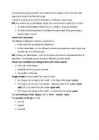
Testi tuleb kindlasti see tabel!
Nasal , Bilabial: m
Nasal, Alveolar : n
Nasal Velar : ŋ
Plosive , Bilabial: p; b
Plosive, Alveolar: t; d
Plosive, Velar: k; ɡ
Affricate, Post-Alveolar: ;
Fricative, Labio- dental : f; v
Fricative, Dental: θ; ð
Fricative, Alveolar: s; z
Fricative, Post-Alveolar: ʃ; ʒ
Fricative, Velar: x
Fricative, Glottal: h
Approximant, Alveolar ja Post-Alveolar: ɹ
Approximant, Palatal: j
Approximant, Velar: w
Lateral , Alveolar: l
Phonetics and Phonology.
Mid-term 1.
Phonetics – the general study of the characteristics of speech sounds:
  • how they may be “strung” together to form meaningful units
  • how they are produced
It studies :
Acoustic phonetics – the study of the physical properties of the sounds themselves.
Auditory phonetics – the study of the way listeners perceive these sounds.
Articulatory phonetics – the study of how the vocal tract produces the sounds of language .
Phonology maybe used by actors, teachers, computer engineers etc.
Phonology – the description of the systems and patterns of speech sounds in a language.
It studies:
  • the abstract or mental aspect of the sounds in a language
  • the actual physical articulation of speech sounds
The phoneme .
Phoneme – is a meaning distinguishing sound in a language; it functions contrastively/ the smallest contrastive unit in the sound system of a language.
When there is a contrast in identical environment we must be dealing with separate phonemes - when we replace one sound with another , we get another word with another meaning, therefore that sound must be a phoneme.
There are small shades of sounds that don’t distinguish meaning – phones . The different phones that are the realisations of the same phoneme are called allophones. Allophones - are the actual pronunciations of phonemes in different environments.
Complementary distribution – phonetic units that never occur in the same environment are said to be in complementary distribution. For example, clear/l/ and dark /l/.
NB! The sounds we produce and hear are continuous : we move our organs of speech continuously and produce a continuous signal – still it is possible to divide speech into units, which is called segmentation.
The sounds of languages can be produced by:
  • pushing air out of the lungs through the vocal tract (pulmonic, egressive)
  • sucking the air into the mouth (ingressive)
NB! Without air we cannot produce sound.
There are two classes of sounds:
Consonants are produced with some restriction or closure in the vocal tract that impedes the flow of air from the lungs.
Vowels are produced so that the airstream is relatively unobstructed.
NB! Any speech sound will always exhibit two components in some form or other :
  • An activity that initiates a flow of air (i.e. initiation, lungs as initiators)
  • An activity that modulates or articulates the air- stream , thus generating a specific type of sound
Vowel and Consonant
The difference between vowel and consonant is:
  • in the way they are produced (phonetics)
  • in their distribution, i.e. the different contexts and positions in which particular sounds can occur (phonology)
NB! Vowels can stand alone – they can be produced without consonants before or after them. Consonants require at least a “little bit” of vowel sound.
Vowels are classified according to their phonetical quality :
  • how high is the tongue
  • what part of the tongue is involved
  • the position of the lips
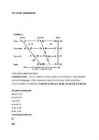
Tongue height can be varied from close to open :
  • the tongue can be high in the mouth – it is close to the palate (close)
  • the tongue can be mid in the mouth – mid, but closer to the palate (close-mid)/ mid, but lower from the palate (open-mid)
  • the tongue can be low in the mouth – it is low from the palate (open)
The involved part of the tongue can be: front central back .
The position of the lips can be:

The vocalic quadrilateral:
Testi tuleb kindlasti see tabel!
Cardinal vowels - a set of reference vowels used by phoneticians in describing the sounds of languages. Other vowels are placed on the vowel chart using these cardinal vowels as landmarks . Cardinal vowels are: [i]; [e]; [ɛ]; [a]; [ɑ]; [ɔ]; [o]; [u]
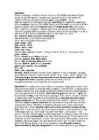
Six short vowels are:
as in cat
e as in bed
ı as in bit
as in cut
ʊ as in put
ɒ as in pot
Five long vowels are:
i:
u:
ᴈ:
ᴐ:
ɑ:
Short and long vowels differ phonetically:
  • in quality
  • in length (the duration of articulation)
Comparing English and Estonian vowels: both languages have short and long vowels, but English vowels also differ in quality, thus they are marked by different symbols . In Estonian to mark long vowels the symbols for short vowels are just doubled – they differ only in length.
Diphthongs .
Diphthong - is a double vowel sound which includes a glide from one vowel sound to another. In English diphthongs the first vowel sound is more intense than the last vowel sound, in Estonian the other way around .
Centring diphthongs end with a central vowel, the glide is towards ə.
Closing diphthongs end with a closed vowel, the glide is towards ı and ʊ.
English vowels:
  • a vowel is longest in an open syllable and in monosyllabic words (sea, speed )
  • a vowel is next longest in a syllable closed with a voiced consonant and in two-syllable words ( seed , speedy)
  • a vowel is shortest in a syllable closed with an unvoiced consonant and in words with more than two syllables (seat; speedily).
Stop Consonants (Plosives).
A stop (or plosive) - is a consonant articulation which stops the airflow in the vocal tract completely , the air cannot escape through the mouth. When the articulators come apart, the airstream will be released in a small burst of sound.
Aspiration – a period of voicelessness after the release of an articulation, e.g. pie [pʰaı]
NB! K, p, t are unvoiced/aspirated consonants and g, b, d are unaspirated/voiced consonants. These unvoiced stops are completely unaspirated (spy, sty, sky), because stop is immediately following word-initial s.
Fricatives, Affricates, Nasals .
Fricatives - narrowing the distance between two articulators so that the airstream is partially obstructed and a turbulent airflow is produced (i.e. friction). Fricatives may be voiced or voiceless.
Consonants can be classified by:
  • place of articulation( bilabial /p/; /b/; /m/ ; labiodental /f/; /v/; alveolar /t/; /d/; /n/; velar /k/; /g/
  • manner of articulation – refers to variation in the way the airstream is affected ( blocked vs.partially blocked; vocal folds are vibrating or no vibration).
Affricate – a stop followed by a homorganic fricative (phonological)/ a stop plus a fricative (phonetics). These are the only sequences that can occur at both the beginning and the end of words in English.
Homorganic means that the plosive and the following fricative must be made with the same articulators.
Nasals – in case of nasals, the air escapes through the nasal cavity, because oral cavity is completely closed at some point.
M, n, ᵑ
Within a word containing letters „ng“ in the spelling, ᵑ occurs without the following g if it occurs at the end of the morpheme, if it occurs in the middle of a morpheme it has a following g (finger vs. sing /er). Exceptions are comparatives and superlatives.
A lateral consonant – l – while producing it, the air escapes along the sides of the tongue.
A post-alveolar approximant – r.
Approximant – the articulators approach each other but do not get sufficiently close to each other to produce a „complete“ consonant such as a plosive, nasal or fricative.
J and W – are phonetically like vowels but phonologically like consonants. J is a palatal and w is a bilabial approximant.
Mid-term 1 in English Phonetics and Phonology #1 Mid-term 1 in English Phonetics and Phonology #2 Mid-term 1 in English Phonetics and Phonology #3 Mid-term 1 in English Phonetics and Phonology #4 Mid-term 1 in English Phonetics and Phonology #5 Mid-term 1 in English Phonetics and Phonology #6
Punktid 50 punkti Autor soovib selle materjali allalaadimise eest saada 50 punkti.
Leheküljed ~ 6 lehte Lehekülgede arv dokumendis
Aeg2010-01-09 Kuupäev, millal dokument üles laeti
Allalaadimisi 36 laadimist Kokku alla laetud
Kommentaarid 1 arvamus Teiste kasutajate poolt lisatud kommentaarid
Autor Ash - Õppematerjali autor
Inglise keele fonoloogia ja foneetika (Merilin Miljan) esimese vahe-eksami terminoloogia materjalide kokkuvõte.

Sarnased õppematerjalid

Foneetika ja fonoloogia
10
docx

Foneetika ja fonoloogia

before the alveolar ridge.  Dental sounds are produced by the tongue touching the front teeth.  Bilabial sounds are produced by the contact of both lips.  Labiodental sounds are produced by lip-to-teeth contact. Distribution is the act of looking sounds in different contexts and positions they can occur in. Any speech sounds must always have air flow and some kind of blockage or modification to the air flow. There are 2 kinds of sounds in English:  Vowels that are produced do that the airstream is not obstructed – they can stand alone meaning that they can be produced without consonants before or after them  Consonants that are produced with some restriction or closure in the vocal tract that the air flow is obstructed – consonants require some vowels around them To classify vowels, fixate:  The height of the tongue – close, close-mid, open-mid, open

Inglise keel
Phonetics Glossary Homework
6
odt

Phonetics Glossary Homework

CITATION FORM The citation form of the lexeme is the form that is employed to refer to the lexeme; it is also the form that is used for the alphabetical listing of lexemes in a conventional dictionary. In English, the citation form of a noun is the singular: e.g., mouse rather than mice. For multi-word lexemes which contain possessive adjectives or reflexive pronouns, the citation form uses a form of the indefinite pronoun one: e.g., do one's best, perjure oneself. In many languages, the citation form of a verb is the infinitive: French aller, German gehen, Spanish ir. In English it usually is the full infinitive (to go) although alphabetized without 'to' (go);

Inglise keele foneetika ja fonoloogia
Foneetika ja inglise keele variandid eksamiküsimused
12
odt

Foneetika ja inglise keele variandid eksamiküsimused

1. English vowel system and its description: A vowel is a letter of the alphabet [a,e,i,o,u and sometimes y (happy)] that represents a speech sound created by the relatively free passage of breath through the larnyx and orav cavity. English has 5 vowels. Front vowels Central vowels Back vowels High/close /i:/ see /i/ sit /u:/ boot /ʊ/ book Mid /e/ bait /Ɛ:/ bird /ə/ sofa /3:/ bird /o/ boat /ɔː/ bought Low/open /æ/ bat /ʌ/ under /a:/ father /ɒ/ sock With front vowels tounge is pushed forward, with central vowels its neutral and with back vowels tongue is pushed back.

Inglise keel
English Phonetics and Phonology-Mid-term2
4
docx

English Phonetics and Phonology. Mid-term2

Phonology. Mid-term 2. Syllable - is a phonological unit consisting of one or more phonemes. In phonetics ­ a syllable is a unit which consists of a centre, that has little or no obstruction to airflow; it is comparatively louder than other sounds. In phonology ­ syllables are the possible combinations of phonemes. The syllable consists of - onset, nucleus, coda. (every syllable has a nucleus: vowel, syllabic l, or m, n). Rhyme/rime ­ nucleus + coda; the nucleus and the coda constitute a sub-syllabic unit ­ rhyme. Words rhyme, when their nucleus and coda are identical. (E.g 'cr-o-wn', 'd-o-wn'). The hierarchical structure of the syllable: Onset ­ the beginning of the syllable Nucleus/peak ­ the open part of a syllable, generally a vowel.

Inglise keele foneetika ja fonoloogia
History of english review questions and answers 2016
5
odt

History of english review questions and answers 2016

but he had presented his theory already on 1 May, 1875 in a comprehensive personal letter to his friend and mentor, Vilhelm Thomsen. It was received with great enthusiasm by the young generation of comparative philologists, the so- called Junggrammatiker, because it was an important argument in favour of theNeogrammarian dogma that the sound laws were without exceptions ("die Ausnahmslosigkeit der Lautgesetze"). BREAKING IN OLD ENGLISH Vowel breaking is a sound change whereby a single vowel changes to become a diphthong in specific environments. The resulting sound preserves the original vowel, which is either preceded or followed by a glide. This process is manifested in a variety of Germanic languages and is characteristic of Old English. Certain front vowels, /æ/ /e/ and /i/, in their short and long variants, were diphthongized when

Inglise keele ajalugu
History of the English language
7
doc

History of the English language

Suppletion Present in languages of different families. Present in Old, Middle and Modern English, though the general tendency is towards more regularity/iconicity so the number of suppletive forms has decreased.In the text: goon ­ to go wenden - to turn Gan was suppletive in Old English, past form: eode.Eode was supplanted by went (past form of wenden) at the end of the Middle English period.To wend has survived in Modern English in phrases such as to wend one's way, we wended homewards (ironic usage). Thus: suppletivity- suppletion ­ different parts of one and the same paradigm come from what were originally different paradigms (different words with close meanings or words in different but close dialects).Suppletion embraces verbs, adjectives, nouns. Be ­ was/were ­been (Old English beon/wesan) (am, art, is, are); in Old English some suppletive

Inglise keel
Short analysis of two phonetics articles
3
odt

Short analysis of two phonetics articles

finding out what it is that random people find "sounding gay" or "sounding heterosexual". The articles have a nine year gap, and the newer, written 2015 also mentions Munson et al's research several times. One of the main differences between the researches is that while Munson et al included bisexual men and women, and also Lesbians, Erik.C. Tracy worked solely with the topic of gay men. Both, however, did their research on American English. As to the conclusions: * Yes, listeners can distinguish between LGB and heterosexual men and women. * Listeners rely more on vowels than consonants, and of those, only few. * The /s/ is the most important consonant when making a judgment. (also deriving from this topic, see "gay lisp" ­ there were some excellent articles about that, too, but unfortunately they were about a research done in Belgium). But only if you are male. (Apparently there is a "gay lisp", but no

Foneetika
ESSAY YORKSHIRE
9
docx

ESSAY YORKSHIRE

Varities of English Sirelin Koval YORKSHIRE ENGLISH Introduction The history of the Yorkshire variety, sometimes known as The Broad Yorkshire, or Tyke, can be traced back to 400 AD, with the arrival of Angles, Saxons, and other Germanic tribes on the mainland of Britain. Yorkshire is located in the north of today's Britain and even though allowing for boundary changes, has remained the biggest county in England. The English language has become one of the most known lingua franca. Language is used for

Inglise keel


Meedia

Kommentaarid (1)

XiaoKeAi profiilipilt
XiaoKeAi: Aitäh!
19:37 06-05-2011


Sellel veebilehel kasutatakse küpsiseid. Kasutamist jätkates nõustute küpsiste ja veebilehe üldtingimustega Nõustun