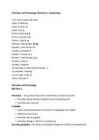
Phonetics and Phonology. Mid-term 1. Terminology. Testi tuleb kindlasti see tabel! Nasal, Bilabial: m Nasal, Alveolar: n Nasal Velar: Plosive, Bilabial: p; b Plosive, Alveolar: t; d Plosive, Velar: k; Affricate, Post-Alveolar: t; d Fricative, Labio-dental: f; v Fricative, Dental: ; Fricative, Alveolar: s; z Fricative, Post-Alveolar: ; Fricative, Velar: x Fricative, Glottal: h Approximant, Alveolar ja Post-Alveolar: Approximant, Palatal: j Approximant, Velar: w Lateral, Alveolar: l Phonetics and Phonology. Mid-term 1. Phonetics the general study of the characteristics of speech sounds: how they may be "strung" together to form meaningful units
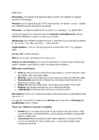
eə - aired, cairn aɪ - time, nice ᴜə - moored, tour ɔɪ - void, voice əᴜ - houm, load aᴜ - loud, grown, house Triphthongs are sounds consisting of 3 vowels. They form when adding schwa to the 5 closing diphthongs. A stop consonant aka a plosive is a consonant articulation which stops the airflow completely – air can’t escape through the mouth. When the blockage is released a burst of air is released with a sound (plosion). Plosives divide into: Bilabial – the stop is made by two contracting lips Alveolar- the stop is made by the tongue touching the alveolar ridge Velar – the stop is made with the velum aka soft palate Fortis – aspirated consonants
usage of loan-words · Less important · Vanishing in my opinion FEATURES Consonants Bilabial Labio-dental Dental Post-alveolar Velar Pharyn-geal Glottal Nasal m n voiceless p t k Plosive voiced b d voiceless ts t Affricate voiced dz d voiceless f s Fricative voiced v z Trill r
A clearer case of neutralisation can be found in the case of plosives following s in syllable-initial position. Words like 'spill', 'still', 'skill' are usually represented with the phonemes p, t, k following the s. But, as many writers have pointed out, it would be quite reasonable to transcribe them with b, d, g instead, because b, d, g are unaspirated while p, t, k in syllable- initial position are usually aspirated; but in sp, st, sk we find an unaspirated plosive. Although we dont transcribe as such, it is important to remember that the contrasts between p and b, between t and d and between k and g are neutralised in this context. There are many ways of analysing the English phonemic system, each with its own advantages and disadvantages. The rhythm of speech is determined by many factors where the stresses fall, whether long and short vowels contrasted, whether unstressed vowels in syllables can be reduced, what syllabic structures are allowed (e.g
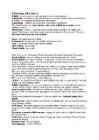
Nasaalid ehk ninahäälikud : õhk läbi nina ( m n ) Lareraal ehk külghäälikud : keelega, õhk pääseb völja küljelt ( l ) Tremulant ehk värihäälik : põrisev r ( keeletipp ) Poolvokaal : j ( v ) Heliline häälekurdude vibreerimine ,, Aadama õun" vibreerib. (v, z, m, n, r, e) Heliline m n l r j v helitu - ei vibreeri ( plosive stop ) kpt, gbd, f, s, jne. helitu on sulghäälik v hõõrdhäälik ( frikatiiv ) v, s , h , , f Minimaalpaar sõnad mis erinevad ühe foneemi poolest.(kana-kala, kasv- kass) Tikk takk tukk tokk tekk Foneemide distinktiivsed tunnused: 1) erinevad foneemid 2) sama foneemi allofoonid Diftongid: kaks järjest vokaali, mis kuuluvad ühte silpi, nimetatakse diftongiks. Afrikaat klusiilialguline frikatiiv häälikute kombinatsioon. Afrikaat on häälik, mis koosneb sulust ja sellele
 annaabi.ee